
Sacramento wants this to read like a feel-good story: walk into a dealership, buy your first electric car, drive away $3,500 lighter on the price tag. That is not actually the story.
Read what the California Air Resources Board put in writing about MyFirstEV, the state’s new instant rebate program, and a different plot emerges. This isn’t really about affordability. It’s a state government admitting, in its own program materials, that the EV market cannot hold its shape without a subsidy attached to it — and then carving out an exemption for the two automakers who need that subsidy the least.
Here’s what actually happened. On August 7, Governor Gavin Newsom announced that Tesla, Hyundai, and Lucid dealerships in California had gone live with instant rebates: $3,500 off a new zero-emission vehicle, $1,750 off a used one, applied at the point of sale instead of showing up as a tax filing months later. Ford, Rivian, Chevrolet, and Kia are scheduled to flip the switch this month. Toyota, Lexus, Honda, and Subaru follow in September. Mitsubishi in November. Nissan and Volvo haven’t committed to a date at all. The state is putting up $135.5 million; participating automakers match it dollar for dollar, for a combined $271 million pot that CARB projects will move a little more than 73,000 vehicles before the funding runs out.
That’s the press release. Here’s what it’s actually covering for.
CARB’s own FAQ document contains the admission everyone else buried: the agency built this program because, with the federal EV tax credit gone, California faces a critical moment in sustaining momentum toward its clean-transportation goals. That’s the $7,500 federal credit that expired in September 2025. Once it disappeared, demand didn’t soften — it fell off a cliff. New ZEV registrations in California dropped 40.2% year over year in the first quarter of 2026, according to the California New Car Dealers Association. Ford and Ram didn’t wait to see if things would recover; both discontinued their full-size electric truck programs once it was clear the demand wasn’t there without a check attached to it. We’ve written before about how little conviction Detroit ever actually had in the EV transition, and this is the bill coming due for that hedge. MyFirstEV isn’t Sacramento growing a market. It’s Sacramento trying to stop one from shrinking after Washington walked away.
Now, where does the state’s $135.5 million actually come from? Not the general fund. MyFirstEV is funded through California Climate Investments, which spends Cap-and-Invest dollars — the revenue from the state’s cap-and-trade program that charges industrial polluters for carbon allowances. Those costs get passed down into gasoline and utility bills paid by every Californian, EV owner or not. So the mechanism here is blunter than “instant rebate” makes it sound: California is using money generated by carbon emissions, indirectly paid at the pump by gas car owners, to discount the cars of people trying to stop being one. That isn’t a scandal — it’s the entire design premise of cap-and-trade. But it’s worth stating plainly, because a rebate framed as free money is really a transfer from one group of drivers to another.
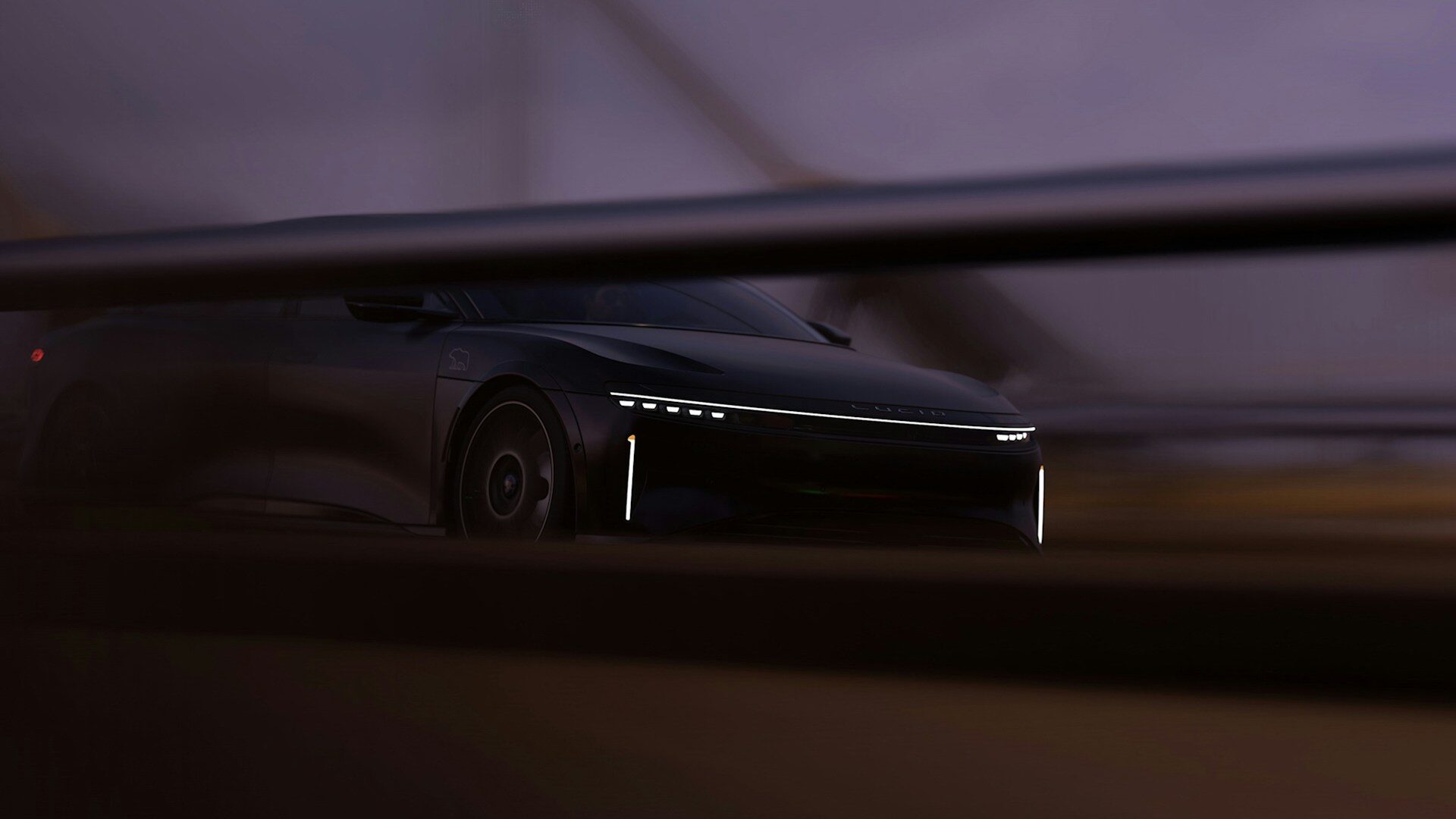
Then there’s the price cap, and this is where the program stops making sense on its own terms. MyFirstEV limits new vehicles to a $50,000 MSRP and used vehicles to $25,000, in order to keep the incentive aimed at ordinary, budget-conscious buyers. Except the rule doesn’t apply to any manufacturer headquartered in California that builds nothing but zero-emission vehicles. Today, that carve-out effectively describes Tesla and Lucid — and, once its rebate goes live, Rivian. A fully loaded Lucid Air Sapphire stickers well north of $200,000 and can still qualify. A Hyundai Ioniq 9 or Kia EV9, built by companies headquartered somewhere other than Sacramento’s backyard, cannot cross the $50,000 line no matter how the rest of their lineup is priced. It’s a strange concession from a regulator that threatened to suspend Tesla’s own sales license over marketing claims less than a year ago. This time, the same automaker gets to skip a rule everyone else has to follow.
If a rule with a built-in escape hatch sounds familiar, it should. California legalized 80,000-pound driverless trucks this month using a regulation originally written to fix typos, never intended to cover autonomous rigs. Carve-outs and technicalities keep turning up in this state’s biggest vehicle policies, and MyFirstEV’s California-headquartered exemption fits the pattern precisely.
There’s a mechanical wrinkle worth understanding too, because it explains why the rollout is staggered by brand instead of arriving all at once. MyFirstEV isn’t a tax credit you claim next April. CARB signs individual grant agreements with each automaker, and the manufacturer fronts the discount at the counter before getting reimbursed by the state. Building that plumbing — dealer point-of-sale systems, verification paperwork, compliance training — takes real time per brand, which is exactly why Tesla, Hyundai, and Lucid went first while Nissan and Volvo still don’t have a launch date. On the fraud side, the entire safeguard is a self-attestation form signed under penalty of perjury. There’s no national registry cross-checking whether this really is your first zero-emission vehicle. It’s an honor system wrapped around a quarter-billion dollars.
And here’s the timing problem nobody in the announcement wants to sit with: the crisis MyFirstEV claims to be answering was already easing before the program existed. Yes, Q1 2026 registrations cratered 40.2% from a year earlier. But by Q2 2026, ZEV market share had already climbed back from 13.7% to 15.9%, with volume up more than 23,000 vehicles from the first quarter. MyFirstEV didn’t launch until August 7 — deep into the third quarter. The rebate showed up after the worst of the bleeding had already slowed on its own, which raises a fair question about whether this program is triage or a well-timed victory lap.
None of this is new for California, either. The state’s previous EV incentive, the Clean Vehicle Rebate Project, offered up to $7,500 and closed to new applicants in November 2023 for the same reason MyFirstEV will eventually close: the money ran out, and nobody refilled it. MyFirstEV has a hard expiration built in too — every dollar must be spent by September 2031, one-time funding with no promise of a sequel. California has now run this exact play twice in three years: prime the pump with a rebate, let it drain, and figure out the next one later.
The real story in MyFirstEV isn’t the $3,500. It’s that Washington and Sacramento have each separately discovered that EV demand doesn’t hold its shape without a subsidy bolted onto it — and that whoever controls the subsidy also decides who benefits most from it. Right now, that’s two automakers headquartered in the state writing the check, exempted from the very price cap meant to keep the money aimed at first-time, budget-conscious buyers. The number everyone’s repeating is $3,500. The number that actually tells you who this program is for doesn’t have a dollar sign in front of it. It’s the zero California wrote into the MSRP cap for the companies that share its address.