
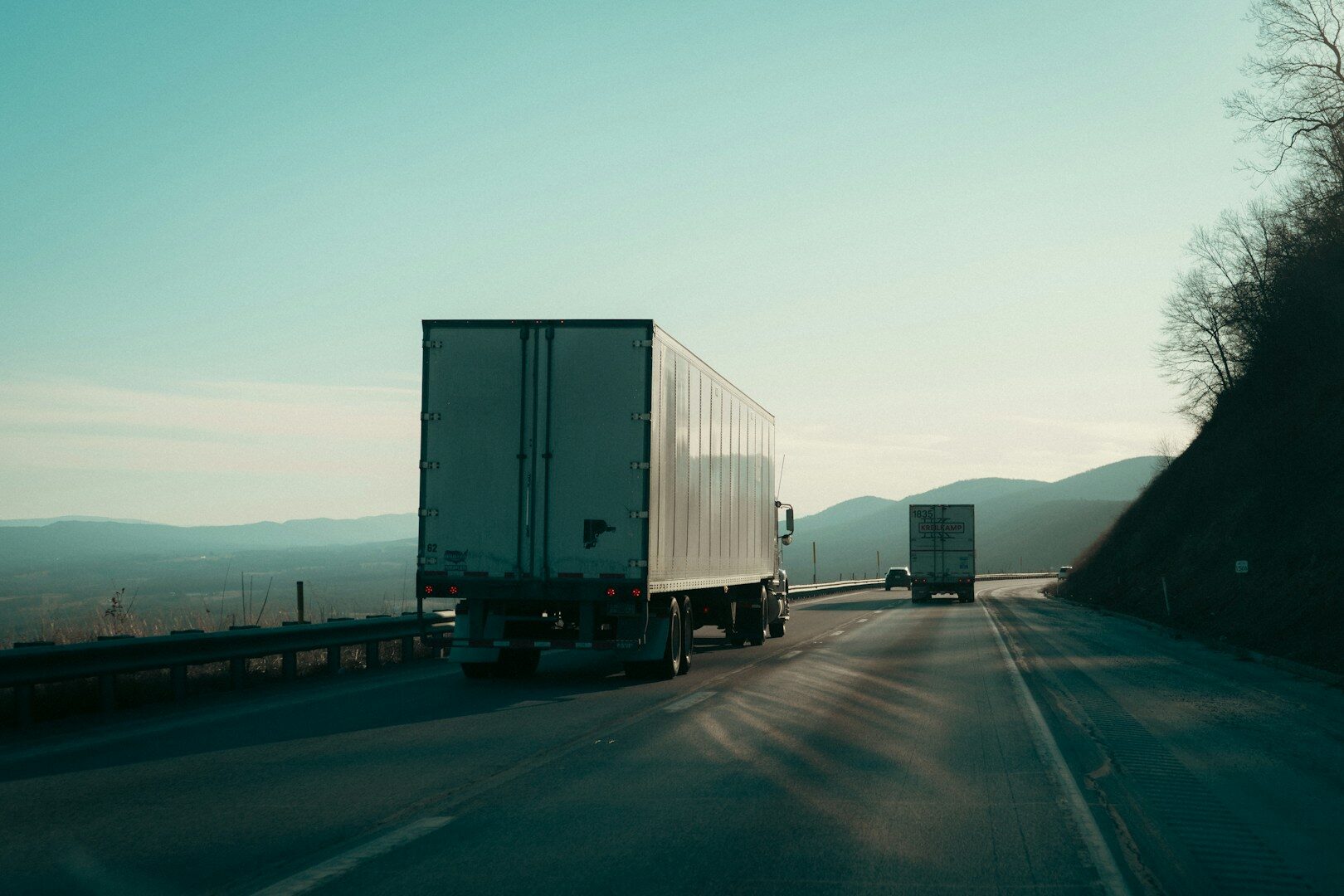
No self-driving semi has crashed on a California freeway. None has even been allowed to try. That is the detail missing from most of the coverage of Teamsters California’s new lawsuit against the state’s DMV, and it is the detail that actually matters.
On August 5, Teamsters California filed a writ of mandate in Alameda County Superior Court asking a judge to void the DMV’s April 2026 regulations, which opened California roads to autonomous commercial trucks weighing 10,001 pounds or more. The union says the agency broke state law by dodging a full economic study, then compounded the problem by claiming the new rule would not eliminate a single job.
Read past the safety headline and the real fight is over four words buried in California’s rulemaking process: no significant statewide impact. State law lets an agency skip a full economic impact study, the kind meant to catalog who wins, who loses, and how many paychecks disappear, if a regulation is expected to produce less than $50 million in costs or benefits during its first year. That threshold exists so the DMV doesn’t need to convene an economic task force every time it renumbers a form.
Teamsters California says the DMV ran an entire new category of vehicle through that same fast lane. According to the lawsuit, the agency priced the rule’s cost almost entirely as compliance paperwork, the expense of filing incident reports, while pricing its effect on California’s roughly 200,000 unionized big-rig drivers at zero.
That 10,001-pound line isn’t arbitrary, by the way. It’s the same weight class the federal government uses to define a commercial motor vehicle, the threshold above which a human has always needed a commercial driver’s license to be behind the wheel. The new rule is written so that once a company convinces the DMV its software is ready, that human requirement simply goes away, for box trucks and eighteen-wheelers alike.
Here’s the detail that separates this case from the usual robotaxi horror story: California doesn’t have a single company running a fully driverless heavy truck on public roads right now. DMV permits come in three tiers, testing with a human backup, driverless testing, and commercial deployment, and heavy trucks are still sitting in the testing lane. Teamsters isn’t suing over a crash. It’s suing over the on-ramp, before anyone gets to drive on it unsupervised.
The union’s safety argument borrows its evidence from a different, smaller vehicle. Teamsters California points to Waymo robotaxis freezing in traffic, including a mass freeway stall this month, plus a pattern of vehicles wandering into active fire scenes and an NHTSA investigation opened after one struck a child on her way to school. Scale that same software stack up to a sleeper-cab tractor pulling 80,000 pounds at 65 mph, the union argues, and a stalled robotaxi blocking an intersection becomes a jackknifed trailer blocking a freeway.
But the lawsuit’s timing says more than its safety section does. Governor Gavin Newsom vetoed two separate bills, in 2023 and again in 2024, that would have required a human safety operator in autonomous heavy trucks. Unable to win that fight in the Legislature, the DMV delivered the same outcome administratively, in the closing stretch of Newsom’s final term. Xavier Becerra, the Democrat considered the front-runner to succeed him, has already said he would reverse the rule if elected. Lock a regulation in now, on an economic-impact technicality, and it survives past the point where a new governor could simply order it undone.
That’s not a safety strategy. That’s a clock.
It’s easy to see why the DMV wanted this settled before anyone changes offices. Autonomous trucking is forecast to become an $18 billion industry by 2030, and Waymo, Volkswagen, and Zoox all filed comments during the rulemaking. California had been the last state standing that banned autonomous heavy trucks outright, a strange position for the state that invented the robotaxi industry, and one starting to look like a competitive liability. Bot Auto ran a fully driverless cross-state freight haul in Texas last October. No safety driver. No lawsuit waiting at the courthouse.
None of this stays confined to an Oakland courtroom. If autonomous trucking scales the way its backers project, the ripple reaches anyone who shares a lane with an eighteen-wheeler. Insurers will have to work out who’s liable when the “driver” is a software stack with no license to suspend. Truck stops and roadside repair networks built around drivers who need to sleep and eat will have to adapt to machines that don’t. And the CDL training pipeline that feeds new drivers into trucking could shrink years before the vehicles meant to replace them are actually cleared to drive alone.
This isn’t really a story about whether a computer can drive a semi truck. It’s a story about how quietly a state agency can decide that question doesn’t need a public hearing, and how a $50 million paperwork threshold ended up deciding an industry worth tens of billions.
The DMV will get its day in court, and so will the Teamsters. Watch the calendar as closely as the docket. If Alameda County doesn’t rule before a new governor takes office, the future of driverless trucking in California won’t be settled by a judge weighing safety data. It will be settled by whoever wins an election that, on paper, has nothing to do with trucks at all.