
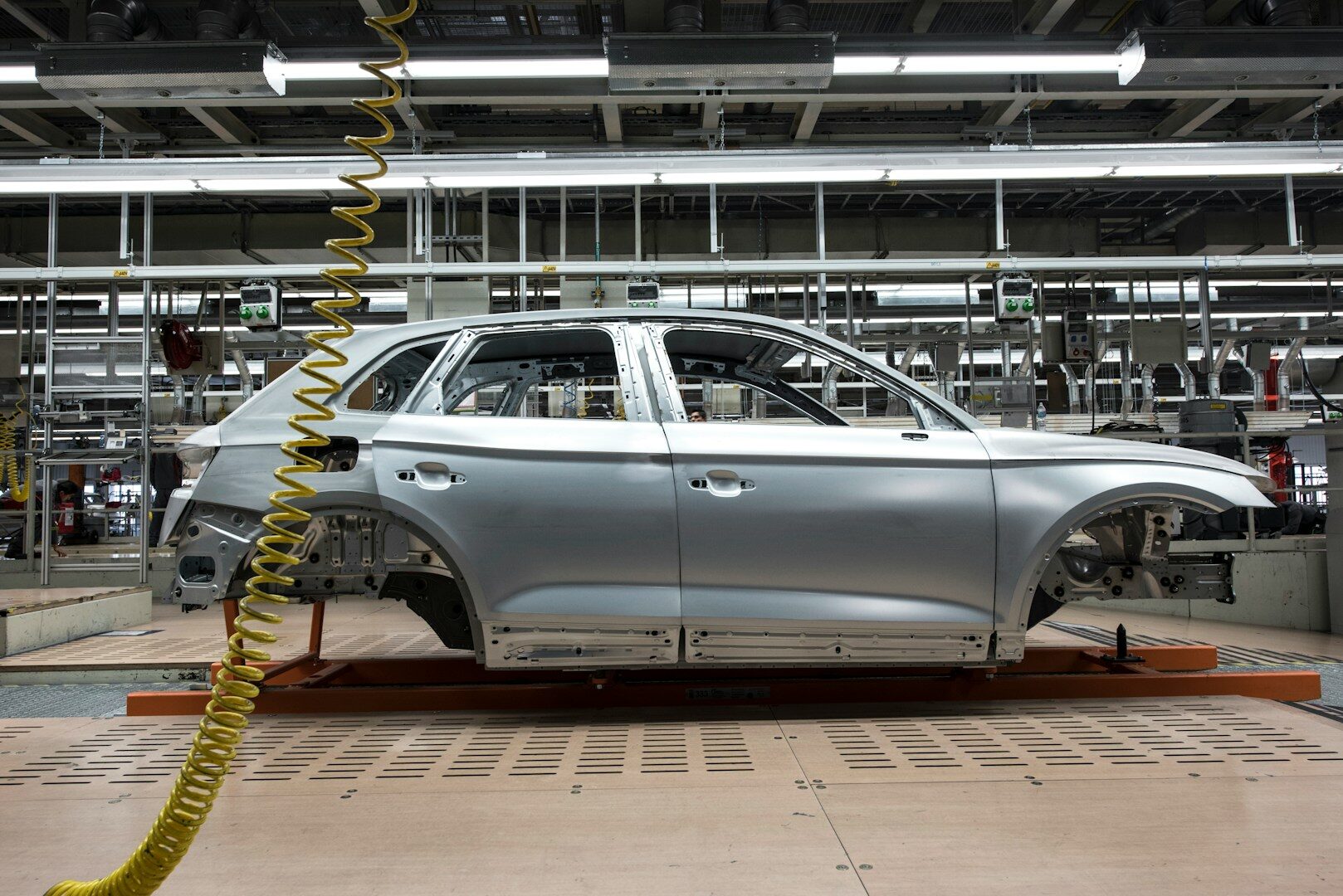
Honda’s factory in Ozu, Kumamoto, sits close enough to the epicenter of Japan’s July 28 earthquake that it took a direct hit. It’s already building again. Meanwhile, in Saitama, nearly 600 miles north, the Honda plant that builds the Civic, the Civic Type R, the ZR-V, and the new Prelude didn’t even shut down until a week after the ground stopped shaking. It’s still dark, and Honda won’t say it’s coming back before August 19.
That’s the wrong way around for an earthquake story to go.
Here’s what actually happened. A magnitude-6.8 quake hit Kumamoto Prefecture, on the southern island of Kyushu, on July 28. Four Japanese automakers felt it: Nissan, Toyota, Honda, and Mitsubishi. Nissan’s two Kyushu plants, which build the X-Trail and the Patrol for export markets, restarted within days. Toyota’s Kyushu engine and hybrid-component plants, which feed the Lexus UX, NX, RX, and ES lines, were back running by August 6. Mitsubishi’s Mizushima plant, its factory farthest from the epicenter, never really stopped. Honda’s own Kumamoto factory, which builds motorcycles and power equipment rather than cars but sits closer to the fault line than any other plant these companies operate, had partial output running again ahead of its own scheduled reopening date.
Then there’s the other Honda. The Yorii plant, part of Honda’s Saitama complex, sits closer to Tokyo than to the quake. It felt nothing on July 28. It kept building Civics for another week. Then, on August 5, Honda shut it down anyway, along with the Suzuka plant that builds the new Super-One electric city car. Honda hasn’t given a restart date for Saitama, Suzuka, or its Yokkaichi facility. The company says all three stay closed until at least August 19, three weeks after an earthquake that hit a region none of them are actually in.
That gap is the actual story. Not the quake. The lag.
Under Japan’s kanban system, an assembly plant keeps only hours of parts inventory on hand, not weeks. A Civic built in Saitama needs a wiring harness, a control module, a stamped bracket, whatever it might be, and that component very likely traces back through two or three supplier tiers to a factory somewhere on Kyushu. The assembly line in Saitama never felt a tremor. It just kept running on parts already in the building until that stockpile ran dry, roughly a week later. Then it stopped, for reasons that have nothing to do with anything physically breaking in Saitama at all.
That’s a different failure than the one Kyushu’s own plants dealt with. Nissan and Toyota’s Kyushu factories had actual structural inspections to clear and actual local roads and utilities to wait on. They also sit closest to their own supplier base, so once the immediate damage was checked, they had the shortest distance to travel to get parts flowing again. Honda’s Saitama and Suzuka plants have no local damage to fix and nothing to inspect. They’re simply waiting for components that have to travel the length of Japan to reach them, from a supplier base still catching up.
There’s a second detail buried in Toyota’s timeline worth knowing. Toyota’s Tahara plant, in Aichi Prefecture, stays closed on earthquake-related parts shortages until August 17. That closure runs directly into Toyota’s own previously scheduled Obon shutdown, the nationwide factory break most of Japan’s manufacturing sector takes every August around the Buddhist holiday honoring ancestors. Obon was going to close Tahara from August 8 through 17 regardless of any earthquake. So for over a week of Tahara’s downtime, there’s genuinely no way from the outside to tell how much of it is earthquake and how much is calendar. That’s convenient for a company that would rather not put a precise number on quake-related losses.
Zoom out further and the numbers get bigger than any one Civic or Patrol. The Japan Automobile Manufacturers Association’s chairman, Koji Sato, who also happens to run Toyota, put out a statement citing “the 5.5 million people involved in Japan’s automotive industry.” That’s not a rounding error of a workforce. It’s roughly one in twelve working people in Japan, tied to an industry built, generation after generation, on top of one of the most seismically active patches of ground on Earth. The equipment gets inspected. The suppliers get audited. The industry does not relocate.
None of this will show up on a window sticker. But it will show up on a dealer lot. Honda’s Super-One is supposed to be the company’s answer to affordable EVs, launching right as automakers everywhere scramble to lock down EV chip supply; a three-week hole in Suzuka’s production is exactly the kind of disruption that race can’t afford. Buyers waiting on a Civic Type R, already one of the hardest Hondas to get your hands on in the U.S., should expect allocations to tighten a little further this fall. None of it is catastrophic. All of it is a preview of the same story Toyota and Nissan’s Kyushu plants told less than two weeks ago, just running on a different clock.
An earthquake breaks concrete in thirty seconds. It takes the supply chain three weeks to find out what it actually broke.