
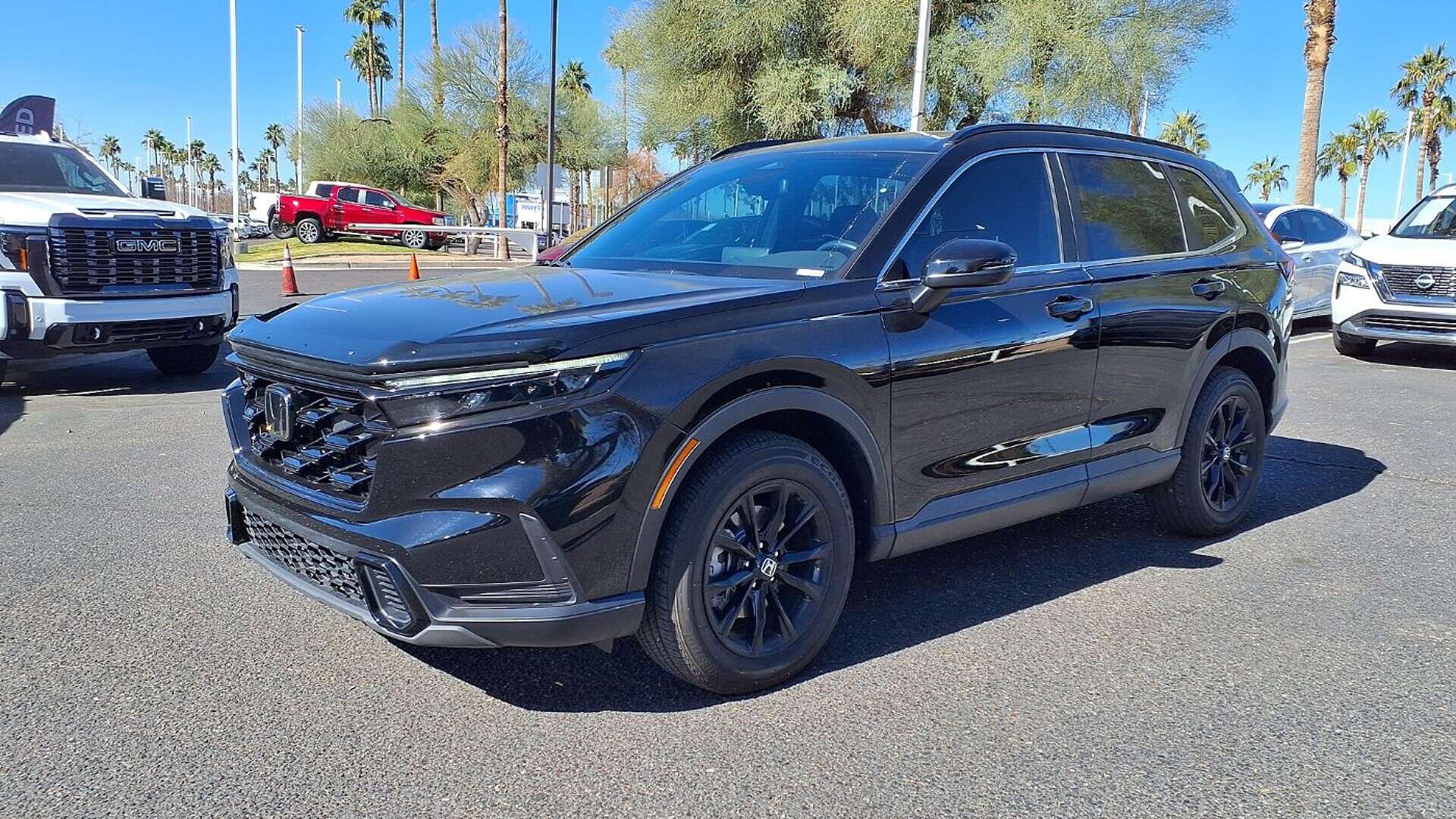
Honda’s redesigned CR-V hybrid will start mass production in the United States in May or later, months behind plan, Japan’s Nikkei business daily reported on Oct. 7, Tokyo time. Nikkei said the slip covers Honda’s next-generation hybrid vehicles in North America, in both the U.S. and Canada. That puts a delay on the best-selling vehicle Honda has, at the moment Honda’s post-EV business plan needs it to arrive cheaper to build than the one it replaces.
Honda had not posted a statement or announcement about the timing on its U.S. or global newsrooms as of Wednesday.
What was reported, and what Honda has put on paper
Nikkei’s story, filed from New York by Azusa Kawakami, said Honda will push back mass production of its next-generation hybrids in North America by several months. A photo caption on the story, showing a CR-V at Honda’s Indiana plant, said U.S. production of the SUV’s hybrid version is expected to slip to May or later.
Those hybrids are the centerpiece of the plan Honda laid out at its May 14, 2026 business briefing, where it scaled back EV spending and moved money and engineers toward hybrids. Honda said that starting in 2027 it would begin launching next-generation hybrid models built on both an all-new hybrid system and an all-new platform, with 15 such models globally by the end of the fiscal year ending March 31, 2030, primarily in North America. It set two engineering targets for that system: a cost reduction of more than 30% compared with the hybrid system it introduced in 2023, and a fuel-economy gain of more than 10%.
The same briefing committed the North American factories to the shift. Honda said it would reassign all excess capacity at its Ohio auto plants to gasoline and hybrid vehicles, make every auto plant in North America capable of building hybrids, and convert part of the EV battery lines at L-H Battery Company, its joint venture with LG Energy Solution, to hybrid batteries. The Auto Wire covered the pressure that put on Ohio in our look at Honda’s flexible Ohio line running out of room.
Why the CR-V carries Honda’s cost target
A 30% cost cut on a hybrid system does not arrive as a running change. Honda describes the savings as coming from an all-new hybrid system paired with a next-generation platform and a newly developed electric all-wheel-drive unit. Hardware on that scale goes into production only when a new model launches, because the body, mounts, wiring and crash structure have to be engineered around it. Until the next CR-V hybrid starts rolling, every CR-V hybrid Honda builds carries the current system, the one Honda says its successor will undercut by more than 30%.
Volume is what makes that expensive. Honda’s Oct. 1 sales release put third-quarter CR-V sales at a record 110,730, up 16.6%, with hybrids at 53% of the mix and 59,668 hybrid units in the quarter. That is roughly 20,000 CR-V hybrids a month in the U.S. alone. Each month the launch slides is another month of that volume built at the old cost, which feeds straight into the cost work Honda has already been pressing on suppliers, as The Auto Wire reported on Honda’s supplier cost-cutting push and in our explainer on the cost overhaul.
Model changeovers also have a cost that never appears on a press release. When a plant switches generations, it runs pilot builds, retools the body shop and ramps up line speed over weeks, and output dips while it does. Moving the start date moves that dip, and suppliers keep building current-generation parts longer than scheduled.
A 17-day CR-V supply leaves little room
The current CR-V is not a model Honda is trying to clear out. The same sales release said CR-V hit those records while overcoming a supply of 17 days, and American Honda’s vice president of auto sales, Lance Woelfer, said in it, “While we are experiencing some inventory issues due to sustained strong demand, I’m proud of our production team in North America along with our dealers for continuing to focus on meeting the needs of our customers.”
Seventeen days of supply means a dealer selling 30 CR-Vs a month has about 17 on the ground. That suits Honda’s margins and frustrates shoppers who want a specific trim and color. A later changeover keeps the current CR-V’s plants building it at full tilt for longer, which helps supply in the near term. The risk sits in spring, when plants begin switching over and output dips during the ramp while demand for the outgoing model is still strong.
Honda’s 2026 North American manufacturing factbook, dated June 17, lists three plants building the CR-V and CR-V hybrid: the East Liberty Auto Plant in Ohio, rated at 240,000 vehicles a year and also home to the Acura MDX; Plant 2 in Alliston, Ontario; and the Indiana Auto Plant in Greensburg.
Greensburg’s capacity was already spoken for on paper
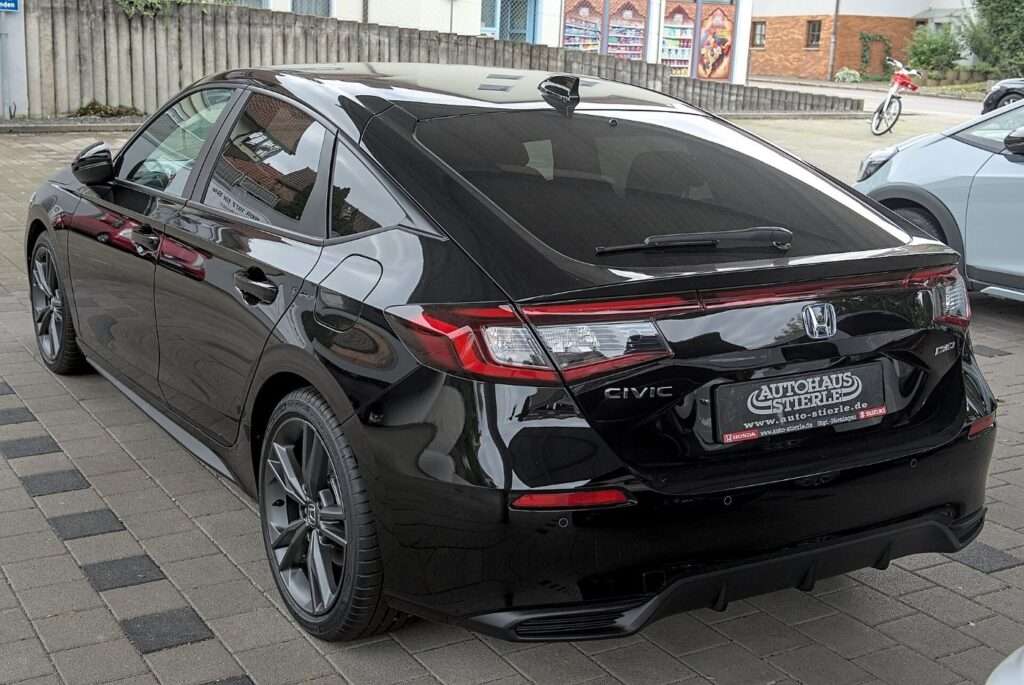
Greensburg builds just two nameplates. Honda’s factbook lists it at 250,000 vehicles a year and 2,600 employees, building the Civic Hatchback, the Civic Hatchback hybrid, the CR-V and the CR-V hybrid. It is the only Honda plant in North America the factbook lists as building the Civic hatchback; the Civic sedan, Si and sedan hybrid come from Alliston’s Plant 1. Honda first said it would build Civic hybrids in Indiana in an October 2023 announcement.
The next Civic was supposed to make that plant busier still. In March 2025, Reuters reported that Honda had decided to build its next-generation Civic hybrid in Indiana starting in May 2028 instead of in Guanajuato, Mexico, starting in November 2027, at about 210,000 units a year, as Indianapolis station WISH-TV relayed at the time. Honda did not confirm the plan; its spokesperson told Reuters only that the company would keep weighing demand and the business environment in production decisions.
By The Auto Wire’s math, 210,000 Civics in a plant rated for 250,000 would leave about 40,000 slots a year for everything else Greensburg builds, CR-V included. The 2025 plan therefore always implied moving a large share of Indiana’s CR-V output somewhere else, adding capacity in Greensburg, or both. Honda has not said publicly whether the next Civic is still headed to Indiana, and reports this week that the company has dropped that plan could not be confirmed against any Honda document as of Wednesday. If the Civic is not coming, Greensburg’s future rests even more heavily on a CR-V whose new generation is now running late.
Tariffs are why the address matters. Under the executive order implementing the U.S.-Japan agreement, signed Sept. 4, 2025, Japanese passenger vehicles carry a combined duty of 15%. A Civic built in Indiana carries none of that, and one built outside the U.S. is a tariff question Honda has to answer model by model. That calculation runs through Honda’s recent U.S. plant spending, including its $472 million Alabama expansion.
What CR-V shoppers and Greensburg should watch before May
Honda’s next quarterly earnings report is the first place the company could put a date on the next CR-V or address Greensburg’s model plan in its own words. Until it does, the May timing remains Nikkei’s reporting, not a Honda commitment.
Shoppers can track CR-V days’ supply in Honda’s monthly sales releases. If it stays near 17 days through winter, expect little room to negotiate on a current CR-V hybrid and longer waits for specific trims. Anyone who wants the new hybrid system’s promised 10%-plus fuel-economy gain is likely looking at summer 2027 before dealers have them in volume, if production starts in May. The current CR-V hybrid’s system has been on the road since the 2023 model year, so owners and independent shops already know its parts and repair procedures; the next one will start with none of that track record.
For Greensburg’s 2,600 workers, the date to watch is when Honda names the plant’s next-generation products. Its June factbook lists two nameplates there, and the newer of them is the vehicle whose replacement just slipped.
If you need a CR-V hybrid in the next six months, are you buying the proven current model now, or waiting for the cheaper-to-build redesign and whatever teething problems come with a first-year hybrid system?