
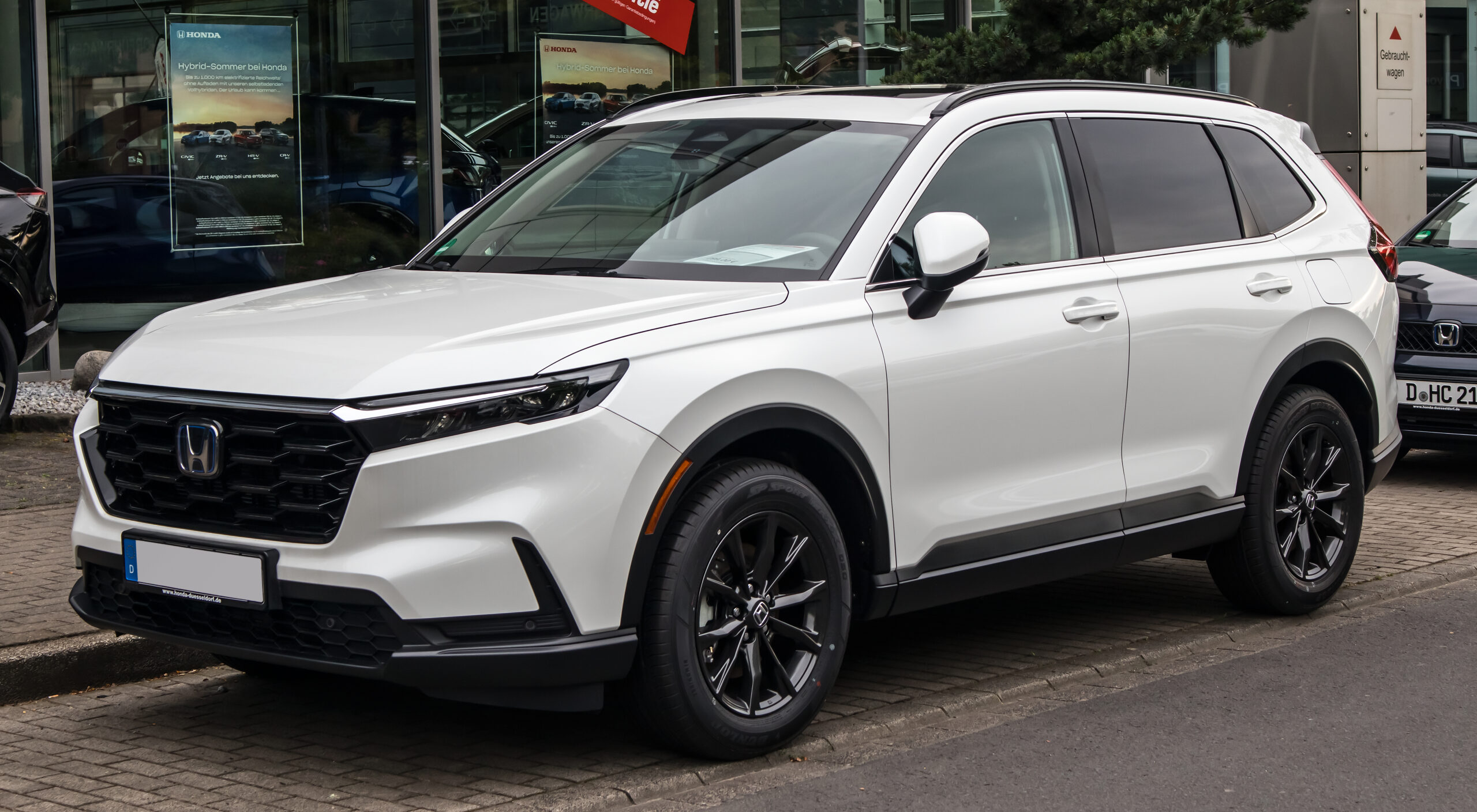
This week’s reports that Honda may pour concrete in Ohio again carry an expensive lesson, and it has little to do with hybrids. A factory can be as flexible as you like and still be full.
Japan’s Nikkei business daily reported that Honda is in the late stages of preparing a new hybrid vehicle plant in Ohio, at a cost somewhere between 300 billion and 400 billion yen, with production starting around 2030. Honda’s U.S. spokesman, speaking to Reuters, said “no decisions have been made at this stage” regarding a new U.S. plant.
Both can be true. Saying no decision has been made isn’t the same as saying there’s no need, and the need shows up in Honda’s investor materials, its monthly sales releases and a pile of federal notices.
The billion-dollar line built to avoid exactly this
Start with what Honda already built. When the company opened the books on its Ohio EV Hub in early 2025, the retooling of the Marysville Auto Plant, the East Liberty Auto Plant and the Anna Engine Plant had passed $1 billion, on top of the $3.5 billion committed with LG Energy Solution for the battery joint venture in Fayette County.
That money didn’t buy electrification so much as flexibility. The lines don’t much care what powers the car. Marysville collapsed two assembly lines into one and carved out a dedicated zone where battery packs are dropped into EVs — a zone that gasoline and hybrid cars roll straight through without stopping. East Liberty built a mezzanine so EVs can step off the main line for pack installation and then rejoin it. Drop lifts, conveyors and body carriers were reinforced to carry heavier electric bodies. And Honda expanded its hybrid battery assembly area and moved it closer to the installation point, in its own description, to keep up with record hybrid demand.
Anna went further. Six 6,000-ton high-pressure die-cast machines, each roughly 31 feet tall, sit on pilings driven 80 feet below the plant floor because the building could not otherwise hold them steady. Anna joins the two halves of an aluminum battery case with friction stir welding, and inspects them with photogrammetry rigs carrying 90 and 120 cameras — a technique borrowed from aerospace.
It’s the most powertrain-agnostic complex Honda has run, built so the company wouldn’t have to bet a building on one propulsion system. On that point it worked. Honda guessed the mix right: buyers wanted hybrids.
It read the volume wrong.
460,000 cars. 1.18 million engines.
By Honda’s own accounting, its five Ohio plants — roughly 12,000 employees and $13 billion of cumulative capital investment — can build about 460,000 automobiles a year. Those same plants can build 1.18 million automobile engines and more than a million transmissions and two-motor hybrid systems.
For Honda, Ohio is more of a powertrain state than a car state. It supplies the rest of the company.
Honda lumps “transmissions and two-motor hybrid systems” into one capacity figure because in an e:HEV there is no conventional gearbox to speak of. The hybrid drive unit is the transmission. So every additional hybrid Honda builds anywhere in North America — including the engine capacity it just paid to expand in Alabama — pulls on the same Ohio powertrain plants. Adding hybrid assembly slots without adding hybrid-unit capacity would simply move the bottleneck up the road to Anna and Russells Point.
Demand keeps climbing. American Honda crossed a million sales in eight months this year, a month earlier than in 2025. Honda-brand hybrid sales set an August record at 36,776 units — roughly three of every ten Honda-brand vehicles sold that month. Honda-brand car sales are up 16.3 percent for the year while its light trucks are down 2 percent, which is an inversion of the last decade of American car buying and a direct consequence of hybrid Civics and Accords being the cheapest efficient cars on a dealer lot.
A mixed-model line can change what it builds. It can’t change how many cars fit in the building.
The tariff arithmetic that makes concrete look cheap
Tariffs are the second reason Honda may be reaching for a shovel.
Proclamation 10908, issued in March 2025, imposed a 25 percent Section 232 tariff on imported automobiles and certain parts. It also created an escape hatch: for vehicles that qualify under the USMCA, an importer may file documentation with the Commerce Department identifying the U.S. content in each model, and the duty then applies only to the non-U.S. portion of the car.
That escape hatch isn’t permanent. A Commerce notice published in August moved those U.S.-content determinations onto an annual cycle. Paperwork was due by September 30 of this year to cover vehicles imported from December 1, 2026 through November 30, 2027, with the next filing due by September 1, 2027. Domestic content now works like a subscription with a renewal date, and letting it lapse costs 25 percent of the whole car instead of 25 percent of a sliver.
That matters more for Honda than for most. In its 2026 Digital FactBook, Honda states that nearly 99 percent of the Honda and Acura vehicles sold in the U.S. in 2025 were built in North America, across 18 major plants and more than 750 regional suppliers.
So the lever every importer reached for in 2025 — shift a model from Japan or Mexico to an American plant — is essentially exhausted at Honda. There is almost nothing left to move. The only remaining way to cut per-vehicle tariff exposure is to raise U.S. content inside vehicles already built here: engines, hybrid drive units, transmissions, battery cases. That’s the shopping list a new Ohio complex would deliver, and it is the same logic driving Hyundai’s move into American steelmaking.
The complication is that all of it rests on USMCA surviving in recognizable form. USTR opened public consultations ahead of the agreement’s joint review, which was set for July 1, 2026. Honda Executive Vice President Noriya Kaihara has said publicly that the company is near capacity in North America and needs another factory, but that its direction could change without a durable trade deal — a point we unpacked when Honda first floated skipping its eighth North American plant.
The rule change that made hybrids the safe bet
Then there’s fuel economy regulation.
NHTSA’s proposed reset of the CAFE program covers model years 2022 through 2031 and projects an industry fleetwide average of roughly 34.5 mpg by MY2031. That is a considerably gentler target than the one automakers were planning against. The bigger change for factory planning is elsewhere in the proposal: NHTSA proposes to eliminate inter-manufacturer credit trading, and to reclassify which vehicles count as cars and which count as trucks, beginning in MY2028.
Kill credit trading and you change the nature of compliance. For fifteen years, falling short on fuel economy was partly a purchasing problem — you could buy credits from a company with a cleaner fleet. Take that away and compliance becomes a manufacturing problem again. You cannot buy efficiency. You have to build it, in a factory, on a line, at volume.
Honda is well set up for that, and EPA data shows why. In the agency’s Automotive Trends Report, Honda posted the second-highest real-world fuel economy of any large manufacturer in model year 2024 at 31.0 mpg, behind only all-electric Tesla and ahead of Hyundai and Kia. Honda got there with almost no meaningful EV volume — a fleet of small, light, mostly hybridized cars and crossovers. Its only real EV seller was a Honda-badged Chevrolet, and it has already been discontinued.
So a hybrid plant would also be compliance insurance under rules that reward building efficiency instead of buying credits.
Honda published this plan. It just never published the address.
Honda laid most of this out in its 2025 business briefing. In it, Honda said it would launch 13 next-generation hybrids globally across four years starting in 2027, and aim for 2.2 million hybrid sales in 2030 out of total volume above 3.6 million. It cut planned electrification spending by 3 trillion yen, to 7 trillion. It postponed the Canadian EV value chain. And it stated plainly that it was changing the timing for building dedicated EV production plants.
Compare that with the Nikkei report. Honda deferred its dedicated EV factories. The dedicated factory it now reportedly needs is for hybrids.
The briefing also set hard cost targets: the next-generation hybrid system is supposed to cost more than 50 percent less than the 2018-era system and more than 30 percent less than the 2023 one, while improving fuel economy by more than 10 percent. Honda is explicit that those reductions depend on higher sales volume, commonized parts and better production efficiency. Translation: the business case needs scale, and scale needs floor space.
Enthusiasts should note one more line: Honda is developing a hybrid system for large vehicles with real towing capability, targeted at products in the latter half of this decade. Two-motor hybrids are coming to the Pilot-and-Passport end of the showroom, not just the Civic end.
What it means if you are actually buying one
Practically, a 2030 production start fixes nothing about the next four model years. The hybrid wave Honda described for 2027 onward has to be absorbed by the plants that exist today, which means continued tight allocation and thin discounting on hybrid CR-Vs and Accords. If you have been waiting for hybrid pricing to soften, a new plant announcement is not the news you were hoping for. It is confirmation that the constraint is real and the fix is years out.
Longer term, spreading two-motor hybrid systems across heavier vehicles changes what independent shops and insurers deal with. High-voltage service procedures move from a niche specialty into mainstream three-row SUV territory, and the structural techniques Honda is now using on electrified platforms — aluminum megacastings, friction stir welds, bonded joints — are exactly the kind of construction that has been reshaping collision economics for a decade.
Back to Marysville
Honda began building cars in Marysville in 1982, part of the wave of Japanese transplant factories that currency policy and trade friction pushed onto American soil. Forty-four years later, trade friction and currency are again dictating where Honda pours concrete, and again the answer is central Ohio.
The bigger lesson is about flexibility. The entire industry spent the last decade buying flexible, mixed-model assembly as insurance against not knowing which powertrain would win. That insurance paid out. Honda can build a gas car, a hybrid and an EV down the same line in Ohio, and that’s impressive engineering.
But the hard question turned out to be how many cars, not which powertrain. Flexibility tells you what to build. It doesn’t tell you where to put it.
Honda has not confirmed a new U.S. plant, and the investment figures reported by Nikkei remain unconfirmed by the company. The Auto Wire will update this story if Honda announces a decision.
If hybrid Hondas stay tight for another four years, would you wait for one or take a different brand’s hybrid now?