
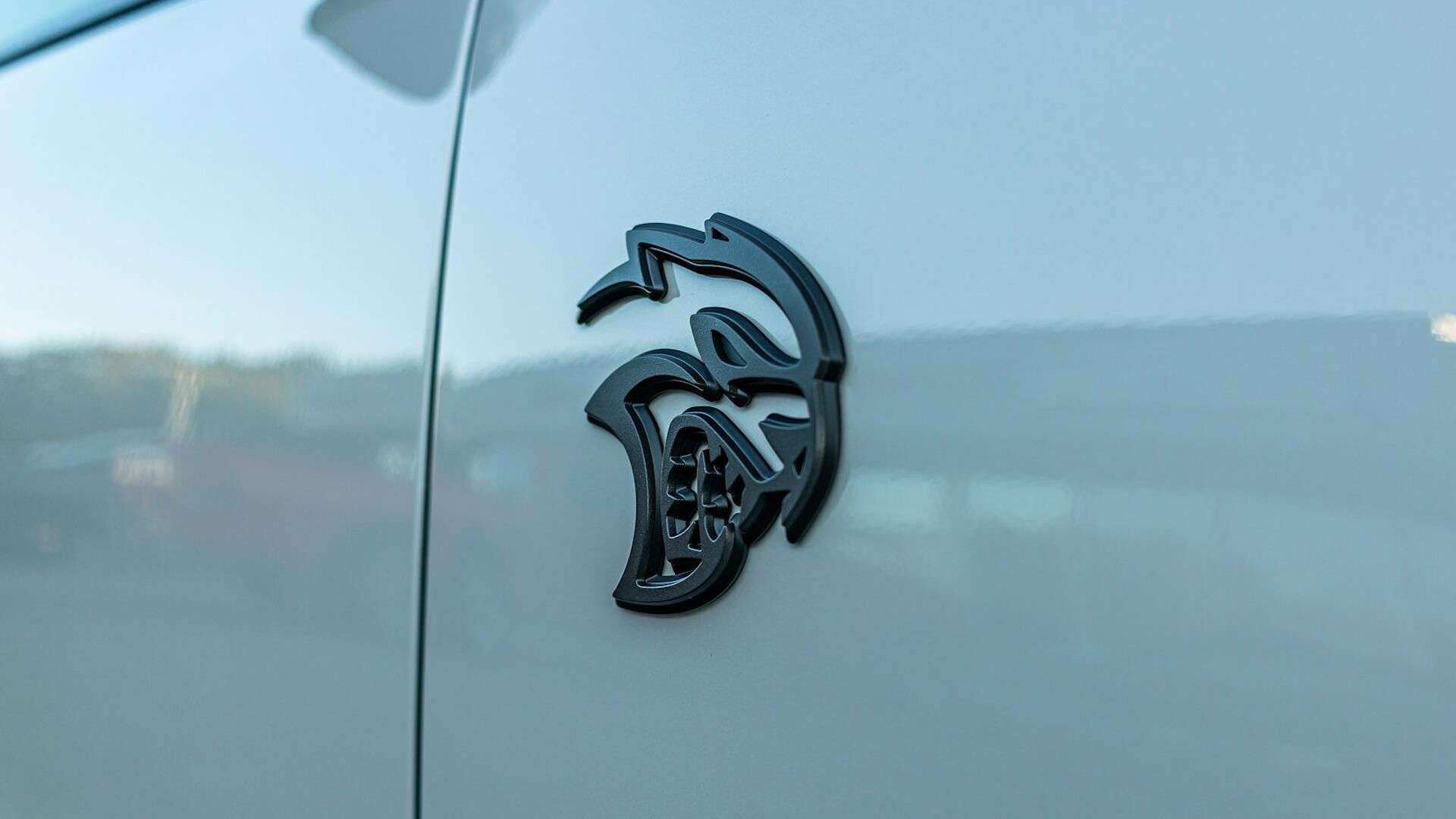
Dodge fans have been treating the supercharged Charger like a cryptid for two years: plenty of blurry sightings, no hard evidence. Here’s the thing, though. Stellantis has quietly published most of the evidence itself. It just put it in an investor deck instead of a press release.
What’s actually on the record
At its May 21 Investor Day, Stellantis laid out a five-year North American plan. One slide lists every nameplate in the American-brand showroom and flags the ones with an “SRT variant planned.” The Investor Day deck flags the Charger two-door and four-door. The same deck’s Dodge page promises the “most powerful muscle car.”
Note what that slide doesn’t say. It doesn’t say “Hellcat,” and it doesn’t give a date. SRT is a performance badge, not an engine code, and Stellantis has made a point of saying so. No official Charger document I could find spells out supercharged V8. Treat the engine as the overwhelmingly likely answer, not a confirmed one.
Related Articles
- Mercedes S-Class Brake Hose Recall Grows to 30,078 Cars, Maybach and AMG Included
- One Burning EV at a Fort Worth Cadillac Dealer Spread to at Least Seven More, Then Kept Firefighters There for 17 Hours, 33 Minutes
The surrounding plan makes the likely answer very likely. In the North America transcript, CEO Antonio Filosa promised “the return of the legendary HEMI V8.” Tim Kuniskis said Dodge will reclaim the title of best-selling muscle car by the end of the plan.
Follow the margin, not the horsepower
The real tell is the SRT business case. Kuniskis told investors SRT models earn two to three times the net margin of their donor vehicles. Stellantis wants to grow SRT from roughly 3,000 units in 2025 to about 50,000 by 2030, with eight new SRT models over the plan period.
His framing was blunt: “It’s not ego. It’s not for fun. It’s not a hobby.”
Do the math. Fifty thousand SRT units spread across Dodge, Jeep, and Ram leaves room for a Charger SRT to sell in the low five figures without cannibalizing anything. Dodge’s overall target is modest, about 135,000 units in 2030, up from 126,000 last year. A high-margin halo car is how you make a 10% volume bump look like a lot more on the income statement.
The engine is already back in production
The supercharged 6.2-liter isn’t a museum piece. The 2027 Ram 1500 TRX started shipping this summer from Sterling Heights, Michigan, rated at 777 horsepower. Stellantis’ own spec sheet lists 922 Nm, or 680 lb-ft. Dodge also sells the 710-horsepower Durango SRT Hellcat in all 50 states.
That matters for timing. When an engine family is already certified, tooled, and flowing to two vehicle lines, adding a third is mostly packaging and calibration work, not a clean-sheet program.
The engineering headaches
Packaging still isn’t trivial. The current Charger rides on the STLA Large architecture, which was designed around batteries and the twin-turbo Hurricane inline-six. That engine makes 550 horsepower in Scat Pack form. A supercharged V8 brings its own set of problems:
- Packaging: The blower and intercooler bricks sit on top of the engine, which affects hood height and pedestrian-impact clearance.
- Cooling: The intercooler circuits need dedicated low-temperature radiators up front, competing for space with everything else in the nose.
- Weight: Iron-block mass over the front axle changes the car’s balance.
- Drivetrain: Every component downstream has to survive roughly 680 lb-ft.
Stellantis has done this before with the Durango and TRX, but a low-slung coupe is less forgiving than an SUV or a lifted pickup.
Related Articles
- Toyota’s AU$750M DPF Payout: What HiLux, Prado and Fortuner Owners Get
- The 2025 Traverse Brake Fix Is Free Until 36,000 Miles. A Federal Probe Could Change That.
There’s also a geography wrinkle. Every Charger is built at Windsor Assembly in Ontario. Meanwhile, Filosa told investors Stellantis will boost U.S. production partly to “help offset tariff pressures.” A Canadian-built car with a high-dollar powertrain sits squarely in the crosshairs of that problem, and it could shape pricing more than horsepower does.
What buyers should do now
If you’re shopping for a Charger Scat Pack today, the Hellcat question is a real factor, but Stellantis hasn’t announced a date. Dodge’s Roadkill Nights reveal in August was billed as its most powerful six-cylinder Charger yet, not a V8. That tells you Dodge still has six-cylinder inventory to move and isn’t in a hurry to undercut it.
Some practical advice:
- Don’t wait on a rumor. If you need a car now, buy the Scat Pack on its merits. If the Hellcat is the only car you’ll accept, nothing official stops you from waiting, but no official date is coming soon either.
- Get an insurance quote before you sign. Supercharged Mopars have historically been expensive to insure and attractive to thieves, and a new one will be both.
- Expect SRT pricing, not Scat Pack pricing. That margin multiple Kuniskis pitched to investors comes out of somebody’s wallet. It will be yours.