
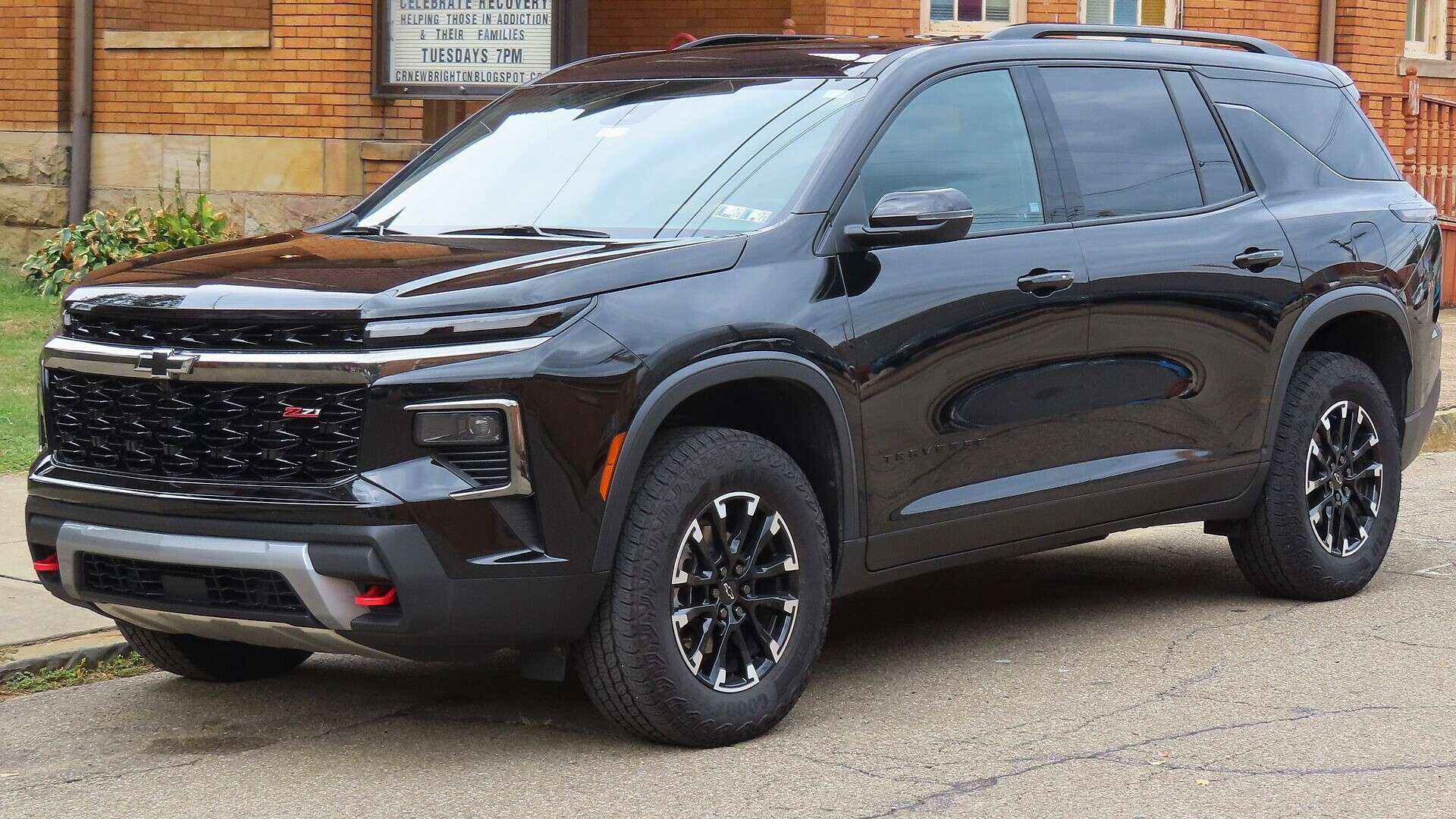
Chelsey Thompson had owned her 2025 Chevrolet Traverse for 32 days when, according to the federal complaint she filed with another Traverse owner, the brake pedal lost its resistance and she drove to her Rochester-area Chevrolet dealer pumping it. The odometer read about 1,237 miles. The dealer replaced the master cylinder, the work was covered under GM’s warranty, and the SUV was out of service for 31 days.
That free repair is now the hinge of a legal fight in Philadelphia, where two proposed class actions accuse General Motors of selling five 2025 models with brake hardware that can fail partially or completely: the Chevrolet Traverse, GMC Acadia, Buick Enclave, Chevrolet Colorado and GMC Canyon. GM has answered in court by trying to move the claims to arbitration and to have them dismissed. Whatever the judge decides, owners’ real leverage is in Washington, not Philadelphia. In August, NHTSA upgraded its investigation of GM’s eBoost brake module to an engineering analysis covering an estimated 1,164,820 vehicles, and all five of those models are on its list. A warranty repair is free until the warranty runs out. A recall remedy, under federal law, is free for 15 years.
Two lawsuits, one judge, the same five models
The first case, Barron et al. v. General Motors LLC, No. 2:25-cv-05696, was filed in the U.S. District Court for the Eastern District of Pennsylvania on Oct. 2, 2025. Eric Barron of Crum Lynne, Pennsylvania, bought his Traverse new on April 9, 2025. The complaint says his brakes failed on July 1, under three months later, at about 3,895 miles. The dealer replaced the master cylinder, the reservoir kit and a retainer, and the vehicle was out of service for 29 days. Thompson, of Farmington, New York, bought hers the next day. The original complaint pleads fraudulent concealment, unjust enrichment, Pennsylvania lemon law, breach of warranty and Pennsylvania consumer-protection claims, plus New York claims for Thompson. A Missouri owner, Simon Moeller, joined when the plaintiffs amended the complaint on Jan. 21, 2026.
The second case landed on Oct. 6, 2026. Fehrmann et al. v. General Motors LLC, No. 2:26-cv-07669, names six plaintiffs: Stephanie Fehrmann, Jeff Mellinger, Rachel Solak, Alexie Wise, Stephen Worthington and Marlene Jennis. Both cases are handled by the same plaintiffs’ lawyer, Sergei Lemberg, and both are assigned to the same judge, U.S. District Judge John F. Murphy. According to a summary of the new complaint published by the legal-news site Top Class Actions, it covers the same five 2025 models and seeks classes in Illinois, Kentucky, Michigan, Ohio and Texas.
There’s a reason the plaintiffs keep adding owners from new states. Lemon laws and consumer-protection statutes are state statutes, and each state class needs a named plaintiff who lives there and bought there. Barron’s case started with a Pennsylvania class and a New York class because those are the states its two original plaintiffs live in. Each new resident plaintiff opens another state’s statute. Lemberg has now named nine owners in two cases.
What GM told its dealers in December 2024
Both complaints lean on a GM document that is public on NHTSA’s website. On Dec. 9, 2024, GM sent dealers Service Update N242482170, titled Brake Master Cylinder. It covers two vehicles only, the 2024 Chevrolet Traverse and the 2025 Buick Enclave. GM’s description of the condition is that some vehicles may be missing the “internal cartridge seal in the eBoost Module.” The fix is a new brake master cylinder, billed to warranty at 2.7 hours of labor. Dealers were told to hold any affected vehicle in inventory, including certified pre-owned and courtesy cars, until it was repaired.
GM revised the update in August 2025 to add a brake master cylinder reservoir kit to the parts list. The vehicle list did not change. The 2025 Traverse, 2025 Acadia, 2025 Colorado and 2025 Canyon are not on it, and the complaint argues that GM never sent dealers a bulletin about those models and never issued a safety recall.
NHTSA’s complaint database points the same direction. I searched the agency’s owner complaints on Oct. 14 for any that mention the master cylinder. For the 2025 Traverse, 55 of 182 complaints do. For the 2024 Traverse, the model year GM’s service update names, nine do. Across the five 2025 models in the lawsuits, the count is 88. Those are unverified owner reports, and a keyword search is a blunt instrument, but the earliest 2025 Traverse match is dated May 13, 2025, and they were still arriving this year. One, filed Jan. 6, 2026, describes a 2025 Traverse at about 30 mph whose brake pedal turned abnormally hard and would not stop the SUV before it hit the car ahead. The air bags deployed.
The part on the dealer’s bench is more than a master cylinder
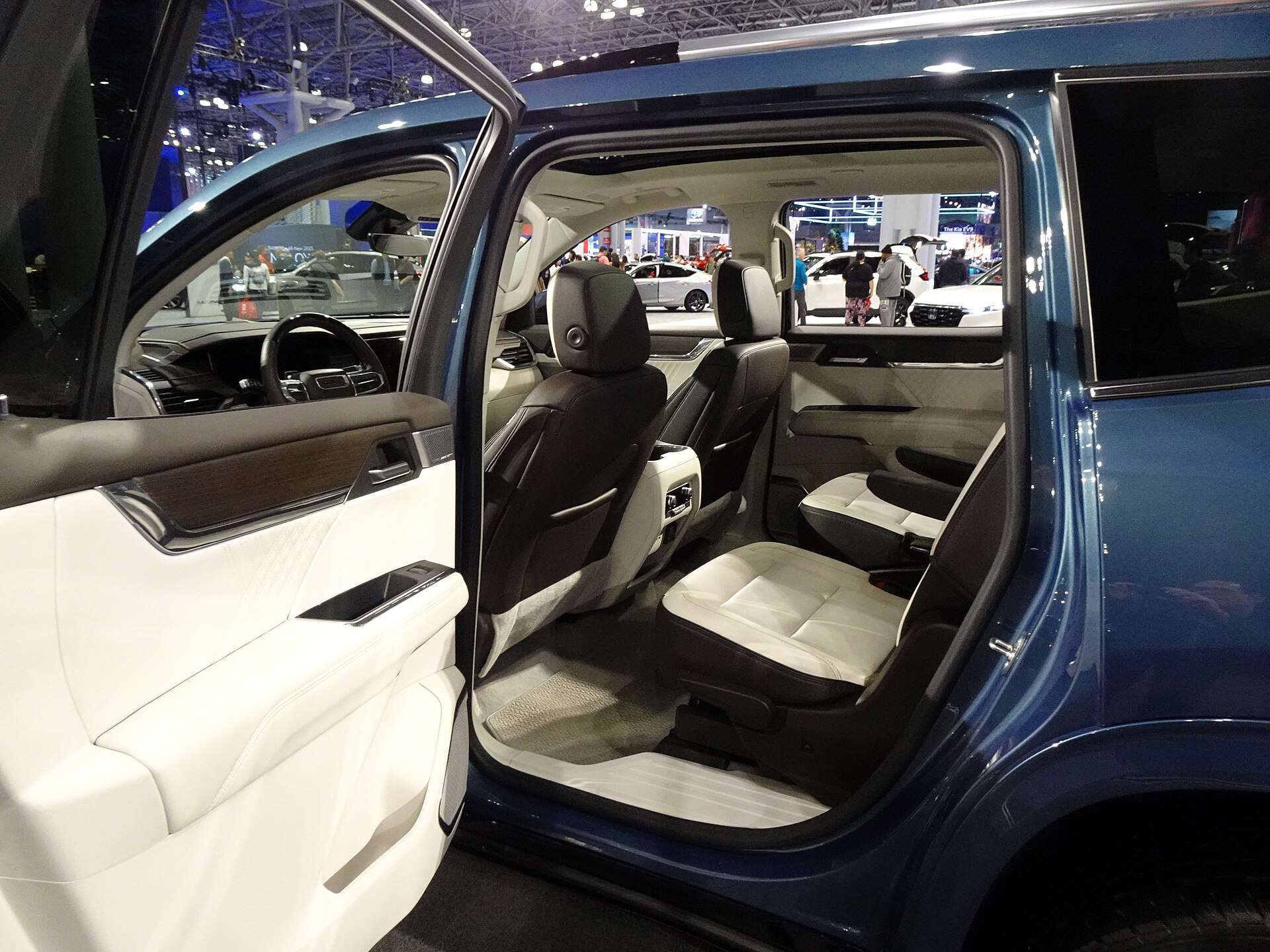
On an older car, a master cylinder is a fairly simple cast part bolted to a vacuum booster, and a shop can swap one in an afternoon. GM’s parts list tells a different story. Part 85779207 is listed in the August 2025 revision as “Cylinder ASM-BRK MAS (W/P/B Boos&Elek Brk Boos Cont Mdl),” which decodes to a brake master cylinder assembly with the power brake booster and the electronic brake booster control module built in. That is eBoost: an electric motor and its control electronics doing the job a vacuum diaphragm used to do, packaged with the hydraulics as one unit.
Owners describe two failure feels, and they point to different halves of that unit. A pedal that sinks toward the floor suggests fluid getting past seals inside the hydraulic section, which is what the lawsuits allege. A pedal that turns rock-hard suggests the assist has quit and the driver is pushing the hydraulics alone. The complaints list both, along with a red Brake light, an ABS light and a Service Brake System message.
The packaging also helps explain why Barron and Thompson each went about a month without their SUVs. The service update warns that the parts may be quantity-limited and non-returnable, and asks dealers not to stock them. Several of the owner complaints quoted in the Barron filing describe back-ordered parts. When the replacement part is a whole electro-hydraulic module rather than a cylinder, there is no shelf of spares at the parts counter to fall back on.
GM’s case so far: arbitration, dismissal and an appeal
The Barron docket shows GM’s strategy. On Dec. 17, 2025, it filed a motion to dismiss and a separate motion to compel arbitration, attaching Barron’s and Thompson’s April 2025 purchase agreements. Those are contracts with the dealers, not with GM, and the motion asks the court to apply their arbitration terms to GM’s benefit. When the plaintiffs amended, the court denied the first dismissal motion as moot on Feb. 9, 2026, and GM filed a new one on March 6. I found no ruling on the merits in the docket entries available.
On June 9, 2026, the U.S. Court of Appeals for the Third Circuit docketed an appeal, No. 26-2430, with General Motors as the appellant. The public docket summary does not say which order GM is appealing. The Federal Arbitration Act lets a company appeal right away when a trial judge refuses to send a case to arbitration, and in Coinbase v. Bielski, decided June 23, 2023, the Supreme Court held that the trial court must pause the case while that kind of appeal is pending. If that is the ruling on appeal here, the Barron case is frozen until the Third Circuit acts, and a fresh case with six new plaintiffs is one way to keep pressure on GM in the meantime.
GM’s warranty runs three years or 36,000 miles, and Barron and Thompson both got a new master cylinder at no charge. A buyer who paid nothing for the fix has a harder time showing a dollar loss. The plaintiffs’ answer is that they paid for a vehicle whose brakes were defective when they drove it off the lot, lost the use of it for a month, and cannot be sure the replacement part will last. The court has not yet said which view it accepts. Until one does, the warranty is the remedy, and the warranty has a mileage limit. GM’s own service update says it expires when the New Vehicle Limited Warranty does.
The NHTSA investigation that covers the same five models
NHTSA’s interest in eBoost started small. In April 2024 the agency opened Preliminary Evaluation PE24011 into 3,322 Cadillac Lyriqs from the 2023 model year after field reports of lost brake assist. GM told the agency that an internal spindle in the module could fracture during an anti-lock braking event, that it had switched to a new material at its plants in May 2023, and that it had pushed an over-the-air software update that cycles the booster at each start so a broken spindle triggers a warning lamp. That update was not done as a recall.
On Aug. 21, 2026, NHTSA upgraded the probe to Engineering Analysis EA26006 and widened it to every GM vehicle it found using the system: the 2023-2026 Lyriq, Colorado and Canyon; the 2024-2026 Enclave, Envision, Blazer EV, Equinox EV, Traverse, Acadia and Cruise Origin; the 2025-2026 Cadillac Celestiq and Optiq; and the GM-built 2024-2026 Honda Prologue and Acura ZDX. The agency counts 745 incident reports, 22 crashes or fires and six injuries, with no deaths. GM’s account to NHTSA is that a fractured spindle leaves ABS, stability and traction control working until the vehicle stops, after which the driver gets a chime, a Service Brake System message, warning lights and a speed limit of 70 km/h, or 43 mph. NHTSA says it has since received reports that allege “an immediate loss of brake assist functionality” while braking, which does not match GM’s description.
The failure NHTSA is studying, a broken spindle, is not the one the lawsuits describe, which is leaking seals. Both sit inside the same module on the same five vehicles, and both can end with the same Service Brake System message on the dash. An engineering analysis is the last stage before NHTSA can formally ask a manufacturer to recall, and the agency can request field and warranty data on the whole assembly. We covered the upgrade that pulled Honda- and Acura-badged vehicles into the probe and the timing of GM’s own brake-by-wire publicity.
A recall would change the math for owners in ways a lawsuit may never reach. Under 49 U.S.C. § 30120, a recall remedy must be free unless the vehicle was first sold more than 15 calendar years before the recall notice, so the 36,000-mile cutoff stops mattering. Owners get a letter. And under 49 CFR § 573.13, manufacturers must have a plan to reimburse owners who paid for the same repair before the recall was announced. As of Oct. 14, NHTSA’s recall database shows no brake recall for any of the five 2025 models. The only recalls listed for them are a February 2026 owner’s-manual campaign for the Colorado and Canyon and a passenger air bag inflator recall for the Canyon.
What 2025 Traverse, Acadia, Enclave, Colorado and Canyon owners can do now
Run your VIN at NHTSA’s recall lookup and ask the service department to check GM’s warranty system for open service updates on your vehicle. If the brake pedal sinks, goes hard, or the dash shows a red Brake light, an ABS light or Service Brake System, stop driving and have the vehicle towed rather than pumping it to the dealer.
Keep every repair order. Mileage, dates and days out of service are what a lemon law claim is built on, and they are what a reimbursement claim would need if a recall comes later and you paid for a repair after your warranty ran out. If you are getting close to 36,000 miles with brake symptoms, get it documented at a dealer before the odometer gets there. A report to NHTSA also counts: owner complaints are part of the record the agency’s investigators are working from. And read your purchase contract. If it has an arbitration clause, GM has already shown in this case that it will try to use the dealer’s paperwork.
The next moves are on three calendars. The Third Circuit has to decide GM’s appeal in Barron. GM has to respond to the Fehrmann complaint. And NHTSA’s engineers have to decide whether GM’s explanation for eBoost failures holds up against the reports of immediate assist loss. Only the last one can put a recall letter in owners’ mailboxes. For a look at how the agency’s recent decisions have landed, see our roundup of the past 60 days of recalls, and for another GM case built on warranty repairs, our look at the federal suit over GM’s CVTs.
GM’s defense is that the fix was free, so the days without the car are what matter. Own one of the five? Tell us your mileage when the pedal went soft and how many days the dealer kept it.