
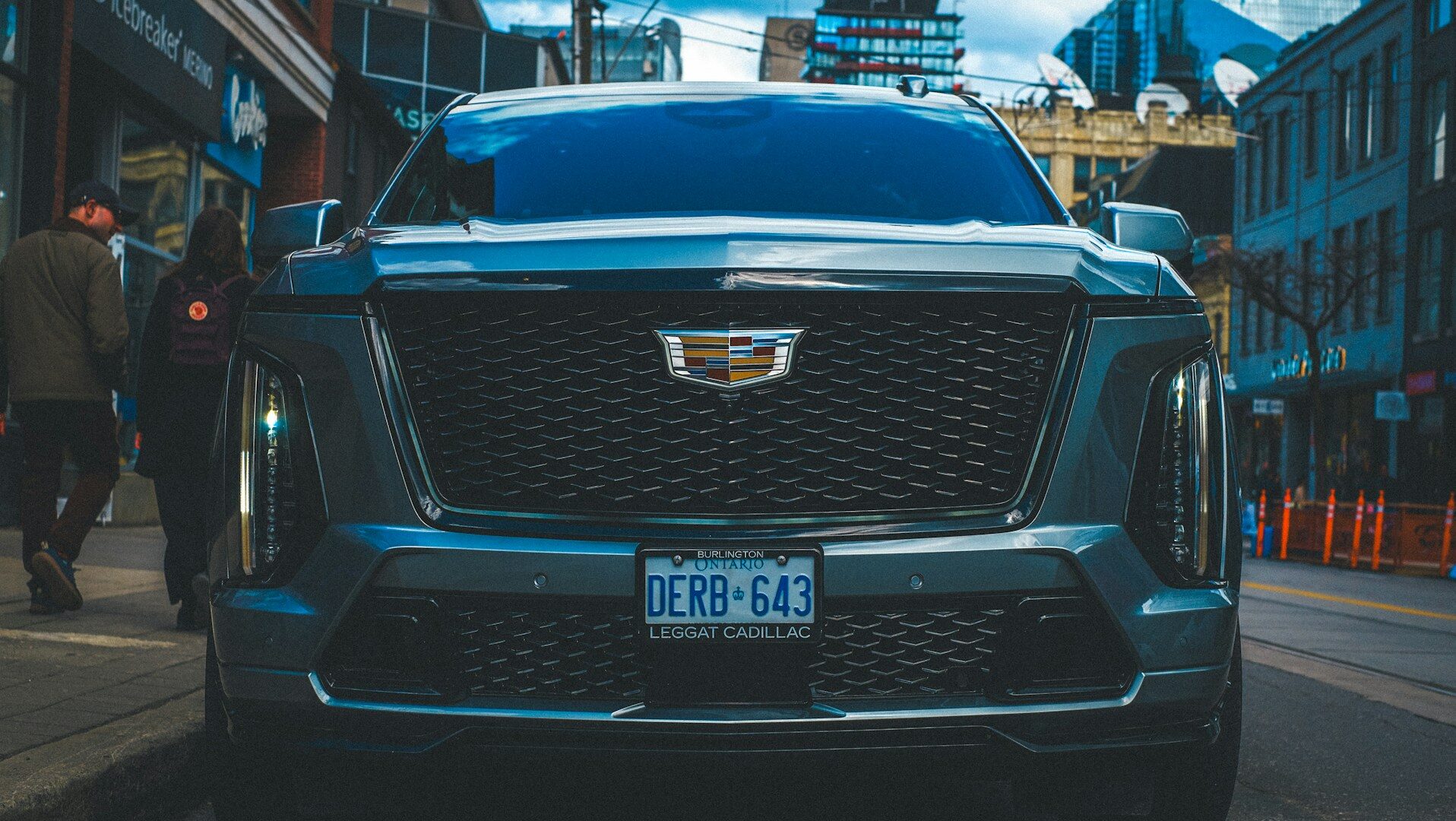
It started with one Cadillac. Now it’s 1.16 million vehicles wearing four different nameplates, including two you’d never expect to see in a General Motors defect filing: Honda and Acura. The federal investigation into GM’s electric brake booster, filed this month as Engineering Analysis EA26006, looks like a simple numbers escalation. It isn’t. The real story is that GM has told regulators exactly how this brake system fails, and drivers keep reporting a different failure than the one GM described. That gap, not the vehicle count, is why the National Highway Traffic Safety Administration just moved this case out of preliminary review and put it in front of its engineers.
NHTSA’s Office of Defects Investigation opened Preliminary Evaluation PE24011 in April 2024 after owners of 2023 Cadillac Lyriqs began reporting a hard brake pedal followed by a “Brake System Failure” warning, sometimes at startup, sometimes mid-drive. GM handed over internal investigation records tracing the complaints to fractured spindles inside its eBoost brake booster, the electric unit that has replaced the vacuum booster on most of its newer platforms. By GM’s own account, a fractured spindle leaves anti-lock brakes, stability control, and traction control running right up until the vehicle comes to a complete stop, at which point all three systems drop out at once, warning lights fill the dashboard, and the car’s top speed gets capped at 43 mph until it’s serviced.
That’s a tidy explanation, and it would be reassuring if the complaints stopped matching it. They haven’t. Since 2024, ODI has kept receiving reports describing brake assist disappearing immediately, not after the car has already stopped, in some cases during active braking. That’s an enormous engineering distinction. A brake system that fails only after a car is stationary is an inconvenience. A brake system that fails while a driver is actively trying to stop is a stopping-distance problem, and GM’s spindle-fracture theory, apparently, doesn’t cover every case NHTSA is seeing. So the agency escalated: 745 reported incidents, 22 crashes or fires, five injury events, six injuries, and, for now, no deaths. When a manufacturer’s explanation and the field reports stop lining up, that’s not a paperwork problem. That’s when a preliminary evaluation turns into an Engineering Analysis, the more serious of NHTSA’s two investigative stages and typically the step before a recall order.
The vehicle list is where this stops being a Cadillac problem. eBoost isn’t a Lyriq-specific part. It’s in the Chevrolet Colorado and GMC Canyon, gas-burning mid-size pickups with no hybrid system and no obvious reason to need an electric brake booster except that GM builds it into the architecture regardless of powertrain. It’s in the Buick Enclave and Envision, the Chevrolet Blazer EV, Equinox EV, and Traverse, the GMC Acadia, the low-volume Cruise Origin robotaxi, and Cadillac’s hand-built Celestiq and Optiq. And it’s in the Acura ZDX and Honda Prologue, electric SUVs that Honda badges and sells but that GM actually builds, under a joint venture that put Honda’s name on GM engineering. NHTSA folded the Acura and Honda models into the Engineering Analysis as peer vehicles, meaning federal investigators consider them mechanically close enough to the GM lineup that whatever eBoost is doing wrong, it’s doing it the same way regardless of badge.
This is not a new dilemma for the industry, and GM isn’t the first automaker to get boxed in by it. Sharing one electronic module across a truck, a crossover, and a luxury flagship is exactly how BMW ended up recalling a Rolls-Royce Spectre and a Mini Cooper S for the same brake-module defect three separate times. Volvo hit a similar wall last year, when an over-the-air pipeline built to beam Apple Music into two million cars turned out to be the same pipeline that had shipped a brake problem the year before. It’s cheaper to engineer one system once and deploy it everywhere than to certify a different one for every price tier. GM has leaned on the same logic with its battery investment, spreading Ultium hardware across Cadillac, Chevrolet, GMC, and Buick to make the tooling math work. The tradeoff, in every case, is that a defect no longer stays contained to the model that found it first. It travels through the parts bin.
It’s worth understanding what actually changed under the pedal to get here. A traditional vacuum booster is about as close to foolproof as automotive engineering gets, a rubber diaphragm and a check valve that either work or don’t, with nothing to reprogram and very little that fails halfway. An electric brake booster like eBoost is a motor, a control module, and software making constant real-time decisions about how much assist to apply, which is exactly what makes it useful for blending regenerative braking on an EV like the Equinox EV or running the automatic emergency braking most new vehicles now need. It’s also why the failure mode is so layered: three separate diagnostic trouble codes, an audible chime, a dashboard message, multiple warning lights, and a speed limiter, all stacked on top of each other as software-managed fallbacks. None of that existed with a vacuum booster, because a vacuum booster didn’t need it. The sophistication that makes eBoost useful is the same sophistication that makes it harder to diagnose, and far more expensive to fix, than the part it replaced.
That expense eventually lands on owners, recall or not. An electric brake booster is a sensor-laden, software-calibrated assembly, not a diaphragm any independent shop can swap in an afternoon. Owners of affected Lyriqs, Blazer EVs, and Prologues who are outside GM’s warranty window should expect a dealer-only repair with a parts-and-labor bill closer to a transmission job than a brake job, and insurers pricing collision and liability coverage on these platforms will be watching whatever NHTSA’s engineers find just as closely as GM’s lawyers will.
GM has been through this brake conversation before. Owners of Buick Envision, Chevrolet Equinox, and GMC Terrain models sued the company earlier this year alleging it had left the same lineup out of a 2019 brake recall it should have covered. A pattern of GM’s explanation not quite catching up to the complaints is starting to look less like a one-off and more like a habit. GM is hardly alone in generating a seven-figure vehicle count from federal regulators this year, either; Ram trucks are working through their own rollaway-defect probe covering roughly 1.2 million pickups, a reminder that when a modern safety system fails, it rarely fails quietly or in isolation.
None of this means eBoost-equipped GM, Honda, and Acura vehicles are unsafe to drive tomorrow morning. NHTSA hasn’t ordered a recall, and the agency says plainly that it’s still assessing whether a safety-related defect even exists. What NHTSA has done is the more telling move: it stopped treating GM’s spindle-fracture story as the full picture and opened the kind of investigation that exists specifically to find out what a company’s own paperwork left out. Building one brake system that works is an engineering achievement. Building one brake system and putting it in a Chevy pickup, a Cadillac flagship, and a Honda SUV all at once is a business decision, and every decision like that eventually gets its bill read out loud, one incident report at a time.