
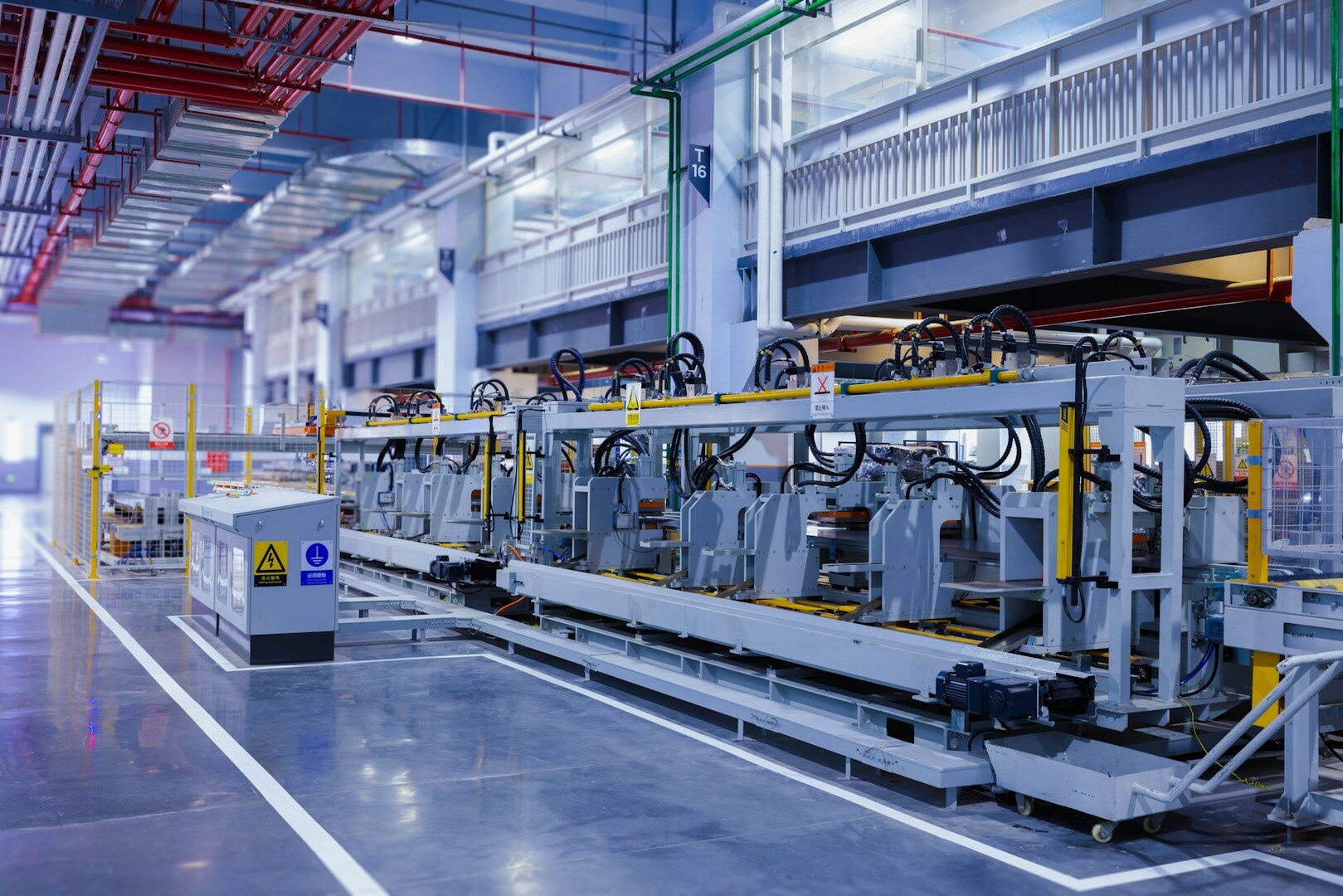
Seven months after the lights went out, General Motors and LG Energy Solution are flipping them back on at their Ultium Cells battery plant in Warren, Ohio. About 1,400 workers will return Monday. Production of the NCMA pouch cells that power the Chevrolet Equinox EV, the Cadillac Lyriq, and most of GM’s electric lineup will resume.
Fine. But here’s the part nobody’s writing about.
While the Warren plant sat idle for seven months, GM was quietly executing one of the most significant restructurings of its battery manufacturing strategy since it announced the whole thing. It sold its stake in a $3.5 billion Indiana battery factory to Samsung SDI — before the plant ever produced a single commercial cell. It invested $70 million to convert its Tennessee Ultium Cells facility from EV batteries to lithium iron phosphate cells for grid-scale energy storage — specifically including power infrastructure for AI data centers.
Ohio came back. Indiana was handed off. Tennessee found a new boss.
This is not a comeback story. It’s a liquidation and reallocation.
The Plant That Reached a Milestone and Then Went Dark
The Warren facility is the original Ultium Cells plant — GM and LG Energy Solution’s first large-scale US facility, the proving ground, the one they built from a steel skeleton starting in May 2020. At 2.8 million square feet — roughly 45 football fields — it’s capable of producing 45 gigawatt hours of cells annually using advanced NCMA chemistry.
By December 2024, the plant had produced its 100 millionth battery cell. A milestone worth celebrating. Six weeks later, production stopped.
The official reason was “weaker EV demand.” The actual trigger was more specific: the elimination of the $7,500 federal EV consumer tax credit on September 30, 2025. When Congress axed the credit, GM’s EV sales forecasts changed overnight. The company had already built more battery manufacturing capacity than it needed for a slower market, and Warren — with roughly 850 temporary layoffs and 480 permanent cuts — bore the first consequences. Workers who had been told they’d return in June got another delay to August. Now it’s actually August.
What they’re returning to is a plant that supplies cells for GM’s best-selling EVs — a lineup that has shown genuine recovery signs in the second quarter of 2026. Chevrolet and Cadillac EV sales were up meaningfully. The market isn’t fixed, but it’s not getting worse.
So Ohio makes sense. That’s the easy part.
The Factory That Never Shipped a Cell
The Indiana story deserves more scrutiny.
In April 2023, GM and Samsung SDI announced a $3.5 billion joint venture to build a battery factory in New Carlisle, Indiana. The plant was designed to produce prismatic nickel-rich cells — a different format than the pouch cells made in Ohio — under Samsung’s PRiMX brand. Mass production was scheduled to begin in 2027. The facility was expected to employ over 1,600 people and produce 27 gigawatt hours annually, with potential to scale to 36 GWh.
This week, Samsung SDI acquired GM’s roughly 50 percent stake. The purchase price was not disclosed.
The Indiana plant has not shipped a single production battery cell. GM committed to a $3.5 billion factory, spent roughly three years reconsidering, and then walked away before the thing opened. Samsung SDI is keeping the plant — converting part of it to energy storage system batteries — and the two companies signed a separate agreement to jointly develop next-generation prismatic batteries. So GM still gets the technology. It just doesn’t own the factory.
Think about what that means from a manufacturing strategy standpoint. GM essentially co-funded Samsung SDI’s first wholly owned battery factory in North America, then handed it back and said, “We’ll buy cells from you.” That is a remarkable reversal for a company that spent years insisting domestic battery ownership was non-negotiable.
Tennessee Found a Different Customer
The Spring Hill, Tennessee Ultium Cells plant tells the most surprising chapter of the three.
In March 2026, GM and LG Energy Solution announced they were investing $70 million to convert part of the Tennessee facility to produce lithium iron phosphate (LFP) cells — not for EVs, but for stationary energy storage systems. Grid projects. Renewable energy installations. And specifically, power infrastructure for AI data centers. By July, the plant had started LFP cell production.
LFP chemistry is cheaper, longer-lasting in cycle terms, and more thermally stable than the NCMA chemistry used for EV applications. It’s ideal for large stationary storage installations that utility companies and data center operators need. It gives up energy density — a problem for a car, a non-issue for a warehouse full of battery racks.
Here’s the irony that should stop you cold: the technology that many argue is responsible for accelerating electricity demand and straining grids — AI computing — is now the paying customer keeping an American EV battery factory operating. The EV slowdown created idle factory capacity. AI’s relentless appetite for electricity created demand for exactly the kind of batteries that idle factory could pivot to make. One problem fed the other’s solution.
GM and LG didn’t save Tennessee from the EV market. AI did.
The First Unionized Battery Contract in American History — Then Layoffs Six Months Later
There’s one more detail in the Warren story worth acknowledging.
In June 2024, the UAW ratified its contract at the Ultium Cells plant in Warren. It was, by any measure, a historic moment: the first unionized battery manufacturing contract in American history. Workers at a facility that didn’t exist four years earlier had secured union representation and a collectively bargained agreement.
Six months later, they were laid off.
That’s not a criticism of the union, GM, or LG. It’s a reflection of how quickly the economics of EV manufacturing can shift. The $7,500 federal tax credit wasn’t just an incentive for consumers. It was the load-bearing wall of GM’s near-term EV demand projections. When Congress removed it in September 2025, the wall came down and the production schedule collapsed with it.
Those workers are going back now. But the sequence — ratify the first union battery contract in the country, hit 100 million cells, get laid off within half a year — captures the volatility of building a career in a market that depends as much on congressional arithmetic as on consumer demand.
What This Is Actually About
The Warren restart will be reported as good news, and it is. Jobs are returning. EV cells are flowing again. GM’s electric lineup — the Equinox EV, Silverado EV, Blazer EV, Cadillac Lyriq, Vistiq, and the GMC electric vehicles — has enough consumer demand to justify running the plant built for exactly this purpose.
But step back from the individual plant and look at the portfolio. A year ago, GM owned three major Ultium Cells facilities in the United States. Now it owns two, and one of those two has been partially converted to serve AI data centers instead of car buyers.
That’s not an EV strategy. That’s a battery company strategy. GM is repositioning itself less as an automaker that happens to make batteries and more as an entity that manages battery manufacturing assets across multiple end markets: consumer EVs, commercial EVs, grid storage, AI infrastructure. Whether that’s a smart adaptation to a turbulent market or a quiet signal that the original EV ambition has been permanently downgraded is the question nobody is asking Monday morning in Warren.
The Ohio restart isn’t the answer. It’s the last line of a three-chapter story most readers never followed.
The real test is whether Tennessee’s AI batteries and Indiana’s Samsung hand-off generate enough revenue and technology returns to hold the broader strategy together until EV demand catches back up to where GM originally projected it would be by now.
Nobody clocking back in at Warren Monday morning is thinking about that. They’re thinking about getting back to work.
Which is, honestly, the most reasonable possible response.