
New Jersey hasn’t banned Tesla’s robotaxis. It has written a hardware requirement that Tesla’s current cars don’t meet, which may have the same effect.
The bill is S1677, sponsored by Senators Andrew Zwicker and Gordon Johnson. The Senate Transportation Committee adopted a committee substitute on May 11 and sent it to Senate Budget and Appropriations, where it still sits. It would set up a three-year pilot for fully driverless vehicles, run by the state Department of Transportation together with the Motor Vehicle Commission. The section that matters for Tesla is 4(e). It requires every pilot vehicle to have crash-avoidance systems that include “a camera system and two distinct sensing modalities” capable of detecting and tracking obstacles if the cameras fail.
The bill never says lidar. It doesn’t have to.
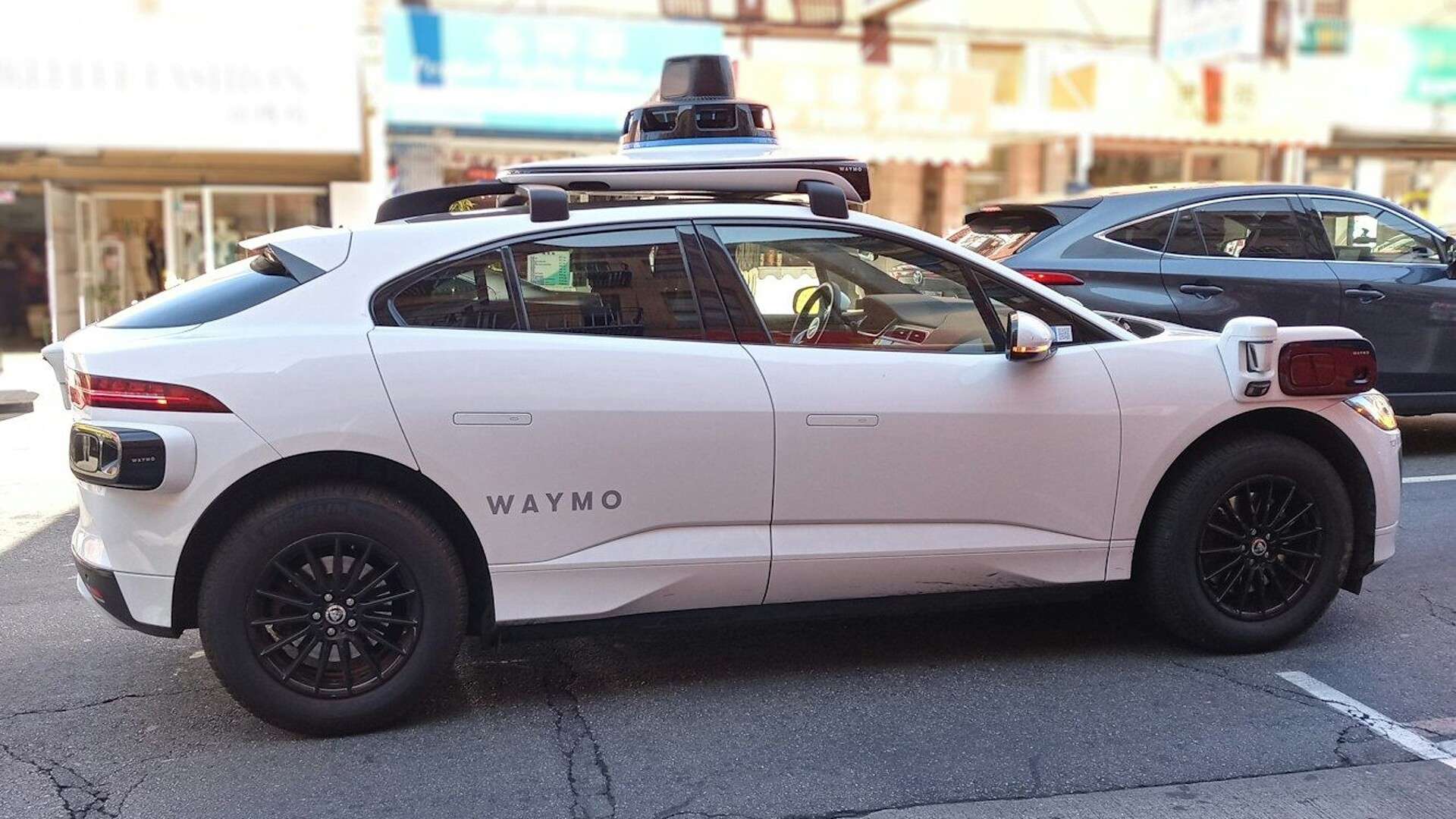
The bill never mentions lidar or radar. It’s written to be neutral about technology. In practice, though, the obvious two backup modalities are lidar and radar, which is what Waymo runs alongside its cameras. Waymo’s own description of its 6th-generation sensor suite lists lidar, cameras and radar, with the lidar and radar there to cover for cameras when visibility is poor.
Related Articles
- Illinois Trooper Didn’t Chase a Car Police Say Was Stolen at 140 MPH, Then a Helicopter Followed It to North Chicago
- One Wrong Emissions Sticker Froze 2027 Corvette Deliveries, and GM Is Idling Bowling Green Again
Tesla went the other way. Its support page explains that it took radar out of the Model 3 and Model Y in 2021 and out of the S and X in 2022. It then removed ultrasonic sensors as well. Every recent Tesla relies on cameras alone, so under New Jersey’s test it has one sensing modality where the bill asks for three.
A thermal infrared camera is arguably a different sensing modality from a visible-light camera, and ultrasonic sensors technically detect obstacles, although only within a few meters. Whether a regulator would accept either as a backup “capable of detecting and tracking obstacles” is the sort of question that ends up in a hearing. For Tesla, the cleanest route to compliance is adding radar and lidar. That is a hardware-and-wiring job, and the software would have to learn from data Tesla deliberately stopped collecting.
Sensors aren’t Tesla’s only problem
The rest of Section 4 creates more trouble. Pilot vehicles must let human drivers or emergency responders override the system and take control at any time, through the brake, the accelerator pedal or the steering wheel. A purpose-built robotaxi without a steering wheel or pedals doesn’t comply, whatever sensors it carries.
Section 9 limits every company. Driverless vehicles operating as taxis or “autocabs” would be allowed only on “designated highways,” monitored continuously, and equipped for law-enforcement override. Section 6 bars pilot vehicles from school zones, construction zones and areas with high rates of pedestrian crashes. A robotaxi service that can’t go near schools or roadwork in a state as built-up as New Jersey covers very little ground, whichever company runs it.
The paperwork before a car drives itself
Before going fully driverless, an operator must show 50,000 miles of testing in its intended operating area. It must also log 50,000 miles on New Jersey public roads with a human behind the wheel and no major incident, unless the car wasn’t at fault. Other requirements:
- $5 million in liability insurance, self-insurance or a surety bond for each registered vehicle
- Data recording that starts 30 seconds before any collision, covering speed, steering, braking and sensor inputs
- Reports of serious crashes within five calendar days, with the state publishing the data and passing it to NHTSA and the NTSB
- A plan for dealing with law enforcement, approved before any testing starts
The 30-second recording window and the five-day crash-report clock are the parts an insurer would underline. A nine-member task force that includes an insurance-industry seat would oversee the program.
Tesla’s response
Tesla isn’t waiting. Its advocacy page asks New Jersey residents to contact lawmakers and claims that, as written, Tesla’s technology couldn’t legally operate in the state. The company wants the bill made “technology-neutral” and opened to all qualified companies.
Related Articles
- Pennsylvania’s House Voted 190-13 to Make Plate Readers Delete Data After 72 Hours. Flock’s Seven-Day Default Suddenly Looks Generous
- A 12-Year-Old in a Stolen Car Hit a Baltimore Motorcyclist, 69, Police Say. Maryland’s Governor Ordered a Pilot but Named No Funding
Tesla says a regulation should set safety results, such as crash rates, and leave the choice of hardware to engineers. Supporters of the bill say redundancy is itself a safety result. If the only sensor gets blinded by sun glare or a salt-crusted lens, nothing else is watching the road. New Jersey has chosen redundancy and written it into law, instead of waiting for crash data.
What owners and buyers should know
The bill doesn’t touch Tesla’s FSD (Supervised) on cars people own. The pilot covers fully autonomous vehicles that drive without human supervision. Your Model Y’s driver-assistance features in Hoboken aren’t part of this fight.
It does affect anyone counting on a robotaxi network in New Jersey soon, or buying a Tesla partly for its future earning potential as a robotaxi. If the language survives, New Jersey’s rules will favor vehicles built with multiple sensor types from the start.
The bill has a long way to go. S1677 still needs a Budget and Appropriations vote and a vote of the full Senate. Its Assembly twin, A3968, would need to pass too, and the governor would have to sign. A similar bill cleared the same Senate committee last session and then died. Amendments are still possible. If you were drafting S1677, would you write a crash-rate test instead of a sensor count, and what number goes in it?