
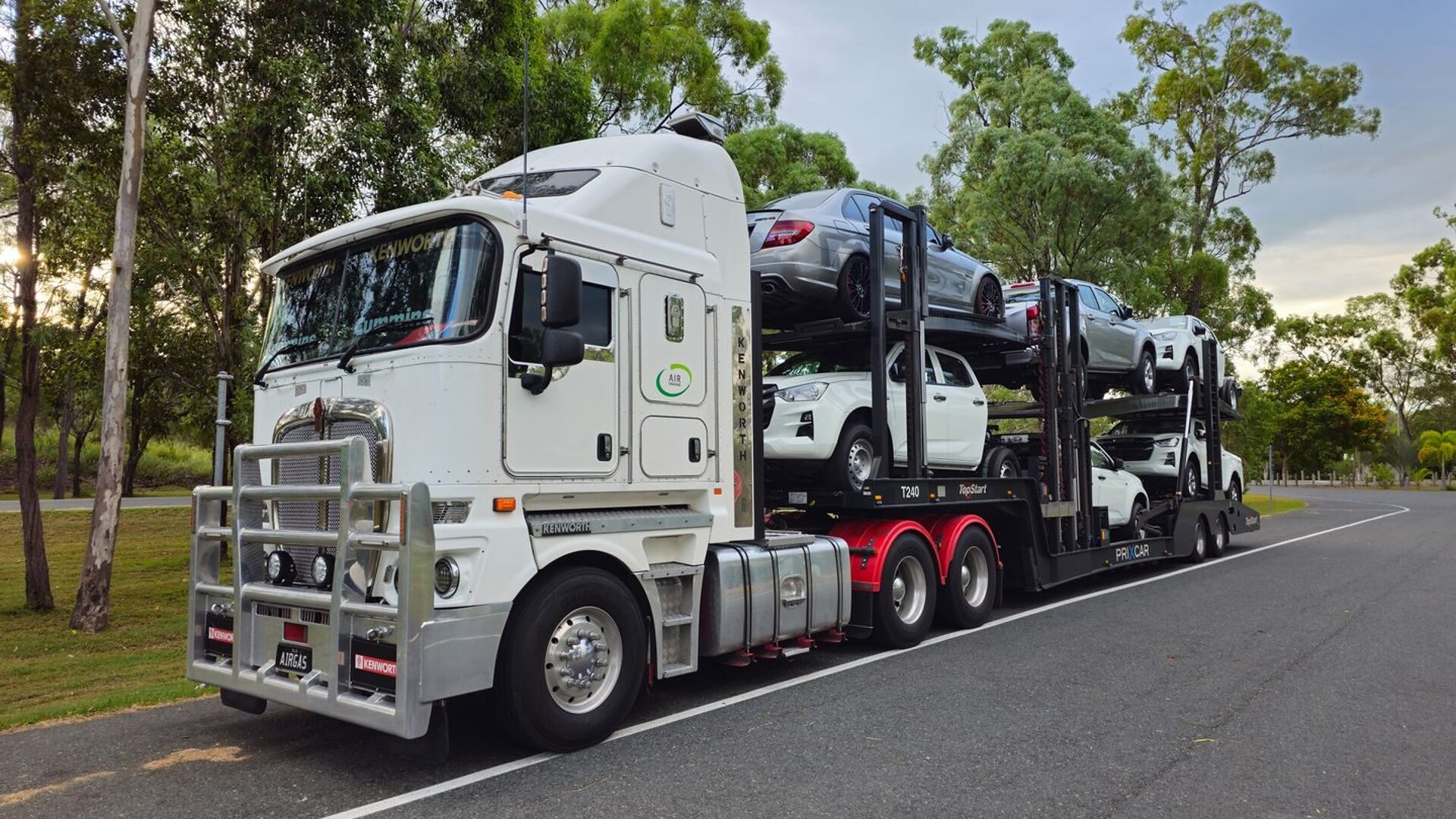
A Miami realtor bought a black-on-black Mercedes G-Wagon in Colorado Springs, Colorado, for $150,000, used an online shipping marketplace to find a hauler, and agreed to pay about $1,200 to have the SUV trucked home to Florida. It never got there. Miami police created a fraud report and have an investigation underway, according to reporting by KOAA, the Scripps station in Colorado Springs, and the phone numbers for both the hauling company and its driver are now out of service.
The buyer, who told the station he wanted the G-Wagon for driving clients around, did more checking than most people shipping a car for the first time. In text messages the station reviewed, he asked the company, which went by Cahaulers, for its U.S. DOT number and whether it carried cargo insurance. The company’s representative wrote back, “Why are you asking so many questions?” He booked anyway. He told the station it was his first time shipping a vehicle and he didn’t know the business well enough to make it a deal-breaker.
Those two questions were the right ones. Federal law requires an interstate car hauler to register, and a cargo policy is what pays a hauler’s bill when a customer’s car goes missing, but nobody in this transaction confirmed either one before the G-Wagon was loaded. That job fell to the customer, and the marketplace he used says so in its own contract.
A Tracking Link Lists the G-Wagon as Delivered in Highland Park, New Jersey
The hauler had an answer for each doubt. Its representative described a small operation with low overhead and its own trucks, and sent the buyer a photo of a driver’s license and a phone number for the driver. Then the company told him the truck would stop in New Jersey before continuing to Florida, a detour that adds most of the East Coast to a Colorado-to-Miami run.
Delivery was promised for a Sunday, then pushed to Monday. Neither day produced a G-Wagon. The online tracking link the company had sent tells its own story: it lists the Mercedes as delivered to an address in Highland Park, New Jersey, on a Thursday, along with photos labeled as delivery inspection photos of the SUV. KOAA’s report, posted Nov. 24, does not give calendar dates for the pickup or the promised delivery. As of Nov. 25, I found no public announcement of an arrest or a charge, and no one has been publicly named as a suspect. The buyer is also working with his insurance company.
No Carrier Named Cahaulers Turns Up in FMCSA’s SAFER Database
Anyone hauling cars for pay across state lines has to register with the Federal Motor Carrier Safety Administration, and so does any broker arranging the trip. The agency’s consumer advisory on auto transporters says carriers and brokers both get a six-digit MC docket number, carriers also get a seven-digit USDOT number, and customers should be wary of any company that doesn’t display its MC number prominently.
On Nov. 25, I searched FMCSA’s SAFER company database for “Cahaulers” and “CA Haulers.” Neither search returned a carrier name or a doing-business-as name. That doesn’t rule out that whoever ran the account holds authority under a different name, but the name the buyer was given doesn’t match any registration a customer could have looked up before handing over the keys.
Registration is what makes a hauler worth suing. Under the Carmack Amendment, 49 U.S.C. § 14706, a registered carrier is liable for the actual loss of property it hauls, and it can’t give a customer less than nine months to file a claim or less than two years to file suit. A registered broker has to keep a $75,000 surety bond or trust fund in effect under 49 CFR 387.307. Neither covers a $150,000 SUV by itself, but each gives the owner a company with a federal number and money behind it to go after. A hauler that exists as a text thread and two dead phone numbers leaves him nothing to file against.
His cargo insurance question mattered for a reason most people shipping a car don’t know. FMCSA’s financial-responsibility rules in 49 CFR 387.303 set a cargo-coverage minimum only for household goods movers. The filing a car hauler must keep on record is liability coverage for injuries and damage it causes on the road, $750,000 for a non-hazmat freight truck of 10,001 pounds or more, not coverage for the vehicle chained to its deck. Whether a hauler can pay for a car it loses depends on a cargo policy the customer has to ask to see, and FMCSA’s fraud and identity theft alert warns that insurance certificates can be fraudulent too.

Shiply’s User Agreement Says It Does No Due Diligence on Haulers
The buyer found Cahaulers through Shiply, which did not respond when KOAA asked how it vets transport providers. Its U.S. user agreement, last revised May 22, 2020, already answers the question. Shiply describes itself as a neutral venue, not a transportation provider, freight forwarder, or broker, and it disclaims responsibility for anything transport providers claim about their licenses, insurance, or registration. In its section on member feedback, it states: “we do not conduct any due diligence on our Members.”
The same agreement requires transport providers to carry at least $2 million in auto liability coverage and $1 million in general liability coverage that includes the full replacement value of whatever they haul. That requirement sits a few sections below Shiply’s statement that it doesn’t check its members. It also caps Shiply’s total liability to a user at the fees that user paid Shiply in the prior 12 months, and it says disputes go under the law of England and Wales, in English courts.
The buyer told the station he took comfort in Shiply’s thousands of reviews. Shiply’s U.S. site displays a rating of 4.5 out of 5 based on 44,845 reviews, and those rate the marketplace, not the individual hauler. His booking page did carry a warning, according to KOAA, that the provider he picked was relatively new to Shiply.
Whether a platform like this is legally a broker is a live question. FMCSA’s June 16, 2023, guidance on the definition of broker says posting information about shipments, even for a fee, doesn’t require broker authority as long as the site is not otherwise involved in the transaction between shipper and carrier. The same guidance lists handling money exchanged between shippers and carriers as one factor pointing toward broker status, though not a required one, and says the guidance itself doesn’t carry the force of law. Shiply’s agreement has the customer pay a deposit into an account Shiply runs, which moves to the hauler’s account and is then kept by Shiply as its fee. Federal law, 49 U.S.C. § 14916, makes anyone who knowingly allows unregistered brokering liable for a civil penalty of up to $10,000 per violation and liable to the injured party for all valid claims regardless of amount, with that liability reaching a company’s officers and principals personally. No court or regulator has applied that statute to this case, and Shiply hasn’t said publicly how it sees its role here.
Fake Pickups Now Make Up a Quarter of Reported Cargo Thefts
Commercial freight has the same problem at scale. Verisk CargoNet, which tracks cargo crime for insurers and law enforcement, reported on Nov. 4 that it logged 138 fictitious pickups, cases where deception is used to get a shipment released, in the third quarter of 2026, compared with 147 a year earlier. Total reported incidents fell 33% to 547, so fake pickups grew from 18% of the total to about 25%. CargoNet’s numbers cover commercial loads, not one-off private car shipments, so this G-Wagon wouldn’t show up in them, but the method is the same: a convincing identity gets the cargo handed over.
Consumers have been warned about this corner of the business for years. FMCSA’s auto transporter advisory opens by citing a dramatic increase in complaints against auto transporters and brokers, and the page was last updated Feb. 10, 2015. High-dollar vehicles that leave their owners’ hands through paperwork tricks also need paperwork to be resold, which is how a case like the Pennsylvania tag agent accused of laundering titles on 65 stolen exotics ends up in a courtroom.
Where the Miami Fraud Case and Insurance Claim Go Next
The Miami police investigation is the main track, and the Highland Park address in the tracking record is the most concrete lead in the public account so far. FMCSA directs victims of transport fraud to its National Consumer Complaint Database or 1-888-DOT-SAFT (1-888-368-7238), and its fraud alert also points to the FTC at reportfraud.ftc.gov, the FBI’s Internet Crime Complaint Center, local police, and the state attorney general. Whether the buyer’s own insurer pays for a vehicle handed to a hauler who disappeared will depend on his policy’s language, and no outcome has been reported.
The checks in FMCSA’s own guidance translate directly to a private car shipment. Look up the MC or USDOT number in SAFER before paying anything, and call the phone number SAFER lists, not the one in the text message. Ask for the certificate of insurance and confirm it with the insurer. At pickup, write down the tractor and trailer plate numbers and photograph the truck. A hidden tracker in the car, the kind that has followed a stolen car overseas, gives police something to work with if the truck goes the wrong way. And a route that sends a Colorado-to-Florida truck through New Jersey is reason enough to cancel before the car leaves.
Should marketplaces that take a cut of every car shipment be required to verify a hauler’s FMCSA registration before it can bid, or is checking the DOT number the customer’s job?