
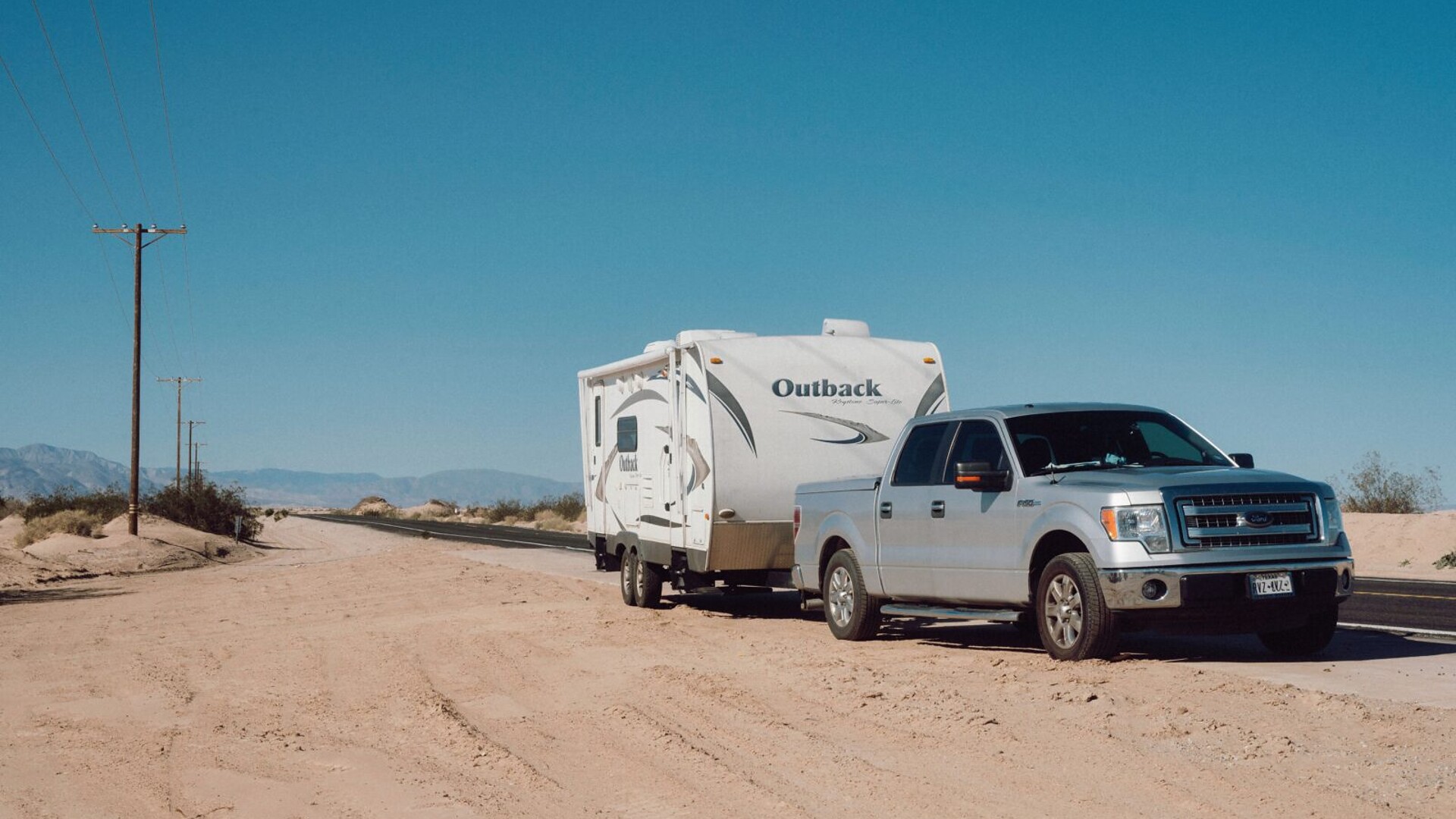
Earlier this year in Australia, an Elecbrakes In-Car Remote riding in a security researcher’s tow vehicle connected mid-drive to a trailer brake controller on someone else’s trailer, the second Australian vehicle-security finding The Auto Wire has covered since September. His own trailer wasn’t hitched up. Nobody had paired anything, and the other driver had no idea.
The remote had latched onto, in the researcher’s words, “a brake controller that wasn’t mine, on a trailer I’d never seen.” That moment is how the write-up Patrick Forck and Jeremy McCarthy of Element Digital published on Nov. 19 begins, and it ends somewhere worse: Elecbrakes’ current trailer brake controllers would accept a brake command from any Bluetooth device in range, with no pairing, PIN or password, and apply the trailer’s brakes at whatever force the sender asked for.
The U.S. Cybersecurity and Infrastructure Security Agency published advisory ICSA-26-323-02 the same day and scored two of the three flaws 9.6 out of 10. Elecbrakes, which builds its controllers on the Central Coast of New South Wales, shipped fixes for its two current models in July. Those fixes only arrive if owners go get them, and a third, older controller still towing caravans and boats in Australia and New Zealand has no fix at all.
How four bytes could take over a trailer’s brakes
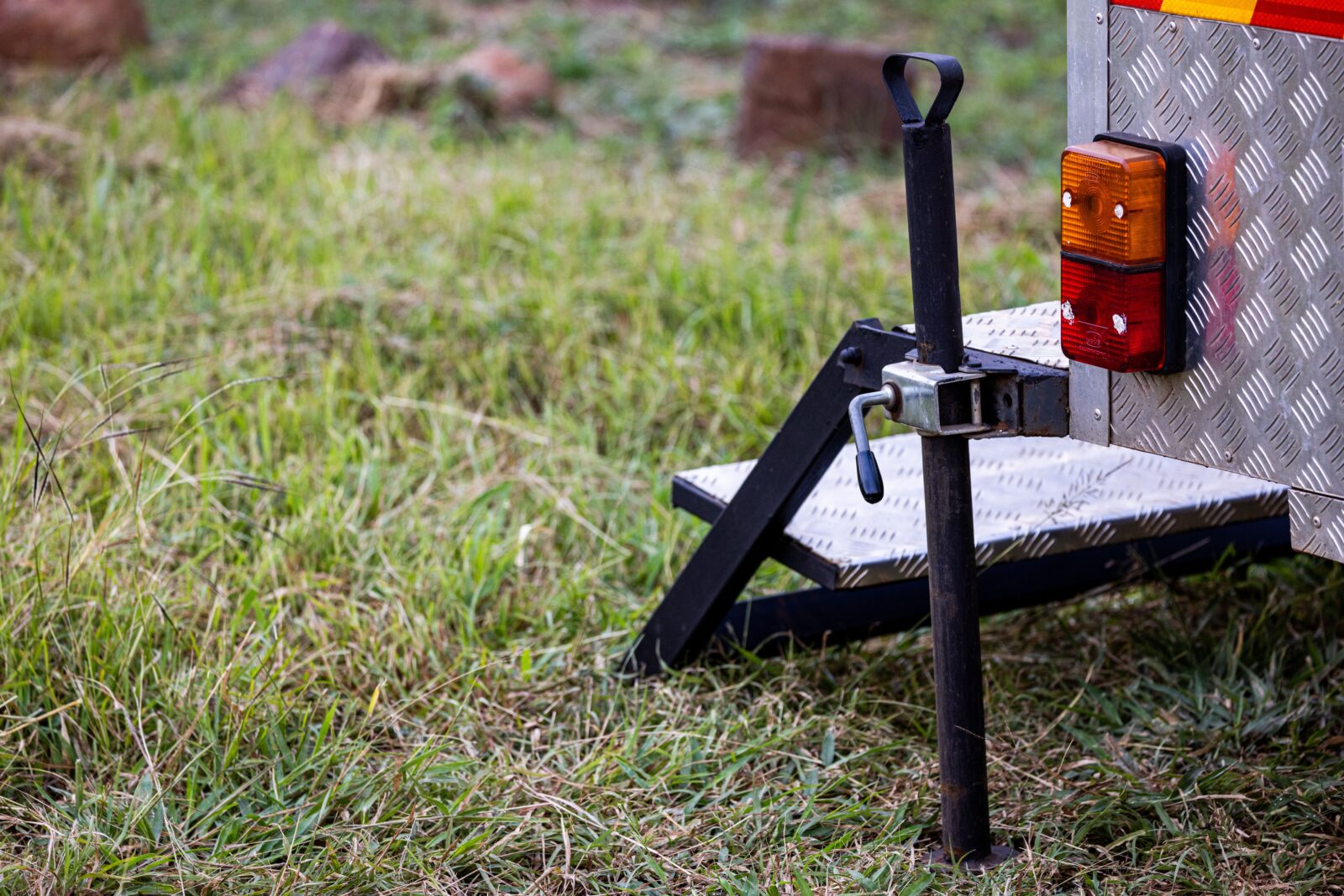
An electric trailer brake controller decides how much current goes to the electromagnets inside each trailer drum. More current pulls the shoes harder against the drum. Elecbrakes’ controllers take their settings, and their commands, over Bluetooth from the Elecbrakes phone app or a separate in-car remote. One current model mounts on the trailer itself, the other in the tow vehicle.
The researchers mapped the controller’s Bluetooth profile, 47 characteristics across four services, and found that other functions needed pairing while the braking commands did not. Four bytes were enough. The force value ran from 0x00 to 0xFF, and on private gravel roads the top setting produced noticeably harder deceleration than the bottom one. The brakes let go two to five seconds after an attacker’s connection drops, but someone who stays in range can hold them on. For scoring purposes the researchers put that range at roughly 10 to 100 meters.
That is CVE-2026-96805, which CISA classifies as missing authentication for a critical function. The second 9.6, CVE-2026-125273, covers the fact that commands carried no sequence numbers, nonces or session tokens, so a captured command could simply be sent again. The third, CVE-2026-124281, scored 6.1, involves the firmware-update channel, which the researchers say relied on “Just Works” Bluetooth pairing, a CRC32 checksum and a key shipped inside the app. CISA’s summary says successful exploitation could let an attacker take control of a trailer’s brakes, modify firmware or disable the brake lights. The researchers did not flash modified firmware; the brake-light and firmware scenarios in their write-up are described as possible, not demonstrated.
CVSS scores read like abstractions until you look at the vector string. CISA marks the attack as “adjacent,” meaning the attacker has to be within radio range, not anywhere on the internet. It still lands at 9.6 because it needs no credentials and no action from the victim, and its impact on integrity and availability, in this case the trailer’s brakes, is rated high. Elecbrakes asked CISA to score the replay flaw at 8.2 by calling the attack complex, according to the researchers, then agreed to keep 9.6 after they argued the point.
A trailer that brakes hard on its own at highway speed pulls back against the hitch, and drum brakes clamped at full force on a light trailer can lock its wheels. A trailer with locked wheels is no longer steering itself in line behind the tow vehicle. Elecbrakes says it is unaware of any exploitation of the vulnerability or any related property damage or injuries, and CISA says no known public exploitation has been reported to it.
Elecbrakes patched in seven weeks, then left the install to owners
The researchers’ timeline has them reporting the flaw to Elecbrakes on May 18. The company validated it on May 29 and released fixed app and firmware versions on July 6: EB2 firmware 3.0.4.4.3 and VM1 firmware 1.3.4.2.1.
The update is user-initiated. Elecbrakes’ Nov. 23 customer advisory walks owners through it: update the app, plug the trailer into the tow vehicle so the controller has power, connect in the app and follow the prompt. By late October, Elecbrakes’ own figures showed about 60% of daily active EB2 and VM1 users were on the latest firmware, according to the researchers. By The Auto Wire’s math, that left roughly four in ten active users on vulnerable firmware more than three and a half months after the fix shipped, and the share among owners who haven’t opened the app at all is unknown.
There’s a cost that may explain some of the lag. Elecbrakes’ older V2 remote stops working with an EB2 or VM1 once the new firmware is installed, because it can’t support the new pairing model. The company is offering a free V3 replacement remote, with freight paid both ways according to the researchers, and asks owners who are mid-trip and relying on the remote to call before updating. An owner halfway through a caravan trip has a reason to put the update off.
The fix itself drew a second round of scrutiny. On Nov. 17, the researchers found the patched firmware is unsigned. Elecbrakes told them controllers on the fixed firmware only enter update mode over an authenticated, bonded connection, and said its next app release will add signed firmware, rolling encryption keys, app attestation and code obfuscation.
The ELBC2000 owners have no update coming yet
Partway through the disclosure, the researchers came across an older Elecbrakes ELBC2000 on a trailer in their local area. Elecbrakes’ own assessment had listed the EB2 and VM1 as affected and missed it. The researchers asked about the ELBC2000 on Sept. 17; their timeline also records 53 days with no vendor contact between Aug. 14 and Oct. 6. Elecbrakes confirmed the older controller was vulnerable on Oct. 30.
CISA lists every version of the ELBC2000 as affected and the remediation as “None available,” noting the controller is no longer sold and the vendor is determining how to address it. Elecbrakes’ advisory says the original ELBC cannot receive the EB2 and VM1 update and tells owners to stay actively connected to their smartphone or remote whenever the controller is in use. The company doesn’t explain the reasoning, but the practical effect appears to be keeping the controller’s Bluetooth link occupied by the owner’s own device.
CISA has flagged trailer brake commands before
Missing authentication on a brake-command channel is a repeat finding in CISA’s files. In 2020 and again in March 2022, the agency issued advisories on the power-line communications that tractor-trailers use between truck and trailer; the 2022 notice said trailer brake controllers’ diagnostic functions could be invoked by replaying messages, with no authentication or authorization. In January 2025, research from the National Motor Freight Traffic Association led to another CISA advisory on wirelessly reachable trailer equipment. In July 2025, CISA warned that railroad end-of-train devices could be sent brake commands built with a software-defined radio.
Those cases involved tractor-trailers and freight trains. The Elecbrakes case moves the same weakness down to a box a weekend boat owner can bolt to a drawbar, controlled by an app on a phone. It also lands while governments elsewhere are only starting to test how they’d respond to a hacked vehicle; South Korea rehearsed a hacked steering wheel this fall, and the U.S. has no equivalent drill.
What Elecbrakes owners and U.S. towers should check
CISA lists the affected controllers as deployed in Australia and New Zealand, and Elecbrakes markets itself in those two countries. Nothing in the advisory or the researchers’ write-up says any U.S.-market brake controller has the same flaw. App-connected brake controllers are sold in the U.S., though, and the questions this case raises apply to any of them.
- EB2 or VM1 owners: confirm the controller shows EB2 3.0.4.4.3 or VM1 1.3.4.2.1 or later in the app, and register for the free V3 remote before updating if you rely on a V2 remote. Elecbrakes’ support line is 1300 516 248.
- ELBC2000 owners: there is no firmware fix. Elecbrakes’ only guidance is to keep the controller actively connected to your phone or remote whenever it’s in use, and to contact support with questions.
- Anyone shopping for a Bluetooth brake controller: ask the maker whether brake commands require a paired, bonded connection, whether firmware is signed, and whether security updates install automatically or wait for you to open the app.
ELBC2000 owners still don’t know what they’re getting: a firmware path, a hardware swap, a discount on a newer unit, or nothing. The signed-firmware app release Elecbrakes promised is on its own clock, and Australia’s summer holiday towing season starts whether either one shows up or not.
Caravan and boat owners: when did you last open your brake controller’s app? Would you even know if it had an update waiting?