
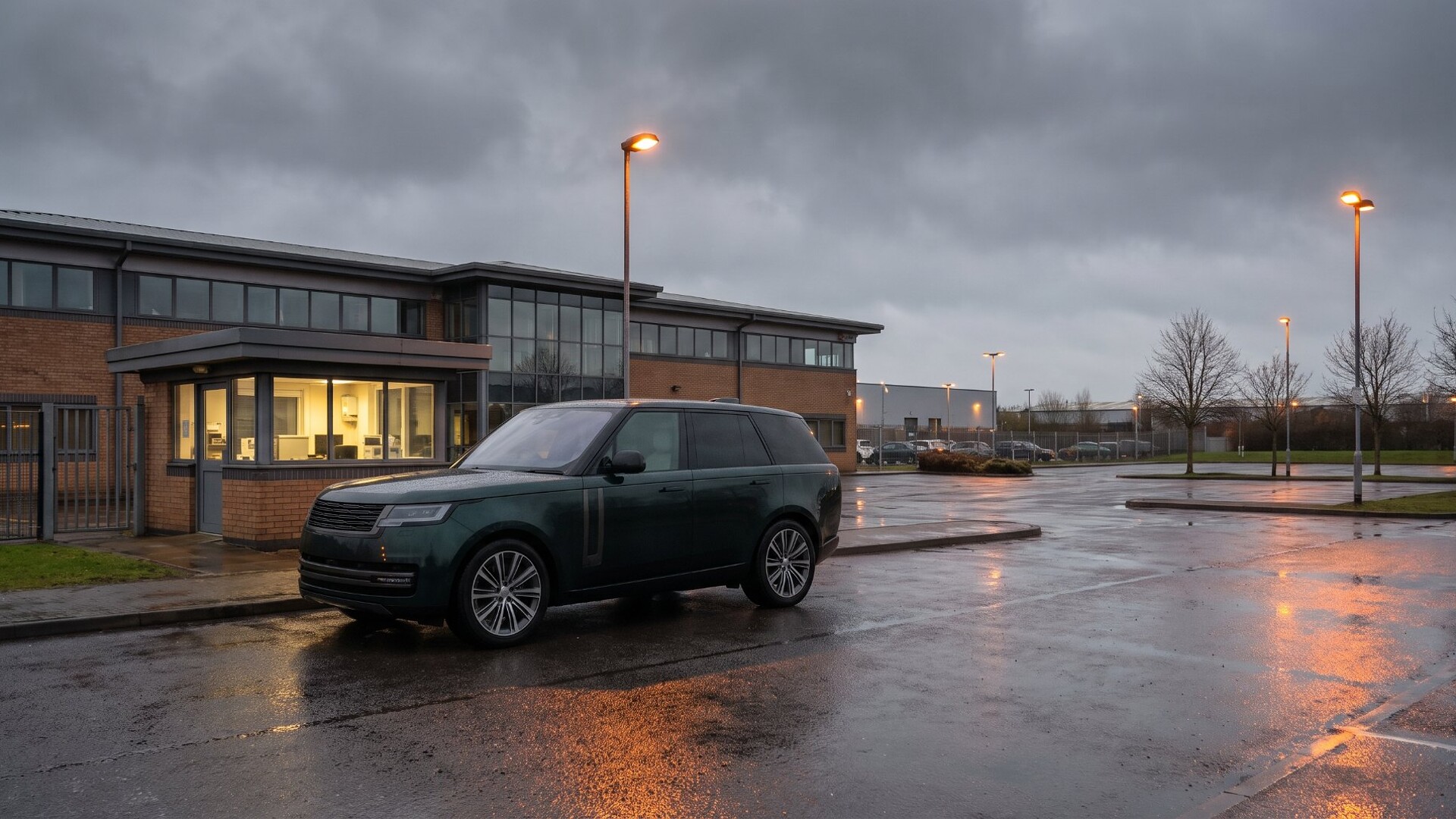
Jaguar Land Rover, the Range Rover and Defender maker that spent last week fighting BYD in a Dutch court, lost £451 million in the three months to Sept. 30, about $597 million at the Nov. 13 exchange rate of roughly $1.32 per pound. The company, based in Gaydon, England, and owned by India’s Tata Motors, disclosed the loss in its second-quarter results on Nov. 13 and cut its forecast for the fiscal year that ends in March 2027 in the same release.
The headline number is smaller than a year ago. In the same quarter of 2025, JLR lost £559 million after a cyberattack stopped vehicle production in September. This year’s loss has a different cause, and JLR chose most of it: £530 million (about $701 million) of what it calls exceptional items, which the release says cover restructuring, including separation costs for departing staff, the write-down of intangible assets under development and the write-down of other assets. Before those charges, JLR made a pre-tax profit of £6 million, roughly $8 million, on £5.9 billion of revenue.
JLR earned £109 million on the same basis in the previous quarter, and its release blames the drop on “adverse market and model mix.” Fewer of its most expensive vehicles went to its most profitable buyers, and China is where that shows up most plainly.
What JLR wrote off, and why it matters
The separation costs are the price of the job cuts. JLR said on Sept. 7 it would eliminate about 4,000 roles worldwide over two years, The Associated Press reported, as part of a plan to save £1.7 billion (about $2.25 billion). In its results, JLR ties those savings to what it calls Enterprise Missions and says the goal is to lower its breakeven volume toward 300,000 vehicles a year.
The asset write-downs say something different. Carmakers can record engineering and development spending as an asset on the balance sheet while a program is under way, then expense it gradually after the vehicle goes on sale. Writing down “intangible assets under development” means JLR has decided some of that work will not earn back what it cost. The release does not say which programs were affected or how the £530 million splits among separation pay and the two kinds of write-downs.
The breakeven target puts the job cuts in context. JLR wholesaled 79,288 vehicles in the April-to-June quarter and 82,400 from July through September, according to its Oct. 3 sales release. That is 161,688 in six months, an annual pace of about 323,000 by The Auto Wire’s math. A company selling at that rate, trying to push its breakeven down to 300,000, has little room for a bad quarter in any big market.
China wholesales fell 46% as the Chery joint venture stopped building JLR cars
JLR’s wholesales in its China region fell to 6,100 vehicles from 11,370 a year earlier and from 8,660 in the previous quarter. Retail sales of imported vehicles in China fell to 6,300 from 10,604. The steeper drop came at Chery Jaguar Land Rover, the joint venture in Changshu, where retail sales fell to 900 from 7,417. JLR’s sales release says China retail volumes were hit by the end of locally built vehicles from the joint venture in June 2026. The Changshu plant now builds Freelander vehicles, and JLR’s August results said production of the first Freelander there started July 30.
The Middle East and North Africa slipped too. Wholesales there fell to 3,700 from 5,112 in the previous quarter, which JLR blamed on ongoing disruption in the region, though retail sales rose to 5,300 from 3,406.
North America carried the quarter. JLR wholesaled 27,100 vehicles there, up from 17,879 a year earlier, when the cyberattack had shut its plants, and the company says the U.S. accounts for about a third of its wholesales. Range Rover, Range Rover Sport and Defender made up 77.6% of all wholesales.
JLR’s new forecast needs a cash turnaround in the second half
JLR now expects an adjusted EBIT margin of 2% to 3% for the fiscal year and a free cash outflow of about £1.25 billion, or roughly $1.65 billion. At its June investor day, the company had guided to a margin of about 4%. JLR’s release cites “ongoing market challenges, geopolitical risks and the exceptional costs recognised in the quarter.”
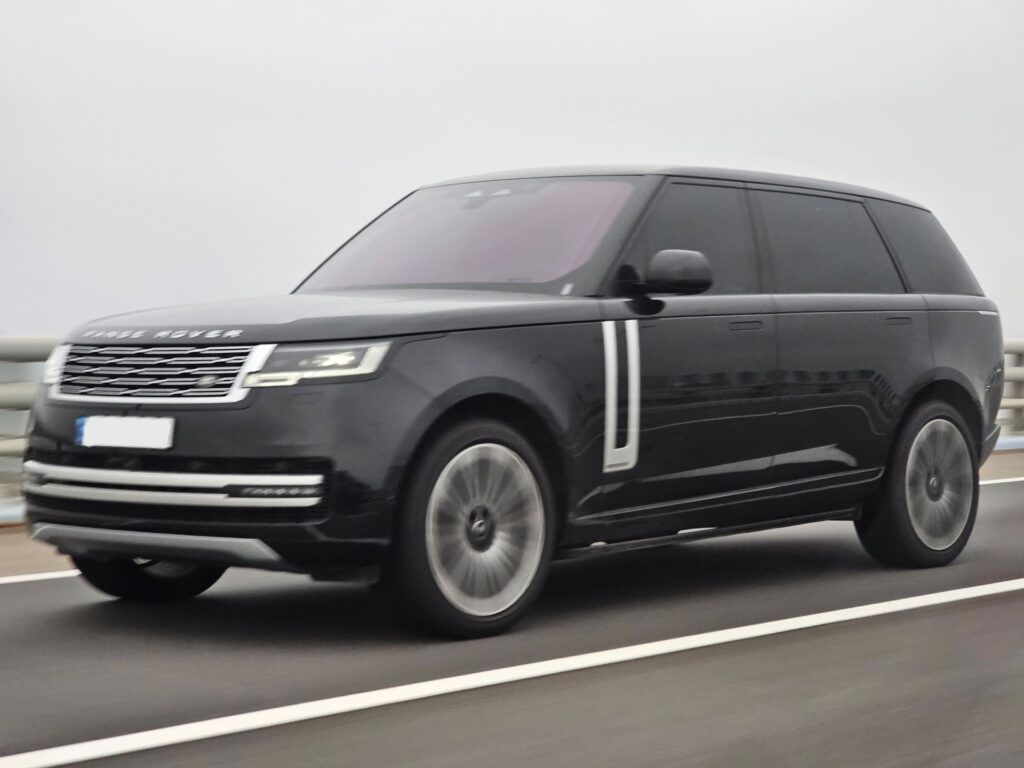
The cash forecast depends on a reversal. JLR burned £998 million in free cash flow in the first quarter and £540 million in the second, a total of £1.538 billion. To finish the year at an outflow of about £1.25 billion, it has to bring in roughly £290 million between October and March. The vehicles meant to do that are new: the Range Rover Electric, Range Rover Sport Electric and Jaguar Type 01, all built in Solihull, England, with deliveries starting in early 2027, according to JLR.
Jaguar is the extreme case. JLR wound down the old Jaguar lineup ahead of the Type 01, which means the brand has no new cars on sale until those deliveries begin. Chief executive PB Balaji said in the release that the company “delivered positive operational profits” in the quarter and the first half “despite ongoing global challenges,” and pointed to the Range Rover GT and a new electric Defender, both due from the Halewood plant next year.
How tariffs and incentives reach Range Rover and Defender buyers
With China shrinking, the U.S. matters more, and the price an American buyer pays depends on where the vehicle was built. Under the 2025 U.S.-U.K. trade deal, the executive order sets an annual quota of 100,000 U.K.-built cars at a 10% tariff, and imports above the quota pay the full Section 232 auto duty. That quota is shared by every British carmaker, not just JLR, which The Auto Wire covered when Defender pickup plans came up. Range Rover and Range Rover Sport come from Solihull and fall under it. The Defender is built in Nitra, Slovakia, so it enters as a European Union product, which faces a 15% rate under the U.S.-EU framework.
Incentives are the other lever. JLR’s release credits part of the year-over-year improvement to lower VME, short for variable marketing expense, the money a manufacturer spends on discounts, subsidized financing and lease support. Lower VME means JLR spent less helping customers buy its cars than it did a year ago. The company did not say whether the weaker forecast will change that, and a buyer should not assume factory deals are coming because the parent company had a bad quarter.
For current owners, the job cuts JLR described are aimed at its own workforce and costs, not at dealer service departments. JLR has not announced any change to how recalls and warranty work are handled, including the Range Rover knuckle recall NHTSA is still investigating.
What JLR has to deliver by March
The October-to-December quarter brings more job-cut costs, and JLR walks into it with no new Jaguar to sell and nothing built locally in China. JLR ended September with £1.8 billion in cash and £6.0 billion in total liquidity, including a new £1.0 billion term loan signed Sept. 29, so it has room to absorb another weak quarter. What it does not have is room for the early-2027 electric Range Rover and Jaguar deliveries to slip, because the second-half cash its forecast depends on starts with them.
Range Rover and Defender owners: does a £451 million quarter make you think twice about buying your next one from JLR, or about hanging on to the one in your driveway?