
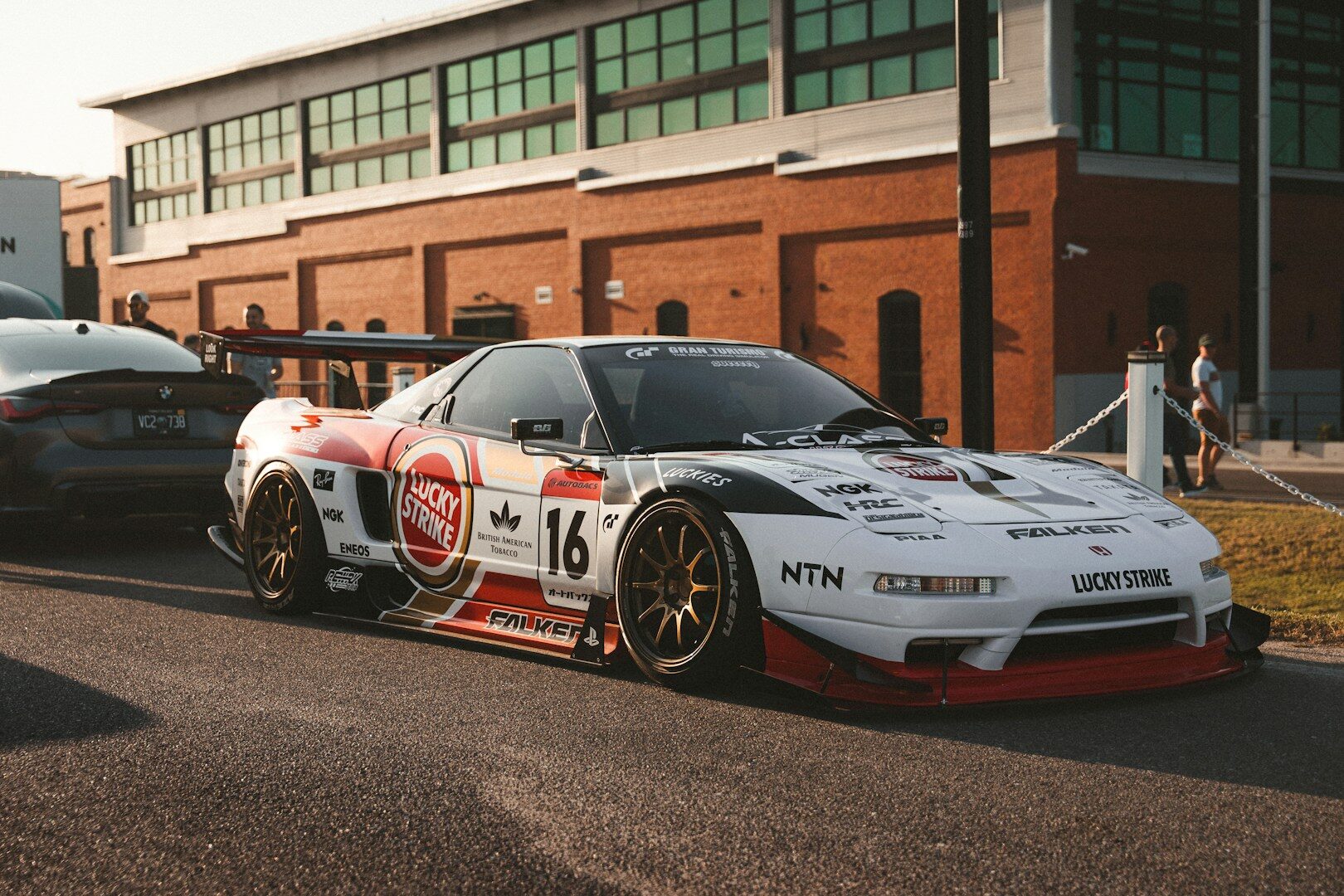
For about fifteen seconds, Honda Racing Corporation’s new Heritage Racing Program announcement looks exactly like what every manufacturer does at Monterey Car Week: dress up some old trophy cars, put them where wealthy people walk, feel good about the legacy.
Look closer. This is something else entirely.
Honda built race cars that won Le Mans. Won Daytona. Won Sebring on the first attempt. Won CART championships back-to-back. Then, when the racing was over, Honda handed those cars to the teams that raced them — and those cars got shuffled into warehouses, private collections, auction houses, and the care of restoration shops that may or may not have had the first idea what they were actually working on.
The Heritage Racing Program is Honda saying: that arrangement is over.
The Problem With Race Cars After the Race
Here’s the part nobody mentions when a manufacturer announces a “heritage” initiative: race cars have a life after racing that the original manufacturer usually has no involvement in whatsoever. They get bought and sold, restored by well-meaning shops with no access to original engineering documents, fitted with replacement parts that are close-but-not-right, and occasionally run at vintage events in a way that reflects on the brand whether the brand likes it or not.
Honda has been watching this happen to its own machinery for decades.
The HRC Heritage Racing Program changes that dynamic by putting Honda in the position it should have always occupied: the authoritative restorer. Not because Honda is sentimental. Because Honda still has the homologation documents, the original engineer notes, the photographs taken during construction, the complete technical archives, and the engineers who actually built these things. Nobody else has that. Nobody ever will.
The 2007 ARX-01a and Why the Debut Matters
The first car offered for sale under the new program is the 2007 Acura ARX-01a — the XM Satellite Radio Andretti Green Racing car that won its LMP2 class debut at the Sebring 12 Hours, driven by Dario Franchitti, Bryan Herta, and Tony Kanaan.
What Honda buries in the announcement: this was the first purpose-built Acura endurance racer and the first car and engine designed and developed entirely by HRC in the United States. Not Japan. Santa Clarita, California.
Most people assume Honda’s race engineering arrives fully formed from overseas. The ARX-01a was an American race car built by American Honda engineers — and it went out and won on the very first attempt. That’s not a footnote. That’s the actual headline.
The Electronics Problem Nobody Wants to Talk About
Restoring a twenty-year-old race car is not the same as restoring a vintage road car. The mechanical side — suspension geometry, bodywork, braking systems — is difficult but solvable with enough expertise. The electronics are something else entirely.
Race car electronics from 2007 to 2010 run on ECUs, sensors, and data acquisition systems that are either obsolete, discontinued, or no longer supported by their original manufacturers. When a private shop gets one of these cars, the choices are grim: run aging original systems that may be unreliable and unsafe, or substitute modern components that fundamentally change the driving character.
HRC can do something in between — modernize the electronics while preserving the feel and intent of the original system — because they have the original calibration data, the original software architecture, and the original engineers who wrote the code. HRC US Commercial Manager John Whiteman described it as making the cars “user-friendly for their new owners” while maintaining “the authenticity of design and driving experience.” That’s not marketing language. That’s a genuinely hard engineering problem, and HRC is the only organization on earth positioned to solve it correctly.
The Speed Record That Still Stands
One detail buried in this announcement deserves its own moment.
In 2001, Gil de Ferran set the fastest official closed-course qualifying lap in American racing history at California Speedway: 241.428 miles per hour in a Honda-powered Reynard. Twenty-five years later, that record has never been broken. Zak Brown — the CEO of McLaren Racing — recently purchased de Ferran’s championship-winning 2001 CART car from Roger Penske and asked HRC to help make it track-ready for demonstration laps at Laguna Seca this weekend.
Consider what that represents. The CEO of McLaren Racing went to Honda to restore a car built for Team Penske. That particular convergence of names would have been unthinkable in 1989, when those organizations were locked in one of Formula One’s bitterest rivalries. But race cars eventually transcend the politics of the era that built them — and the organization that designed the engine remains the only one that truly understands it.
Who This Is Actually For
These are not cars for the person who wants something to display in a living room. Comparable HRC-blessed machinery in this segment trades well into six figures, and sometimes seven. The buyers are serious collectors with the resources to transport, insure, and campaign historic race cars at events like the Rolex Monterey Motorsports Reunion.
What Honda is offering those buyers is something the private market cannot provide: certainty. Documented provenance. Factory authentication. Ongoing technical support from the engineers who designed the car. Post-restoration track testing. HRC engineers available at the track.
For a buyer spending that kind of money on a piece of racing history, the difference between “restored by a reputable shop” and “restored by the factory that built it” is not a minor distinction. It’s the entire value proposition.
The Cycle Is Compressing
HRC currently has four restored Acura ARX-05 DPi cars competing in IMSA’s Historic SportsCar Racing Series. Those cars finished their factory competitive lives in 2022. By 2026, they’re already in historic racing. The cycle from factory race car to collector piece is compressing dramatically, and Honda is positioning itself at the front of that pipeline rather than watching from outside while the market develops without them.
The program plans to expand to include historic Honda-powered IndyCar machinery — which means the cars that won championships with Scott Dixon, Dario Franchitti, and Helio Castroneves could eventually come under the Heritage umbrella. The vintage racing market for those cars is going to exist whether Honda participates or not. Honda has apparently decided it would prefer to participate.
Honda spent decades winning races and then handing the hardware to someone else. That, it turns out, was a business decision they’ve decided to revisit.
The racing never really ended. Honda just stopped paying attention to what came after it. That’s what’s changing.