
Jaguar Land Rover’s first quarter came with two ready-made villains: a fire at a component supplier in Norway, and a war in the Middle East. Both are real. Neither one explains the number that actually matters.
Buried in the JLR Q1 results is a line almost nobody picked up. Variable marketing expense — the industry’s polite phrase for the money a manufacturer spends to get a car off a dealer’s lot — climbed from 4.1 percent of revenue to 7.1 percent year over year. That is not a rounding error. That is close to double.
Here is the problem with the supply-shortage story.
You don’t have to discount a car you can’t build.
What the company actually reported
Revenue of 6.0 billion pounds, down 9.6 percent. Pre-tax profit of 109 million pounds against 351 million a year earlier, a 68.9 percent collapse. After tax, 66 million. Adjusted EBIT margin of 2.8 percent, down from 4.0. Wholesales of 79,300 units, down 9.2 percent. Retails of 80,000, down 15.3 percent.
JLR’s own explanation, in its own words, is three-part: “temporary supply constraints, including a fire at a major component supplier at the start of the quarter,” disruption tied to the conflict in the Middle East, and the planned wind-down of the outgoing Jaguar range.
All three are true. Together they still do not add up to a two-thirds profit wipeout in a quarter when the company’s US tariff burden fell from 27.5 percent to 10 percent. That tariff cut was supposed to be the tailwind of the year. It arrived, and the bottom line fell anyway.
Wholesale, retail, and the gap where the story hides
Two words get used interchangeably in coverage of car company earnings, and they mean completely different things. A wholesale is a vehicle sold to a dealer or a national importer. That is the moment the manufacturer books revenue. A retail is a vehicle sold to an actual human being who drives it home.
In a healthy quarter the two move together. When they separate, the difference is inventory, and inventory is somebody’s debt.
In the quarterly volume figures JLR published in July, they separated almost everywhere. North American wholesales were flat while retails fell 13.1 percent. China wholesales fell 26.2 percent, retails 23.9. Europe: down 12.1 wholesale, 11.4 retail.
And then there is the Middle East and North Africa, the region JLR names as the source of its disruption. Wholesales there rose 4.5 percent. Retails fell 41.5 percent.
Read that again. In the market blamed for the quarter, JLR shipped more vehicles to distributors than it did a year ago, while customers in that market bought roughly four in ten fewer.
That is not a supply constraint. That is metal arriving in a market that stopped buying. And it does not sit there for free — franchised dealers and regional importers carry stock on floorplan financing, paying interest by the day on every unsold Range Rover under a showroom light. When the aging clock runs long enough, the manufacturer ends up funding the exit. Seven point one percent variable marketing expense is what that exit costs.
The exception proves it. The United Kingdom was the only region where retails held up better than wholesales — down 1.8 percent against 5.9. The home market was the one place JLR drew inventory down instead of building it.
The fire matters, just not the way it was reported
JLR has still not named the supplier, and has not publicly confirmed the widely reported detail that the facility sits in Norway. What is on the record is the effect: Range Rover and Range Rover Sport assembly at Solihull was suspended in late March, with output halted into the second week of April.
The instructive part is not the fire. It is what the fire was able to reach.
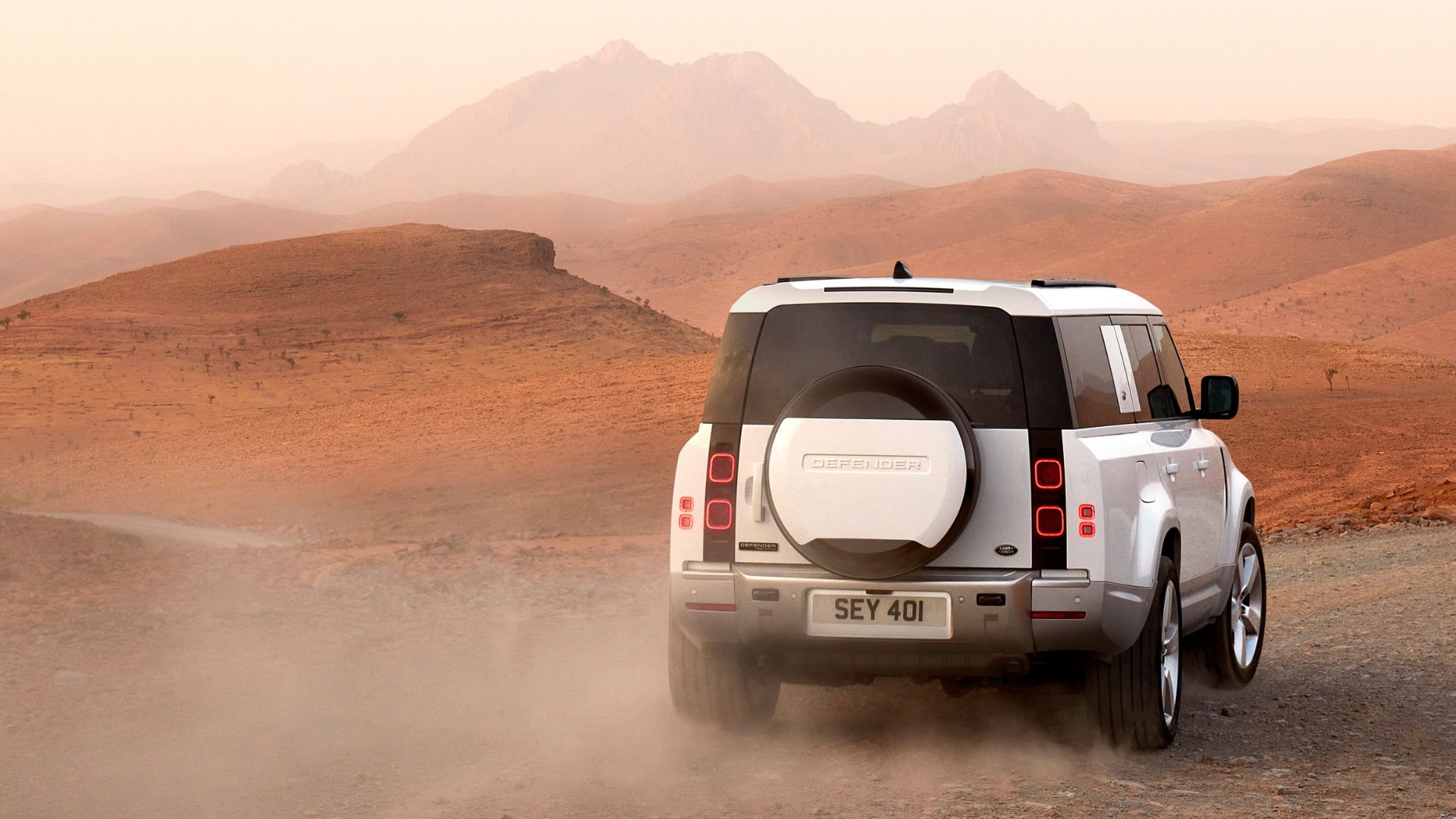
Range Rover, Range Rover Sport and Defender made up 80.8 percent of JLR’s wholesales in the quarter, up from 77.2 percent a year earlier. The company presents that as evidence of a richening mix, and on margin per unit it is. It also means four out of every five vehicles JLR sells are one of three nameplates, and two of those three come down the same lines in the same plant in the West Midlands.
One fire, at one supplier, in one Norwegian town, took out the two most profitable vehicles in the portfolio for the better part of a fortnight. That is what single-sourcing looks like when it finally shows up on a profit-and-loss statement.
Here is the part almost nobody outside a risk department knows: the insurance that covers this is called contingent business interruption cover, and it is far narrower than people assume. Most policies only extend to suppliers specifically scheduled by name in the contract. Tier-one suppliers usually make that list. The tier-two and tier-three firms that actually stamp, cast and extrude the parts almost never do — and a modern premium SUV depends on hundreds of them. An automaker can be fully insured on paper and still eat a shutdown.
JLR has now lost significant production to a cyberattack and a supplier fire inside twelve months. Two unrelated events, one shared lesson about how little slack is left anywhere in this company’s system.
The number that did not make a headline
Free cash flow for the quarter was negative 998 million pounds.
JLR closed with 1.7 billion in cash and 5.9 billion in total liquidity, so this is not a solvency story. First quarters are seasonally cash-hungry at this company. But a business that reported 109 million pounds of profit consumed roughly nine times that in cash over the same ninety days, and it is doing so while committed to 18 billion pounds of investment through FY29 and four product launches in the next few months.
Which brings up the arithmetic we covered when the company cut 300 office jobs earlier this month. JLR is targeting 1.7 billion pounds of cost savings to pull its breakeven volume down from 350,000 units to 300,000. Annualize this quarter’s 79,300 wholesales and you land near 317,000. The company is not running below the line. It is running on it.
What it costs you
If you are shopping, this is the most leverage a Range Rover or Defender buyer has had in several years, and the incentive line says it will get better before it gets worse. Stock that has been sitting since spring is the stock a dealer most wants gone.
If you already own one, the same number reads differently. Incentives are not a discount on one car; they are a reset of what every comparable car is worth. Residual values are set off transaction prices, not window stickers. Discounting hard in 2026 means softer three-year values in 2029, which means higher lease payments on the next one and lower settlement offers if an insurer writes yours off — an issue Range Rover owners in some markets are already painfully familiar with. Today’s incentive is tomorrow’s depreciation, invoiced to whoever is holding the keys.
The case for the defense
There is a real counterargument, and it deserves airing. JLR has four launches queued: Range Rover Electric, Range Rover Sport Electric, Range Rover GT and the Jaguar Type 01. The electric Range Rover alone carries a reported waitlist just under 77,000 names — nearly a full quarter of the company’s global wholesale volume, for a vehicle nobody can buy yet.
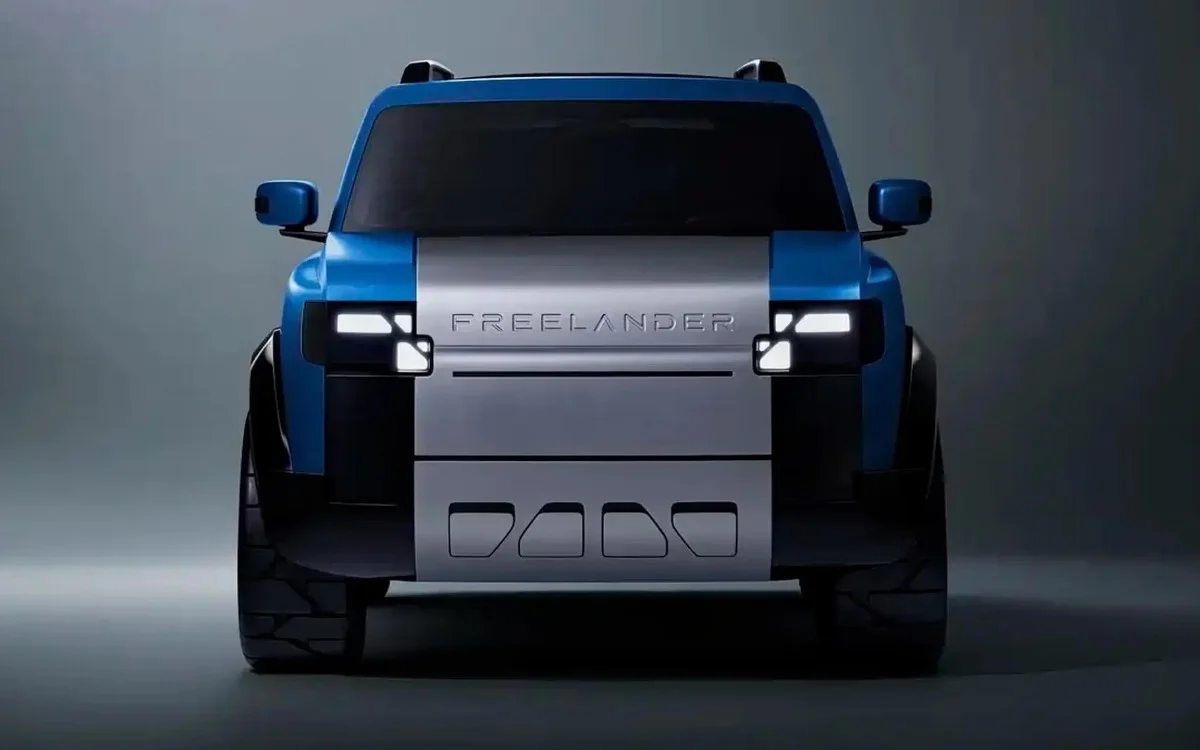
That is genuine demand signal. It is also a refundable expression of interest, not an order bank, gathered over a launch timeline that has already slipped more than once. Meanwhile the Jaguar side of the house has been deliberately selling almost nothing for months while it waits for the Type 01, a gamble that has already cost the brand its design leadership. And in China, where wholesales fell more than a quarter, the company’s answer is a locally built Freelander, whose production started at Changshu on 30 July.
Every one of those products lands in a channel that is already carrying discounted stock. New metal does not clear old metal. It competes with it.
What to remember
JLR headlined this release around delivering a profitable quarter, and it did — 66 million pounds after tax on 6 billion pounds of revenue. About a penny on the pound.
The fire will be repaired. The war will end or it won’t. Both are outside the company’s control and both will eventually stop being mentioned in an earnings release. The incentive line is the one worth watching every quarter from here, because it is the only figure in the whole document that measures what customers think these cars are worth.
A factory fire tells you what a company couldn’t build. A discount tells you what it couldn’t sell.