
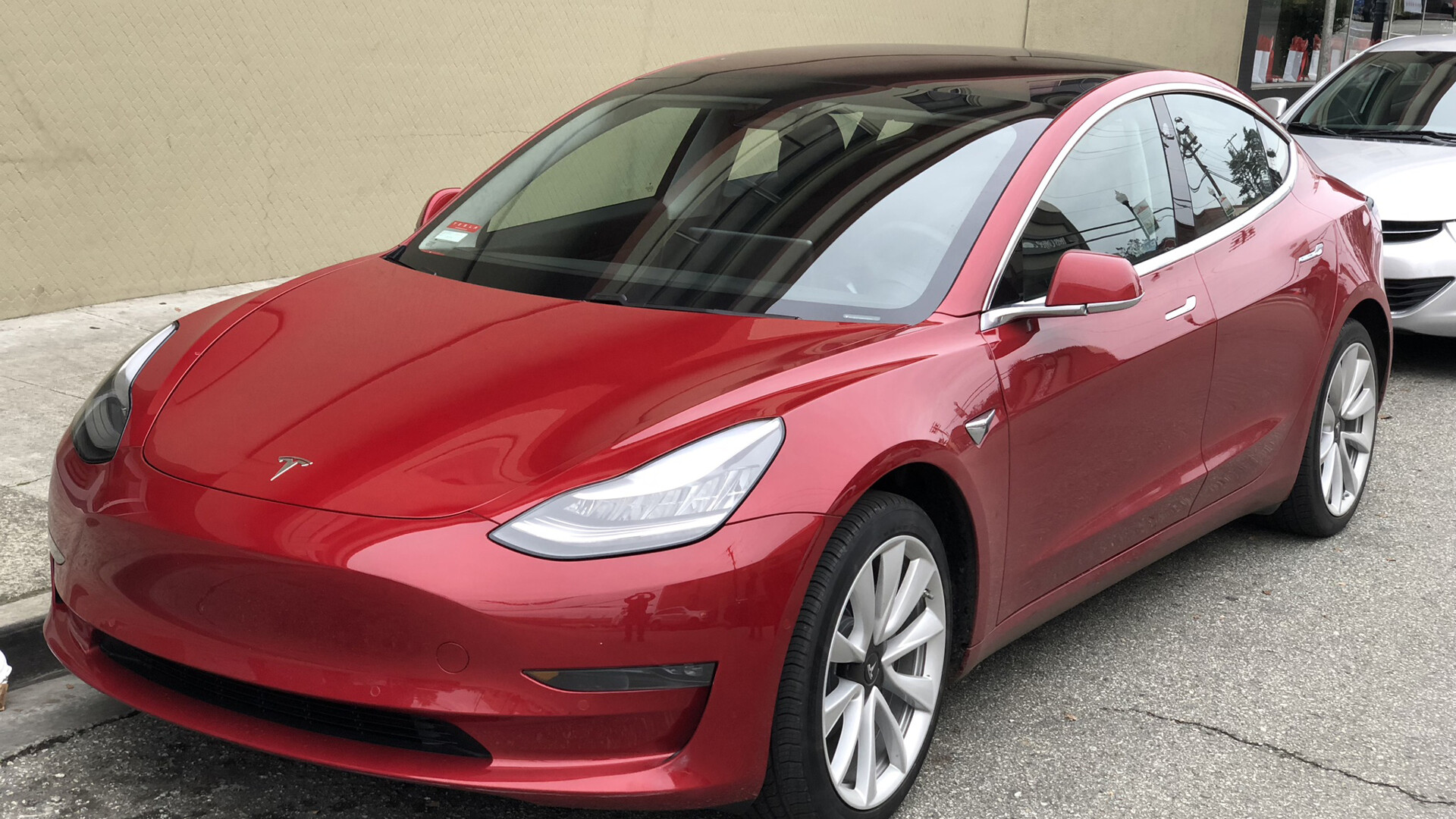
Preliminary information from Clute police in May suggested that Steven Alvarez, 23, had suffered a medical episode before his car left Brazoswood Drive, broke through the fence at Clute Municipal Park and came to rest in the park’s empty, decommissioned pool, where it caught fire. He was pronounced dead at the scene, ABC13 Houston reported the day of the crash. Four months later, a wrongful-death lawsuit filed on behalf of his estate blames something else: it says his Tesla Model 3 “suddenly and unexpectedly accelerated without any input” from him.
That phrase puts the case on the hardest ground in auto-defect litigation. Federal regulators have examined Tesla sudden-acceleration complaints twice, most recently in March, and both times concluded the cars did what the driver’s pedal told them to do. Texas law then requires the family to prove a safer design existed. And a Model 3 tracks its accelerator pedal many times a second, so the central question in this lawsuit may already have an answer stored in the car’s data, if that data survived the fire.
What the estate’s petition says
Leolina Medrano, acting as representative of Alvarez’s estate, filed the suit against Tesla Inc. in Travis County, the Austin American-Statesman reported on Sept. 30. The petition argues the car was “unreasonably dangerous” and that Tesla failed to warn about risks in a vehicle it designed and sold. It asks for a jury trial and relief of more than $1 million, leaving the final number to jurors. The estate filed in Austin rather than Brazoria County because Tesla keeps its principal office at Gigafactory Texas, according to the Statesman’s account. Neither Tesla nor the estate’s lawyers answered the paper’s questions, and The Auto Wire has not reviewed the petition itself.
The crash happened on Wednesday, May 20. Police said Alvarez was driving south on Brazoswood Drive, near Brazoswood High School, when his car went through the park fence and into the pool area. Brazosport ISD identified him as the IT technician at Lake Jackson Intermediate School and a 2022 Brazoswood graduate. The medical-episode explanation was preliminary, and no final police finding has been made public. The Statesman reported that the petition includes a photo of firefighters putting out the burning car. Neither the police account nor the Statesman’s description of the petition names a defective component or explains how the car could have sped up with nobody pressing the pedal.
NHTSA has already tested this claim against Tesla’s data twice
The first test came from a petition filed in December 2019 by Brian Sparks, who asked the National Highway Traffic Safety Administration to recall every Model S, Model X and Model 3 built to that point. He cited 232 owner complaints of sudden unintended acceleration. NHTSA’s Office of Defects Investigation opened the review on Jan. 13, 2020, and pulled the cars’ event data recorders, Tesla’s own vehicle logs and, where it existed, video for 118 incidents. The denial, published Jan. 13, 2021, laid out what that data showed. In 97 percent of the crashes reviewed, the accelerator was pressed to 85 percent of its travel or more, and peak application began within two seconds of impact. Ninety percent of the crashes showed no braking at all; the rest showed braking less than a second before the collision. About 51 percent happened within the driver’s first six months with the car. The agency’s conclusion: “The data clearly point to pedal misapplication by the driver as the cause of SUA in these incidents.”
The same document describes hardware meant to guard against a false pedal signal. Tesla’s accelerator pedal assembly uses two independent inductive sensors. The brake system runs independently of the motor controls. The car also has brake-override logic: if the driver presses the accelerator and then the brake, motor torque drops to zero. If the brake goes down first and the accelerator second, torque is capped at 250 newton-meters and power at 50 kilowatts. For an owner, that means pressing the brake after the accelerator cuts motor torque to zero even if a foot stays on the accelerator.
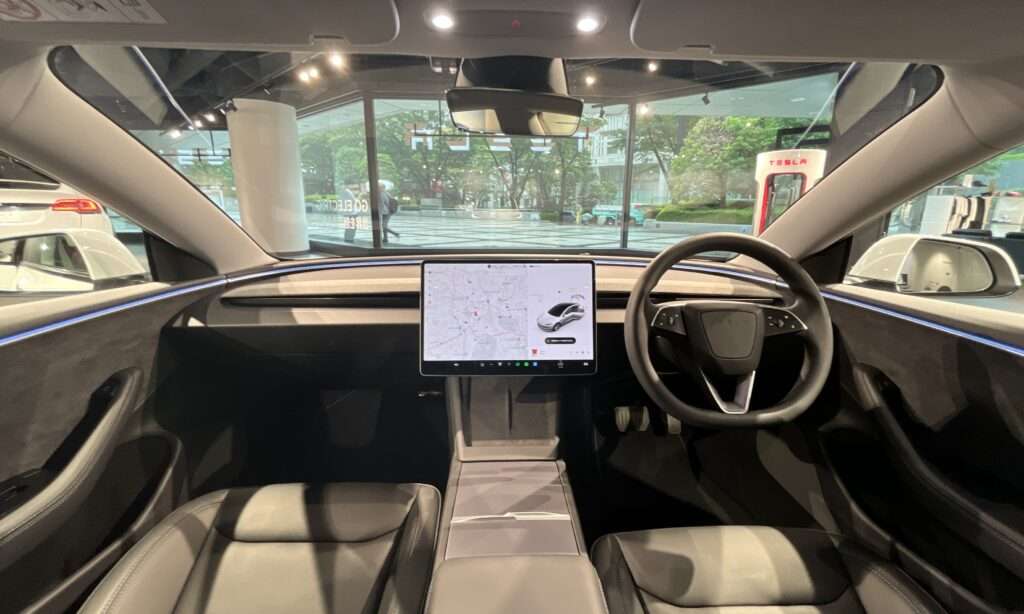
The second test closed this year. Costas Lakafossis petitioned NHTSA in March 2023, arguing that drivers who get used to one-pedal regenerative braking may hit the accelerator by mistake in an emergency. He proposed a software interlock requiring brake application before a shift from Drive to Reverse. NHTSA narrowed its review to manual driving and those shifts, found one-pedal driving capability across 21 manufacturers and 64 models from 2008 through 2023, and denied the petition on March 30: “ODI has not found evidence of a safety defect in Tesla vehicles as described in the Petition.”
Toyota’s runaway cars had mechanical causes
Sudden acceleration has had proven causes. Toyota’s crisis produced real defects, and Toyota paid for hiding them. The company recalled nearly 8 million U.S. vehicles in 2009 and 2010 for accelerator pedals that could stick partway down and pedals that could get trapped under floor mats. In March 2014 the Justice Department announced a $1.2 billion penalty after Toyota admitted misleading consumers and NHTSA about both problems.
What federal investigators did not find was the version of the problem the Alvarez petition describes. In the joint study the Transportation Department released in 2011, NASA engineers reviewed Toyota’s circuitry and more than 280,000 lines of software code, exposed vehicles to electromagnetic radiation, and found no electronic flaw capable of opening the throttle wide enough to cause a dangerous high-speed surge. NHTSA said the stuck pedal and the trapped pedal remained the only known causes. Both are physical, and both leave a pedal pressed down. In those two federal reviews, one covering Toyota and one covering Tesla, regulators did not find a car that accelerated hard while every pedal was up.
Pedal errors themselves are well documented. A 2012 NHTSA study of pedal-error crashes found they cluster in parking lots and follow a U-shaped age pattern: drivers under 20 made up just over 3 percent of all crashes but nearly 18 percent of pedal-error crashes, and older drivers were also overrepresented. A 23-year-old leaving a city street does not fit that profile neatly, which is one more reason the car’s own record will matter more in this case than national statistics.
Texas law makes the estate name a better design
Under Section 82.005 of the Texas Civil Practice and Remedies Code, a plaintiff alleging a design defect must prove two things by a preponderance of the evidence: that a safer alternative design existed, and that the defect was a producing cause of the death. The statute defines a safer alternative design as one that would have prevented or significantly reduced the risk without substantially impairing the product’s usefulness, and that was economically and technologically feasible when the car left the manufacturer’s control.
Arguing that a car is dangerous in the abstract won’t satisfy that. The estate’s lawyers will need to identify a failure in a specific Model 3 system and show a design that would have stopped it. The most obvious candidate for an EV-specific theory, Lakafossis’s brake interlock, is one NHTSA examined and declined to require in March. A failure-to-warn claim is a separate route and depends on what Tesla told drivers, but it still needs a hazard to warn about.
The Model 3’s data log may settle the pedal question
Besides the event data recorder federal rules describe, Teslas keep their own vehicle logs. NHTSA’s 2021 notice says the accelerator pedal position sensor refreshes every 10 milliseconds, and the agency built its findings from a mix of event-recorder data and Tesla’s own logs. A recent Texas case shows how fast that record can answer the question. After a 2025 Model 3 hit a house in Katy on June 19 and killed a person inside, the National Transportation Safety Board’s preliminary report, released July 15, said electronic data showed the driver had overridden Full Self-Driving (Supervised) by pressing the accelerator pedal to 100 percent, and that the car was going more than 70 mph on a street posted at 30.
The Clute car burned, and whether its modules survived, or what reached Tesla before the crash, has not been made public. If the data exists and shows the accelerator pinned, the case turns on why, and the police’s preliminary account offers one answer: a driver in a medical emergency can press a pedal without meaning to. That would be an input the driver didn’t intend, and a jury would be weighing a very different claim from a car that produced acceleration on its own. Tesla does not always take these cases to a verdict. The Statesman reported that the company settled, on undisclosed terms, a suit by the estate of Clyde Leach, who died after his Model Y allegedly accelerated off the road and into a gas-station pillar in 2021.
The Clute case also joins other Tesla product-liability suits that turn on what the car recorded and what the company knew, including a Model Y crash on Interstate 90 now in federal court in Washington. Tesla, meanwhile, is working to put a Cybercab with no pedals at all on public roads.
What comes next in Travis County
Three things will shape this case before any jury hears it: Tesla’s answer to the petition, which will show whether the company intends to put vehicle data in front of the court early; whether the Clute Police Department’s final report, or a medical examiner’s finding, confirms the medical-episode account; and whether the estate’s lawyers name a specific defect and an alternative design that satisfy Section 82.005. For Model 3 owners, the federal record points to one useful fact: the brake overrides the accelerator when it is pressed second, so in any surge, the response is to press the brake and keep it pressed. Anyone worried about an open defect on their own car can check recent recalls by VIN.
If your Tesla’s data log could show exactly what your foot did, would you want it released after a crash even if it didn’t help your side?