
Most lawsuits over Tesla crashes circle the same question: was the car driving itself? A new Tesla Model Y lawsuit out of Washington, at least as it has been described so far, never gets there. It turns on something far more ordinary, and potentially more uncomfortable for Tesla: two visits to the service center.
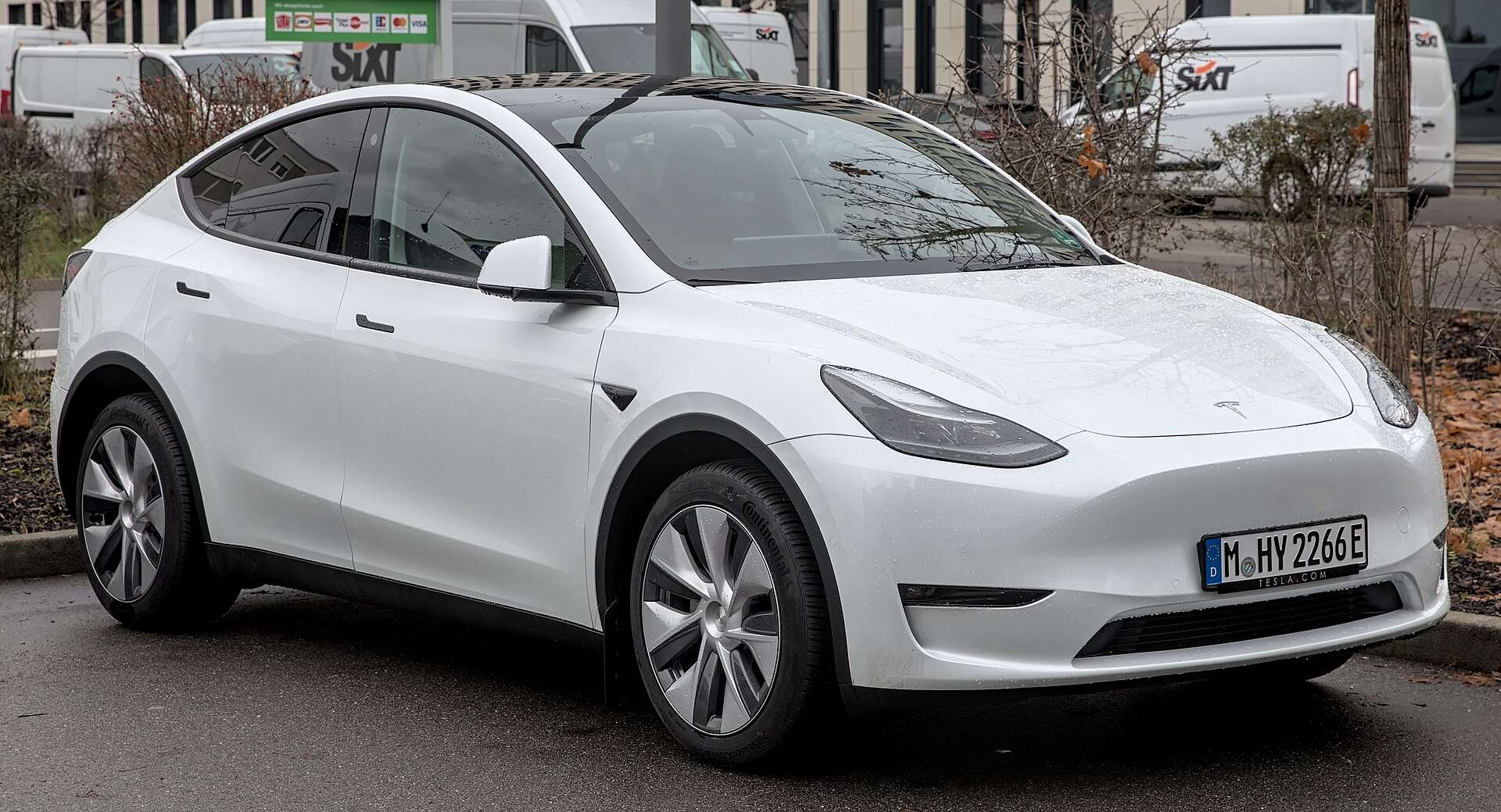
Noah Hampton says his 2022 Model Y lost stability and steering on a rain-soaked stretch of Interstate 90 near Issaquah on Aug. 29, 2023, and slammed into a concrete barrier without deploying its airbags. He sued Tesla in King County Superior Court in August. On Monday, Tesla moved the case to federal court, according to the docket in the U.S. District Court for the Western District of Washington, where it is now Hampton v. Tesla, Inc., No. 2:26-cv-03553, classified as a personal-injury product-liability case.
None of the allegations have been tested in court, and Tesla had not publicly responded when KREM first reported the complaint. But the shape of the case is worth studying, because it exposes a pressure point that exists for Tesla in a way it doesn’t for most automakers.
The crash is the headline. The paperwork is the story.
What the complaint says
According to the complaint as publicly described, Hampton was heading west near milepost 19 at about 4:37 p.m. The road was wet. He says he was driving normally when the Model Y suddenly lost stability and steering control, didn’t respond to his attempts to recover, and veered into the barrier. The Washington State Patrol investigated and did not cite him, the suit says.
The detail that matters most comes earlier. Hampton alleges he had taken the SUV to Tesla for warranty service at least twice before the crash for problems with the rear drive motor, and that Tesla never identified or fixed problems with the car’s electronic drive and stability-control systems.
He says he suffered serious neck, back and knee injuries, was out of work for an extended period from his job as a Boeing aircraft maintenance technician and inspector, and may need spinal surgery. He is seeking damages for medical bills, lost wages and earning capacity, and pain and suffering.
Wait, what does a drive motor have to do with steering?
More than most drivers realize.
Every light vehicle sold in the U.S. has to meet Federal Motor Vehicle Safety Standard 126, the electronic stability control rule. The regulation doesn’t just describe a system that brakes individual wheels to straighten a skidding car. It also requires a means to modify engine torque “as necessary, to assist the driver in maintaining control.”
In a gasoline car, that means throttling back the engine. In an electric car, the “engine” is the drive motor. The same motor that pushes the car forward is also the actuator stability control reaches for when it needs to cut power, and on lift-off, the motor’s regenerative braking puts drag on its axle. On a dual-motor Model Y, the rear unit is the workhorse.
That’s why the complaint lumps “electronic drive and stability-control systems” together, and why it’s not as strange a pairing as it sounds. In an EV, they aren’t separate departments. They are one control loop. A fault in how the rear motor delivers or withdraws torque, on a wet interstate at highway speed, is exactly the kind of thing stability control exists to manage, and exactly the kind of thing that could overwhelm it if the motor itself is misbehaving.
To be clear, nobody has shown that happened here. That is what the case will have to prove, and the complaint’s version is only one side. But it explains why a plaintiff would point at a drive-unit repair history in a loss-of-control crash, rather than at the steering rack.
At Tesla, the mechanic and the manufacturer are the same company
Here is the part that should get the attention of anyone who follows how Tesla sells and services cars.
At a Ford, Toyota or Chevrolet store, the technician who looks at your car usually works for an independently owned franchised dealership. The automaker gets warranty claims and field reports, but the dealer is a separate business.
Tesla doesn’t work that way. It sells direct and runs its own service centers. When a Tesla technician writes up a repair order, Tesla the manufacturer is, in a very literal sense, the one learning about the problem.
Washington’s product liability statute makes that matter. Under RCW 7.72.030, a manufacturer can be liable not only for how a product was designed and built, but for failing to warn after the sale, when it “learned or where a reasonably prudent manufacturer should have learned” about a danger connected with the product. The complaint’s failure-to-warn claim fits right into that language.
In a franchise system, a manufacturer can at least argue about what reached headquarters. When the service bay has the manufacturer’s name on the door, that argument gets harder. Tesla’s direct model is usually pitched as a convenience for owners. In a courtroom, it can also become a very short chain of knowledge.
The service center that fixes the car and the company that designed it share a single memory, and a lawsuit like this one is an attempt to read it.
Whether those two warranty visits reveal a pattern, a misdiagnosis, or a routine repair unrelated to the crash is unknown. Tesla will almost certainly argue the latter. But the records exist, they are Tesla’s own, and discovery is where they will surface.
The airbag question is less simple than it sounds
The complaint also says the airbags didn’t deploy when the Model Y hit the barrier. That sounds damning. It may not be.
The National Highway Traffic Safety Administration says frontal airbags are generally designed to fire in moderate-to-severe frontal or near-frontal crashes, roughly equivalent to hitting a solid, fixed barrier at 8 to 14 mph or higher. The agency also notes that some crashes are mild enough that an airbag isn’t needed to protect a belted occupant.
A car that veers into a concrete barrier at highway speed can hit at a shallow angle, scraping and redirecting rather than stopping dead. That can produce a violent event for the occupant without the kind of straight-ahead deceleration a frontal airbag sensor is looking for. Or the airbag logic may have failed. The point is that “the airbags didn’t go off” is a question to be answered with data, not a conclusion by itself.
The car already knows what happened
That data likely exists. Federal rules in 49 CFR Part 563 set out what event data recorders must capture when a car has one, including vehicle speed, accelerator position and brake status in the seconds before a crash, along with airbag deployment timing. Tesla’s Model Y owner’s manual confirms the car records data in a non-trivial crash, including how fast it was going and how hard the pedals were pressed.
Here’s the catch most owners don’t know: under the federal rule, steering input is one of the elements that has to be reported only if the manufacturer records it. The data that could best settle whether the driver steered and the car didn’t answer is not a guaranteed part of the federal black box. What Tesla’s systems actually logged, beyond the federal minimum, could end up being the most important evidence in the case.
The recalls that don’t cover this car
Tesla’s steering has been under federal scrutiny before. In July 2023, a month before this crash, NHTSA opened a preliminary evaluation covering about 280,000 Model 3 and Model Y vehicles after 12 complaints of lost steering control, often accompanied by warnings that power steering assist was reduced or disabled. In January 2025, Tesla filed recall 25V-092 for 376,241 vehicles over an overvoltage issue in the power steering electronics, fixed by an over-the-air update Tesla had begun pushing in October 2023.
Both covered 2023 model-year cars. Hampton’s is a 2022. Neither the investigation nor the recall applies to his vehicle, and his complaint, as described, is about the drive and stability systems rather than power steering assist.
That gap is instructive. A recall only reaches the specific build window and failure mode a manufacturer or regulator defines. Owners whose problem falls outside those lines have two paths: the service center, and the courthouse.
Why the calendar and the courthouse matter
Two procedural details are easy to miss.
First, timing. Washington’s statute of limitations for personal injury is three years. The crash happened Aug. 29, 2023. The suit was filed in August 2026, inside the final stretch of that window.
Second, venue. Tesla removed the case under federal diversity jurisdiction, which applies when the parties are citizens of different states and enough money is at stake. Tesla has been a Texas corporation since its 2024 reincorporation, according to its certificate of formation filed with the SEC, and is headquartered in Austin. Hampton is a Washington resident. Defendants often prefer federal court for its procedural rules and jury pools, and moving there is a routine early step, not a signal about the merits.
What to take from it
Tesla crash litigation has trained the public to think in terms of Autopilot, Full Self-Driving and driver attention. This case, if it proceeds as described, is a reminder that EVs also fail in the old-fashioned way: a component acts up, a car goes to the shop, and the question becomes what the company knew and when.
The practical lesson for owners of any car is simple. Keep every repair order. Write down what warning messages said and when. If a problem keeps coming back, a written record of each visit is worth more than any recall notice you might someday receive.
For Tesla, the lesson is sharper. Owning the service network means owning the knowledge that flows through it. That is a real advantage when it is used to find and fix problems early. It is a liability when a customer can point to a repair order and ask why the fix didn’t stick.
For more on how EV software and hardware faults surface, see how Toyota found an EV power-loss bug by accident, why Tesla’s Cybercab self-certification puts federal oversight to the test, and this week’s recall roundup.
Should an automaker that also runs its own service centers be held to a higher standard for what its technicians see? Or is a repair visit just a repair visit? Share your take in the comments.