
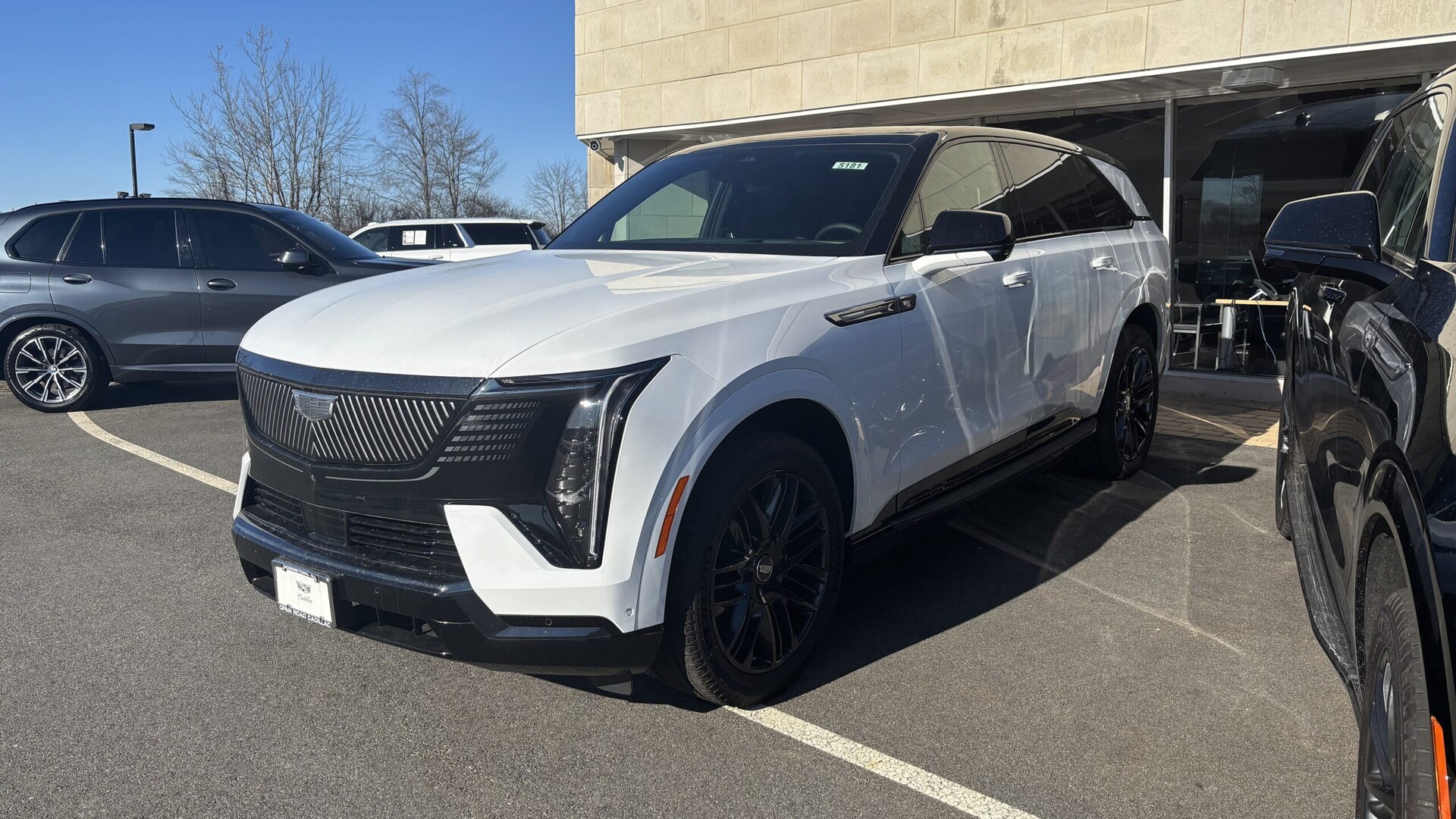
General Motors has already written the sentence it will use to sell eyes-off driving. In the release announcing the system last October, GM said turquoise lighting across the dashboard and mirrors of the 2028 Cadillac Escalade IQ will be “a visual cue that it’s safe to sit back, read, or catch up on messages while the vehicle handles the drive.” Attached to the announcement is a footnote six words long: “Availability and permissible use by state.”
That footnote carries more weight than the light. I read the phone-use statutes in four states that matter to this launch, and they give four different answers to whether an Escalade IQ owner can legally answer a text with the system engaged. None of them says who is responsible in the seconds after the car asks for the wheel back, which is the moment most likely to end up in front of an insurance adjuster.
What GM has promised for the Escalade IQ
GM’s own description of the feature has stayed consistent for a year. The October 2025 release said eyes-off driving arrives in 2028 on the Escalade IQ, “beginning with highways,” using lidar, radar and cameras rather than cameras alone. The same release said Google Gemini-based conversational AI would let drivers “draft and send messages.” In an August 2026 explainer, GM said the system would let drivers look away from the road while it is engaged, and added the qualifier that the 2028 date is “subject to development, validation and other factors.” The same page puts today’s hands-free Super Cruise on nearly 750,000 vehicles with more than one billion miles driven.
GM executives have been plainer in person. Tyson Becker, GM’s executive director for autonomous vehicle strategy and product, told The Associated Press this week that the system lets drivers do other things in the cabin, listing looking at a phone, working on a laptop, taking a meeting and watching a movie. Maureen August, a senior manager at GM Research and Development, told the AP the company’s goal is to warn drivers early enough that they can take over if needed. GM has not published how many seconds that warning will be.
GM is about to say more. The Detroit Free Press reports that GM Forward, the company’s technology briefing, returns next week. GM also reports third-quarter earnings on Oct. 20.
Why your car’s screen won’t show you a text today
Anyone who has tried to type an address into a dashboard while rolling knows the screen goes gray. That lockout traces to a federal document most drivers have never heard of. In April 2013, NHTSA published its Visual-Manual Driver Distraction Guidelines for In-Vehicle Electronic Devices. They tell automakers that any task on a built-in screen should be doable in glances of 2 seconds or less, adding up to no more than 12 seconds away from the road. Some tasks fail by definition, and the agency recommended locking them out while driving: manual text entry for messaging or web browsing, displaying text to read from books, web pages or social media, and video unrelated to driving.
The guidelines are voluntary, and NHTSA said in the notice that they do not have the force of law. The gray keyboard most drivers run into on a moving car’s screen matches that list. The guidance assumes a human is driving, and its 12-second budget only makes sense if that human is watching the road.
Eyes-off driving is the first consumer feature designed to switch that logic off. When the turquoise light is on, GM wants the screen to behave like a parked car’s screen while the vehicle is doing highway speeds. That is a software decision GM controls. Whether the driver is allowed to use it is not.
Michigan, Florida, Nevada and California answer differently
Start in GM’s home state. Michigan’s hands-free law, MCL 257.602b, bars drivers from holding or using a mobile electronic device. Subsection (10)(a) says the ban does not apply to a Level 3, 4 or 5 automated driving system, or a vehicle equipped with one, while the system is engaged. The statute uses SAE International’s J3016 definitions to sort those levels. Under that scheme, a Level 3 system drives within set conditions and hands control back to a human on request, which matches how GM describes its system. GM has not said publicly which SAE level it will certify, and the Michigan exception turns on that label.
Florida goes further. Its wireless-device ban, section 316.305, exempts a driver “operating an autonomous vehicle” with the automated driving system engaged, and a separate statute, section 316.85, says the system itself “shall be deemed to be the operator” when engaged. Nevada takes a third route. NRS 484B.165 provides that a person is deemed not to be operating a vehicle while it is lawfully driven autonomously, so the phone law has nothing to attach to.
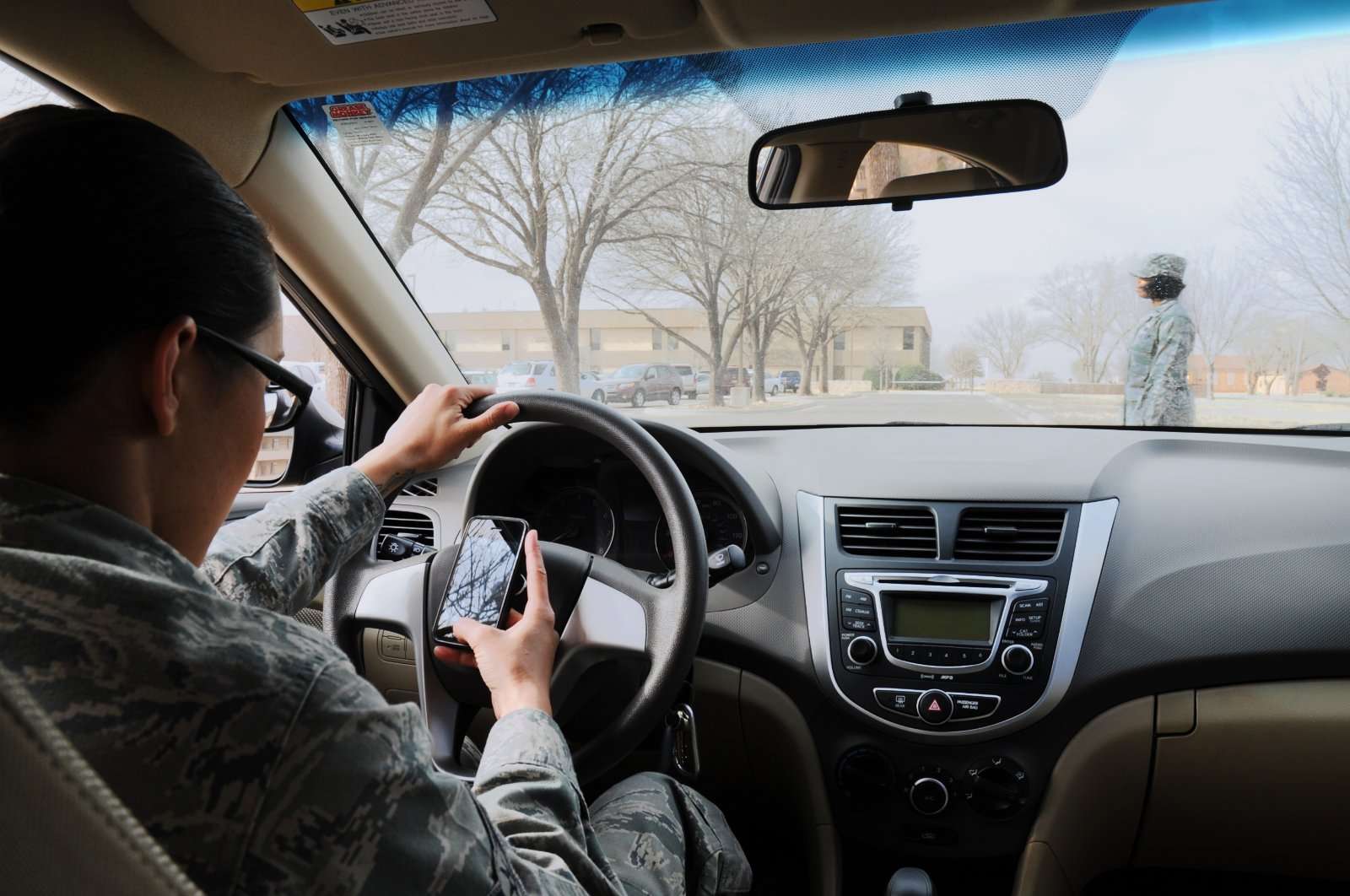
California, the most populous state, has no such carve-out in its handheld law. Vehicle Code section 23123.5 says a person shall not drive while holding and operating a handheld phone unless it is used hands-free, and the statute contains no exception for automated driving. Subsection (b) does say the section does not apply to “manufacturer-installed systems that are embedded in the vehicle.”
That line gives GM a reason to keep messaging on its own screen. Under the plain text of the California statute, a driver holding a phone to read a text while the Escalade drives itself is covered by the ban, while the same driver reading the same text on the factory display, through the Gemini assistant GM has promised, falls outside it. That is my reading of the statute; no court has ruled on it. Either way, the legal safe harbor in the biggest state sits on hardware GM builds and software GM sells.
California has approved one eyes-off system before. When the state DMV cleared Mercedes-Benz Drive Pilot in June 2023, it limited the system to designated highways, daylight and speeds not exceeding 40 miles per hour, and said the driver must remain behind the wheel to take over when prompted. That is a traffic-jam feature. GM is aiming higher; Sam Abuelsamid, an analyst at the research firm Telemetry, told the AP the systems expected in 2028 would operate at highway speeds, and that automakers are seeking approvals state by state.
Who is driving during the handoff
The phone laws settle whether a driver gets a ticket. They say much less about fault when the Escalade asks for the wheel back and the driver is halfway through a reply.
Florida’s statute ties operator status to the system being engaged. Read literally, once the system disengages the human is the operator again, whether or not the human has looked up from the screen. None of the phone-use or operator statutes I read in the four states defines a grace period between a takeover request and the moment the driver is responsible.
Michigan does have a law that makes the manufacturer liable when its automated system is at fault. MCL 257.665b says a manufacturer “shall assume liability for each incident in which the automated driving system is at fault” while it controls a vehicle. That provision covers vehicles in a manufacturer’s own participating fleet under the state’s SAVE program, which also requires the manufacturer to insure those vehicles. An Escalade IQ sold to a private buyer is not in that fleet. After a crash, the owner’s personal auto policy is the first stop.
Federal crash reporting already treats the handoff as part of the system’s record. NHTSA’s Standing General Order, last amended in April 2025, requires automakers to report crashes in which an automated driving system or Level 2 driver-assistance system was engaged at any time from 30 seconds before the crash through its end. The order counts attempts to transfer control that were rejected, aborted or still underway in that window. So if an Escalade asks for the wheel 8 seconds before a serious crash, the crash falls inside GM’s federal reporting window as one involving its system, while under Florida’s wording the driver may have been the operator for most of those 8 seconds.
That mismatch will be argued with data. A system that hands control back has to know when it issued the request and whether its driver-facing camera saw the driver look up, and that record becomes evidence. Whoever controls access to it, and how quickly a plaintiff’s lawyer or an insurer can get it, will matter more in these cases than any statute. Our earlier look at the system’s sensors and repair costs covers the hardware side of that bill.
Texting is becoming a car feature across the industry
GM is not the only company moving messaging from the phone to the car. Tesla’s Model Y manual already describes its Grok assistant composing and sending texts on a driver’s behalf, by voice. GM’s plan goes further: the turquoise light is designed to tell the owner they can stop watching the road, and owners will act on that signal.
The states have mostly written their automated-driving laws with robotaxi fleets and test vehicles in mind. California only began letting officers write up a driverless car for a traffic violation on July 1, 2026, and that notice carries no fine and no points. A privately owned SUV whose owner is sometimes the driver and sometimes a passenger in the same lane, on the same trip, fits awkwardly into all of it.
Questions GM can answer at GM Forward
GM can resolve most of this with specifics. The useful ones: which states the Escalade IQ will launch in with eyes-off enabled; whether GM will certify the system as SAE Level 3, which decides whether Michigan’s exemption applies; how many seconds of warning a driver gets before a takeover; whether texting will work only on the factory screen or also on a handheld phone; and whether GM will accept responsibility for crashes that happen while the system is engaged, as Michigan already requires for automated fleets. Mercedes’ approval in California shows regulators will grant eyes-off permission with tight limits. GM’s version is meant to run at highway speeds, and the first crash during a handoff will test every answer GM gives next week.
When an eyes-off car asks for the wheel back and a crash follows seconds later, who should pay: the driver who was reading a message, or the company whose dashboard light said it was safe to read?