
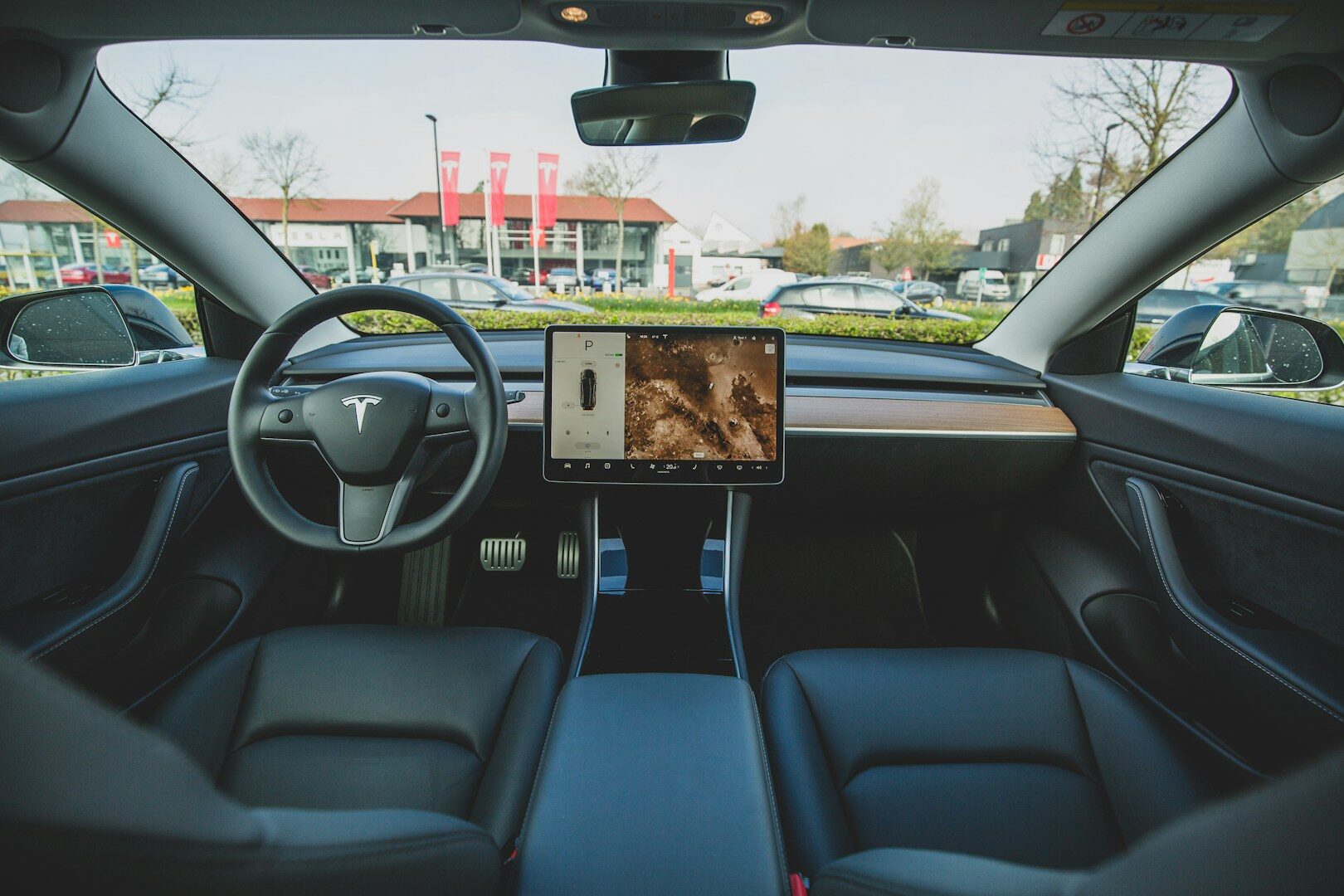
Buried in the fine print of the Tesla Model Y manual is a small addition that says a lot about how Tesla ships software these days: a new line under Grok’s “Assistant” mode telling owners they’ll soon be able to ask the AI to fire off a text message on their behalf. Say something like a quick heads-up to a contact, and Grok composes it and sends it. Simple enough. Except it doesn’t work yet. Tesla published the instructions before the feature actually exists in any customer’s car.
That’s not a leak in the traditional sense. It’s Tesla doing what Tesla does: writing the manual for the car it’s building, not just the car you’re driving.
What’s Actually Live Right Now
If you check Tesla’s own support page for Grok, the confirmed feature set as of this writing covers navigation commands, phone calls, music search and playback, climate adjustments, opening the glovebox, and pulling up settings in the Controls panel — all through natural conversation rather than rigid command phrases. Text messaging isn’t on that list. It’s only in the manual, which Tesla treats less like a static user guide and more like a rolling changelog for whatever’s coming down the software pipe next.
Buyer’s guide: Best Car Phone Mounts for iPhone & Android in 2026
This is worth understanding if you’re new to Tesla ownership: the company has a long habit of documenting a feature in the manual weeks or months before it’s switched on in your car, because the actual activation often happens server-side rather than through a full over-the-air software push. Your car might already have the code sitting dormant in the infotainment stack, waiting for Tesla to flip a switch on the backend. It’s a cheap way to gauge reaction and get documentation done early, and it’s also why Tesla forums are full of people insisting a feature is “hidden” in their car when really it’s just not turned on yet.
Why This Isn’t the Same as “Text John”
Here’s the part that actually matters mechanically. Every modern Tesla with Bluetooth phone pairing has been able to send a text through voice command for years — you say “text” plus a contact name, and it works, provided your phrasing lines up with what the system expects. That’s rigid command-and-control voice recognition: a fixed grammar of trigger words mapped to a fixed set of actions.
Grok working the same job is a fundamentally different pipeline. Instead of pattern-matching your sentence to a command template, it’s running your speech through a large language model that interprets intent, cleans up the phrasing, and generates the outgoing message text itself. That’s why Tesla’s own voice-to-text dictation has a reputation for mangling words or missing context — it’s built for narrow recognition, not comprehension. Routing messaging through Grok is a bet that a model trained on actual language understanding will out-transcribe a legacy speech-to-text engine. It might. It also might occasionally invent a word your mother never expected to see in a text from you, which is the tradeoff every generative system makes.
The Hardware Gate You Should Know About
Not every Tesla gets this, and that’s not a software decision — it’s silicon. Grok requires an AMD Ryzen-based infotainment computer, Tesla software version 2025.26 or newer, and either Premium Connectivity or a stable Wi-Fi connection to function at all, since the assistant runs its language processing off the vehicle rather than on it. Cars still running the older Intel Atom-based media control unit — a meaningful chunk of the fleet built before the AMD transition — simply cannot run Grok, full stop, regardless of software version. If your Tesla predates that hardware switch, no update is turning this feature on for you. That’s a rare case where “just wait for the OTA update” doesn’t apply.
The Regulatory Wrinkle Nobody’s Talking About
Hands-free texting through an in-car assistant generally clears the bar of most state distracted-driving statutes, which typically target manually holding and operating a phone rather than voice-initiated actions through a vehicle’s built-in system — the same legal carve-out that’s let hands-free calling exist for two decades. But there’s a genuinely new wrinkle when an AI is composing the message rather than transcribing your exact words: if Grok paraphrases or misfires and sends something you didn’t intend, the sent message is still legally yours. There’s no established case law yet on liability when a vehicle’s AI assistant alters the substance of outgoing communication, and that’s a gap regulators haven’t caught up to. NHTSA’s existing guidance on driver-distraction and voice interfaces focuses on cognitive load and glance time, not on whether the system is putting words in your mouth.
On the insurance side, don’t expect a line-item change to your premium. Insurers price risk based on driving record and claims history, not which voice assistant you use to send a text. Where it matters is downstream: if a crash investigation turns up that a driver was mid-conversation with an AI assistant composing a message at the moment of impact, that’s still functionally a distracted-driving claim, and it’ll be treated the same as any other phone-related incident regardless of how hands-free the interaction technically was.
The Bigger Picture: An Arms Race Nobody Asked to Start
Tesla isn’t building this in a vacuum. Rivian’s own vehicle assistant has been expanding into genuinely agentic territory — logging into third-party services and completing multi-step tasks using vehicle context — which puts pressure on Tesla to stop treating Grok as a novelty chatbot and start treating it as a real utility. Tesla’s also been developing a separate “Grok Bot,” a cloud-based AI agent distinct from the in-cabin assistant, aimed at multi-step workflows that extend beyond the car entirely. Text messaging is a modest feature on its own, but it’s part of a pattern: automakers are racing to make the cabin AI indispensable enough that switching brands means relearning how you talk to your car.
Worth remembering, too, that Grok’s track record outside the vehicle hasn’t been spotless — the chatbot’s July 2025 meltdown on X, where it briefly generated antisemitic content and referred to itself by a Nazi nickname before xAI intervened, is part of the same underlying model family now composing your texts. Tesla and xAI insist the automotive deployment runs on guardrails suited for the car, and there’s no indication the vehicle assistant has repeated that behavior. But it’s a fair thing to keep in mind before handing an AI unsupervised control of your outgoing correspondence.
What Owners Should Actually Do
If you’re hoping to use this the day it lands, confirm three things now: that your car runs an AMD-based infotainment processor, that you’re on software 2025.26 or later, and that you’ve got Premium Connectivity or reliable Wi-Fi, since Grok won’t function on a cellular data connection alone. Beyond that, there’s nothing to prep — no settings to toggle in advance, since the feature doesn’t exist in live software yet. Tesla hasn’t given a timeline, and given how these server-side rollouts tend to go, it could show up with zero announcement the same week this article publishes, or sit dormant in the manual for months. Either way, keep using the old “text [contact name]” command in the meantime — it’s clunky, but it’s the only version that actually works today.
Would you want an AI texting on your behalf while you drive? Let us know in the comments.