
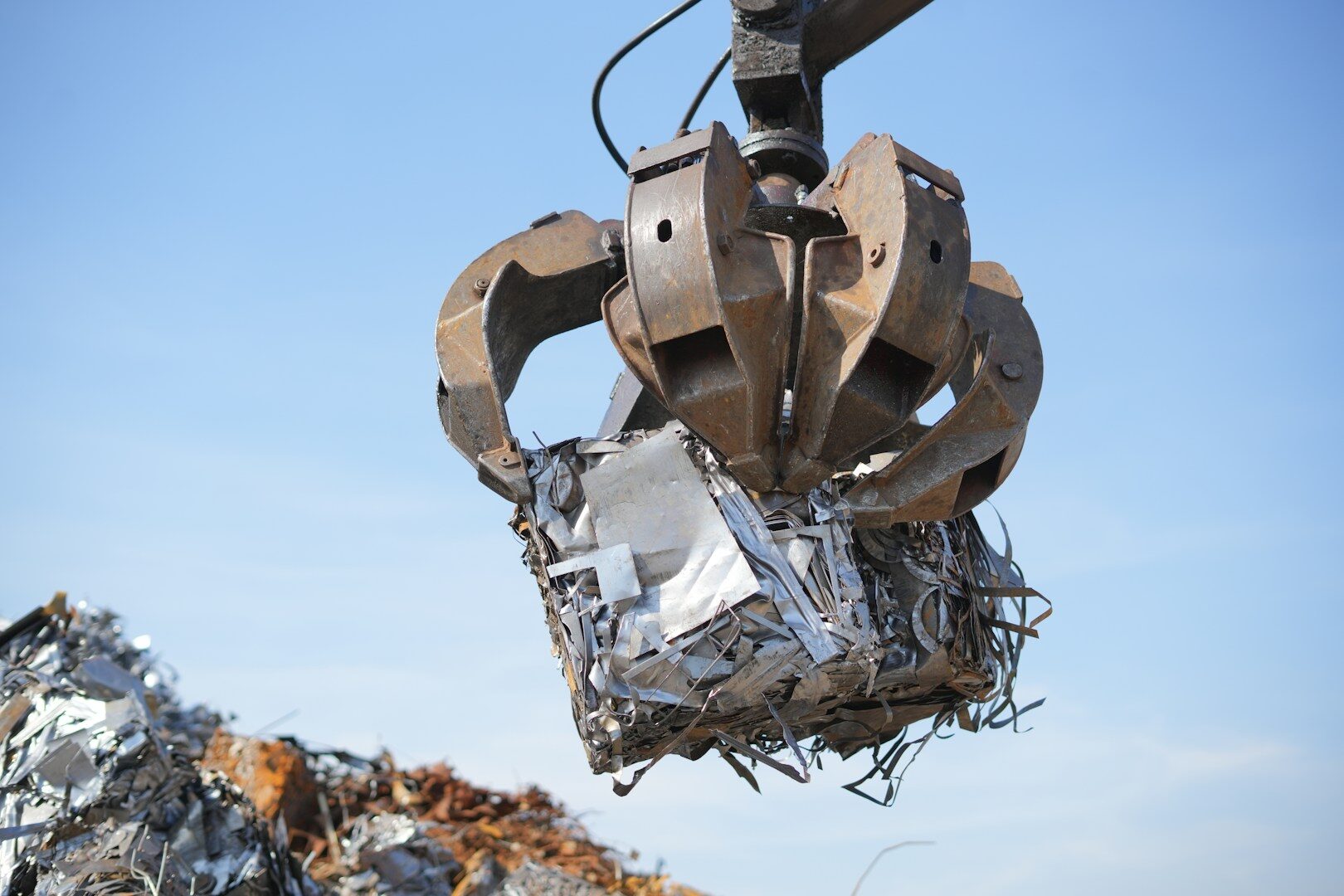
BMW put out a number this week that sounds like a win: 51 percent. That’s the share of a scrapped car’s materials the company says it can now recover at a quality level good enough to go straight back into building a new one, according to results from its Car2Car research project. Under normal market conditions today, that number is 6 percent. Steel alone jumped from 1 percent to 81 percent.
Buried in that same data release is a detail nobody at BMW is putting in a headline: the material that improved the least was plastic. And three days after BMW published those results, the European Union’s new End-of-Life Vehicles Regulation took effect, with hard, binding recycled-content numbers attached to exactly one material. Plastic.
That is not a coincidence so much as a mismatch, and understanding why it exists says more about how automotive recycling actually gets regulated than a press release about steel ever could.
Start with what BMW actually did. The Car2Car project pulled apart 500 end-of-life BMW Group vehicles — everything from Minis to Rolls-Royces, combustion, hybrid, and electric — and ran the resulting scrap through extra sorting and processing steps beyond what a typical shredder yard does today. The headline gain was steel: enhanced pre-sorting, sensor-based sorting, and a new process for stripping copper contamination out of shredded scrap pushed steel recovery from 1 percent to 81 percent. BMW liked the results enough to file a patent on the copper-sorting step and to run production trials at its Leipzig plant, where steel coils made from that recovered scrap went into more than 100,000 real vehicle parts.
Here’s the first thing worth pausing on. Automakers have been telling the public for two decades that cars are roughly 95 percent recyclable, a figure that traces back to the EU’s original End-of-Life Vehicles Directive, which set an 85 percent reuse-and-recycling target and a 95 percent reuse-and-recovery target by weight. That figure is real, but it measures something much looser than what Car2Car measures. “Recovery” under the old directive counts energy recovery — burning material for heat — and downcycling, like melting body steel into rebar instead of another car body. Car2Car’s 6 percent baseline measures a stricter bar entirely: material recovered at a quality good enough to become automotive-grade steel or aluminum again, in a new car, not a construction site. The gap between those two numbers, 95 versus 6, is the gap between what automakers have been allowed to call “recyclable” for twenty years and what closed-loop recycling actually looks like in practice.
The second thing worth pausing on is why copper is the villain in this story at all. Every scrapped car carries a growing tangle of copper wiring, connectors, and motor windings, and when that scrap gets shredded and melted down with the rest of the steel, the copper doesn’t separate out on its own. Unlike the impurities steelmakers have been managing since the Bessemer era, copper doesn’t oxidize out in the furnace — once it’s alloyed into molten steel, it stays there, weakening the metal and knocking it out of contention for anything load-bearing, like a car body panel. Researchers have been warning for nearly a decade that rising copper content in the global vehicle fleet could eventually choke off high-grade steel recycling altogether. Electrification is making that problem worse, not better, since EVs carry substantially more copper than combustion cars. BMW’s sorting fix works because it happens before the melt, catching copper-laden components on the shredder line instead of trying to chemically un-ring the bell afterward.
That is a genuine engineering win, and it’s the kind of unglamorous, upstream fix that never gets a splashy unveiling because there’s no design to photograph. But it’s worth asking who actually benefits from BMW solving it. The Car2Car consortium reads like a who’s who of German heavy industry: thyssenkrupp Steel Europe, Salzgitter Mannesmann, Aurubis, and Novelis all sat at the table alongside BMW. Steelmakers running electric arc furnaces need cleaner scrap to make lower-carbon “green steel,” both to hit their own emissions targets and to stay ahead of the EU’s carbon border tariffs on imported metal. A patented process that cuts copper contamination is worth more to thyssenkrupp’s balance sheet, in the long run, than it is to any BMW customer who will never notice a car door made from recycled scrap versus virgin steel.
Now compare that to what Brussels actually wrote into law this week. The new regulation sets recycled-plastic content minimums of 15 percent starting in 2032 and 25 percent starting in 2036. It says nothing enforceable yet about recycled steel or aluminum — the European Commission is only required to propose metal targets by 2033, a year after the plastics rule is already locked in. Europe, in other words, built hard numbers first for the one material category where Car2Car’s own results show the least progress, and left the material where BMW just proved an 81 percent recovery rate is achievable to a future rulemaking that doesn’t exist yet on paper. Regulators reached first for the material that’s easiest to write a number for, not the one where the industry actually has a solution. The Auto Wire has tracked this same pattern before: a single EU rule lands on one narrow target, and the engineering response reshapes far more of the car than the regulation itself ever mentioned.
None of this makes BMW’s numbers fake, and the company is upfront that the results depend on “access to vehicles, market conditions, investment and viable business models” actually materializing at scale — worth noting given the trial leaned on vehicles less than five years old, a much cleaner sample than what actually rolls into a scrapyard. Europe has shown before that it isn’t shy about attaching real financial teeth to targets that start out sounding aspirational, and the metal targets due by 2033 will eventually catch up to what BMW just demonstrated in Leipzig.
The 51 percent number is the part BMW wants people repeating. The part that actually matters is that Europe just wrote a recycling law with real teeth in it, and pointed those teeth at the one material this project barely touched.