
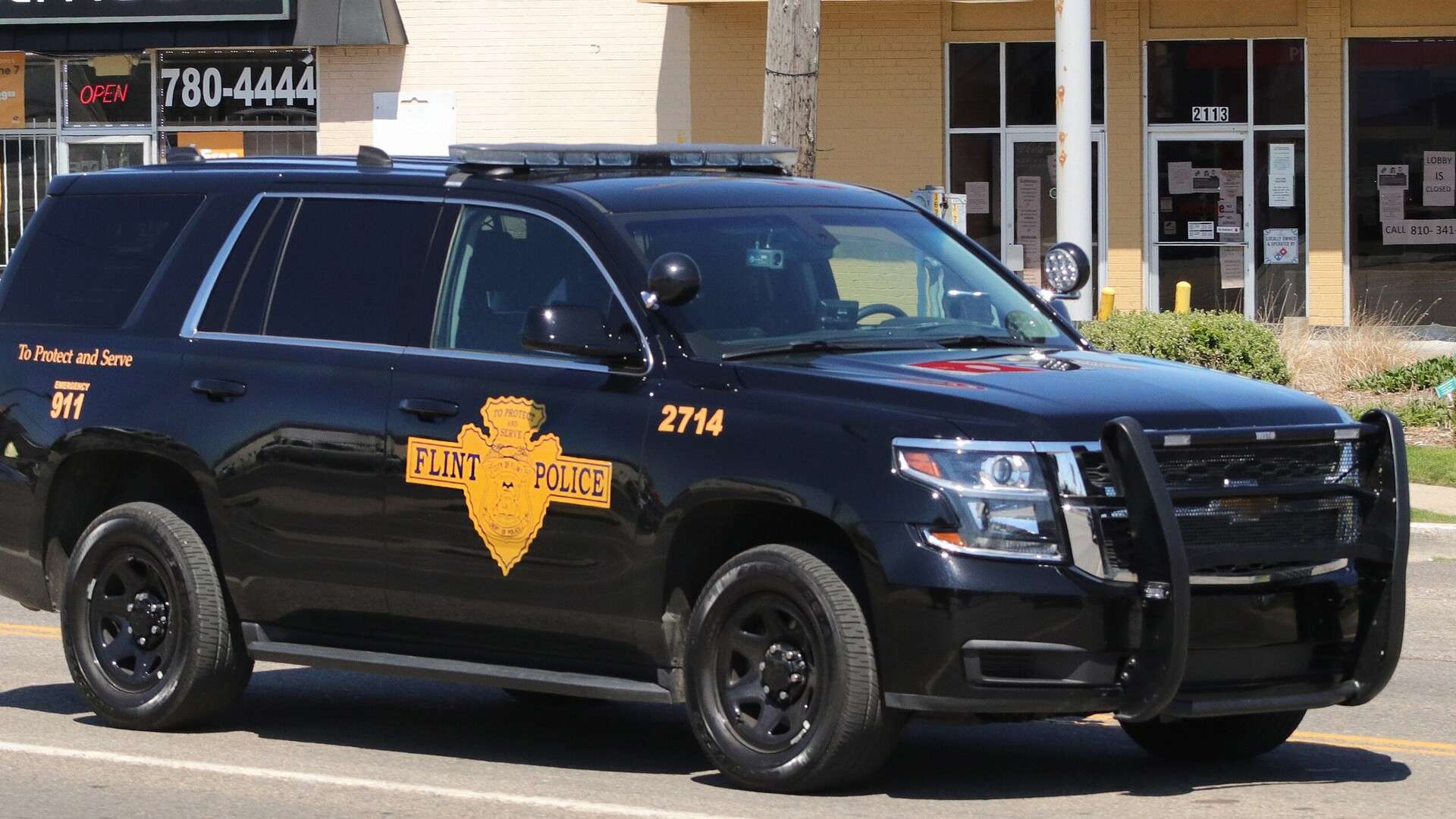
It started with one of the smallest violations in Michigan traffic law: no license plate. A Grand Blanc Township, Michigan, police officer pulled over a white sedan for it in the north end of the township, and the driver pulled away while the officer was still standing in the grass. Officers chased the car into the City of Flint, where they found it disabled and empty. A Genesee County sheriff’s deputy arrested the driver a few houses away, according to the Grand Blanc Township Police Department’s Facebook post.
The department says the car had recently been stolen out of Flint Township and that the driver had five outstanding warrants for his arrest, three of them for violent felonies. ABC12 in Flint reported the stop happened on Sept. 25. The department posted its dashcam clip on Oct. 8.
The violation that started all this sits at the bottom of Michigan traffic law. A missing plate is a civil infraction, the same legal category as a routine speeding ticket. Once the driver pulled away, it became a felony that carries a mandatory license suspension on conviction, and the driver happened to run from one of the few police departments in Genesee County that still chases. And it only got that far because Grand Blanc Township still chases cars the Michigan State Police would have let go since 2024.
What the Grand Blanc Township dashcam video shows
The department cut its footage into a quick vertical edit and set it to Blur’s “Song 2,” which is a choice. The dashcam portion shows the white sedan stopped on the shoulder of a two-lane road and an officer on foot in the grass beside it. A second person standing near the officer has been blurred by the department, and the post doesn’t say who that is. The sedan then pulls away from the shoulder while the officer is still standing in the grass.
The post doesn’t give the route, the speeds, how long the chase lasted, or what disabled the car before officers found it in Flint. It also doesn’t name the driver or list charges, and neither do the local reports I found. Without a name, I couldn’t match the arrest to a Genesee County court record, so whether prosecutors have charged him, and with what, is unconfirmed. The warrants and the theft are, for now, the department’s account.
How a missing plate turns into a five-year felony in Michigan
Michigan’s plate law, MCL 257.225, requires a passenger car’s plate to be attached to the rear, fastened horizontally, at least 12 inches off the ground and clearly visible. Subsection (7) makes any violation a civil infraction. The penalty is a ticket and a fine.
Running is a different statute. Under MCL 257.602a, a driver who willfully refuses an officer’s signal to stop and tries to get away commits fourth-degree fleeing and eluding, a felony worth up to 2 years in prison and a $500 fine. The law applies only if the officer is in uniform and the car giving the signal is identified as an official police vehicle.
The charge climbs to third degree, up to 5 years and $1,000, if the flight causes a collision, if the driver has a prior fourth-degree conviction, or if any portion of it happened where the speed limit was 35 mph or less, posted or set by law. That last trigger covers a lot of ground. Under MCL 257.627, the default limit is 25 mph in a business district and on residential local streets unless another speed is posted. The statute doesn’t require the driver to tear through a neighborhood at 80. One block counts. This chase ended in a Flint neighborhood, with the driver caught a few houses from the abandoned car, so the route the department hasn’t released will decide which degree is on the table.
Either degree also costs the license. MCL 257.319(2)(d) requires the Secretary of State to suspend a driver’s license for one year after a conviction under the fourth- or third-degree fleeing subsections. Separately, Michigan’s unlawful driving away statute, MCL 750.413, makes taking and driving someone else’s car without authority a felony punishable by up to 5 years. Police have said the car was stolen. They have not said who stole it.
Grand Blanc Township pursues cars the State Police would let go
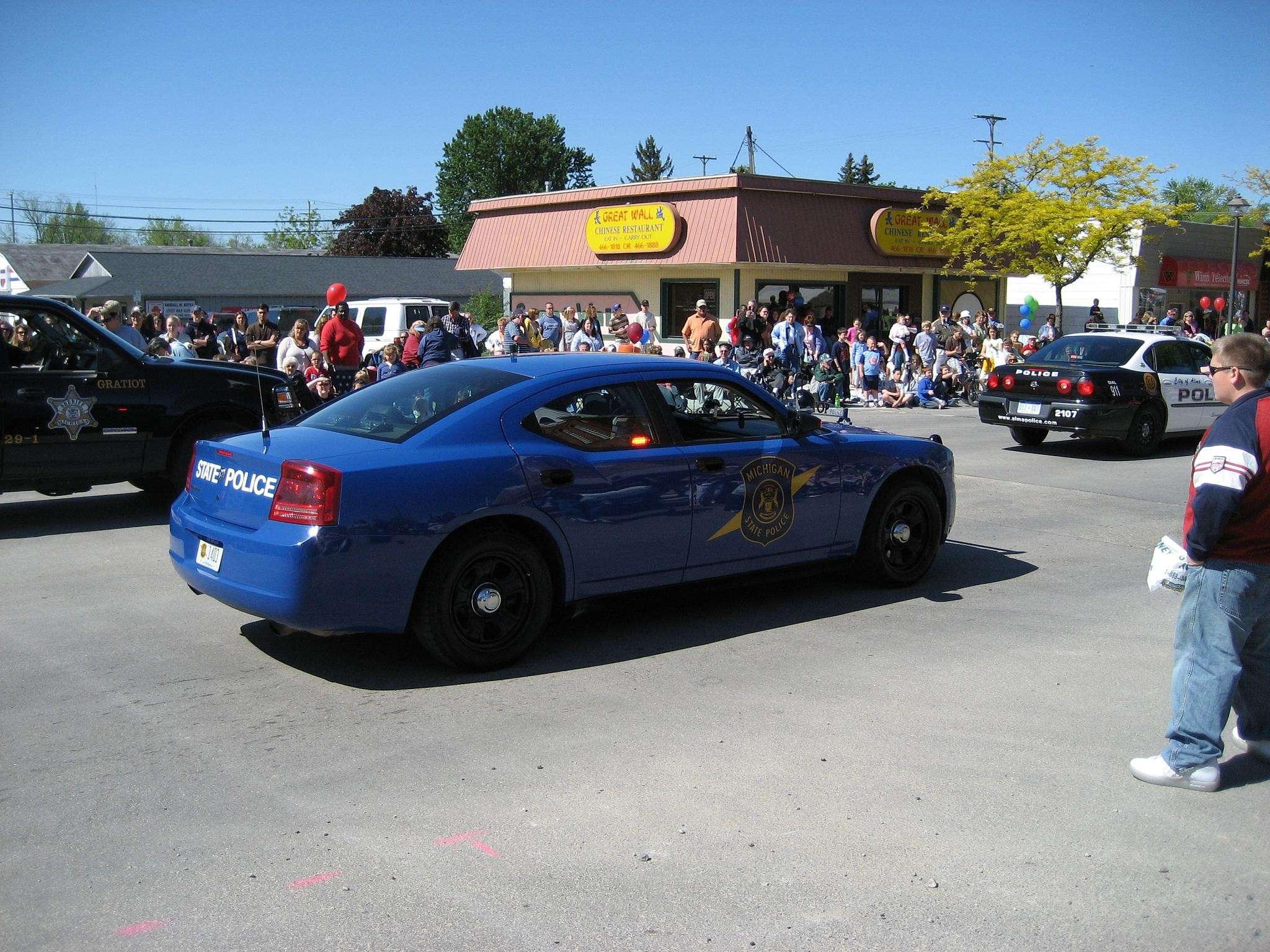
On March 14, 2024, the Michigan State Police changed its pursuit policy so troopers may chase only when they have probable cause that someone in the car has committed a life-threatening or violent felony. Troopers had been in 235 pursuits in 2022 and 236 in 2023. The agency’s announcement cited U.S. Justice Department figures showing crashes in at least 30% of pursuits and injuries or deaths in 5% to 17%. Col. James F. Grady II, the department’s director, said a key consideration in any pursuit “must be the seriousness of the underlying crime.”
A car with no plate that drives off doesn’t meet that standard by itself. The Grand Blanc Township post says the car “was determined” to be stolen and the driver “was found” to have warrants, without saying whether officers knew either fact before the car left the shoulder or learned it afterward. Under the State Police rule, that timing would decide whether the chase happens at all.
Grand Blanc Township has made the opposite choice on purpose. In March 2025, after officers put down stop sticks on I-75 and a Porsche stolen from Manheim Flint rolled several times, WNEM reported that the township is one of the few Genesee County departments that engages in pursuits. Chief William Renye told the station his officers had already handled 13 of them that year, roughly one every five days, and said they weigh traffic, population density and school zones before and during a chase, with the goal of ending it as fast as possible. The Auto Wire has previously covered what Michigan’s own testing says about which police vehicles can keep up, and a Charger chase involving Michigan troopers before the 2024 rule took effect.
Michigan’s $1-per-car theft assessment funds the team that made the arrest
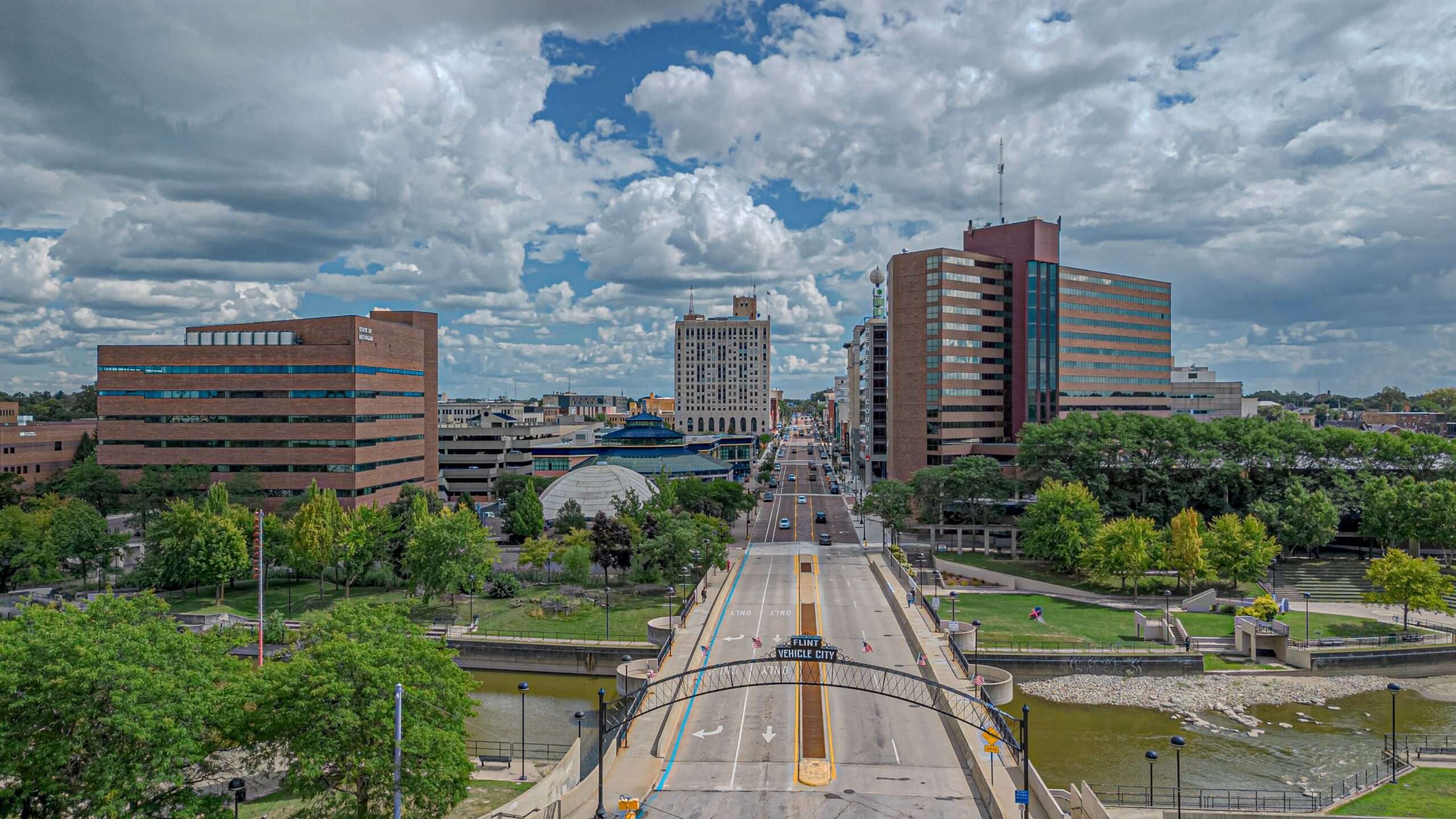
The car in this case came out of Flint Township, and the agencies that chased and caught its driver are on the same team. According to the state’s 2025 Automobile Theft Prevention Authority annual report, Grand Blanc Township, Flint Township and Flint police all belong to the Genesee Auto Theft Investigation Network, led by the Genesee County Sheriff’s Office. GAIN received a $1,095,167 grant for fiscal 2025 and reported $9,474,818 in recovered value.
The authority’s money comes from car insurance: an annual $1 assessment that insurers pay on each insured motor vehicle in Michigan, which came to $7,815,347 in 2024, according to the same report. It counted 23,649 vehicle thefts statewide in 2024, down 6.3% from the year before, and 480 in Genesee County from January through October 2025, the latest partial-year figures it published.
The bigger bill lands on anyone who gets hit. In Robinson v. City of Detroit (2000), the Michigan Supreme Court held that an officer’s decision to chase isn’t “operation” of a police vehicle under the motor vehicle exception to governmental immunity, and that police owe no duty to a fleeing driver or a wrongdoing passenger. As the Michigan Court of Appeals summarized the rule in a 2009 case out of Troy, the injuries have to result from the operation of the government’s vehicle. An innocent driver struck by the car being chased generally can’t sue the city unless the police car itself caused the harm. Their own policy carries them instead: under MCL 500.3105, Michigan no-fault personal protection benefits are owed without regard to fault.
Video: Grand Blanc Township Police Department
What’s next for the driver arrested in Flint
None of the reports mention injuries, and the department’s post credits the partnership and teamwork that ended it. The driver’s first problem is the five warrants police say were already out for him. Any new fleeing charge will depend on the route, and a conviction under the fourth- or third-degree subsections would add a year without a license. For a driver whose plate fell off on the highway, or who is still waiting on paperwork for a new car, the line sits in the same place: stopping means a civil infraction, and driving off is what makes it a felony.
Grand Blanc Township chases; the State Police mostly don’t. If you live in Genesee County, which policy do you want on your street?