
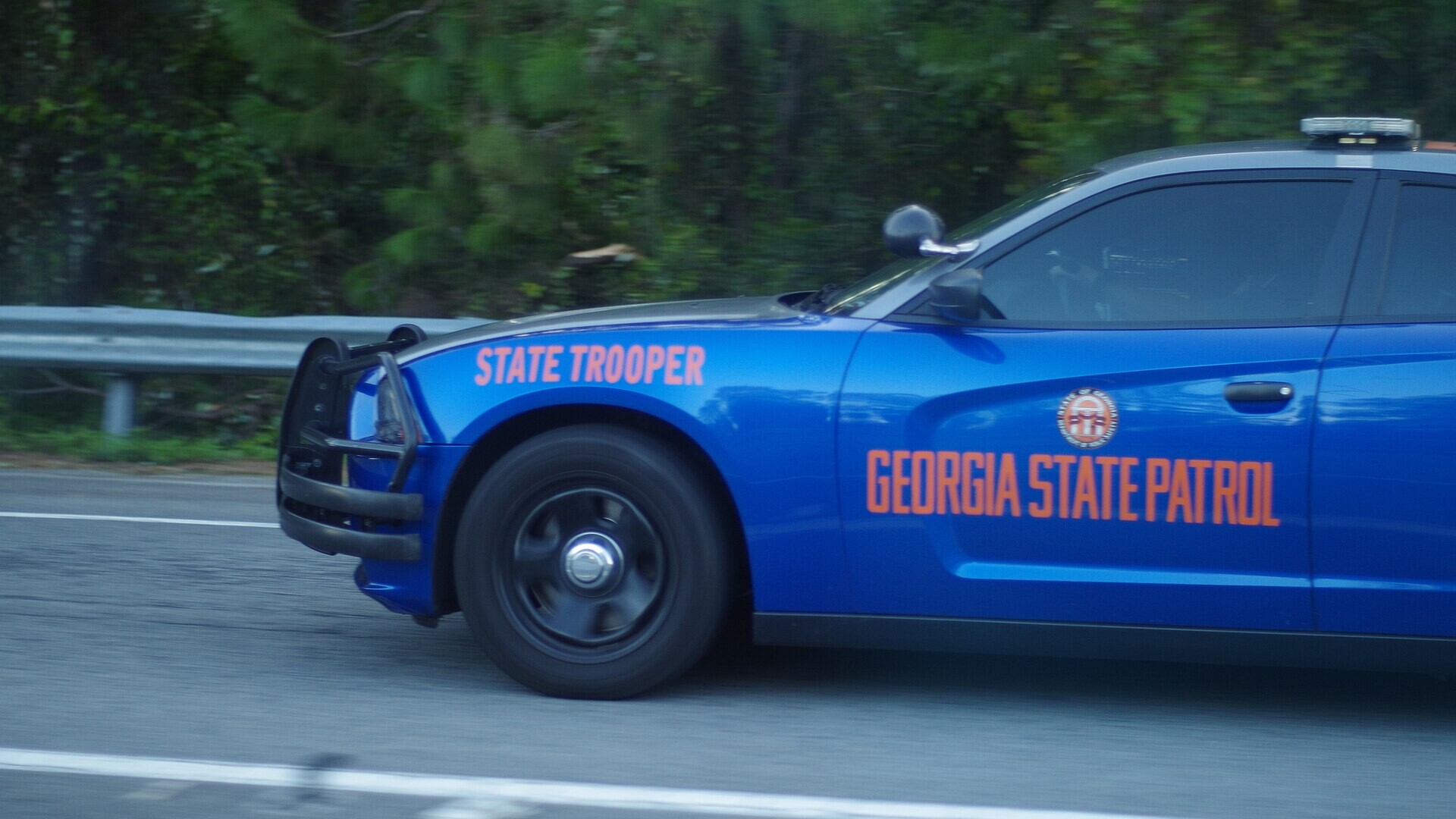
Georgia State Patrol troopers say they pulled up on a stunt-driving takeover near Peachtree Industrial Boulevard and Blue Ridge Industrial Parkway in Norcross just after midnight on Sept. 24, and that one of the drivers, 18-year-old Trey Adkins, left in a hurry. According to the patrol’s account, as reported by WSB-TV, Adkins reached 145 mph on Peachtree Industrial, crashed into another vehicle, seriously injured that driver and then ran from the scene.
Adkins was booked into the Gwinnett County Jail in early October on 15 charges, hit-and-run among them, WSB-TV reported. He bonded out the next day and is waiting on his first court appearance. The station named only the hit-and-run count, and the patrol has not published the other 14. When I searched the Gwinnett County Sheriff’s public jail lookup on Oct. 13, it returned no record under his name. I found no public statement from an attorney for Adkins. Every one of the charges is an accusation until a court says otherwise.
The charge list will decide how much of his life this case takes. Once troopers arrive at a takeover, a driver’s legal exposure depends more on whether he stays than on how he drove before they got there. Georgia rewrote its street-racing penalties in 2024, and the new law saves its harshest punishment for drivers who keep getting caught. For a first-time defendant, the takeover itself is a misdemeanor no matter how fast anyone was going. The years in prison sit in two older statutes that cover what troopers say happened after they arrived: the run, and the injured driver left behind.
What Georgia’s 2024 street-racing law does to a first offender
The law is Senate Bill 10, carried by Sen. Emanuel Jones of the 10th District. It passed the Senate 46-6 on Feb. 26, 2024, and the House 149-7 on March 26. Gov. Brian Kemp signed it May 1, 2024, and it took effect July 1 that year. When the governor signed it, Jones said in a Senate press release, “Drag racing should not be tolerated when it endangers the lives of our citizens.”
The bill’s main target is reckless stunt driving, Georgia’s charge for drag racing or “laying drags” (spinning, zigzagging or doing donuts) in reckless disregard for the safety of people on the road. The as-passed text sets up a four-step ladder, counted over 10 years:
- First conviction: a misdemeanor of a high and aggravated nature, a $500 to $1,000 fine and 10 days to six months in jail. Before the bill, the minimum fine was $300.
- Second: $750 to $1,500 and 90 days to 12 months.
- Third: $2,500 to $5,000 and 120 days to 12 months.
- Fourth: a felony, $5,000 to $7,500 and one to five years. If that fourth offense injures someone or does more than $1,000 in property damage, the judge cannot suspend, probate, defer or withhold the first 12 months.
The ladder runs on a record. The statute measures prior convictions from the dates of the earlier arrests to the date of the current one, so a driver with no history starts at the bottom rung even if the radar gun read triple digits. The only felony stunt-driving tier is for someone on his fourth conviction.
SB 10 also went after the crowd. Under the rewritten O.C.G.A. § 16-11-43.1, anyone knowingly present and actively facilitating a drag race or laying-drags exhibition commits a misdemeanor with a $250 minimum fine, and the statute says using a vehicle to block the road next to the participants can be evidence of that. Promoting or organizing one is a high and aggravated misdemeanor. Los Angeles has gone further with spectators, as the 442 citations from a single Harbor Gateway takeover showed.
The hit-and-run and fleeing statutes carry the prison time
Georgia’s hit-and-run law, O.C.G.A. § 40-6-270, requires a driver in a crash to stop at or return to the scene and meet the duties the statute lists. When the crash is the proximate cause of a death or a serious injury, knowingly failing to do that is a felony punishable by one to five years in prison. That is the same top sentence SB 10 reserves for a fourth stunt-driving conviction, and it attaches the first time. Fault for the crash is a separate question; the felony attaches to leaving.
WSB-TV’s report does not say whether Adkins is charged with fleeing or attempting to elude, and the charge list will answer that. Georgia’s fleeing statute, O.C.G.A. § 40-6-395, turns a fleeing charge into a felony if, while running from an officer, the driver goes more than 20 mph over the posted limit, strikes another vehicle, causes a crash, flees in traffic that puts the public at risk of serious injury, or commits reckless stunt driving, among other triggers. The penalty is a $5,000 to $10,000 fine and 12 months to 10 years in prison. Georgia’s statutory maximum on any road is 70 mph under O.C.G.A. § 40-6-181, so a speed of 145 mph would be at least 75 over anywhere in the state. On the patrol’s account, the crash would qualify on its own.
The newest statute, written for takeovers, climbs slowly and tops out at five years for a habitual offender. The fleeing law tops out at 10 years and can apply on a driver’s first night out.
An automatic license suspension and a $200 super speeder fee
Adkins’ age adds a layer most adult drivers never see. Under O.C.G.A. § 40-5-57.1, a driver under 21 who is convicted of hit-and-run, racing, fleeing an officer, reckless driving or any offense worth four or more points loses the license by operation of law, and a no-contest plea counts as a conviction. The convicting court collects the license and sends it to the state. A first suspension under that section means at least six months before the driver can apply for reinstatement and pay the fees; a second means 12 months.
A speeding conviction at 145 mph would also trigger Georgia’s super speeder law, which has the Department of Driver Services collect a $200 fee from anyone convicted of driving 85 mph or faster on any road, or 75 or faster on a two-lane road. It comes on top of whatever the court imposes, DDS collects it separately from the criminal case, and failing to pay within 90 days of the notice suspends the license on its own.
Gwinnett County’s string of street-racing crashes
The Norcross crash is the latest in a run of Gwinnett cases built on the same statutes. On July 22, Susan Kirkland was killed when her car was T-boned at Old Norcross Road and Glen Chase Drive near Lawrenceville. Gwinnett County police said Fabian Ricardo Harris was driving a 2001 Mercedes at 93 mph on a road posted at 45 while racing a motorcycle, WSB-TV reported in August. Harris was charged with first-degree homicide by vehicle. The motorcyclist, Michael Edward Pestle, was charged with homicide by vehicle and felony hit-and-run for leaving the scene, and a judge denied him bond as a flight risk. Both men are presumed innocent; in WSB-TV’s August coverage, their cases were at the bond-hearing stage.
Kirkland’s friend Kathy Vosper told WSB-TV after the Norcross arrest, “It’s really infuriating that these people are able to get away before the police get there.” Samantha and Symeon Izaguirre told the station they moved out of Gwinnett County after a driver accused of racing crashed into their vehicle and killed their unborn child.
And the chases aren’t free either. The Auto Wire has tracked how often Georgia State Patrol chases end in wrecks, including a fatal one in Tucker in September, and a trooper’s dashcam caught a Nissan GT-R running at 170 mph in another Georgia pursuit. Earlier this year, a Georgia street race ended in a death and a homicide charge for the driver who fled.
What happens next in the Adkins case
The next document to watch is the charging paperwork, which will list all 15 counts. It will show whether prosecutors are treating the 145 mph run as felony fleeing, whether the takeover is charged as reckless stunt driving, and what the patrol says about the injured driver’s condition. No date for his first court appearance has been made public in the coverage so far.
The statutes set a few fixed points for any Georgia driver. After a crash that injures someone, the law requires the driver to stop and stay, and leaving a seriously injured person turns the crash into a felony with up to five years attached, whatever caused it. Since July 2024, knowingly being at a takeover and actively helping it happen, including by using a car to block the road, is a crime of its own. And a driver under 21 convicted of hit-and-run, fleeing, racing or reckless driving loses the license by operation of law for at least six months.
Georgia’s 2024 law reserves its felony tier for a fourth stunt-driving conviction and leaves the heaviest time on a first offense to the fleeing and hit-and-run statutes. Is that the right order, or should the takeover itself be the felony?