
GM’s first published repair for a Corvette LS6 oil leak calls for two seals, four bolts and a specific tightening order. Preliminary Information bulletin PIP6132, dated September 2026 and filed with the National Highway Traffic Safety Administration, tells Chevrolet technicians how to stop 2027 Corvettes with the new 6.7-liter V8 from leaking engine oil where the oil cooler adapter bolts to the oil pan.
As engine problems go, this one is small, and owners under warranty pay nothing to have it fixed. The leak sits in oiling hardware GM redesigned for its sixth-generation Small Block, the engine family that goes into the next Chevrolet Silverado 1500 and GMC Sierra 1500 later this year. GM sells far more of those trucks than it does Corvettes, and it is still answering to federal regulators over its last V8.
What bulletin PIP6132 tells Chevrolet technicians
The bulletin’s subject line reads “Engine Oil leak between Engine Oil Pan to Oil Cooler Adapter.” It applies to the 2027 Corvette with the LS6, the standard engine in the 2027 Stingray, Grand Sport and Grand Sport X. According to GM, owners or technicians may find oil leaking from underneath the car, and with the engine running there may be bubbling at the adapter’s mounting points.
The repair replaces the two oil pan high-pressure port seals, GM part number 12746274, and reinstalls the adapter. The four adapter bolts go in on two passes, first to 5 Nm (44 lb-in) and then to 15 Nm (11 lb-ft). Under an “Important” flag, the bulletin warns that to prevent leaks “it is very important to run the bolts down evenly and tighten in sequence.” It also tells technicians they do not need to separate the oil cooler from the adapter, which the standard service procedure calls for, so the job takes less time. The dealer bills it under labor operation 4030450, Engine Oil Cooler Adapter Replacement.
The bulletin has a “Cause” heading, but it only repeats the symptom. GM does not say whether the problem is the seal material, the adapter casting, or how the adapters were torqued when the engines were built. I found no GM press statement on the leak in its newsroom.
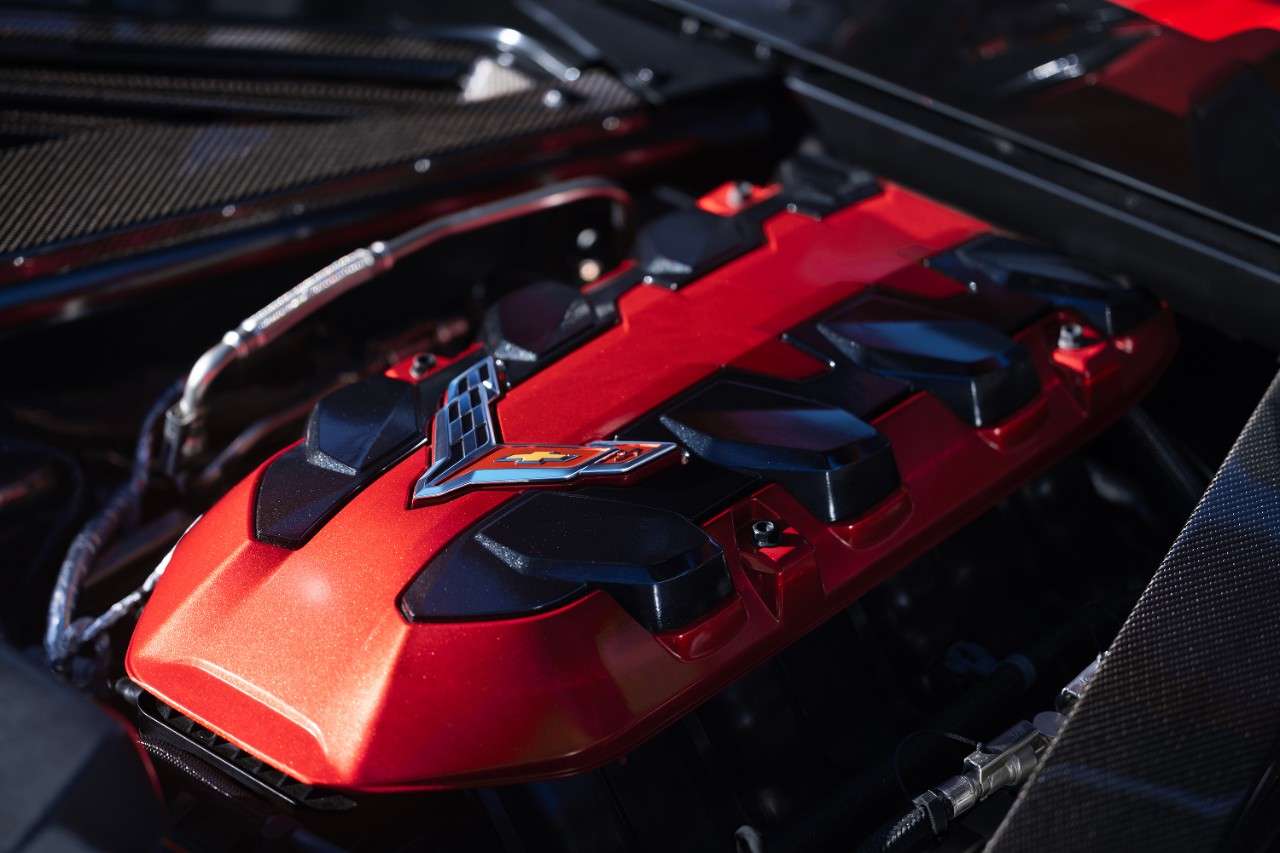
Why GM’s fix centers on bolt order
Fifteen newton-meters is a light torque, about 11 lb-ft. A seal clamped that lightly depends on even pressure all the way around. If one bolt is run down fully before the others, the adapter can tilt slightly as it seats. One seal gets crushed, the other is left partly compressed, and the clamp load that was supposed to hold oil in is uneven. The part name places this on the pressure side of the oiling circuit: a high-pressure port carries oil the pump is pushing, not oil draining back to the pan. Under pressure, a partly seated seal will weep, and the bubbling GM describes at a running engine is consistent with pressurized oil working its way past the joint.
The bulletin calls for no redesigned adapter. It lists one part, the seal, plus a tightening procedure. My reading, not GM’s statement, is that the company sees assembly as at least part of the problem. That fits the timing. GM said in April that Flint Engine Operations was beginning to assemble the LS6, making it a new engine on a new line, and early production is when fastener and seal variation tends to show up in the field. Chevrolet’s own technical briefing on the LS6 lists a new oiling system designed for track driving among the engine’s main changes from the LT2 it replaces, along with a longer 100-mm stroke and a 13.0:1 compression ratio.
A Preliminary Information bulletin is not a recall
GM uses Preliminary Information bulletins to tell dealers how to handle a condition when a customer brings one in. They do not trigger owner notification letters and they do not call for every car to be inspected. PIP6132 says so in its own disclaimer: “If a condition is described, DO NOT assume that the bulletin applies to your vehicle, or that your vehicle will have that condition.”
The public can read it at all because of a federal rule. Under 49 CFR 579.5, a manufacturer must send NHTSA a copy of every notice, bulletin and other communication it sends to more than one dealer or owner about a defect in its vehicles, and must submit it no later than five working days after the end of the month in which it was issued. Bulletins such as this one are often the first public sign of a problem on a new model, before owners have filed complaints.
When I checked NHTSA’s recall and complaint records on Oct. 7, the agency listed no recalls and no owner complaints for the 2027 Corvette. Recall 26V-213, filed April 2, 2026, covers a rear turn-signal software problem in 32,988 Corvettes from the 2025 and 2026 model years and does not include 2027 cars. GM has not filed a safety recall for the LS6 oil leak.
The Silverado and Sierra get the same engine family next
On Sept. 17, GM announced two more sixth-generation Small Block V8s: the L76 5.7-liter, rated at 402 hp and 428 lb-ft, and the L78 6.6-liter, rated at 481 hp and 501 lb-ft. GM said both will be available with the launch of the next-generation Silverado 1500 and Sierra 1500 later this year, joining the LS6 in the same architecture. Production starts at Flint, with $888 million going to Tonawanda Propulsion in New York and C$691 million to St. Catharines Propulsion in Ontario for sixth-generation V8 work.
GM’s description of the new family’s lubrication system includes “a continuously variable oil pump, on-engine oil cooler and reworked oil feed locations for additional oil pressure consistency.” The Corvette’s leak is at the mounting point for its oil cooler adapter. GM has not said whether the truck engines use the same adapter, the same seals or the same torque procedure. The shared engineering and the shared Flint assembly line are still reasons for truck shoppers to watch how this bulletin develops.
GM’s L87 recall shows why small V8 problems get attention
GM’s previous V8 trouble was far more serious. In recall 25V-274, GM told NHTSA that connecting rods and crankshafts in 6.2-liter L87 V8s may have manufacturing defects that can lead to engine failure. The recall covers 597,571 2021-2024 Silverado 1500, Sierra 1500, Tahoe, Suburban, Yukon, Yukon XL, Escalade and Escalade ESV models. Dealers inspect the engine and either replace it or switch the truck to a higher-viscosity oil with a new fill cap and filter.
That remedy is now under federal review. On Jan. 16, 2026, NHTSA’s Office of Defects Investigation opened Recall Query RQ26001 after receiving 36 owner questionnaires alleging engine failures in trucks that had already received the recall remedy. The agency said complaints alleged failures of both the oil-change remedy and the replacement engines. The Auto Wire has covered what the investigation documents show and owners’ experience with the oil-change fix.
A seeping adapter seal on a Corvette is not a bearing failure on a Tahoe, and nothing in PIP6132 suggests the LS6 has a durability problem. The link between the two stories is the sixth-generation Small Block, the engine family GM is counting on to restore confidence in its V8s, and the LS6 is the first one in owners’ hands. A problem found on early-production sports cars and fixed with a bolt sequence is the cheap way to learn something before the same factory ramps up truck engines.

What 2027 Corvette owners and truck shoppers should watch
Corvette owners who see oil spots under the car, or an oily film around the bottom of the engine, can ask the service desk to check it against PIP6132. Virtually every 2027 Corvette is still inside Chevrolet’s 3-year or 36,000-mile bumper-to-bumper limited warranty and 5-year or 60,000-mile powertrain limited warranty, so the repair should cost the owner nothing. Owners without a leak have nothing to do, since the bulletin applies only when the condition is present.
Three developments would change how this reads. If GM turns the PIP into a formal technical service bulletin, it will mean the leak is common enough to warrant a standard repair. If a new seal or adapter part number appears, GM will have decided the problem is in the parts and not only in the assembly. And if early Silverado and Sierra trucks with the L76 or L78 get a similar bulletin, the leak will be a family trait rather than a Corvette quirk. Each would likely surface first in NHTSA’s bulletin filings, which GM is required to submit within days of the end of each month.
Would a leak like this on a new-generation V8 make you wait a model year before buying the new Silverado or Corvette, or is a two-seal fix the kind of first-year problem you’d expect and accept?