
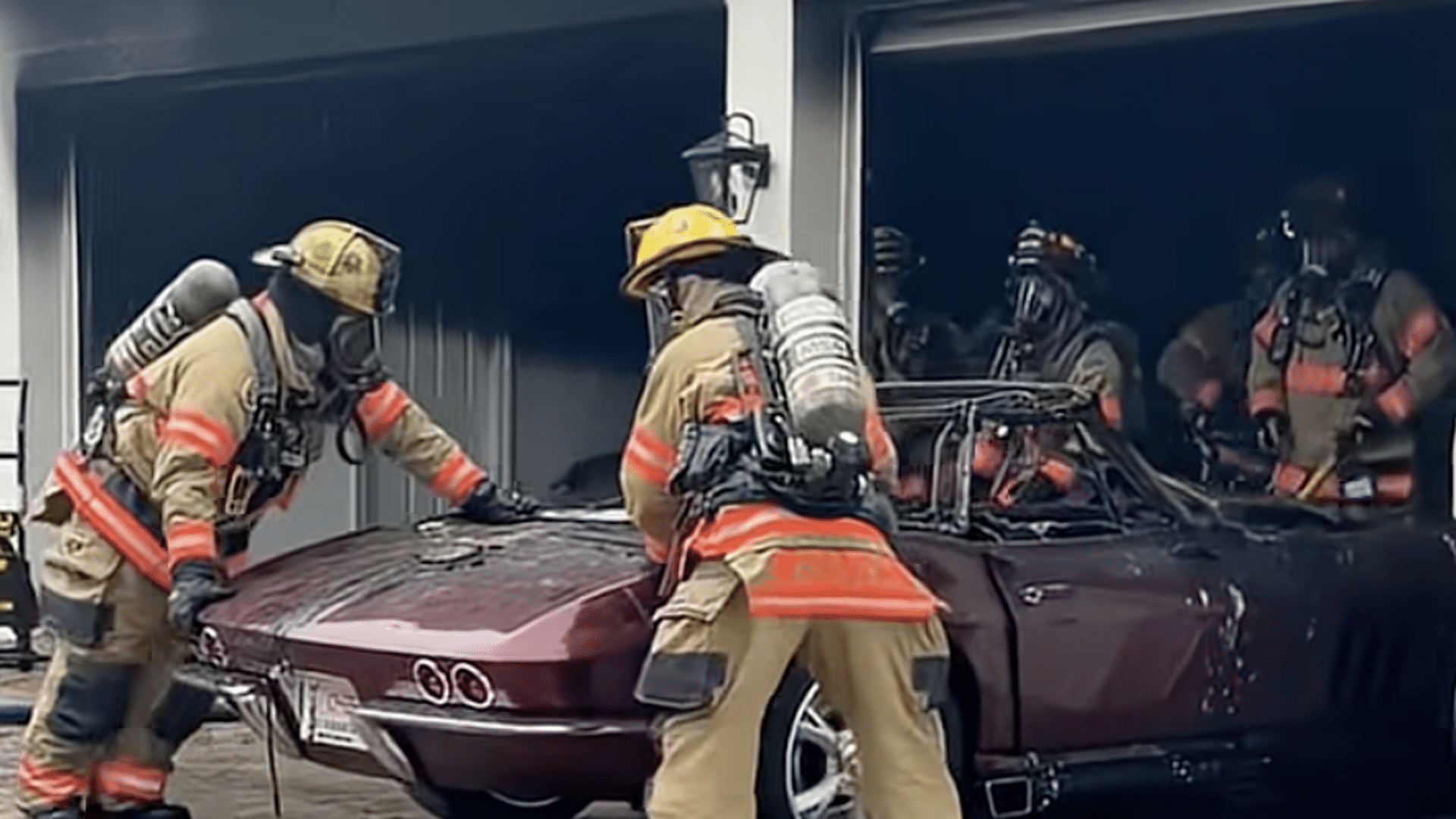
Southwest Florida added another entry to an old, sad list on Tuesday, October 6: a vintage Corvette sitting in a home garage that may have turned into the fire starter.
Firefighters put out a garage fire on Somers Drive in Bonita Springs. According to the Bonita Springs Fire Control and Rescue District, nobody was hurt and the damage stayed inside the garage. The district said the blaze may have started with an antique Corvette, which was damaged. wesetthestandards
That is everything officials have put on the record. They have not released the car’s year, its condition, how badly it burned, or a confirmed cause. “May have started” is fire-service language for a working theory, not a finding. The car is the leading suspect, but no one has charged it.
Why parked classics catch fire
People assume car fires come from crashes, but the federal numbers point elsewhere. In Fire Administration data, 62 percent of highway vehicle fires began in the engine, running gear, or wheel area. Mechanical failure was the top contributing factor at 45 percent. Wiring insulation was the most common item to ignite first (29 percent), followed by flammable liquids in the engine bay (18 percent). The same report also notes that investigators still couldn’t determine a cause in 23 percent of these fires after investigating. So don’t expect a neat answer here soon, or at all. fema
Related Articles
- Chevy’s Pink Corvette Pace Car Pledges $500 Per Caution Lap to Fight Breast Cancer
- Ohio Cops Tracked a Stolen Kia With a GPS Dart. It Still Crashed Into 2 Cars in Dayton.
For a classic Corvette, the usual suspects are easy to list:
- Aged wiring. A harness that has spent decades going through heat cycles, rodent visits, and amateur rewiring jobs can chafe through its insulation. Older cars often lack modern fusing on every circuit. A dead short on an unfused battery feed can heat a cable until it glows, even when the key is off.
- Fuel delivery. Carbureted cars use rubber hoses, mechanical pumps, and float bowls. As those parts age, they seep fuel, and a seep near a hot exhaust manifold or a sparking connection is enough. Fuel choice matters too: EPA’s E15 waiver did not approve 15-percent ethanol blends for model-year 2000 and older vehicles. Owners who don’t replace old rubber with ethanol-rated line are taking a risk. epa
- The body itself. Every Corvette from 1953 onward has a composite body, either fiberglass or sheet molded compound. Steel doesn’t add fuel to a fire. Resin does. Once a Corvette’s body catches, the car is feeding the flames.
What’s left after the smoke clears
Restoring a burned Corvette is harder than restoring a burned steel car. Heat-damaged composite panels usually can’t be straightened like steel. They get cut out and replaced, and on an original car, factory-correct panels are expensive and getting harder to find. The steel frame may survive, but the heat can cook bushings, brake lines, and wiring, and firefighting water and smoke residue keep causing corrosion long after the fire is out. Expect a full teardown, not a quick repair.
The car’s value now depends on its paperwork. A classic insured on an agreed-value policy pays out the figure the owner and insurer set in advance. A standard auto policy pays actual cash value, and the argument then becomes what an older car was “worth,” which collectors rarely win. The garage structure is a separate claim under the homeowner’s policy. Because officials pointed at the car, insurers on both policies will want the fire investigation results before they decide who pays for what.
Related Articles
- Police Say a Gunman Killed a Man in a Tesla at an Idaho Supercharger, Then Tesla Let Drivers Flee Plugged In — at Up to $25K in Damage
- BYD’s Shark 6 Security Fix Closes the Door a Researcher Used, and an Aftermarket App Goes With It
There’s a registration angle too. Under Florida law, a privately used vehicle built after 1945 qualifies for a special “Antique” plate once it is 30 or more years past its model year. So “antique Corvette” can mean anything from a chrome-bumper Sting Ray to a C4 from the early ’90s. Without more details from the fire district, the specific car stays unknown. state
The practical lesson
If you store a vintage car in an attached garage, take three easy steps. Install a battery disconnect and use it every time you park. Replace any rubber fuel line you can’t date. Keep an ABC-rated extinguisher by the door, not in the trunk. If you see smoke coming from under the hood, follow the federal guidance: get away from the vehicle, call 911, and never pop the hood or trunk on a suspected fire, because the rush of air can make it grow. fema
Nobody was hurt in Bonita Springs, and the house survived. A garage and an old Corvette can be replaced. The lesson about how fires start in parked cars applies to every enthusiast with a classic in the garage.
Images Via: Gulf Coast News on Youtube