
A Moraine, Ohio, police officer tried to pull over a Kia on North Springboro Pike on the afternoon of Tuesday, Sept. 29, after spotting fake tags on a car police say was stolen. The driver took off instead, cutting through rush-hour traffic and running red lights, according to WHIO-TV, which obtained the cruiser’s dash camera video. Officers called off the chase over safety concerns and switched to a StarChase GPS tracker.
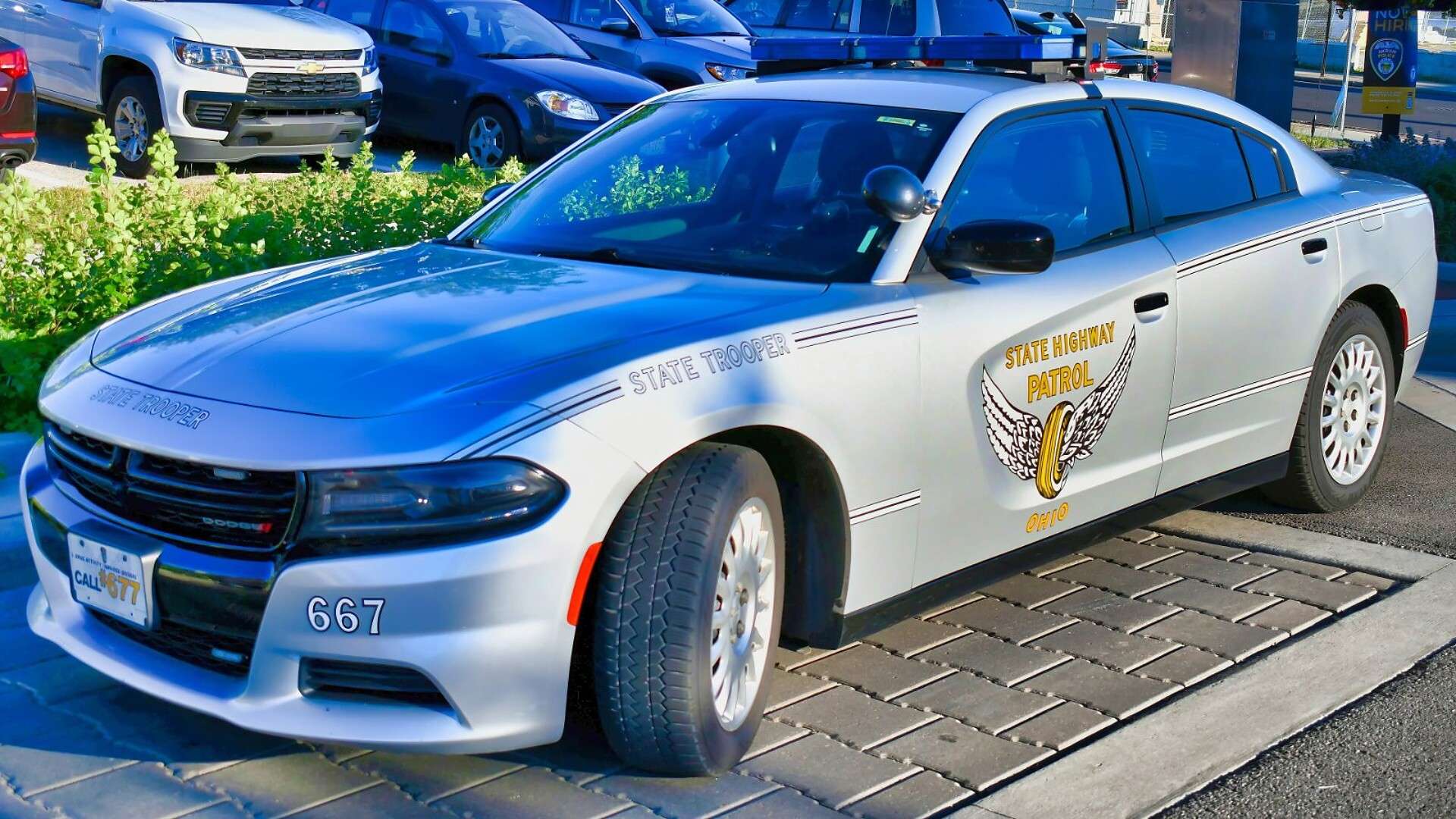
The tracker worked. It led police about seven miles away to Hoover Avenue in Dayton, where the Kia had crashed into two other cars near North Gettysburg Avenue around 6:50 p.m., WHIO reported that night. Two people went to the hospital. The three people police say were in the Kia ran, and Dayton police K9 teams did not find them. The Ohio State Highway Patrol is investigating the crash, and Moraine police have the criminal case. As of WHIO’s Oct. 2 report, no one had been arrested, and police had not said publicly who was hurt or which car they were in.
This is the second time in under two years that a car tagged by a Moraine GPS dart kept running hard enough to hit someone else after police backed off. The dart is sold, and bought, as the way to end dangerous chases. On Hoover Avenue it took the police car out of the chase and left the getaway driving where it was, and the people whose cars got hit now face Ohio rules that make it hard to send the bill to anyone but themselves.
How Moraine’s StarChase launcher works
The system mounts in the front of a cruiser and fires a GPS tag that sticks to the back of the fleeing car. Officers then follow a dot on a map instead of a set of taillights. Moraine Sgt. Andrew Parish described it to Dayton 24/7 Now in December 2024 as a compressed-air launcher that sends a projectile off the front of the patrol car. The station reported the tag travels at about 28 mph, which means the cruiser has to be within a few feet of the target when the officer fires.
The bet behind the device is that a driver with no lights in the mirror eases off. StarChase’s website advertises an 86% apprehension rate and lists zero injuries or fatalities, without saying whether that tally includes crashes a tagged car causes after the tag lands. The tag can tell police where a car is. It has no way to tell the driver that nobody is behind him anymore, and nothing about it slows a car down.
Other hardware built to end chases has had a harder time getting onto cruisers at all. The Auto Wire looked at that problem with the Grappler, a bumper-mounted net that physically stops a car and that few departments own.
Three Moraine GPS tags that made the local news
Moraine has not published how often it fires the launcher, so this is my count from local news reports, not a department record. It covers every tagged chase I could find, and two of the three ended in crashes with other drivers.
On Nov. 19, 2024, a Moraine sergeant tagged a white Ford Escape that had been stolen in Fairborn after a pursuit of about 90 seconds on Main Street near Vance Road, the Dayton Daily News reported. Police dropped the chase. About 27 minutes later the Escape crashed at North Snyder and Little Richmond roads in Trotwood. Several teenagers from the Escape and at least one person from the other vehicle were hospitalized, and one person was flown out by CareFlight. Initial reports indicated the SUV failed to yield at a stop sign.
The clean one came in May 2026. An officer tagged a stolen Hyundai that fled on State Route 741, and Moraine and Dayton officers followed the signal for about 20 minutes until they found the car abandoned, WHIO reported. Two minors were arrested and charged with receiving stolen property and failure to comply. Sgt. Andrew Dyer told the station the system lets officers keep things as safe as possible while still catching suspects.
Then came the Kia on Sept. 29. A Moraine chase from before the launcher ended differently. On June 23, 2023, a stolen 2006 Honda Civic fled a stop on North Springboro Pike, ran the red light at South Dixie Avenue and was hit by a van, snapping a utility pole at its base, according to the Dayton Daily News. That crash happened in Moraine with an officer in sight. The two tagged crashes happened in Trotwood and Dayton, after the cruisers had peeled off, at intersections where nobody was expecting a stolen car.
Ohio made fleeing police a felony in 2024
Until Oct. 24, 2024, a basic charge of fleeing police in Ohio was a first-degree misdemeanor carrying up to 180 days in jail, according to the Legislative Service Commission’s analysis of House Bill 56. That bill, sponsored by Reps. Phil Plummer, R-Dayton, and Andrea White and signed July 24, 2024, made it a fourth-degree felony with a prison range of six to 18 months.
Under the current Ohio Revised Code Section 2921.331, the charge climbs to a third-degree felony if the driver was fleeing right after committing a felony, or if the driving caused serious physical harm to people or property or created a substantial risk of it. A third-degree count carries nine to 36 months. The law also requires a license suspension and says any prison term for fleeing is served after, not alongside, other sentences.
Those penalties depend on an arrest, and a GPS tag locates a car, not a driver. In May the occupants bailed and were caught anyway. On Hoover Avenue, three people ran from a wrecked car, and the dogs came up empty.
Who pays for the cars hit on Hoover Avenue
Suing the police is a long shot in Ohio. Under Ohio Revised Code 2744.02, a city is generally liable when its employees drive negligently, but it has a full defense when a police officer was responding to an emergency call and the driving was not willful or wanton misconduct. Under Section 2744.03, individual officers are shielded unless they acted with malicious purpose, in bad faith, or in a wanton or reckless manner.
The leading case comes from this same county. In July 2011, Montgomery County sheriff’s deputies and Miami Township officers chased a burglary suspect whose car hit another driver head-on. In Argabrite v. Neer, decided Dec. 27, 2016, the Ohio Supreme Court threw out an older rule that treated officers as never the cause of a fleeing driver’s crash unless they acted in an extreme or outrageous way. It replaced that with the statute’s wanton-or-reckless test, and the officers still won. In the Moraine case, the officers had already ended the pursuit and were following a signal miles back when the crash happened. A recklessness claim against them would be weaker than the one that failed in Argabrite.
That leaves the Kia’s driver, who has not been identified. If the Kia’s owner carries liability insurance, that insurer can be expected to dispute covering someone who took the car without permission. Ohio’s uninsured motorist statute, Section 3937.18, plans for both problems. It counts a driver as uninsured when the liability insurer denies coverage, and it covers an unidentified driver when independent corroborating evidence shows that driver caused the injury. A dash camera video and a highway patrol crash report are the kind of evidence that helps there.
There are two limits in that statute. Uninsured motorist coverage is optional in Ohio; the law says a policy may include it but is not required to. And it pays for bodily injury and death, not for the car. The cost of a crumpled fender on Hoover Avenue falls on the victim’s own collision coverage, deductible included. A driver carrying only the state minimum of $25,000 per person, $50,000 per crash and $25,000 in property damage has liability coverage for damage they cause to others and nothing from their own policy for their own car.
Police have not said what year or model the Kia was. Kias and Hyundais built without engine immobilizers have been a steady theft target, and the fight over who answers for that is now in federal court, as The Auto Wire covered after a September ruling from the 9th Circuit in the theft litigation.
What comes next for the Moraine case
Moraine police are still looking for the three people they say were in the Kia, and the highway patrol’s crash report is expected to lay out how the collision on Hoover Avenue happened. If anyone is charged with fleeing, running red lights through rush-hour traffic is the kind of driving the statute’s substantial-risk language covers, which would put the third-degree version of the charge on the table. That decision belongs to prosecutors.
There is also a policy record to watch. Ohio’s accreditation standard for vehicle pursuits, adopted Oct. 15, 2024, says a chase should end when its danger outweighs the immediate cost of letting the suspect go, and it calls for a written report on every pursuit plus a documented annual analysis signed off by the agency head. Records kept to that standard would show how many of Moraine’s tagged cars got caught cleanly and how many ended at someone else’s intersection. For drivers in the Dayton area, the more immediate question is on the declarations page of their own auto policy: whether it includes uninsured motorist and collision coverage.
When a fleeing car is already tagged and on a map, should officers hang back and let the signal do the work, or stay close enough to end the drive before it reaches a busy intersection?
Related: A Stolen BMW Chase Ended on Its Roof in Tombstone. Then the Case Kept Leading to the Circle K
Top photo: Ohio State Highway Patrol Dodge Charger. Photo: Raymond Wambsgans via Wikimedia Commons, CC BY 2.0.