
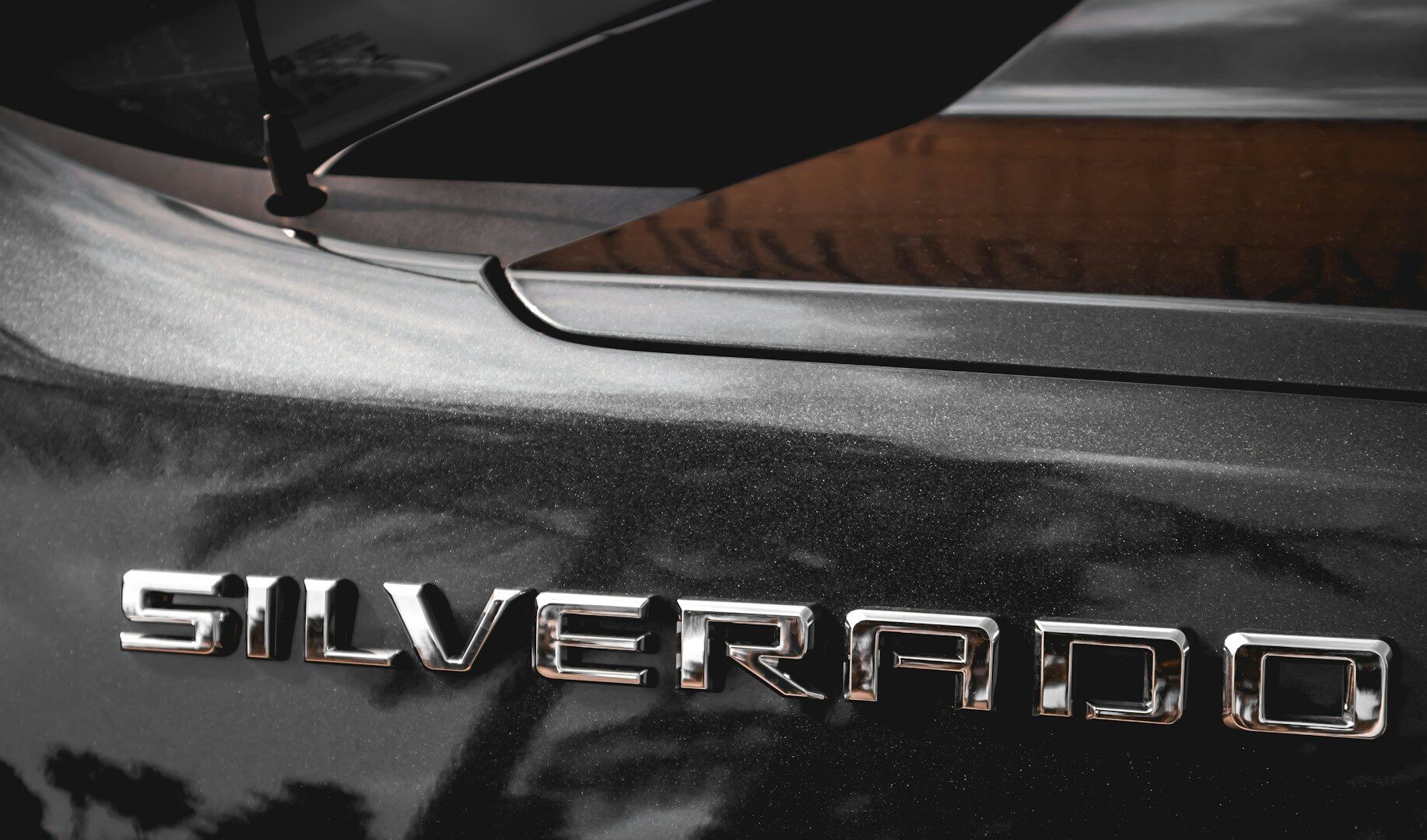
General Motors already recalled 597,571 trucks and SUVs to fix a defect that can cause its 6.2-liter V-8 to destroy itself from the inside. For most of those owners, the actual repair amounted to an engine inspection, a new oil fill cap, a fresh oil filter, and a switch to thicker oil. Nearly 7,000 of them are now finding out that a different bottle of oil does not put a broken connecting rod back together.
That gap between what GM promised and what actually happened after the fix is the real story behind the new federal investigation into the L87, GM’s full-size V-8. A truck engine failing isn’t news. Engines fail. What matters here is that GM’s own remedy, mailed to nearly 600,000 owners starting last year, failed too, often enough that investigators are now looking at engines the original recall never touched.
Start with what’s actually on the record. In April 2025, GM issued recall 25V-274, covering 2021-2024 Cadillac Escalade and Escalade ESV, Chevrolet Silverado 1500, Suburban and Tahoe, and GMC Sierra 1500, Yukon and Yukon XL models built with the 6.2-liter L87. According to GM’s own filing with NHTSA, the connecting rods and crankshaft on affected engines could carry manufacturing defects serious enough to cause engine damage and outright failure. Dealers were told to inspect engines and, for units that passed, add higher-viscosity oil, a new fill cap, and a new filter. Units that failed inspection got a new or rebuilt engine.
GM traced the defect to a supplier’s manufacturing and quality problems on engines built between March 1, 2021, and May 31, 2024, a three-year window that became the entire boundary of the recall. That boundary matters, because it’s exactly where this story stops being about a bad batch of parts and starts being about how confident GM actually is in that explanation.
NHTSA’s Office of Defects Investigation opened its first review of L87 bearing failures back in January 2025, months before the recall existed, after owners reported knocking and growling noises from the bottom of the engine, sometimes followed by a broken connecting rod punching through the block. Once GM issued the recall, NHTSA closed that preliminary review, effectively accepting that the recall covered the problem. It didn’t stay closed for long. In October 2025, the agency opened a new engineering analysis specifically because reports of the same failure kept arriving on engines built before March 2021 and after May 2024, outside the window GM had defined as the defect’s boundaries. As of late August 2026, the agency’s files show 499 owners who received the recall repair reporting that their engines failed anyway, and GM itself disclosing 6,953 post-remedy failure complaints in its own warranty data, plus another 191 failures on engines the recall never covered at all.
That roughly 14-to-1 gap between what owners reported directly to the government and what GM disclosed isn’t evidence of a cover-up. It’s a function of the Early Warning Reporting rules Congress wrote into the TREAD Act after the Firestone tire scandal, which force automakers to hand regulators a running tally of warranty claims, deaths, injuries, and lawsuits tied to specific failure patterns. Most owners never file a NHTSA complaint even when a warranty repair fails; they just call the dealer again. The 6,953 figure is the number that would otherwise stay buried in GM’s own service records. It surfaced only because federal law requires it to.
The engineering detail worth sitting with is the remedy itself. A connecting rod bearing failing from a manufacturing tolerance problem, a crank journal ground slightly out of round, a bearing shell with an inconsistent crush height, contamination baked into a casting, is a hardware problem. Higher-viscosity oil is a mitigation, not a repair. Thicker oil builds a marginally stronger film between two surfaces that shouldn’t have been machined that close, or that far apart, in the first place. It can buy a bad tolerance stack some room to survive. It cannot restore a crankshaft journal to spec. That’s why an oil change, a new cap, and a new filter was ever the fix for a defect GM itself described as a manufacturing flaw in the crankshaft and rods: it was the plan for the engines healthy enough to tolerate the compromise, not a plan to eliminate the underlying defect.
GM has now changed its recommended oil viscosity for the L87 twice, once as the original recall remedy, and again earlier this year. Two revisions to the fluid spec, on an engine GM says it fully understands the root cause of, is not the signature of a closed case. It’s the signature of an engineering team still adjusting a workaround because the actual hardware fix, a new engine, is too expensive to apply to everyone.
The L87 isn’t a niche engine. It’s the volume V-8 underneath nearly all of GM’s full-size truck and SUV lineup, the vehicles that generate the bulk of the company’s North American profit. An engineering analysis that widens beyond a three-year recall window, back into 2019 production and forward into current models, is the kind of federal case that can turn a 598,000-vehicle recall into something closer to the company’s entire full-size truck output for the better part of a decade. That’s not a rounding error on a balance sheet built on Silverado and Suburban margins.
The timing matters, too. GM has spent this year managing plenty of self-inflicted manufacturing turmoil already, including an idled-then-reopened battery plant in Ohio and production shifts in Indiana and Tennessee. Those were strategic bets the company chose to make on its own schedule. An engine investigation that keeps widening on the trucks and SUVs actually funding those bets is a different kind of problem, one GM does not get to choose the timing of.
GM isn’t alone in discovering that a fix and a cure aren’t the same word this year. NHTSA opened a similar reopened investigation into Tesla’s front suspension this month after two prior repairs didn’t hold up, and Volkswagen is fighting a lawsuit over an Atlas water pump defect it addressed with a claim form instead of a recall. What connects all three is a pattern regulators are watching closely: automakers issuing remedies that satisfy the paperwork requirement of a recall without necessarily solving the mechanical problem underneath it.
For owners, the practical risk isn’t abstract. NHTSA classifies this defect under loss of motive power, engineering language for what happens when a truck towing a trailer, or merging onto a highway, suddenly has no engine at all, which on most of these platforms also means losing power assist for steering and brakes. For insurers and used-truck shoppers, the more useful number is the one nobody’s filing yet: a full L87 replacement runs deep into five figures, and a 2021-2024 Tahoe, Suburban, or Silverado with an unresolved engine question attached to its VIN shouldn’t command full recall-repaired pricing at a dealer auction. GM’s recent run of recalls and lawsuits, including a coolant hose problem that cost GMC Acadia owners a warranty extension while Chevy Colorado owners got a lawsuit instead, suggests the company’s quality-control math is being tested across more than one platform at once.
GM will likely argue, correctly, that most of the 597,571 recalled trucks are running fine. That’s beside the point. The company already told NHTSA and the public that it understood this defect well enough to draw a three-year box around it and mail out an oil change. Nearly 7,000 disclosed failures inside that box, and 191 more outside it, say the box was wrong. An oil change is not an engine rebuild, and for thousands of GM truck owners, that distinction just got a lot more expensive than a dipstick.