
On June 26, Jonathan Dixon filed a proposed class action against General Motors LLC in the U.S. District Court for the Northern District of Georgia, Case No. 2:26-cv-00217. Dixon says he bought a new 2024 Chevrolet Colorado in March 2024, and less than two years later, in February 2026, his truck threw a check-engine light and started making a metal-on-metal grinding noise at low speed. He paid $489.36 out of his own pocket to fix it. His complaint claims GM knew, before it ever sold the truck, that a design or manufacturing flaw in the cooling system would eventually let coolant escape and cook the engine, risking what the filing calls “sudden engine disablement.”
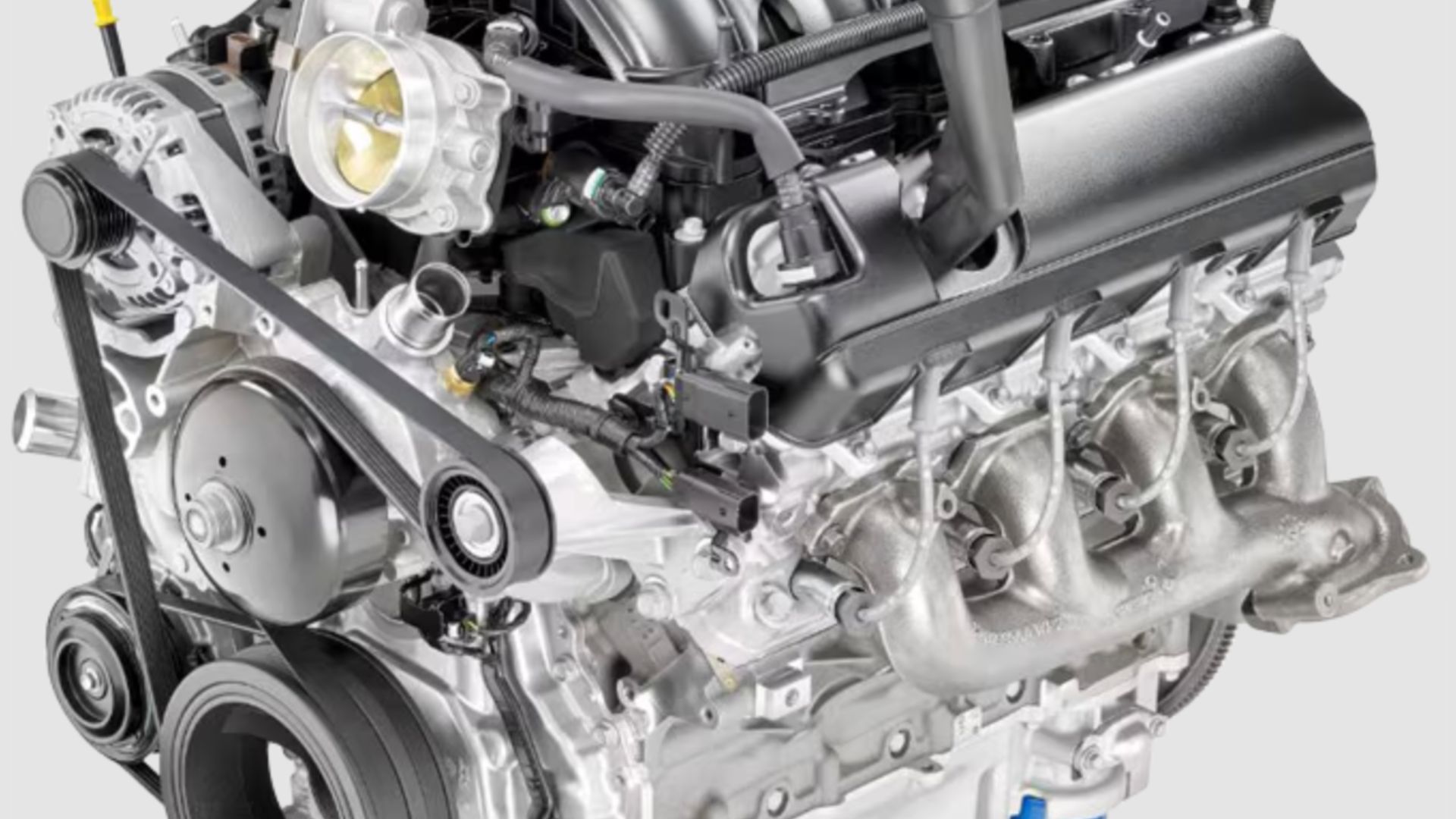
The lawsuit names two unrelated engine families as defective: the L3B 2.7-liter turbocharged four-cylinder in the 2023–2026 Chevrolet Colorado and GMC Canyon, and the LK0 2.5-liter turbocharged four-cylinder in the 2024–2026 Chevrolet Traverse, GMC Acadia, and 2025–2026 Buick Enclave. Different displacement, different architecture, different assembly plants, different vehicle segments entirely. Same alleged failure point: the quick-connect fitting that joins the upper radiator hose to the radiator itself.
Here’s the detail the lawsuit doesn’t dwell on, because it actually undercuts the idea that GM stayed silent. The company had already documented this exact failure before Dixon filed anything. Technical Service Bulletin PIT6494, released in March 2026, tells Chevrolet and GMC technicians precisely what Dixon’s dealer should have caught: a degraded seal inside the upper radiator hose’s quick-connect fitting, showing up as diagnostic trouble code P3075, and covered under the truck’s powertrain warranty. The bulletin doesn’t blame a cracked radiator or a bad batch of coolant. It blames a worn seal — a nickel-and-dime part that, multiplied across three vehicle lines and four model years, turns into a very expensive habit.
Knowing what’s wrong and being able to fix it are two different problems, and this is where GM’s paperwork gets embarrassing. The replacement hose, part number 86518091, went on backorder soon after the bulletin dropped. GM’s own guidance told dealers without stock on hand to escalate the order to what’s internally known as a “SPAC Case,” a rush designation usually reserved for repairs that can’t wait. Owners on enthusiast forums reported waiting anywhere from a couple of weeks to a couple of months for a part that costs a fraction of a service visit, all while driving a truck GM’s own engineers had already flagged as capable of losing coolant and overheating without warning.
Here’s what actually separates the Colorado owner from the crossover owner, and it isn’t the leak itself. In April, GM filed Special Coverage N262546590 with NHTSA, extending factory coverage on the affected Traverse and Acadia coolant hose to five years or 60,000 miles from the vehicle’s original in-service date, well past the standard three-year bumper-to-bumper window, and promising to reimburse owners who’d already paid to fix it themselves. That’s a formal, owner-facing campaign, the kind that shows up as a letter on GM letterhead in your mailbox. A technical service bulletin is not that. It’s an internal repair instruction that a technician only finds if they search for it, or if a customer walks in holding a printout from a truck forum. Dixon’s Colorado isn’t covered by anything resembling N262546590. It’s covered by a bulletin most owners have never heard of, on a truck GM apparently didn’t think warranted the same formal outreach as the crossover.
That distinction is worth understanding, because it explains a lot about how defects actually get resolved in this industry. A recall exists because a defect creates a safety risk that NHTSA can compel a manufacturer to fix, with mandatory notification. Special coverage is voluntary, but it still comes with a real letter and, frequently, reimbursement. A technical service bulletin is neither. It’s a manufacturer quietly telling its own shops how to handle something it would rather not turn into a bigger story. Whether an individual owner benefits from that knowledge often comes down to luck: whether their dealer happens to know about it, whether they describe the right symptom, whether they get routed to a technician who’s seen it before.
The engineering decision underneath all of this deserves attention too. Quick-connect fittings — hose connections that snap onto a radiator spigot with an O-ring and a plastic clip instead of a traditional clamp — exist because they install faster on a robotic assembly line and, in theory, seal more consistently than a technician tightening a clamp by hand. They’ve spread across the industry for exactly that reason. The tradeoff is that the seal alone is doing all the work, with no mechanical backup if it degrades from years of heat and vibration. GM’s own bulletin even warns technicians against using any grease or lubricant when installing the replacement hose, because contamination on that seal is exactly what starts the next leak. A connection engineered to save time on the line is now generating warranty claims, a parts backlog, and a federal lawsuit.
For owners, the practical danger isn’t the repair bill. Under warranty, most of this should eventually cost nothing but a service appointment and some patience. It’s the failure mode. A slow coolant leak doesn’t always announce itself with a puddle in the driveway. Left alone, it shows up as an overheating engine, a limp-mode event in traffic, or, in the more serious scenarios this lawsuit describes, a ruined engine. That’s the real line between a minor bulletin and an expensive one: if a remedy campaign doesn’t reach every affected owner before the seal actually fails, the bill quietly shifts from a warranty claim to a short-block replacement.
This also isn’t GM’s only paperwork problem this year, and it’s not the only automaker leaning on process instead of a headline-grabbing recall. Ford spent the first half of 2026 racking up more than 10 million recalled vehicles tied to a park-system defect NHTSA treated as safety-critical rather than warranty business. Stellantis is separately fighting a proposed class action covering roughly 2 million Dodge Charger, Challenger, and Chrysler 300 models over a defect owners say the company knew about and didn’t disclose. If you’ve ever weighed whether an extended warranty is worth the money, this is the exact scenario that pitch is built around: not a catastrophic one-time failure, but a manufacturer’s own internal timeline working against the owner who bought too early.
Dixon’s case will likely settle, get dismissed, or crawl through discovery for a year before anyone outside a courtroom hears about it again. None of that is really the point. The point is that GM’s own paperwork already proves it knew exactly what was wrong and exactly how to fix it, and still let the fix reach the crossover buyer who got a letter faster than the truck buyer who had to find a forum. A warranty extension is only as good as the outreach behind it. Everything else is just a filing cabinet.