
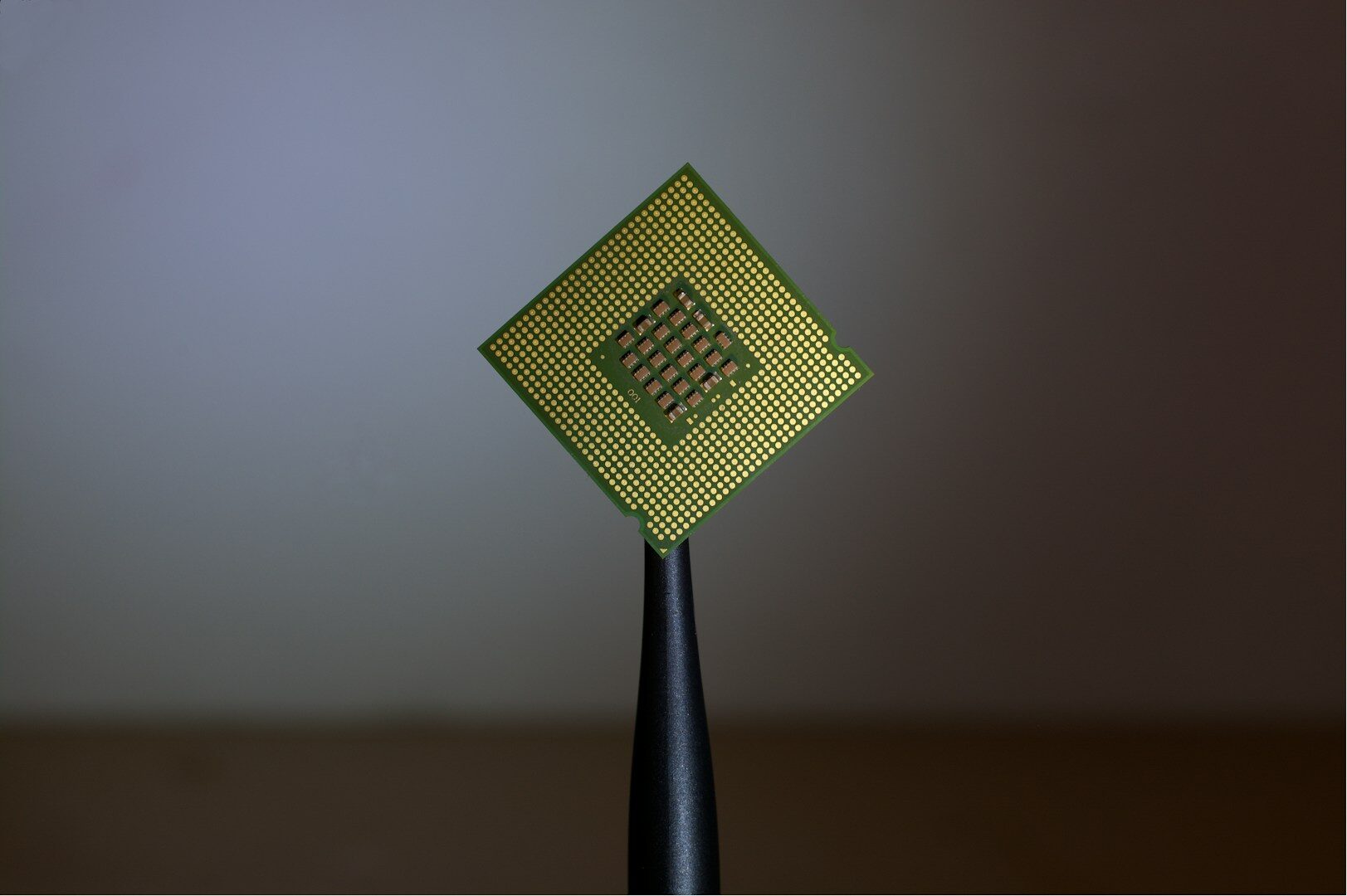
Bosch says it just reached “a milestone.” That part is true. It’s just not the milestone the press release wants you to focus on.
On July 13, Bosch signed a definitive agreement with the U.S. Department of Commerce for up to $225 million in direct funding, part of a roughly $2 billion plan to convert Bosch’s Roseville, California, chip plant into a domestic factory for silicon carbide semiconductors. Those are the specialized chips that let an EV’s inverter push more power through a smaller, cooler package, translating into more range and faster charging from the same battery pack. Ford and Lucid both sent along supportive quotes about EV range and affordability. The Trump administration, meanwhile, barely mentioned EVs at all, framing the deal instead as a matter of “national and economic security.”
Three companies, three press quotes, three different stories about what this money is actually for.
Here’s the one none of them are telling: Washington just financed a second attempt at a business that already bankrupted its first American champion, using an EV supply chain built for demand the government itself just stopped subsidizing.
What Actually Got Announced
Strip away the ribbon-cutting language, and the facts are straightforward. Bosch bought the assets of an existing wafer fab in Roseville in 2023, a plant with roughly 40 years of experience making ordinary silicon chips for cars and industrial equipment. It has spent the time since converting part of that facility into a cleanroom capable of producing silicon carbide, or SiC, chips instead, according to Bosch’s own announcement. Sample production has already started, and commercial production on 200-millimeter wafers is targeted for later this year. Add in a $25 million California tax credit, and Bosch says its total U.S. investment through 2031, the company’s 125th anniversary in the country, could reach $7.5 billion.
That’s the announcement. It’s a real investment, and roughly 300 current Roseville employees have real jobs riding on it. But announcements like this exist to be read past.
Silicon Carbide Is Not Just “Better Silicon”
Here’s the part the press release glosses over: silicon carbide isn’t a cheaper or newer version of the chip material every car has used for decades. It’s a fundamentally different material, and one that fights the equipment used to make it.
Silicon carbide crystal is nearly as hard as diamond. Growing a usable boule of it takes weeks at temperatures north of 2,000 degrees Celsius, far hotter and slower than growing ordinary silicon. The wafers sliced from that boule crack more easily than silicon wafers, and microscopic defects can ruin an unusable fraction of every wafer before a single chip is ever cut from it. That combination is why SiC chips have historically cost multiples of an equivalent silicon part, and why converting a 40-year-old silicon fab into an SiC plant means new furnaces, new epitaxy tools, and new handling equipment throughout, not just a new label on the door.
None of that shows up in a quote written for a ribbon-cutting. It’s the actual engineering story.
Blame (Or Thank) Tesla For This
Here’s a detail most people outside the powertrain-engineering world have never heard: the automotive SiC rush traces back to one company’s parts-bin decision. Tesla was the first automaker to put SiC power modules into a mass-production drive inverter, sourcing chips from STMicroelectronics for the Model 3 starting around 2018. That single design choice on one sedan helped trigger years of SiC supply tightness across the whole industry, as every automaker chasing better EV efficiency numbers discovered they were competing for a chip supply that barely existed at automotive scale a decade earlier.
Every domestic SiC investment since, Bosch’s Roseville plant included, is still catching up to a bet Tesla placed on one car.
The Bankruptcy Nobody In This Press Release Mentioned
Now for the part missing from every quote in Bosch’s release: America already has a homegrown SiC champion, and it just went through Chapter 11.
Wolfspeed, the Durham, North Carolina, company that pioneered commercial SiC production under its former name, Cree, filed for bankruptcy protection in mid-2025, according to its own bankruptcy disclosure to the Securities and Exchange Commission. The company had spent years and billions building SiC capacity for a wave of EV demand that arrived slower than its own projections, and the debt eventually outran the business.
That’s the environment Bosch is entering: not an open market waiting for a domestic supplier, but one that just demonstrated how easily SiC capacity can outrun real-world EV demand. Porsche learned a version of the same lesson this year when it wrote down its own battery-cell venture rather than keep funding it ahead of slower-than-planned EV sales.
Washington’s Right Hand And Left Hand
Which brings up the detail that should bother anyone reading both halves of this story at once. The same year the federal government eliminated the $7,500 EV purchase tax credit, it signed off on $225 million to help build chips that exist almost entirely to make EVs more efficient.
Commerce Secretary Howard Lutnick’s quote in Bosch’s release never uses the word “EV.” It talks about “supply chain resiliency” and technology “of national and economic security importance.” Ford’s and Lucid’s supply chain chiefs, quoted two paragraphs later in the same release, talk about range, efficiency, and affordability, explicitly EV language. That’s not an accident. It’s two different sales pitches stapled to the same check, aimed at two audiences who each needed a different reason to feel good about it.
What This Actually Means For Owners
None of this changes anything about the car sitting in your driveway today. It says something about the one you’ll shop for in five years.
If domestic SiC production scales the way Bosch and the Department of Commerce are betting, EVs should get incrementally more efficient, and their power electronics somewhat less exposed to the kind of overseas chip disruption that helped inflate used-car prices for years after 2021. If it doesn’t scale, and demand stays as uneven as it was for Wolfspeed, taxpayers will have underwritten a second expensive lesson in the same commodity chip business.
There’s a quieter cost worth knowing about, too. SiC-based drive units and inverters are more efficient, but they’re also denser and more expensive to source and replace than the parts they’re replacing. That’s part of why insurers have grown more willing to total out an EV after damage that would just be a repair bill on a comparable gas-powered car. A cheaper, more domestic chip supply doesn’t undo that math on its own. It just changes who profits from making the part in the first place.
The Line Worth Remembering
Bosch didn’t just announce a chip factory. It announced a bet that the second company to build America’s silicon carbide supply chain will succeed where the first one, backed by its own federal money, went bankrupt trying.
The chips are real. The investment is real. What’s still unproven is the market underneath both of them, and no press release, from Bosch or from Washington, is going to write that part for you.