
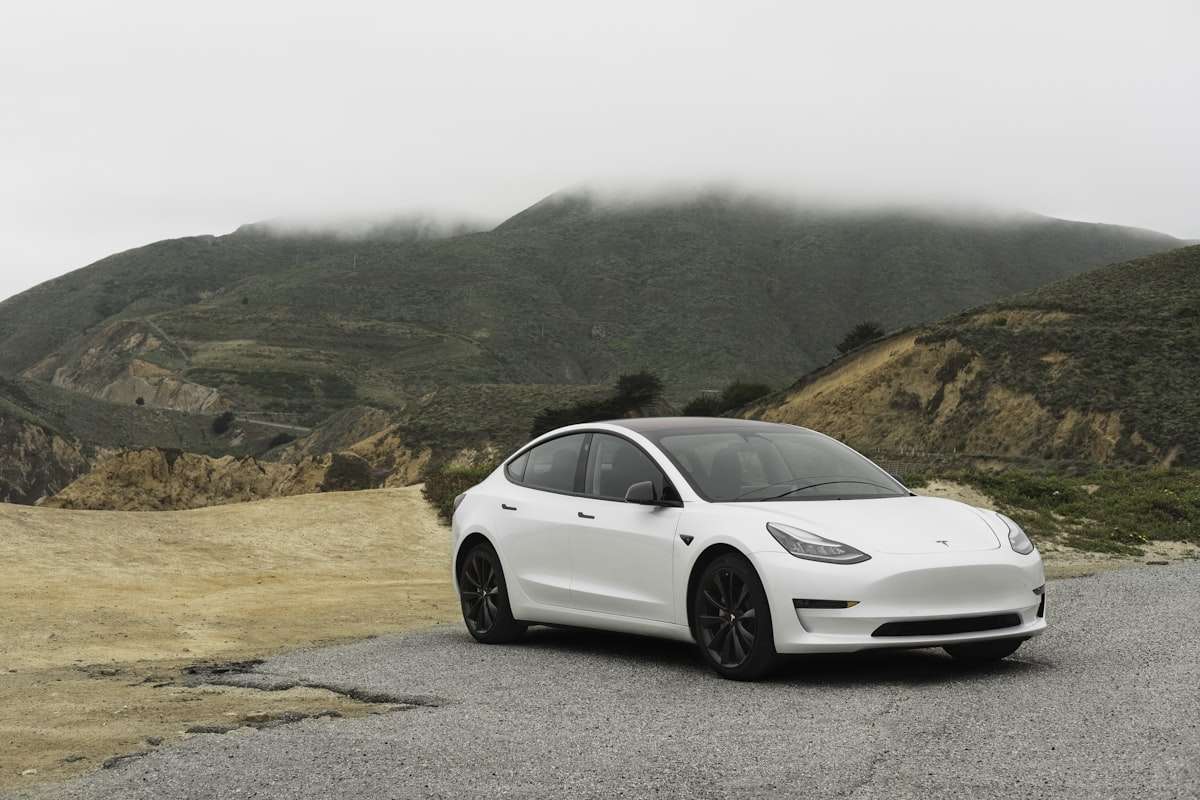
Tesla doesn’t work that way, and a new $10.3 million lawsuit out of Arlington, Virginia shows exactly what happens when a car company skips the one habit every dealership in America built its business around.
The regenerative braking didn’t fail. The sales process did.
According to a lawsuit reported by CarComplaints.com, Alemzewd Lawgalet had never driven an electric vehicle before September 21, 2024, and told Tesla’s staff exactly that before her test drive. She says she was told an EV drives just like a gas car. She asked for a representative to ride along and was told it wasn’t necessary, then was sent off alone in a Model Y to loop back to the service center on her own.
Merging onto I-395, she lifted her foot off the accelerator and felt the car slow on its own, the way regenerative braking is designed to work. To a first-time EV driver with no explanation of one-pedal driving, that deceleration can feel exactly like a brake failure. Rattled, she took the next exit to head back. Accelerating from a stoplight on the way, the Model Y “lurched forward at an extreme speed” relative to how hard she pressed the pedal, according to the complaint. She lost control and struck the front of a hair salon, starting a fire inside a building full of employees and customers.
That single moment, one pedal lift and one misread signal, sits at the center of the case. It’s also the least surprising part of the story to federal regulators.
Just months before this lawsuit surfaced, the National Highway Traffic Safety Administration closed a formal defect investigation into exactly this phenomenon: drivers accustomed to gas pedals misjudging one-pedal regenerative braking and mistaking deceleration for a mechanical problem. The petition covered every Tesla built since 2013. NHTSA denied it. Regulators found that one-pedal driving exists on 64 models from 21 manufacturers, that Tesla’s own vehicles responded appropriately to driver inputs in the crashes it reviewed, and that there was no defect to fix. The car did what it was built to do.
That finding is exactly why this case was never really about the pedal.
Look at how Tesla actually runs its test drives, and the design starts to look less like an oversight and more like a strategy. Tesla now offers what it calls a Self-Serve Demo Drive: no advisor on-site, no employee riding along, just a customer, the Tesla app, and a car unlocked entirely through a smartphone. Qualifying requires being 21 years old, three years older than the minimum for a standard, staffed demo drive, and accepting a legal agreement acknowledging responsibility for any damage to the vehicle before ever touching the wheel. Tesla built an entire test-drive format on the premise that no employee needs to be in the car at all.
Lawgalet’s test drive wasn’t the self-serve version. There were Tesla employees on-site, and by her account, two of them spoke with her before she left. But the outcome matched what Tesla designed for locations with no staff whatsoever: nobody got in the car with her. That detail should make dealership veterans wince. At a traditional franchise store, a customer unfamiliar with the model, let alone the drivetrain, doesn’t leave the lot without a chaperone in the passenger seat. That isn’t etiquette. It’s how a dealer’s garage liability coverage is often underwritten, and it’s the fact courts weigh most heavily when deciding whether a store bears responsibility for what a customer does once she’s off the lot. Tesla, acting as both manufacturer and retailer, appears to have built a sales culture that skips that step by default, not only at the locations advertised as self-serve.
Skipping that step doesn’t guarantee a company avoids liability either. The Auto Wire recently covered a Tennessee dealer that lost a court fight after a technician took a customer’s trade-in on an hours-long, unauthorized detour to a bar. Even when a dealership staffs its test drives properly, the definition of “properly” keeps ending up in front of a judge.
There’s a smaller detail in the complaint that says something bigger about how tangled Tesla’s own product lineup has become, for customers and, apparently, for the attorneys writing about it. The suit faults Tesla for not explaining the Model Y’s varying acceleration modes, naming Chill, Standard, and Insane. One problem: Tesla’s own owner’s manual lists no Insane mode for the Model Y. That name belongs to the Model S and Model X. A Model Y offers Chill and Standard, or Chill and Sport if it’s optioned with Acceleration Boost. It’s a minor error, but a telling one. Tesla has renamed and reshuffled its acceleration modes across four model lines for a decade, and even a formal legal filing couldn’t keep the terminology straight. Regulators have taken notice of Tesla’s mode-naming problem before, including a federal probe into its aggressively-branded “Mad Max” driving mode.
Whatever actually happened at that intersection will likely come down to data Tesla already has sitting on a server somewhere. Modern EVs log accelerator position, vehicle speed, and steering input several times a second, and Tesla’s detailed vehicle logs have already decided the outcome of other lawsuits, including one this outlet covered out of Illinois, where a driver blamed a blackout for a fatal crash and the car’s own data told a different story. Expect the same dynamic here. Tesla can likely already show, down to the millisecond, whether the Model Y surged beyond what Lawgalet’s foot commanded, or whether her foot did more than she remembers.
Zoom out, and this case fits a pattern this publication keeps running into. Tesla frequently ships technology that works as advertised, then under-invests in the human systems meant to explain it to the people using it. California’s DMV has separately threatened to suspend Tesla’s dealer license over how it markets Autopilot. NHTSA is still combing through an internal engineering memo titled “Radar Saves Us” as part of a broader Full Self-Driving investigation. In each case, the hardware mostly did what it was engineered to do. The shortfall was in what the company told customers, regulators, or its own sales floor.
None of this means regenerative braking is dangerous, or that Tesla built a bad car. NHTSA already reached that conclusion after a multi-year review covering every Tesla built since 2013. What it means is that Tesla’s direct-to-consumer model, no franchised network, no salesperson commission structure, and increasingly no salesperson in the car at all, has quietly removed the one low-tech safeguard the rest of the industry built over a hundred years: a trained human in the passenger seat.
Every dealership in America learned that lesson decades ago. Tesla built a sales model on skipping it. A hair salon in Arlington just found out what that costs.