
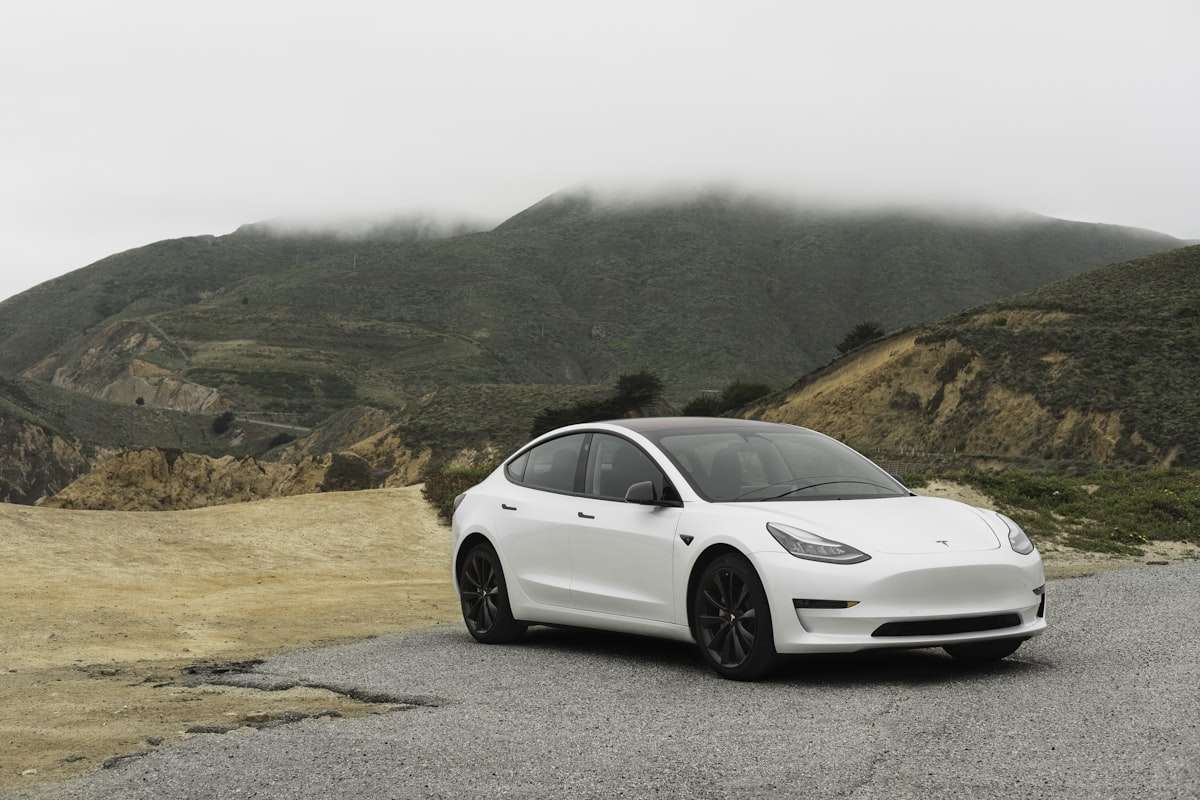
Every state in the country lets people with seizure disorders keep driving. That is not an oversight. It is policy. And it is the detail nobody is examining after a Tesla plowed through three cars near Orland Square Mall in Orland Park, Illinois, last month, killing a 66-year-old bystander named Antoni Luczynski.
According to an Orland Park Police accident report obtained by Patch through a public records request, the Tesla was headed north on LaGrange Road on the morning of June 29 when it rear-ended a Lexus, then a Ford Fusion, then a Volkswagen Jetta in quick succession. The force sent the Fusion off the road, where it struck Luczynski near a Pace bus stop before hitting a signal pole. Paramedics treated him at the scene, but he did not survive. Surveillance footage reportedly showed the Tesla moving well above the speed of surrounding traffic. Three other people were injured. The driver, whose name has not been released pending the outcome of the investigation, told officers he believed he had suffered an epileptic seizure and had no memory of the crash.
That account may hold up. It may not. What is actually worth examining is how ordinary that gap is, and how little stands behind it until someone dies.
Illinois, like most states, allows people with seizure disorders to hold a driver’s license. State law requires drivers to report any condition likely to cause seizures to the Secretary of State’s office within 10 days of finding out about it, and doctors are asked to encourage, not force, that disclosure. There is no database cross-referencing hospital seizure admissions against driver’s license records. There is no automatic suspension the moment a diagnosis lands. The entire system depends on the person behind the wheel deciding to turn himself in, and it is functionally unenforceable until a Ford Fusion ends up on a sidewalk.
Here is the part that should interest anyone who owns one of these cars. The federal government requires most modern vehicles to carry an event data recorder, governed by 49 CFR Part 563, that captures a narrow slice of pre-crash data: a few seconds of speed, braking, and throttle position. Tesla’s own vehicles have long kept a far deeper log than that federal floor requires. That is not speculation. It is how the NTSB reconstructed a fatal 2016 Autopilot crash near Williston, Florida, down to the second, citing what its report labeled Tesla-Recorded Performance Data rather than the standard EDR. It is the same kind of internal logging NTSB investigators leaned on this year when they determined a Texas driver had pressed the accelerator to 100 percent before a fatal Katy-area crash he had initially blamed on Full Self-Driving.
A claimed seizure, in other words, is not simply a driver’s word against a blank windshield. Whatever investigators pull from this car will likely show whether the steering kept making small corrections, whether the accelerator held steady or spiked, whether the brakes were ever touched at all. Consciousness leaves fingerprints. So does the absence of it.
There is a detail in the police report worth sitting with. The Tesla never struck Luczynski. The Fusion did, after being knocked off the road by the initial impact. That does not let the Tesla driver off the hook. Under ordinary negligence law, a driver who sets a chain reaction in motion is generally still responsible for what happens down the line, even if his own bumper never touched the person who died. Only hitting the car in front of him has never been much of a defense in a pileup, and it is not likely to be one here.
This is where the self-reporting law stops being an abstraction. Most states recognize some version of a sudden-emergency defense: a genuine, unforeseeable medical event behind the wheel can blunt or eliminate an ordinary negligence claim. That defense tends to fall apart the moment the emergency was not actually unforeseeable. A driver with a known, previously diagnosed seizure disorder who never reported it, as Illinois law requires, is not relying on bad luck. He is relying on a system that trusted him to police himself and did not check.
It matters to insurers, too. Carriers investigating a crash like this typically want to know whether a condition was diagnosed and whether it was disclosed, because undisclosed material conditions have historically given insurers grounds to contest coverage. It is a smaller-scale version of the same shift we covered when State Farm began building a direct telematics pipeline into Toyota’s onboard data: insurers are done taking a driver’s account of a crash on faith. They want the car’s version of events.
This is not even the first Illinois case where a Tesla driver’s account of a crash has run up against what the car itself could show. Earlier this year, a driver who fell asleep on Autopilot and rear-ended a parked squad car near Chicago found out the same thing this driver may be about to learn: the car remembers more than the person operating it does.
No charges have been announced, and nothing here says whether this driver is telling the truth about the seizure. That is genuinely still an open question. What is not open to much doubt is this: for most of automotive history, saying I do not remember what happened was where an investigation stalled. In a modern car, it is usually where the investigation actually begins.
Related Articles
- Fatal New York Tesla Crash Echoes An Earlier Tragedy
- Las Vegas Tesla Firebombing Suspect Faces Multiple Terrorism-Related Charges
- Cybertruck Driver Claims Lexus LX Owner Brandished Firearm During Dispute
- Unlicensed Driver Suspected in Fatal Milan Crash That Destroyed a Rented Mercedes G-Class