
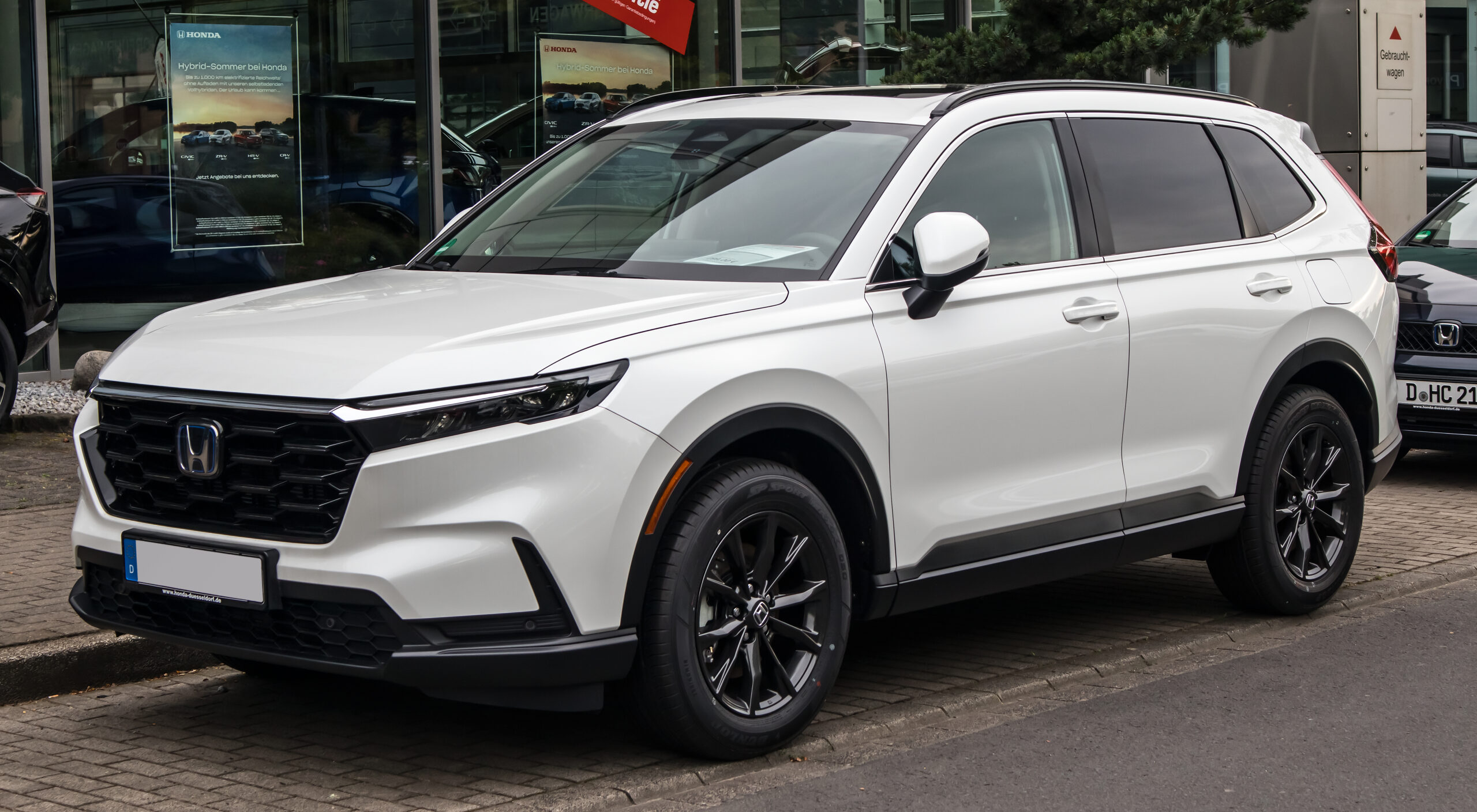
This isn’t really a story about stolen Honda CR-Vs. It’s a story about a thirty-year-old emissions regulation that accidentally became a master key.
Action News Philadelphia has been tracking the wave for weeks. Police say thieves are working in small caravans, hitting parked CR-Vs at night, and vanishing before an owner even hears the glass break. Captain Robert McKeever of the department’s Major Crimes Unit told reporters the crews can strip a car to its skeleton almost as fast as they steal it: “They could probably take apart a car in less than 20 minutes.” Recovered vehicles keep turning up gutted in the same places, dumped in the wooded corners of Fairmount Park and, in one week alone, four of them in a cemetery.
The tool making this possible isn’t exotic. It plugs into the OBD-II diagnostic port, the same port under the dash that an independent mechanic uses to read a check-engine code, and it does something almost mundane: it asks the car’s computer to pair a new key. The car, having no way to know the person asking is a stranger, says yes. According to the surveillance footage police are now reviewing, a parked CR-V was gone in under a minute.
Here’s the detail almost nobody connects to modern car theft: that port exists because of a 1996 federal emissions mandate, not a security decision. The rule required every car sold in the United States to expose the same standardized diagnostic data through the same style of connector, so any independent garage or state inspection station could read a check-engine light without buying a dealer’s proprietary tool. It effectively created the independent repair industry as it exists today, and decades later it became a rallying point for the right-to-repair movement. Nobody involved in writing that regulation was thinking about key fobs, because in 1996 no handheld tool existed that could talk to a car’s key-authentication system through the same wires used to talk to the fuel injectors. Three decades later, that gap is for sale online for a couple hundred dollars.
The other detail worth sitting with is what happens after the car disappears. Police say Honda parts carry no VIN etching at all, and because Honda and Acura share so much engineering across their lineups, stripped fenders, hoods, grilles and airbags can move through legitimate parts channels without raising flags. Impact sensors, the small units behind the bumper that feed a car’s collision-avoidance systems, are reportedly fetching more than $2,000 apiece on their own. That’s not a Philadelphia quirk. It’s a direct consequence of platform sharing, the same cost-saving engineering strategy that keeps a CR-V affordable to build is also what keeps a stolen one profitable to dismantle.
None of this is unique to one city, and it isn’t new. Owners have been posting about CR-Vs disappearing without a key fob in hand since at least 2021, and police departments from New York to Baltimore have issued near-identical warnings about the same relay-style attack hitting Honda products. Multi-state theft rings using similarly quiet, high-tech methods have already been broken up by federal investigators, and Philadelphia’s own chop shops are a familiar problem for police well beyond this one make. The Insurance Institute for Highway Safety’s Highway Loss Data Institute counted 5,620 CR-V thefts in 2022 alone, a claim frequency of about 1.2 percent across roughly 469,000 insured examples nationally, with 2020-model-year cars singled out as the most targeted group.
Here’s what should worry Honda more than a bad month of local news: nationwide vehicle theft actually fell 23 percent during the first half of 2025, according to the National Insurance Crime Bureau. Auto theft in general is trending in the right direction. CR-V-style port attacks are swimming against that current, which suggests this isn’t background criminal noise fading along with everything else. It’s a specific, repeatable exploit that keeps working.
That exploit has a cost, and it isn’t only paid by owners parked on North 22nd Street. Comprehensive theft claims get pooled into actuarial tables that set premiums nationally, so a CR-V owner in a state that has never seen this crime wave is still covering a sliver of it at every renewal. Theft resistance, or the lack of it, is a hidden line item on the insurance bill for a model, whether or not any particular driveway has ever been touched.
It’s a strange loop, too. Transponder immobilizers, introduced broadly through the 1990s and 2000s, are widely credited with ending the era of the screwdriver-and-coat-hanger hot-wire job that once made stolen cars a daily headline. Car theft got harder, then quieter, for two decades. The diagnostic-port attack doesn’t defeat that immobilizer technology so much as it goes around the side door regulators left open for mechanics, which means the fix isn’t a better lock. It’s rethinking what the car is willing to tell anyone who asks nicely.
Expect the industry’s answer to look like what some automakers have already rolled out on newer platforms: authentication gateways that require a verified, sometimes subscription-gated, connection before the OBD port will talk to security-critical modules at all. That will very likely stop this specific attack. It will also make key replacement and diagnostic work more dependent on dealer-level tools and less accessible to independent shops and locksmiths, the same people the 1996 mandate was written to protect. Locking down the port that regulators forced open thirty years ago is going to be one of the more interesting fights the repair industry has had in a decade.
Until then, the fix available to owners is unglamorous. Philadelphia police are recommending a physical OBD port lock, a roughly $35 device that blocks access to the connector entirely. It won’t stop a determined thief with a slide hammer and time, but it removes the quiet, one-minute version of this crime, which is the version actually happening in Fairmount Park.
Every headline about this story will focus on the CR-V, because that’s the make getting stolen this month. It probably won’t only be a CR-V next year. The lesson underneath the make and model is the one worth remembering: the same port that lets a thirty-dollar tool at a corner garage fix your car is the port that lets a two-hundred-dollar tool in a stranger’s pocket steal it. That’s not a Honda problem. That’s the tradeoff built into every car with a diagnostic port, which is to say, every car sold in America since 1996.