
A Shelby County judge has attached a dollar figure to one of the more creative defenses in recent memory: that a five-hour bar crawl in a customer’s Mercedes was an “extended test drive.”
Judge Lynn Cobb of Shelby County General Sessions Court ruled this week that Mercedes-Benz of Collierville and service technician Derrick Nguyen owe customer Kimberly Porter $20,270, with $15,000 of that in punitive damages for what the judge described in his written ruling as “extreme and outrageous” conduct. Back out the punitive portion and the compensatory award is $5,270 — meaning the judge decided the punishment should be roughly three times the actual harm.
Related Articles
- Alabama Wants Credit for $15.6 Billion in Car Plants. Congress Might Ban One of Them Anyway
- Canada’s Chinese EV Quota Is 38% Full — And Tesla Took Most of It
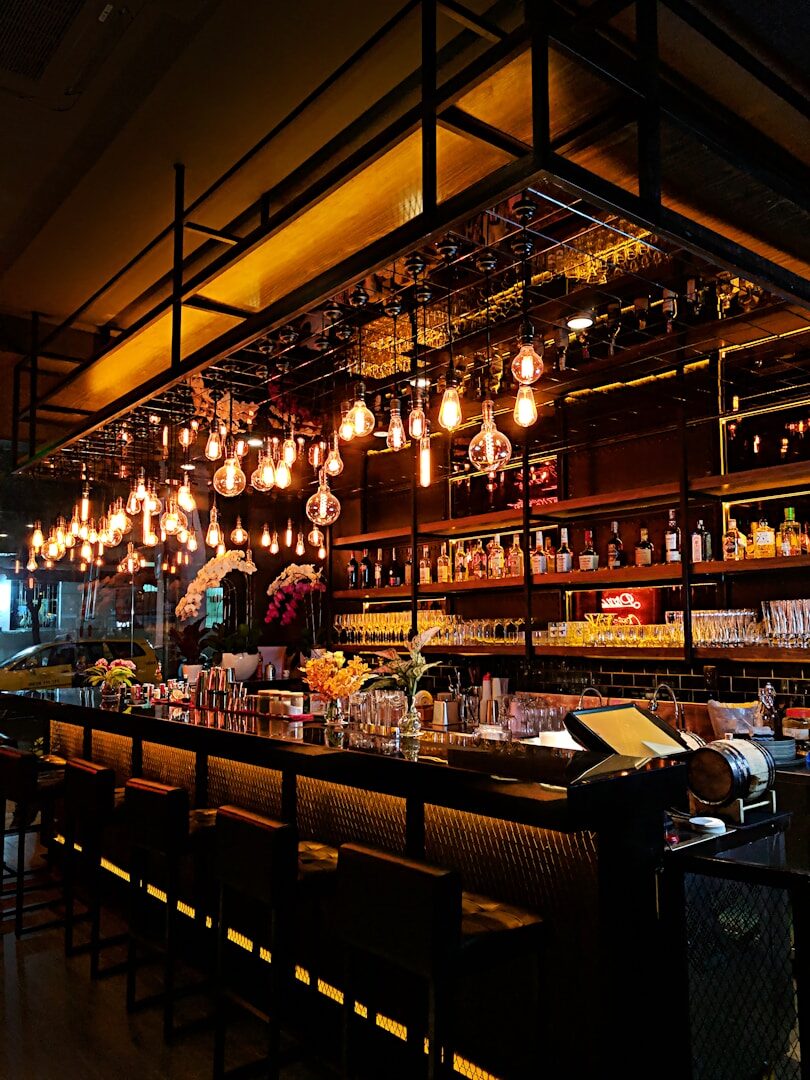
The underlying facts, as laid out at trial earlier this month, are simple enough. Porter dropped her Mercedes at the Collierville store on Dec. 10 for repairs. It was still there on the evening of Jan. 16 when a third-party tracker she’d installed pinged her that the car was moving. It went to a restaurant, then to T.J. Mulligan’s on Houston Levee. Porter drove her loaner to the bar’s parking lot after midnight and called police. Memphis officers found her key fob on Nguyen. Collierville PD booked him on theft of property valued between $10,000 and $60,000, and the arresting officer’s affidavit noted he smelled of alcohol.
Why the charge is a felony and not “joyriding”
This is where Tennessee’s criminal code gets interesting. The state has a dedicated joyriding statute, § 39-14-106, covering anyone who takes a vehicle without the owner’s consent but without intent to permanently deprive them of it. That’s a Class A misdemeanor — the legal equivalent of a bad night, not a bad decade.
Prosecutors instead went with straight theft, which is graded by dollar value under § 39-14-105. At $10,000 to $60,000, that’s a Class C felony. The entire criminal case therefore hinges on intent, which is exactly why Nguyen’s defense has leaned so hard on the test-drive framing. He goes back to criminal court in Collierville next month.
Here’s the wrinkle that sank him in civil court: he took the stand first and invoked the Fifth Amendment when asked whether he’d ever taken a customer’s car to a restaurant before Porter’s. In a criminal trial, that silence costs nothing. In a civil trial, the Supreme Court held in Baxter v. Palmigiano that the Fifth Amendment doesn’t stop a factfinder from drawing an adverse inference against a party who won’t answer. A judge is allowed to fill in the blank, and the size of the punitive award suggests this one did.
Nguyen also testified that a shop foreman authorized him to take the car home for an extensive test drive. Meanwhile, the store’s general manager conceded there was no repair order bearing Porter’s signature, arguing instead that authorization came through the dealership’s digital portal.
The test-drive defense isn’t inherently absurd — but this wasn’t one
Anyone who’s chased an intermittent fault knows extended road tests are legitimate diagnostic work. Heat-soak driveability complaints, CAN bus dropouts, torque-converter shudder, an evaporator whine that only appears after 40 minutes of highway cruising — none of that reveals itself on a lap around the service drive. Overnight and multi-hour road tests are normal practice at a competent shop.
What separates a road test from a night out is documentation, and modern Mercedes products generate an enormous amount of it. Every XENTRY/DAS session is timestamped. Fault memory records freeze-frame data. Vehicles equipped with Mercedes me connect log trip start and end points. A tech genuinely hunting an intermittent fault produces a data trail that corroborates the drive. A tech at a bar produces a five-hour gap between two ignition cycles and nothing else.
That’s the practical lesson for owners: ask for the diagnostic session log, not just the invoice narrative. If a shop tells you your car needed a long road test, the timestamps either back that up or they don’t. Photograph your odometer and fuel level at drop-off, and compare against the mileage-out field on the repair order. The paperwork exists precisely so this question has an answer.
Porter’s tracker is the other takeaway. Factory telematics live inside the manufacturer’s ecosystem, which a dealer can access and, in some cases, manage. A $30 aftermarket unit under a seat answers only to you, and it produced a timestamped movement record that no internal DMS entry could contradict. That single device is why this case exists at all.
The money, and why the number is what it is
Porter filed in General Sessions rather than Circuit Court. Tennessee’s General Sessions courts are unusually powerful for what most people think of as small claims — § 16-15-501 sets the civil jurisdictional ceiling at $25,000 statewide. She asked for the maximum. She got about 81 percent of it.
Related Articles
- Volkswagen’s China Profit Machine Just Collapsed. Nobody Told the Balance Sheet.
- Tesla FSD Probe: NHTSA Demands Internal “Radar Saves Us” File
Her complaint pleaded breach of contract, fraud, conversion, and violation of the Tennessee Consumer Protection Act. That last one matters for a technical reason: § 47-18-109 allows treble damages and attorney’s fees for willful or knowing violations, but expressly forbids stacking punitive damages on top of trebling for the same deceptive practice. A judge awarding $15,000 in punitives is signaling he took the common-law route rather than the statutory one.
None of it is final. Under § 27-5-108, either side has ten days to appeal a General Sessions judgment to Circuit Court, and that appeal is heard de novo — a complete do-over, no showing of error required. Losing in General Sessions in Tennessee is less a verdict than a first draft.
The part almost nobody mentions
Mercedes-Benz of Collierville is not the family store it was for its first decade. Lithia Motors (NYSE: LAD) closed on the dealership and its associated real estate on June 2, 2025, buying it alongside Mercedes-Benz of Jackson from the Higginbotham family. Lithia is the largest automotive retailer on the planet.
Which reframes the deterrence question entirely. A $20,270 judgment against an independent single-point store is a genuine financial event. Against a company of Lithia’s scale, it’s noise — less than the gross on one mid-trim GLC. The judge reportedly observed that the situation needs regulating, and he’s not wrong: the meaningful lever here isn’t a General Sessions judgment capped at $25,000. It’s the Tennessee Motor Vehicle Commission’s authority over dealer licenses under § 55-17-114, or Mercedes-Benz USA’s franchise leverage.
There’s also an insurance dimension worth understanding before you hand over keys. When a shop employee is operating your car, the dealer’s garage and garagekeepers coverage is the primary layer — but coverage disputes get ugly fast when the driver was intoxicated and outside the scope of employment, and “we didn’t authorize that” is an argument insurers make to narrow their own exposure, not just the shop’s. If a drunk tech wraps your car around a pole at 1 a.m., you can end up litigating scope-of-employment while still making payments on a totaled vehicle. Confirm your own policy’s coverage while the car is in a shop’s custody, and understand that a diminished-value claim after an incident like this is a separate fight from the repair itself.
One last detail, because it explains the punitive number better than anything: after the story first aired in March, Nguyen posted a Snapchat video captioned “What car should I steal today?” His attorney characterized it as a joke among friends. Porter’s attorney characterized it as evidence. The judge appears to have agreed with the second reading.