
Every state in the country tests new drivers on the same handful of judgment calls: what to do when you see flares in the road, how to react to a trooper waving traffic through with his hands, when to yield to flashing lights you can’t yet identify. It’s in the manual. It’s on the written exam. It has been for decades. No one has ever built an equivalent test for a robotaxi — because until this month, nobody at the federal level had bothered to write one down.
That’s the real story buried inside an otherwise unremarkable press release NHTSA published on July 8. The headline framing was about enforcement and safety. The more interesting news is what the letter accidentally reveals: the entire regulatory apparatus governing driverless cars has never actually defined, tested, or certified whether a machine understands an emergency scene the way a 16-year-old with a learner’s permit is required to.
What NHTSA Actually Said
NHTSA Administrator Jonathan Morrison sent a public letter to every driverless automated driving system developer operating in the United States, describing a pattern the agency says it has now documented repeatedly: autonomous vehicles driving directly into active emergency scenes, blocking ambulances and fire apparatus, and failing to respond appropriately to flashing lights, flares, smoke, fire, and traffic cones. The letter isn’t a recall. It isn’t a rule. NHTSA is calling it exactly what it is — a call to action — and says it will hold meetings with driverless developers by the end of the month to hear how they plan to fix it, while reserving its existing enforcement authority if they don’t.
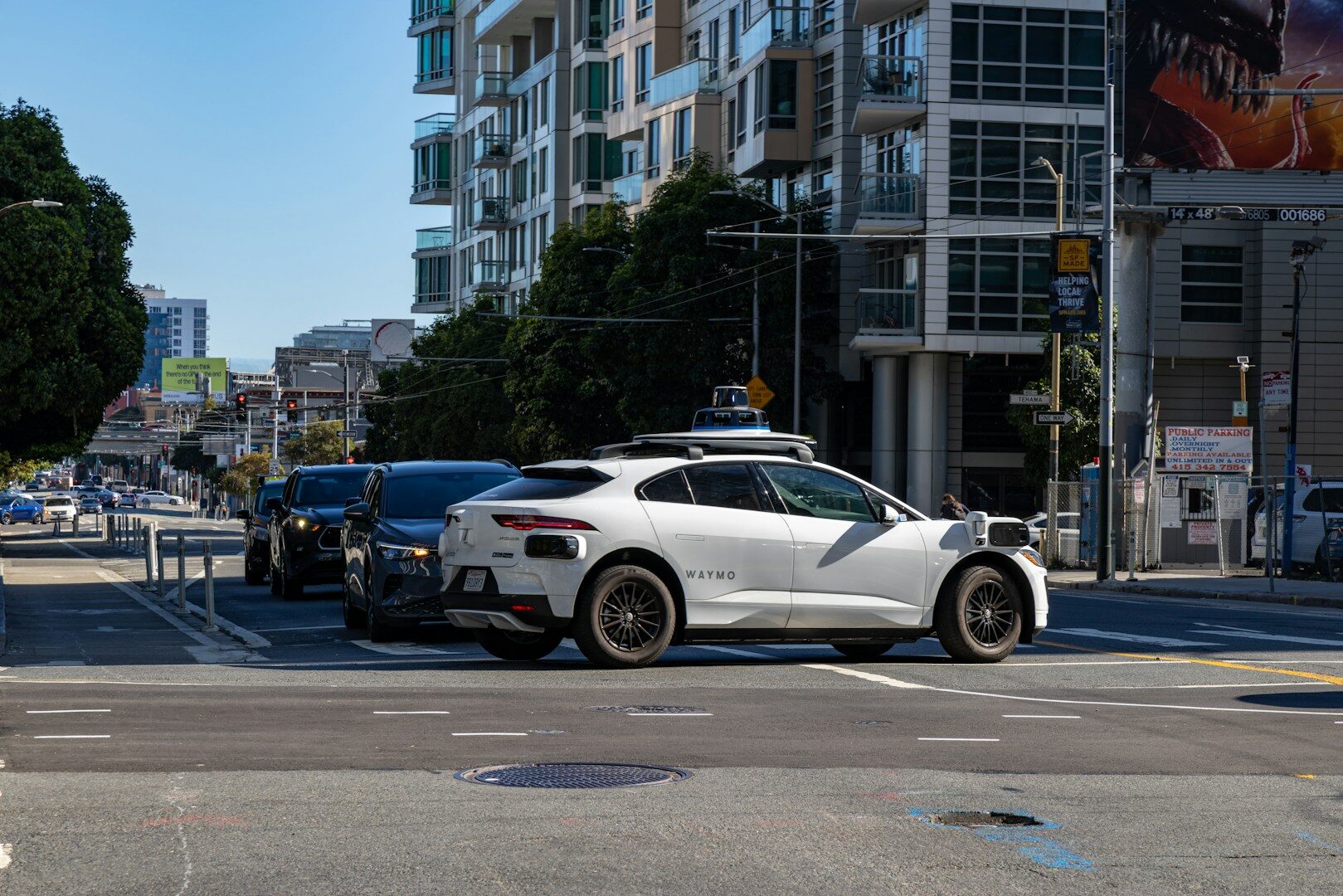
Readers of this site have already seen this pattern up close. In June, a Waymo drove straight through an active construction zone and sped off while California Highway Patrol tried to stop it. Days later, a second Waymo blew past cones and officers on the same stretch of the 101 and kept going. Those weren’t isolated glitches. NHTSA using the word “pattern” in a federal letter is a very different, and much more serious, classification.
The Test That Was Never Written
Here’s the part that should surprise even people who follow this industry closely: there is no federal standard — none — that defines how an automated driving system must recognize or respond to an emergency scene. Every Federal Motor Vehicle Safety Standard that touches driving behavior was built around crashworthiness, lighting output, braking distance, and similar measurable hardware performance. Human judgment in chaotic, ambiguous situations has always been certified a different way: once, at a DMV counter, through a state road test that nobody ever has to retake.
Buried near the bottom of NHTSA’s own release is an admission of exactly that gap. The agency says it has begun developing what it calls the world’s first national competency standards for automated driving system performance — a testable, objective standard for judgment itself, something that has never existed at the federal level for any driver, human or machine. That’s a bigger deal than the headline about fire trucks. It means the government is only now starting to build the equivalent of a driving test for software that has already been carrying paying passengers for years.
You Can’t Arrest a Software Update
The letter itself makes a point of noting that human drivers who obstruct police, fire, or medical crews face fines and even jail time. That line does a lot of quiet work. A human who blocks a fire engine can be cited, can lose a license, can be arrested. A driverless vehicle can’t be handcuffed, and in most states the move-over and obstruction statutes that apply to “operators” were never written with the possibility of an empty driver’s seat in mind. NHTSA’s only real lever against a company is civil: use its authority under the Vehicle Safety Act to demand fixes, or eventually pursue penalties. That’s a slower, corporate-level process, not a roadside ticket. As Morrison put it in the letter, “public trust on our roads is earned, not given.”
Deregulating the Dashboard While Regulating the Judgment
The timing here is what makes this genuinely interesting rather than just another safety letter. The same release touts NHTSA’s progress slashing regulatory red tape to speed autonomous vehicles onto public roads — proposed updates to the standards governing mirrors, sun visors, tire placards, windshield defrosting, transmission shifting, and stability control. Those rules exist because Federal Motor Vehicle Safety Standards were written decades ago around the assumption that a human being sits behind the wheel. A car with no driver doesn’t need a rearview mirror it’s never going to check or a sun visor for eyes that don’t exist, but until now, companies had to request individual exemptions just to build a vehicle without them. NHTSA is now rewriting the baseline instead of granting waivers one at a time, while simultaneously expanding the exemption programs that let more driverless fleets onto the road faster.
So in the same month, the same agency is making it easier to build a car with no steering wheel and harder to excuse that car for not recognizing a firefighter’s hand signal. That’s not a contradiction so much as a sequencing problem: deployment outran judgment testing, and now the agency is trying to catch up in public, one letter at a time.
Why This Is Genuinely Hard to Fix
It’s worth being fair to the engineers here, because this isn’t a simple patch. Emergency scenes are rare by definition, which means they’re rare in training data too. Lane-keeping and stop-sign recognition benefit from years of ordinary driving footage. A fire scene with smoke obscuring lane markings, mismatched flashing light colors, hand signals improvised on the spot, and cones scattered in no consistent pattern is exactly the kind of long-tail scenario that machine learning systems struggle with most, precisely because there’s so little real-world data to learn from. This is closer to the same category of failure that got Waymo’s entire fleet recalled after a vehicle drove into floodwaters — a rare environmental condition the system simply hadn’t been built to recognize as dangerous.
It also reshapes who ends up paying when it goes wrong. A human driver who blocks a fire truck files a claim through personal auto insurance and possibly a criminal record. When a driverless fleet does it, liability shifts almost entirely to commercial and product liability coverage carried by the manufacturer — a much larger, slower-moving risk pool that insurers are still learning how to price.
What To Remember
This letter will be forgotten within a news cycle. The gap it exposes won’t be. A teenager has to prove to a DMV examiner that she understands what a flare in the road means before she’s allowed to drive alone. A two-ton driverless vehicle carrying paying passengers, in 2026, still didn’t have to prove the same thing to anyone. NHTSA just admitted that out loud, and the meetings it holds with AV developers over the next few weeks will matter far more than the press release announcing them.