
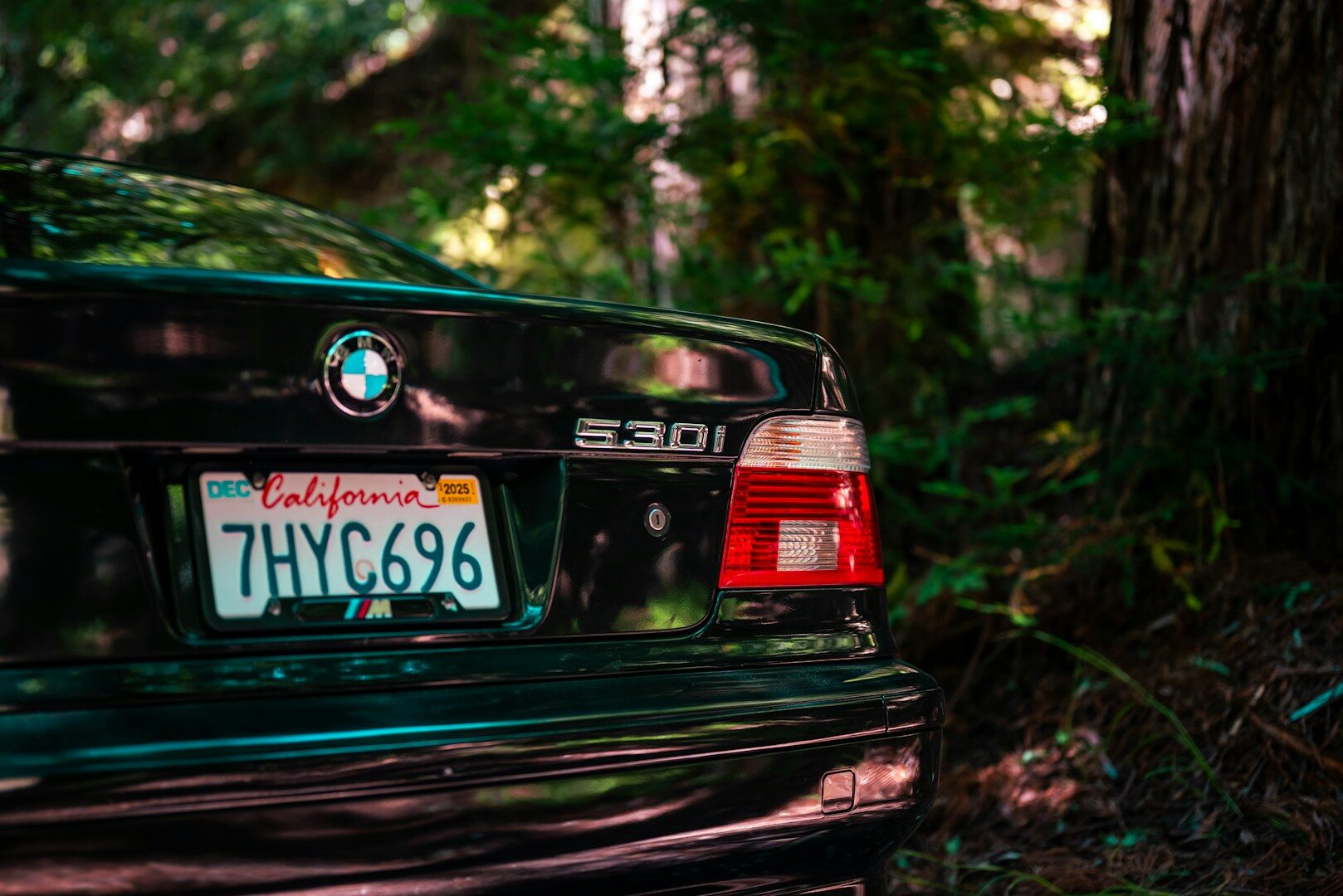
BMW of North America filed a safety recall with federal regulators on August 12 covering 27,720 vehicles across the 2022-2026 840i and 840i xDrive, the 2021-2023 540i, 540i xDrive and M550i xDrive, and the 2024-2026 750e xDrive. The campaign, logged as 26V525, lands under the powertrain category with a defect description that takes eleven words to say something fairly alarming: the connection between the driveshaft and the rear differential may become damaged, possibly resulting in a loss of power to the rear wheels or a vehicle rollaway. Transportation
Two failure modes, and the second one is the one worth your attention.
The remedy tells you what BMW found
Here’s the part of the filing that actually explains the engineering: dealers will inspect the connection between the driveshaft and rear axle differential, and apply adhesive or replace the driveshaft and rear axle differential, as necessary, free of charge. Transportation
Read that as a technician rather than a consumer. You don’t specify adhesive for a cracked casting. You don’t specify adhesive for a snapped bolt or a failed weld. You specify adhesive — an anaerobic retaining compound, the industrial cousin of thread locker — for a clamped or interference-fit steel-on-steel interface that has begun to micro-move under load and needs that movement arrested.
Related Articles
- Pony.ai Promised Europe More Robotaxis Than It’s Ever Built. Who Owns the Ones That Don’t Exist Yet?
- A Nearly Free Recall Just Tanked Stellantis Stock 4% — Its Own Paperwork Explains Why
That mechanism has a name: fretting corrosion. Two mating steel surfaces held together under clamp load will still slip a few microns under cyclic torque reversals. Each slip shears off a bit of oxide. The oxide is harder than the parent metal, so it becomes an abrasive trapped inside the joint. The interface wears, clamp load decays, slip amplitude grows, and the process accelerates into itself. It’s a runaway failure that produces no warning light and no diagnostic trouble code, because nothing electronic is monitoring the physical fit of a driveshaft flange.
BMW has been here before, and used almost this exact vocabulary. In a 2020 recall filing covering 328d xDrive models, the company told NHTSA that large vibration excitations of the engine could subject the output shaft to micro-friction corrosion, leading over time to excessive wear of the output shaft spline and, in some cases, the connection to the rear drive shaft, causing a loss of power to the rear wheels. Same family of problem, different platform, six years apart. nhtsa
Why the rollaway risk isn’t evenly distributed
This is the detail nobody spells out, and it changes how seriously you should take the parking-brake warning depending on which car you own.
The parking pawl in a ZF 8HP automatic doesn’t lock your wheels. It locks the transmission’s output shaft. Everything downstream — driveshaft, differential, halfshafts, hubs — is the torque path that translates “transmission locked” into “car doesn’t move.” Break any link in that chain and the pawl is holding a spinning shaft that’s connected to nothing.
On an xDrive car, there’s redundancy. The transfer case sits immediately behind the transmission, upstream of the rear propshaft, and feeds a separate front driveshaft. If the rear connection lets go on a 540i xDrive, M550i xDrive, 840i xDrive or 750e xDrive, the parking pawl still has a torque path to the front axle. Annoying, expensive, but the car stays put.
On a rear-drive 540i or a rear-drive 840i, there is no second path. The rear propshaft is the only thing standing between the parking pawl and a car that finds its own way down your driveway.
That’s why BMW’s guidance centers on the electronic parking brake. The EPB actuates motors integrated into the rear calipers, clamping the rotors directly. It doesn’t care what the driveline is doing. It is, in this specific failure scenario, the only thing that works. Many of these cars auto-apply the EPB at shutdown, but that behavior can be configured off, and it does nothing if you leave the car in Park with the engine running. Pull the switch manually. Every time.
What it feels like before it lets go
Fretting-driven joints don’t fail silently, they fail quietly — which isn’t the same thing. Expect a metallic clunk on throttle tip-in or when swapping between Drive and Reverse, a shudder that shows up under load rather than at a specific road speed, and eventually a driveline vibration that gets worse with mileage rather than better.
The maddening part for owners is that those symptoms are indistinguishable from two much more mundane BMW wear items on the same shaft: the flex disc at the transmission end, and the center support bearing in the middle. Plenty of these cars have already had one or both replaced by independent shops chasing a clunk, with nobody thinking to inspect the far end of the shaft where it meets the differential. If that’s your service history, this recall is worth taking to a dealer even if the car currently feels fine.
The money and the paperwork
Federal law is unusually clear here. Under 49 U.S.C. § 30120, the remedy must be provided without charge, and there’s no expiration on that obligation for vehicles under 15 years old when the defect determination was made. A 2021 540i is nowhere near that line.
If you already paid to have a driveshaft or rear differential replaced on one of these cars before August 12, ask about reimbursement under 49 CFR 573.13. Push if you get resistance. BMW’s pattern in past driveline campaigns has been to tell NHTSA that a reimbursement plan isn’t necessary because the New Vehicle Limited Warranty would have covered the repair anyway — the company said exactly that in its 2021 output-shaft filing. That logic works fine for a two-year-old car. It works considerably less well for a 2021 540i that fell out of the 4-year/50,000-mile warranty and got hit with a five-figure driveline bill at an independent shop.
Related Articles
- Britain Has No Law Against This: Arnold Clark Just Ate a 65-Year Family Dealership Whole
- Sub-$20,000 Used Cars Are Basically an Endangered Species — Only 1 in 9 Three-Year-Olds Survives
Owner letters are expected to be mailed October 2, 2026, with VINs becoming searchable on NHTSA.gov beginning that same date. Don’t wait on the mail. Dealers already have the campaign. Transportation
Buyers, this one’s for you
The 2021-2023 G30 5 Series is exactly the cohort now flooding the pre-owned market off three-year leases, which means a meaningful share of these 18,000-odd cars are changing hands right now.
Federal law prohibits dealers from delivering new vehicles with open recalls. It does not prohibit selling used ones. A 2022 540i can be legally retailed to you this afternoon with 26V525 wide open, and in most states no inspection regime will catch it. Certified Pre-Owned is a manufacturer program with its own standards, so a BMW dealer selling a CPO car should have cleared it — but “should” is doing work in that sentence. Run the VIN yourself before you sign anything.
The bigger picture
BMW filed two recalls on August 12. The other one, campaign 26V524, covers 13 X3 models whose steering spindle may have been incorrectly attached to the steering column. Thirteen cars. That’s what a contained assembly-line escape looks like: tiny population, precise root cause, replace the part. Transportation
Twenty-seven thousand cars across three model lines, five model years and both drive layouts, with a remedy that hinges on inspection findings, is a different animal entirely. It’s a durability problem in a shared driveline interface — one that only revealed itself as vehicles accumulated real-world mileage, and one BMW is now betting can be arrested with surface prep and a structural adhesive on the cars caught early enough.
That bet is legally permissible; the statute requires the defect be removed, not that a specific part be replaced. It’s also entirely dependent on the technician doing it properly. Adhesive joints live or die on cleanliness and cure time, and cure time is the enemy of dealer throughput. If your car gets the glue rather than the hardware, it’s fair to ask what the documented procedure was and to keep the repair order somewhere you can find it.
Meanwhile, if you own one of these: pull the parking brake switch. Every single time you park. It costs nothing and it’s the difference between an expensive tow and an insurance claim with your name on the liability side.