
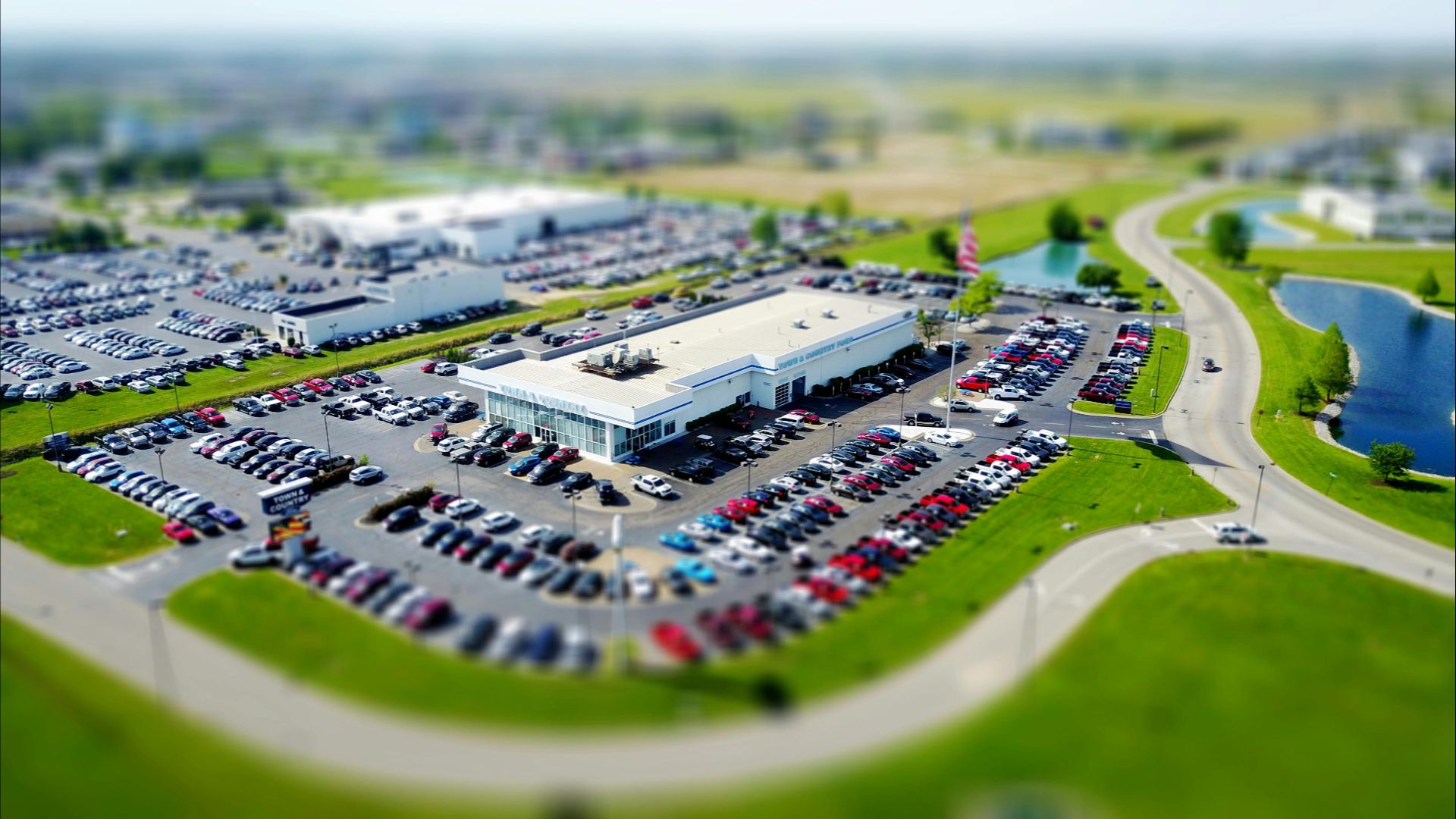
There’s a SEAT and CUPRA dealership in Uddingston, Scotland that changed its name this month. That’s the entire news event. A dealership sign came down, a new one went up, and the paperwork closed on a business that had been selling cars from the same corner of Glasgow’s suburbs for roughly 65 years.
The company doing the buying is Arnold Clark, and if you’re American and you’ve never heard of it, that’s the point of this article. Arnold Clark is, by a wide margin, the most profitable car retailer in the UK, posting £112.5 million in pre-tax profit while moving more than 200,000 vehicles a year across roughly 200 branches. It just added W Livingstone Ltd, a third-generation family business, to that pile. Group brand director Callum Rankin called it a chance to welcome “the team from W Livingstone Ltd Glasgow SEAT/CUPRA to the Arnold Clark family.” Nobody at Arnold Clark had to ask permission from a regulator, fight a state attorney general, or defend the move in court. It just happened.
That’s the real story. Not the dealership. The absence of anything standing in the way.
In the US, this kind of quiet absorption isn’t automatic. Every state has some version of a franchise law limiting how, when, and why a manufacturer can terminate, refuse to renew, or squeeze out an independently owned new-car dealer. Scout Motors’ campaign to get federal regulators to gut those very protections is a good example of how seriously manufacturers take that wall, because without it, they’d love the freedom to sell directly to customers and cut dealers out entirely. Britain never built that wall in the first place. There, a big enough dealer group can simply buy what it wants, and a manufacturer can hand its stores to whoever writes the largest check.
Britain’s car retail market isn’t lawless. It’s just optimized for consolidation instead of independence.
That difference explains why similar pressure produces different outcomes on each side of the Atlantic. In the US, a company can’t just walk in and absorb a rival’s dealer network overnight, it still has to actually buy the dealerships, franchise agreements and all, the way Carvana did this summer when it spent $171 million absorbing a chain of Stellantis stores. In the UK, Arnold Clark doesn’t need a workaround. It just needs a seller.
And W Livingstone was, eventually, always going to be a seller. Three generations is an unusually long run for an independent single-point dealership representing a mainstream European brand. SEAT and CUPRA, like every Volkswagen Group brand, have spent the past few years pushing dealers toward an “agency model” retail structure: centralized pricing, mandatory digital sales platforms, and facility standards built around EV charging and delivery bays that a lot of older showrooms were never designed for. That shift isn’t unique to Europe, either, Volkswagen’s own dealers here in the US are suing right now to stop a version of it at the Scout brand. None of it is optional if a dealer wants to keep the franchise. For a big group, those upgrades are a rounding error. For a family-run store, they’re often the moment somebody finally picks up the phone and calls a buyer.
Here’s the part that should actually interest gearheads: Arnold Clark isn’t just hoovering up Volkswagen Group real estate. Over the same twelve months it took to land W Livingstone, the group also pushed into Wales for the first time, signed on with Chinese startup brand Lepas, expanded its Geely franchise network into Scotland, and opened five new Leapmotor showrooms. That expansion is happening even as China’s own EV market grinds through a brutal consolidation of its own, culling dozens of unprofitable brands down to a handful of survivors. One dealer group is simultaneously deepening ties with a century-old German conglomerate and building out showroom space for three Chinese EV brands most Americans have never heard of.
That’s not brand loyalty. That’s inventory management.
A dealer group that size doesn’t care whose badge is on the hood. It cares about throughput: cars in, cars out, service bays full. Arnold Clark is quietly turning itself into the kind of neutral distribution backbone that doesn’t really exist yet in the US, where franchise law keeps ownership fragmented across thousands of independent operators loyal to a single brand. Whether that’s better for customers is a separate question. It’s certainly better for Arnold Clark’s balance sheet.
Somewhere in Uddingston, a sign that said W Livingstone for 65 years now says Arnold Clark Uddingston SEAT/CUPRA. Nobody broke any rules. Nobody had to.
That’s the uncomfortable lesson here for American readers: the consolidation squeezing out family dealerships is being slowed by law, not by economics. The economics, rising facility mandates, EV transition costs, digital retail platforms, point the same direction everywhere. Britain just shows what the endpoint looks like once the legal guardrail is removed.