
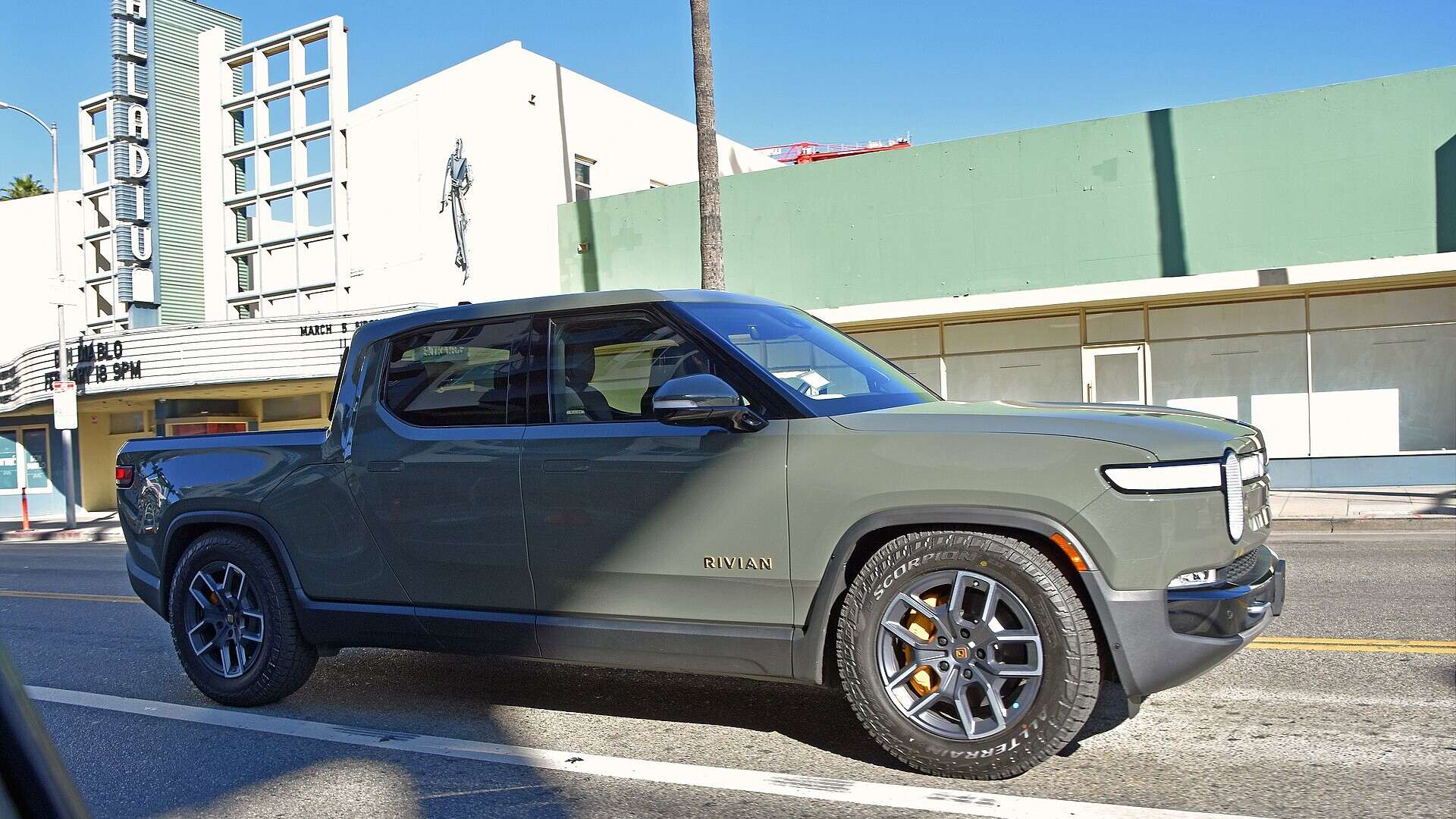
Six Flock Safety cameras cover the three roads into Bow Mar, Colorado, one facing in and one facing out on Sheridan Boulevard, West Belleview Avenue and Berry Avenue. By late September 2025 they had photographed Chrisanna Elser’s Rivian pickup about 20 times in a month. On Sept. 22 they logged it entering at about 11:52 a.m. and leaving at about 12:09 p.m. Shortly before noon that day, someone took a package worth $25 or less from a porch on Ridge Trail.
“You can’t get a breath of fresh air in or out without us knowing,” the sergeant on the case later told her at her front door, according to body-camera footage obtained by Denver7.
Those plate reads were most of the case a Columbine Valley police sergeant brought against Elser. The theft charge is gone, and Elser is now suing. Her lawyers named the camera company as a defendant alongside the two towns and two officers, and they want a federal judge to answer a question Colorado lawmakers declined to settle this spring: whether a month of a car’s trips past roadside cameras, saved and searchable without a warrant, is a search under the Constitution.
What the complaint says happened in Bow Mar
The 64-page class action complaint, Civil Action No. 26-cv-04977 in the U.S. District Court for the District of Colorado, is dated Oct. 5. It names Flock Group Inc., which does business as Flock Safety; the towns of Columbine Valley and Bow Mar; Sgt. Jamie Milliman; and Bret Cottrell, Columbine Valley’s police chief. Elser is represented by Andy McNulty, Mari Newman and Madeline Leibin of the firm Newman | McNulty. According to the complaint, Bow Mar pays Columbine Valley more than $300,000 a year for police and court services, which is why a Columbine Valley sergeant was working a Bow Mar porch theft.
The homeowner’s doorbell camera recorded the theft. The complaint describes a young woman who walks up, takes the package and runs off, and states that “The video does not depict the woman getting into any vehicle, nor does it depict a Rivian or any other truck.” It alleges Milliman never identified the woman or canvassed for witnesses. What he had was a Flock search showing Elser’s truck in town around the time of the theft, plus a month of earlier trips through the same entrances.
On Sept. 27, 2025, Milliman went to Elser’s home in Denver with a summons. In body-camera footage obtained by Denver7, he opened with, “We have cameras everywhere in that town,” before the line about fresh air. The complaint says Elser offered to show him footage from her Rivian’s onboard cameras and that he refused, telling her she could bring her video to court.
She spent the next two weeks building her own defense. The complaint says her truck’s video and GPS show a drive to a noon fitting with her tailor for a gown she planned to wear to a charity event, then a drive straight home, with no stop on Ridge Trail. Her tailor confirmed the appointment, and her home security cameras recorded the truck leaving and coming back. Cottrell voided the summons by email on Oct. 15, 2025.
On Nov. 11, 2025, Columbine Valley issued a statement saying Milliman had a reasonable belief when he issued the summons and that exculpatory evidence reached the department about two weeks later, after which it dropped the charge. The complaint calls that statement false and says Elser had offered the evidence at her door. The same day, according to the complaint, Cottrell wrote to Milliman faulting his rude behavior and dismissive attitude and ordering training in de-escalation and interviewing. The complaint says Milliman still holds his job and rank. Both towns declined to comment to Denver7.
Why the lawsuit goes after Flock as well as the police
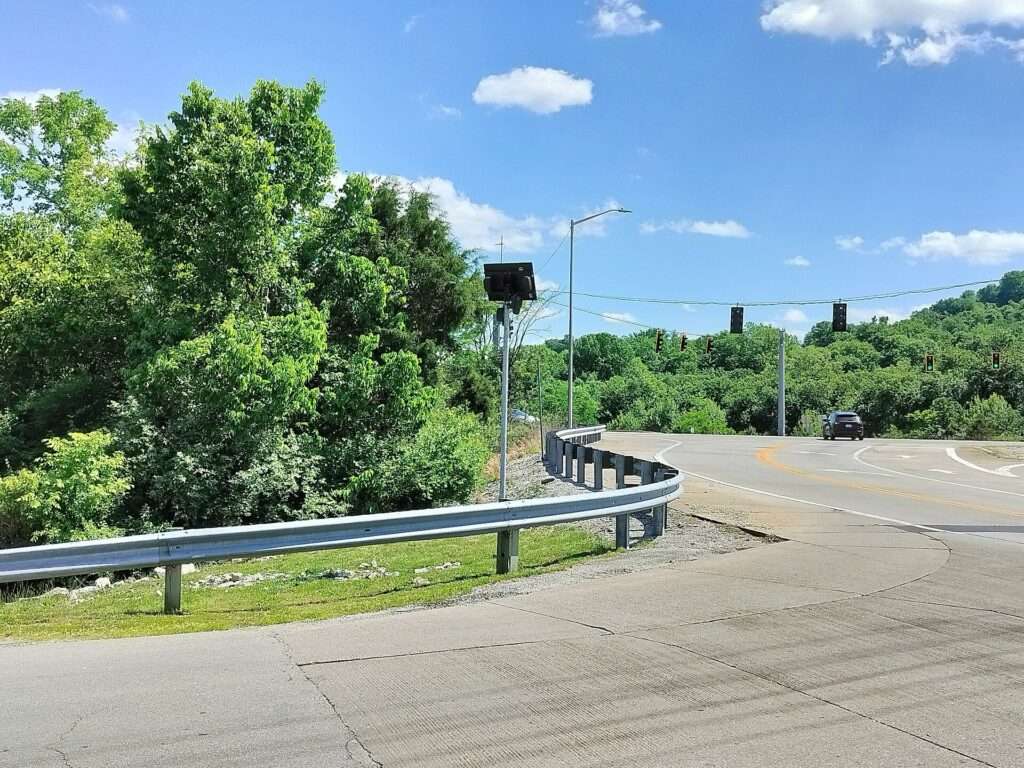
The suit reaches past the officer and the department to the vendor because of how the hardware is owned. The complaint describes Flock as a company that “designs, manufactures, installs, owns, and operates” its license plate readers, and also runs the cloud software that stores and searches what they capture. The town decides how long the data is kept. The poles, the cameras, the servers and the search box belong to Flock.
Two of the six claims are against Flock alone: invasion of privacy by intrusion upon seclusion, and negligence, including negligent design and failure to warn. Flock is also a defendant on the lead federal claim, a Fourth Amendment unreasonable-search count under 42 U.S.C. § 1983. That claim is the hardest one to win against a private company, because Section 1983 reaches people acting under color of state law. That explains why the complaint spends pages on the Columbine Valley relationship. It alleges Flock trained Cottrell and Milliman on Nov. 18, 2020, that a Flock territory manager helped Cottrell plan his pitch to the town board ahead of a March 16, 2021 vote on seven cameras, and that Flock later used the department to grow its Colorado network.
The proposed class covers owners and lessees of vehicles whose captures Flock has recorded and kept. The relief Elser wants goes past money: a warrant requirement for searches, limits on retention and sharing, deletion of data and audit policies.
Flock’s response, sent to Denver7, said the company’s technology is “an investigative tool used alongside other evidence to help law enforcement solve crimes.” It added that “the Flock system accurately identified the location of Ms. Elser’s vehicle, while law enforcement retained responsibility for interpreting and weighing that information,” and that Flock “intends to vigorously defend itself in this litigation.” Nobody in the case disputes that the cameras read the plate right. Elser’s lawyers argue that is the problem. The complaint alleges the photos showed her truck entering and leaving on Sheridan Boulevard roughly 17 minutes apart, never on Ridge Trail, and never showed who was driving.
Covering the plate does not take a car out of the database
A fixed plate reader turns a registration number into a running location log, and Flock does not rely on the number alone. On its license plate reader product page, the company says its Vehicle Signature feature “can recognize thousands of unique vehicle characteristics.” The complaint lists the kinds of details that means: decals, bumper stickers, roof racks, bike racks, and missing or covered plates. A truck with a muddy plate and a distinctive rack can still turn up in a search.
The network behind the cameras is the other half. The complaint says Columbine Valley’s participation in Flock’s one-to-one, statewide and national sharing gave its officers access to more than one billion additional plate reads each month. Flock’s product page cites coverage in 49 states. On its trust page, Flock says customers control their own data and that every search is recorded and tied to a specific user. The complaint alleges that for most of the period it covers, searches required no case number and no explanation. We have looked at how many photos a single Flock camera can hold; the Elser case shows what a small department can do with them.
Two Supreme Court cases bracket the Fourth Amendment claim
In United States v. Jones, decided Jan. 23, 2012, the government put a GPS tracker on a Jeep Grand Cherokee and followed it for 28 days. The Court held that installing the device and using it to monitor the vehicle was a search, resting the majority opinion on the physical trespass onto the Jeep. Justice Samuel Alito, joined by three colleagues, wrote separately that “the use of longer term GPS monitoring in investigations of most offenses impinges on expectations of privacy.” Elser’s month of plate reads is about the same length, but nobody touched her truck, so the trespass reasoning doesn’t help her. Her case depends on the Alito line of thinking.
Six years later, in Carpenter v. United States, the Court said police generally need a warrant to obtain historical cell-site location records from a phone company. It also said the ruling does not “call into question conventional surveillance techniques and tools, such as security cameras.” Flock’s defense will fit inside that sentence: a camera on a public road sees what any passerby sees. Elser’s lawyers will argue that a networked, searchable, multistate archive of where cars have been is much closer to the cell-site log in Carpenter than to a camera over a store’s door. This case puts that argument in front of the District of Colorado with a voided charge and an alibi attached.
Colorado’s legislature let a warrant bill die, and a 2020 law raises the stakes
Colorado lawmakers had the chance to settle part of this themselves. Senate Bill 26-070, introduced Jan. 28, 2026 by Sens. Judy Amabile and Lynda Zamora Wilson and Reps. Yara Zokaie and Kenny Nguyen, would have barred government entities, with exceptions, from accessing a database that reveals the historical location of a person or vehicle, and made evidence gathered in violation inadmissible at trial. It cleared Senate Judiciary 5-2 on Feb. 23 and Appropriations 4-3 on April 21. On April 29 the Senate laid second reading over to July 4, after the session’s end, so the bill died without a floor vote. A federal bill from Sen. Josh Hawley would cap how long plate data can be kept, but retention limits would not have changed Elser’s month of reads much.
An older Colorado law is what gives the individual officers real exposure. Senate Bill 20-217, passed in 2020, created C.R.S. § 13-21-131, which lets people sue police officers for violating rights under the Colorado Constitution. The statute says “Qualified immunity is not a defense to liability pursuant to this section.” Employers must indemnify their officers, with one exception: if the employer decides an officer did not act on a good-faith and reasonable belief that the conduct was lawful, the officer personally owes 5% of the judgment or settlement or $25,000, whichever is less. Prevailing plaintiffs get attorney fees. Elser’s third and fourth claims, against Milliman and Cottrell, are brought under that statute, and they do not have to clear the qualified-immunity defense that ends many federal claims against police.
The truck kept the record that cleared her
Elser’s defense came from her own vehicle. Rivian’s Road Cam feature, added in a May 2, 2023 software update, uses the Gear Guard cameras to record drives to an external USB-C drive the owner supplies. Rivian says Gear Guard videos can only be accessed within the vehicle and that it does not access them without the owner’s consent. That made the footage hers to hand over, which is the opposite of how the plate-reader data works.
Most cars with surround-view cameras use them for parking and do not save anything while driving. Owners who want the kind of record Elser had need a car with a recording feature turned on and a drive plugged in, or an aftermarket dashcam. In the Florida case of a Dodge Durango owner who spent 13 days in jail after a Flock hit, it was the physical condition of the vehicle that got her out. In both cases the driver had to produce evidence that investigators could have gathered themselves.
The next steps to watch are Flock’s response to the complaint, especially any argument that it cannot be sued under Section 1983 because it is a private vendor, and whether the judge lets the Fourth Amendment claim proceed on a month of plate reads with no device ever attached to the truck. A ruling for Elser on that point would reach any department that buys into a shared plate network. A ruling against her would leave the limits to legislatures, and Colorado’s legislature declined to write them this year.
Should police need a warrant before pulling a month of a car’s plate-reader history, or is anything a roadside camera records fair game for any officer with a login?