
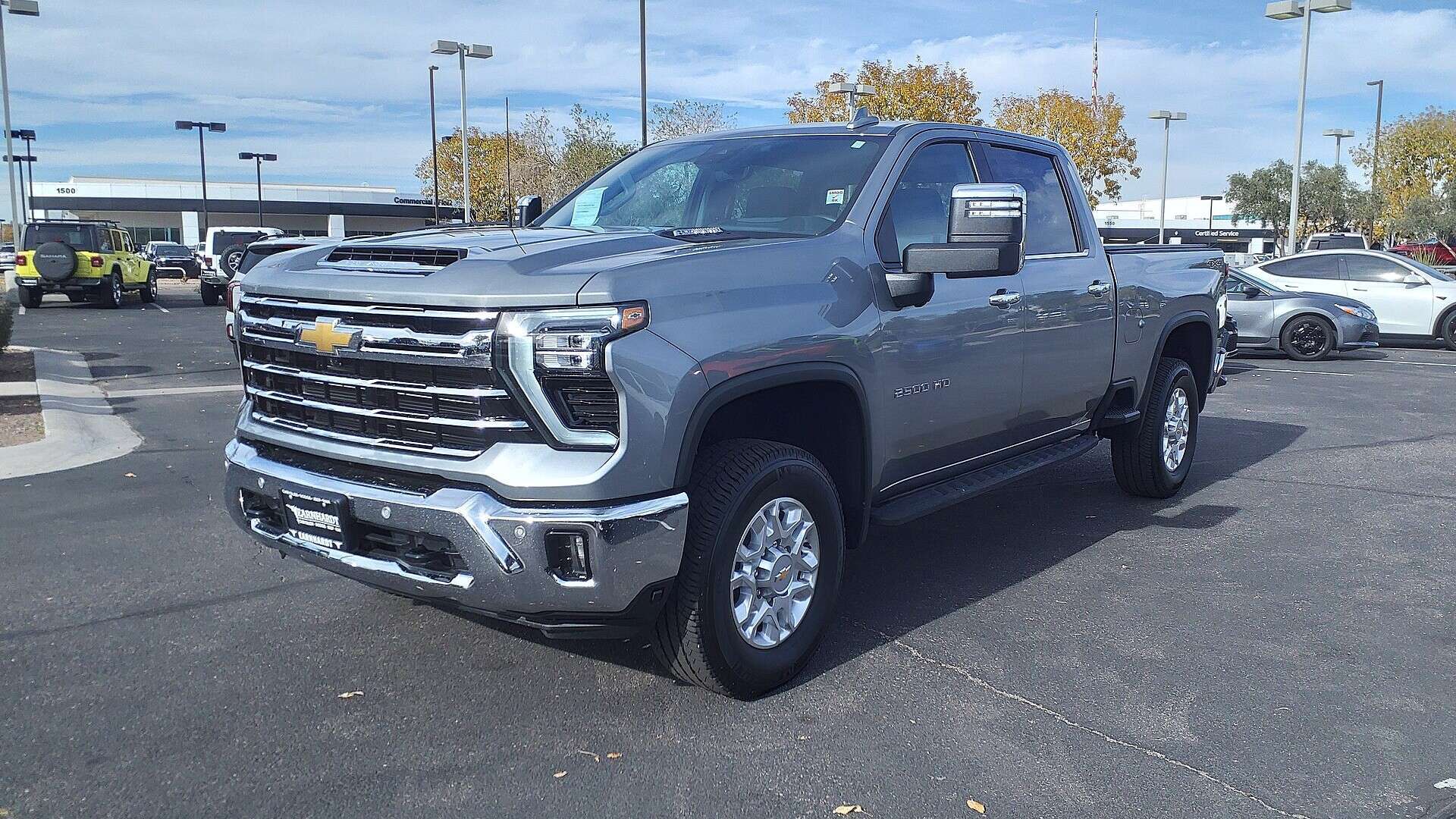
The engine oil cooler on GM’s 6.6-liter Duramax diesel keeps engine oil and coolant apart. When a Duramax oil cooler cracks, oil leaves the engine for the cooling system and the dipstick reads low. A low dipstick is also what GM’s warranty points to when it blames an engine failure on poor maintenance. That overlap is the whole case, in one dipstick, and the basis of a proposed class action filed against General Motors in Detroit federal court on September 24.
The named plaintiff, Robert Hubof, owns a 2024 Chevrolet Silverado 2500HD. His suit claims the oil coolers in 2024 through 2026 Silverado and Sierra 2500HD and 3500HD trucks with the Duramax crack in normal driving, and that GM avoids paying for the wrecked engines by citing low oil. GM’s own service documents, which I pulled from NHTSA’s database, show the company told dealers in August 2024 that coolant in some 2024 Duramax trucks had been contaminated, ordered those trucks held until they were inspected, and handled the matter through dealer bulletins rather than a safety recall.
Hubof v. General Motors: the filing and the claims
The docket for Hubof v. General Motors, LLC, case No. 2:26-cv-13622 in the U.S. District Court for the Eastern District of Michigan, shows the complaint filed September 24, 2026, as a diversity case under the motor vehicle product liability code. It is assigned to Judge Robert J. White. Attorneys E. Powell Miller, Dana Fraser and Bonner C. Walsh have entered appearances for Hubof, and Dennis Lienhardt filed the complaint. As of the docket’s October 6 update, no lawyer had appeared for GM.
The complaint has not been posted to the free federal court archive, and The Auto Wire has not reviewed it. The details in the next two paragraphs come from a summary of the filing published October 6 by the legal news site Top Class Actions, and they are the plaintiff’s allegations, not findings.
According to that summary, Hubof bought his Silverado new in December 2023. In June 2025, at about 16,453 miles, he heard a loud bang and found oil in the coolant bottle and leaking under the truck. A GM technician found the cooling system filled with engine oil and metal debris in the oil system. The repair was not done under warranty, and Hubof was quoted $41,319.79. At that mileage the truck was still inside GM’s 3-year, 36,000-mile bumper-to-bumper coverage.
The suit seeks a nationwide class of buyers and lessees plus an Idaho class, and pleads breach of warranty, fraudulent concealment, unjust enrichment and violations of Idaho consumer protection law. It asks for damages and a court-supervised repair program. It also alleges that replacement coolers share the same defect and are on national backorder, and it says some 2027 trucks may be affected.
How a cracked oil cooler drains a diesel
An engine oil cooler is a heat exchanger. Hot oil runs through passages surrounded by engine coolant, which carries the heat off to the radiator. The two circuits stay apart only as long as the metal walls and seals between them hold. When one fails, pressure decides which way the fluid moves. A running engine’s oil pump pushes oil at higher pressure than the cooling system runs at, so a breach sends oil into the coolant, not coolant into the oil.
That produces a specific set of symptoms. Oil collects in the surge tank, which is why owners describe a black film in the coolant bottle. Oil-fouled coolant degrades rubber, which is why GM’s flush procedure replaces every rubber part the oil touched. The oil pan, meanwhile, loses oil the engine never burned and never dripped on the driveway. If the truck keeps running, the bearings starve, and the debris travels through the whole oiling system. By the time the truck reaches a dealer, the technician is looking at an engine that was run low on oil.
GM’s warranty language sits right on top of that diagnosis. The 2025 Chevrolet limited warranty booklet lists the “integral oil cooler” among the covered diesel engine parts. The same booklet excludes damage caused by “failure to use or maintain proper fluids, lubricants, or refrigerants” between maintenance intervals. A failed cooler and an owner who never checks the dipstick both leave a dry engine behind. GM’s booklet tells owners to keep maintenance receipts because they matter “if a question arises as to whether a malfunction is caused by lack of maintenance or a defect in material or workmanship.” Hubof’s suit asks a court to answer it for every truck in the proposed class.

What GM told its dealers in 2024 and 2025
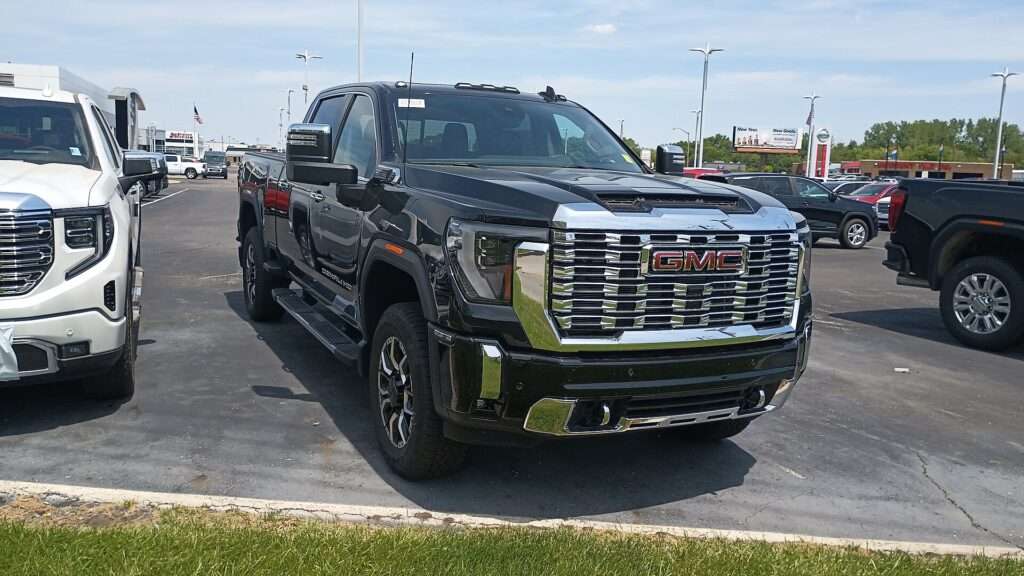
On August 14, 2024, GM issued Service Update N232430450, “Possible Engine Coolant Contamination,” covering 2024 Silverado and Sierra 2500HD and 3500HD trucks with the 6.6-liter diesel, GM engine code L5P. It told dealers to inspect the radiator surge tank, where contamination shows up as “a film of oily black substance floating on top of the coolant.” New, used, Certified Pre-Owned and courtesy trucks on the list had to be held and inspected, and repaired if needed, before a customer took them.
The repair is not small. The parts list calls for six units of coolant, a flush detergent, a new surge tank and eight hoses and pipes covering the heater, radiator, surge tank and air-bleed circuits. GM allows 11.0 hours of labor for the flush and parts replacement. The document does not name a cause, and it does not mention the oil cooler.
A service update is not a safety recall, and the difference matters to owners. A recall under federal defect-reporting rules starts with a defect report to NHTSA and requires the automaker to notify owners by mail. A service update is a dealer instruction. GM’s document says the work is meant to happen during a regularly scheduled visit, so an owner who goes to an independent shop for oil changes may never hear about it. NHTSA’s record for the 2024 Silverado 2500 lists four recalls, covering steering, the tailgate latch (twice) and tire pressure monitoring, and no open investigations. None involves the cooling system.
Two later GM bulletins fill in more of the picture. Bulletin 25-NA-052, released March 4, 2025, and revised March 25, tells technicians how to flush oil out of a cooling system and says: “If you found oil in the coolant and the engine is otherwise healthy, this may be caused by a leaking engine oil cooler.” The lawsuit cites a March 2025 bulletin with that language as evidence GM knew. The bulletin, though, covers Buick, Cadillac, Chevrolet and GMC cars and trucks from 2000 through 2025 and does not single out the Duramax. It is a general repair procedure for any GM engine that gets oil in its coolant.
The more specific document is Bulletin 25-NA-150, “Engine Oil Leak,” from June 2025, which applies to 2024 and 2025 Silverado and Sierra HD trucks with the L5P. It tells technicians to inspect and, if needed, replace the engine oil cooler seals before replacing the cooler, and it states: “Engineering has found that many of the engine oil coolers returned, do not leak.” GM allows 3.3 hours for the seal job. My read: GM’s engineers believe dealers have been replacing coolers that were not faulty. The bulletin arrived during the same period owners were telling NHTSA that replacement coolers were hard to get, and a seals-first procedure would also stretch a short parts supply. GM’s document does not say that.
What Duramax owners have reported to NHTSA
NHTSA’s complaint database holds owner reports, which the agency does not verify. My search of complaints filed on 2024 through 2026 Silverado and Sierra 2500 and 3500 models turned up eight that describe a failed oil cooler or engine oil in the coolant. One came from a fleet operator with a gas-engine truck. The others describe heavy-duty pickups, though not every report names the engine.
The owner of a 2024 Silverado 3500HD wrote in October 2025 that at about 35,126 miles “the oil cooler cracked and flooded my engine cooling system with over 2.5 gallons of oil causing catastrophic engine failure.” The owner of a 2024 Sierra 2500HD Denali Ultimate diesel reported in February 2026 that the truck had been out of service for 52 days, still under warranty, because the replacement part was on national backorder. Another 2024 Sierra 2500HD owner said the cooler failed again within five miles of the dealer’s repair.
Eight complaints is a small number for trucks GM builds in volume. Small complaint counts are common for problems that get handled, or denied, at the service counter, where an owner’s fight is with the dealer and GM’s warranty staff, not with a federal regulator.
GM’s heavy-duty diesel lineup is changing at the same time
The 2024 model year that the service update covers was also the year GM raised the L5P’s output. GM’s September 2022 announcement of the 2024 Silverado HD rated the Duramax at 470 horsepower and 975 lb-ft of torque and made the Allison 10-speed automatic standard. The Auto Wire found no GM document that links the output increase to the cooler complaints.
On September 24, the same day Hubof’s lawyers filed suit, GM unveiled its 2027 heavy-duty trucks with a new 8.3-liter Duramax V8 rated at 555 horsepower and 1,230 lb-ft. The release describes the 2027 engines as the 8.3-liter diesel and an enhanced 6.6-liter gas V8, and it does not mention the 6.6-liter diesel. We covered the new engine here. Whatever GM does with the L5P from here, owners of 2024 through 2026 trucks will be living with its cooler for the next decade, and used-truck buyers will be pricing it in.
The suit also joins a stack of GM drivetrain litigation this year, including a federal case over CVTs in GM crossovers and sedans and owner suits that followed the L87 6.2-liter V8 recall, a problem that drew a federal investigation.
What Duramax owners should do now, and what comes next in court
Owners can protect a future claim with paperwork. Keep every oil change receipt, including ones from independent shops and your own receipts for oil and filters if you do the work yourself. Look at the coolant surge tank when you check the oil; a dark film on top is the sign GM’s 2024 service update tells dealers to look for. If you own a 2024 truck, ask a GM dealer to run your VIN for N232430450. If a claim is denied for low oil, ask for the denial in writing, with the oil level the technician recorded and what was found in the cooling system, because oil in the coolant points to where the missing oil went.
In court, the next document to watch is GM’s first response. In defect cases that is often a motion to dismiss, and here it would likely target the fraudulent concealment count, which depends on proving GM knew of the defect before it sold the trucks. Outside court, watch for a GM special coverage program extending warranty on the cooler, the step automakers often take when a component problem is costly but not a safety defect under federal rules, and for any defect petition or investigation at NHTSA.
When a Duramax shows oil in its coolant bottle and a low dipstick, who should have to prove what happened: GM that the owner skipped maintenance, or the owner that the cooler failed first? And if you own one, has a dealer ever pinned a low dipstick on you?