
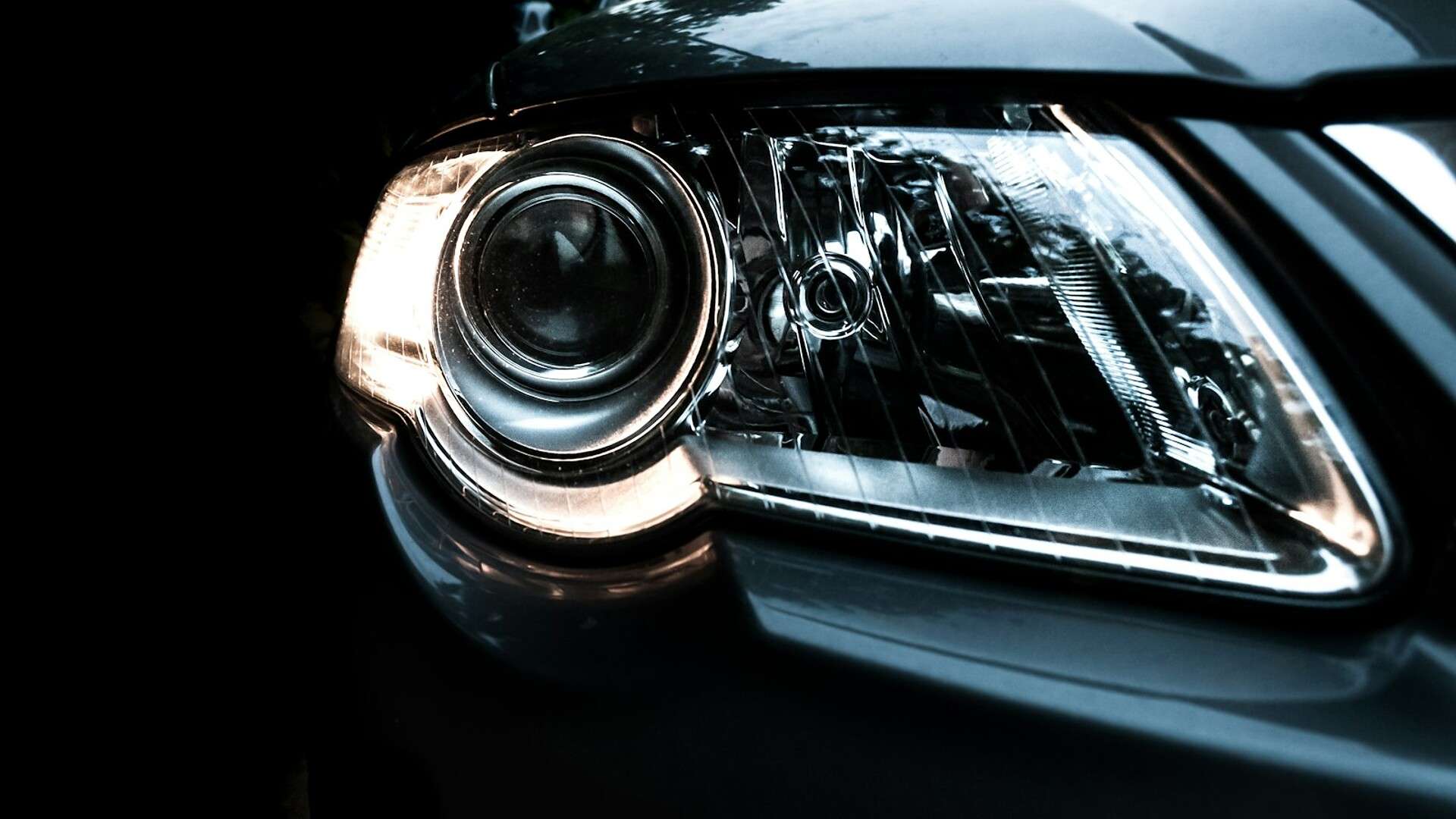
Every headlamp sold in the U.S. passes its federal test on a lab fixture. Nobody checks where it points once it’s bolted to a sedan, a crossover or a pickup, and the same rule lets new vehicles mount their headlamps anywhere from 22 to 54 inches above the road.
NHTSA told Congress about that gap in a February 2007 report on nighttime glare, writing that existing headlamp standards “are silent with respect to headlamp aim, and do not differentiate among a wide range of headlamp mounting heights.” Nineteen years later, the agency has put the same problem on the agenda of a new committee that will rewrite Federal Motor Vehicle Safety Standard No. 108. Of the 14 topics NHTSA named in its notice of intent, one is “on-vehicle headlamps performance that considers aim and mounting height.” If drivers are going to see less glare from the next generation of trucks and SUVs, that is the line item that has to make it out of the room.
NHTSA’s first lighting negotiation in more than 25 years
NHTSA announced the effort on Oct. 6, and the formal notice went on public inspection at the Federal Register on Oct. 7 for publication on Oct. 8. The agency is using negotiated rulemaking, a process set up under the Negotiated Rulemaking Act. Normally the agency writes a proposal, takes comments and issues a rule. In a negotiated rulemaking, a chartered committee of outside parties tries to agree on the substance first. According to the notice, if the committee reaches consensus, “the Department will issue a proposed rule consistent with that consensus for public comment.” The public still gets a comment period, but by then the main terms have been settled.
NHTSA says this is the first time in more than 25 years it has used the process for its lighting standards. The committee would have up to 18 members appointed by Transportation Secretary Sean P. Duffy, plus an NHTSA representative “authorized to represent the agency in discussions and negotiations.” It would meet about four times a year, virtually or in a hybrid format, and its charter runs two years unless renewed. Members are not paid. Comments and membership applications are due Nov. 9, 2026, in docket NHTSA-2026-1981.
NHTSA Administrator Jonathan Morrison framed the rewrite mostly as a way to let new hardware in: “Today’s standards do not allow automakers to deploy the latest safety-improving lighting technologies, so we are bringing key experts and stakeholders together to modernize our standards and address potential causes of glare.”
The full topic list in the notice: glare caused by headlighting systems, replaceable light sources, dusk sensors, plastic optical materials, semiautomatic beam switching, minimum lamp size, lower-beam and upper-beam photometry, on-vehicle performance considering aim and mounting height, auxiliary lamps, three-wheel motorcycle installations, obsolete physical tests for associated equipment, test procedures for lamps with replaceable lenses, and harmonization with international standards.
How a headlamp passes on the bench and glares on the road
FMVSS 108 regulates headlamps by photometry. According to the 2007 report, a headlamp must put a minimum amount of light into the parts of the beam that help the driver see, and must stay under maximum levels in the parts of the beam that could glare oncoming drivers. Those limits are checked on the lamp itself. When NHTSA wrote its 2022 adaptive-beam rule, it described the existing requirements as “component-level requirements that involve testing the performance of an individual headlamp in a laboratory; they do not evaluate the performance of the headlamp system on the vehicle as it is driven on the road.”
Those maximum-light limits only protect the other driver if the lamp is aimed on the road the way it was on the test fixture, and the geometry can’t tolerate much error. The 2007 report found that headlamps aimed upward “by even one degree” produce enough glare to cut the distance at which oncoming drivers can see objects along the road. One degree sounds like nothing. By The Auto Wire’s math, a beam aimed one degree high rises about 21 inches over 100 feet, because the tangent of one degree is roughly 0.0175 and 100 feet is 1,200 inches.
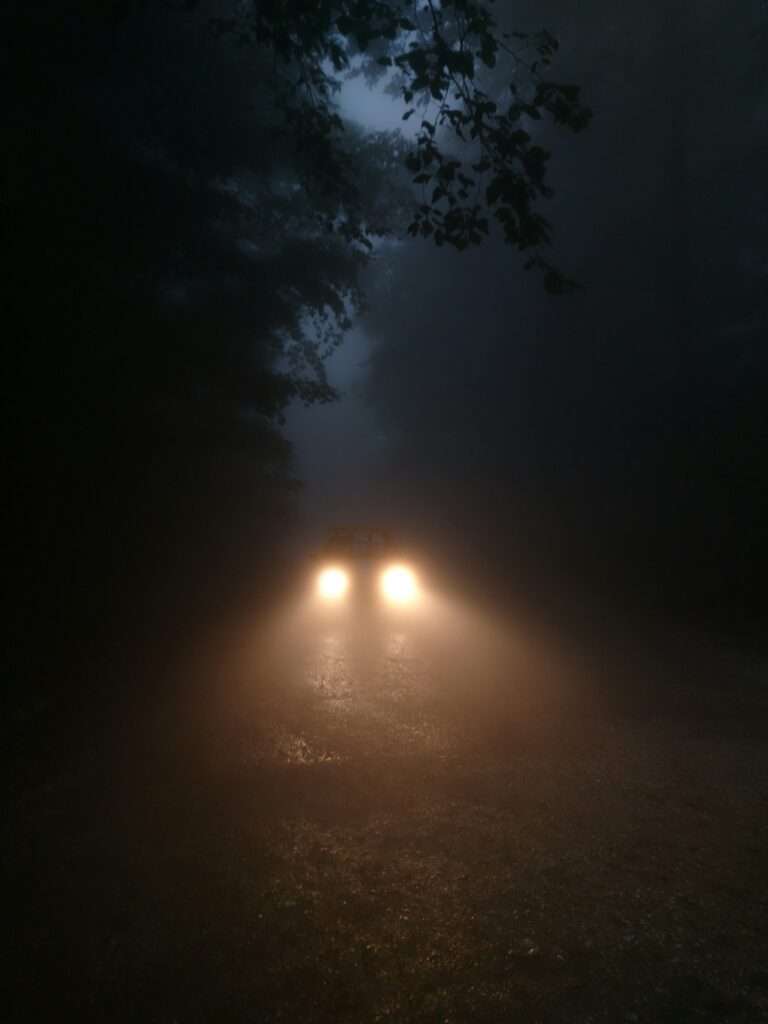
Real cars are often aimed wrong. The same report cited an NHTSA-sponsored survey in New York State that found “two-thirds of passenger cars measured had at least one headlamp improperly aimed either upward or downward.” Mounting height adds to the problem. The report found that raising headlamps “results in higher light levels at the eyes of oncoming drivers, both in meeting situations and when headlamps are seen in rearview mirrors.” A pickup with lamps near the 54-inch limit and a sedan with lamps near 22 inches can both pass the same bench test, but the light that reaches the other driver’s eyes is very different.
Aim also changes over a vehicle’s life. A loaded bed, a tired spring, a leveling kit or a front-end collision repair can tip the beam. The federal standard covers vehicles and equipment when they are new. After that, aim is up to the owner, the shop and whatever inspection a state requires, if it requires one.
The government and insurers have already tested headlights on the vehicle
NHTSA already has a template for testing on the vehicle. The adaptive driving beam final rule, effective Feb. 22, 2022, was the agency’s response to a 2013 Toyota petition and to Section 24212 of the Infrastructure Investment and Jobs Act. Its centerpiece was what NHTSA called “a vehicle-level track test.” Sensors placed near the driver’s eyes and mirrors of a stimulus vehicle measure how much light the adaptive headlamps throw at it. The rule notes that Europe first permitted adaptive beams in 2006, which means the United States was 16 years behind on that technology.
The Insurance Institute for Highway Safety has been testing every headlight it rates on the vehicle since 2016. Its test protocol says the vehicle is tested “as received with the factory headlamp aim.” Glare is measured in the oncoming lane at 110 centimeters off the ground, and maximum glare at 5 to 10 meters “should not exceed 10 lux.” That is how IIHS can rate different trims of the same model differently, as it did with the 2026 Audi A6, where the cheapest trim had the best headlights. In an October 2025 report, IIHS said 21% of the headlights it tested on 2017 models produced excessive glare. For 2025 models the share was 3%.
An insurer-funded rating cut excessive glare in its tests by roughly six-sevenths in eight model years, without any federal requirement. Adding an on-vehicle aim and height test to FMVSS 108 would make that kind of check mandatory for every model, trim and ride height an automaker sells. That is also why it is likely to be the most expensive item on the committee’s list.
An LED bulb petition from 2019 helped get the rewrite started
The notice says the modernization effort “gained further momentum” after NHTSA received a petition from Osram Sylvania “regarding LED replacement light sources.” The petition is dated Dec. 12, 2019, and nearly seven years later the restriction it concerned still governs what owners can legally put in a halogen headlamp. In a February 2024 interpretation letter, NHTSA’s chief counsel’s office wrote that “no LED light source is currently permitted to be used in a replaceable bulb headlamp.”
The reason is optical. In a replaceable-bulb headlamp, the reflector or projector is built around a light source of a specific size and position. FMVSS 108 makes bulb makers file their designs with NHTSA so that any compliant bulb puts its light in the same place inside any compliant housing. NHTSA’s letter says no LED design for that purpose has ever been listed. Plug-in LED “bulbs” for halogen housings are sold widely, but they do not meet the federal standard. If the emitter sits a few millimeters away from where the filament was, the reflector sends that light where its designer never meant it to go, including above the cutoff.
The “replaceable light sources” item could change that by writing a specification for LED replacements, giving owners of halogen-equipped cars a legal upgrade with a defined beam pattern. That would be good for those owners if it comes with a real performance test. It would also open a market for the companies that make and sell bulbs, and those companies are guaranteed seats on the committee.
Ten of the 18 seats go to companies and trade groups
The notice lists the proposed membership: four seats for vehicle lighting manufacturers or lighting retailers, two for national motor vehicle manufacturers, four for national vehicle or equipment manufacturing associations, two for national vehicle or equipment safety organizations, three for educational, research or testing institutions, and three for professional engineering or standard-setting associations. By my count, that gives 10 of the 18 seats to companies that build or sell the hardware and the groups that represent them. Drivers have no category of their own. Their interests would have to come through the two safety-organization seats and whichever research groups get appointed.
Consensus rules shape what gets through. Items that open markets or remove outdated tests, such as LED replacement sources, harmonization with international rules and dropping obsolete equipment tests, cost manufacturers little and are easy to agree on. An on-vehicle aim and mounting-height requirement adds test work for every configuration an automaker builds and could force changes to how the tallest trucks and SUVs mount or level their lamps. My read is that the market-opening items are much more likely to reach consensus than the aim-and-height item. The notice does not say what happens to an item the committee can’t agree on.
Congress has proposed a lumen cap, but lumens are the wrong unit
There is also a bill in the House. H.R. 7772, the LIGHT Safety Act, was introduced March 3, 2026, by Rep. Marie Gluesenkamp Perez. It would require the Transportation secretary to issue a final rule within one year of enactment setting “a maximum allowable brightness standard for low beam headlamps” expressed “in lumens or another appropriate (as determined by the Secretary) photometric measurement.” We covered the bill when it was introduced.
Lumens measure a lamp’s total output in every direction. Glare depends on how much of that light reaches the other driver’s eye, which is a matter of intensity in a specific direction. A headlamp with more lumens and a sharp, correctly aimed cutoff can put less light into an oncoming windshield than a dimmer lamp aimed a degree high. The bill’s fallback language, “another appropriate photometric measurement,” leaves room for the right unit. NHTSA’s committee list does not name a brightness cap, but the “lower beam photometry” item covers the same ground.
IIHS crash data does not show more glare crashes
Complaints about glare go back a long way. NHTSA’s 2007 report said a glare comment docket opened in 2001 had drawn more than 5,700 comments, which made it one of the agency’s most active. Crash reports tell a different story. In the October 2025 IIHS study, Principal Research Engineer Matthew Brumbelow looked at police-reported crashes in 11 states from 2015 through 2023. Glare was cited in one or two of every thousand nighttime crashes. Out of about 24 million crashes, fewer than 150,000 had glare coded as a factor, and the rate stayed about the same over the period.
Brumbelow said: “Drivers older than 70 seem to be most affected by headlight glare, while those between 55 and 60 don’t appear to have an increased crash risk.” Comfort and crash risk are different measures, and a rule can reasonably address both. But the data suggests the strongest argument for the rewrite is that night driving is harder for older drivers, not that glare is causing more crashes.
The Nov. 9 roster, the aim test and the LED spec
The first thing to watch is the roster. Applications close Nov. 9. Whether IIHS, a researcher who studies older drivers, or an automotive safety advocacy group gets one of the non-industry seats will tell you a lot about how the aim item will go.
Second, watch whether “on-vehicle headlamps performance that considers aim and mounting height” comes out as a test with numbers, the way the adaptive-beam rule did, or is cut down to a study. Third, if the committee writes an LED replacement-source specification, check whether it includes a beam-pattern test in the housing or only a size and wattage spec. NHTSA has said it intends to publish a proposed rule “promptly” after the committee’s recommendations are approved, and wants the work done within the committee’s two-year charter. A final rule, and any lead time for automakers to comply, would come after that proposal.
Owners don’t need to wait. If you’ve lifted or leveled a truck, carry heavy loads, or had front-end collision work, ask the shop to check headlamp aim. When shopping, check the IIHS headlight rating for the specific trim, since glare results can differ between trims of the same model.
How often does the truck behind you light up your mirrors? Would you pay more for a new vehicle if its headlights had to pass a test on the vehicle, not just in the lab?