
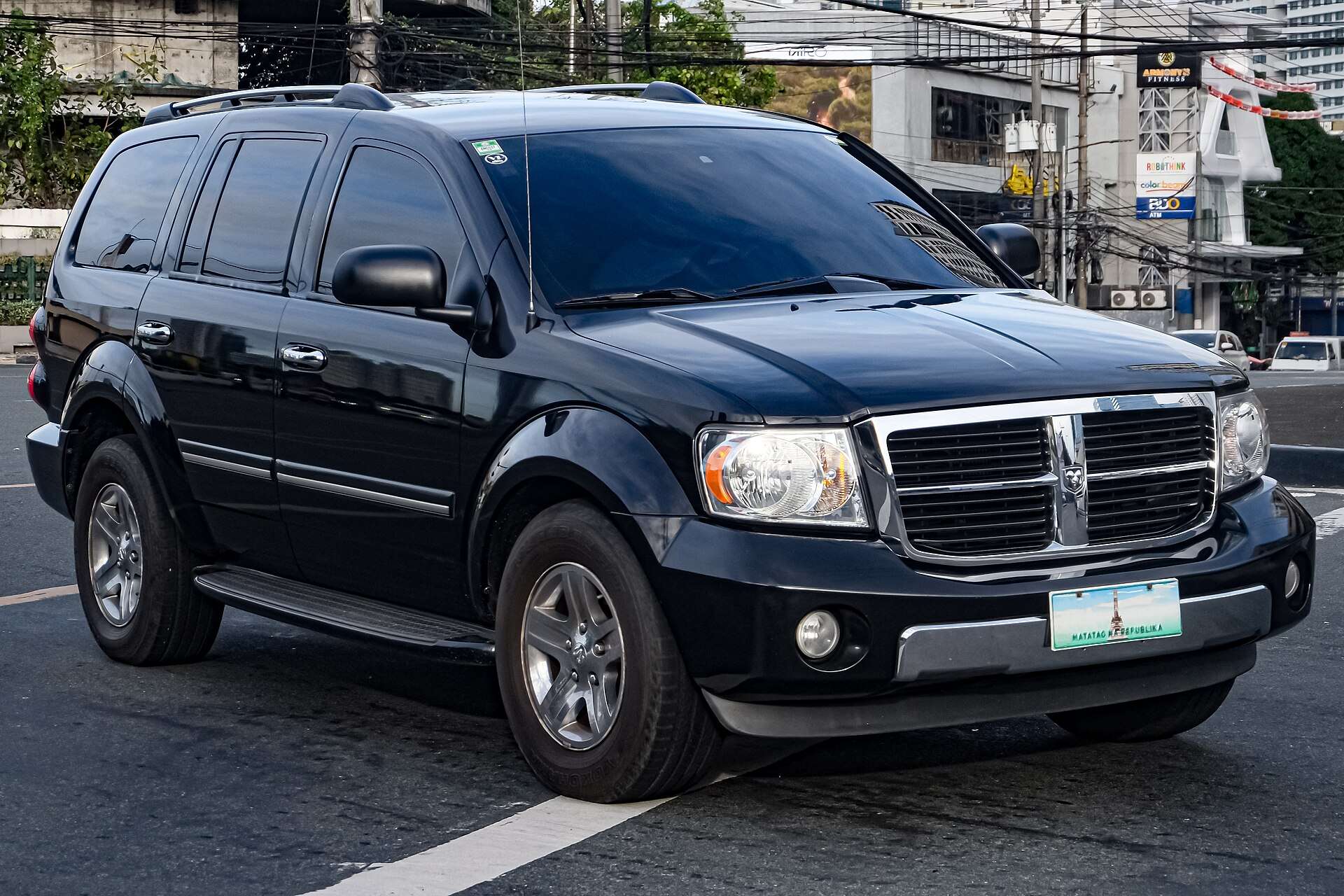
The most important witness in Lindsey Isaacs’s case never took the stand. It sat in a Florida Highway Patrol impound lot, and it was a Dodge Durango.
Isaacs, a driver from Palm Coast, Florida, told a Senate Judiciary subcommittee on September 23 that she spent 13 days in jail facing three counts of vehicular homicide for a crash she had nothing to do with. Part of what led to that wrongful arrest was a Flock Safety license plate camera that recorded her Durango a couple of miles from the scene. The thing that got her out was a set of photographs of that same Durango showing none of the collision damage investigators had said was there.
Most coverage of this hearing will focus on surveillance, privacy and the Fourth Amendment, and those are real issues. For car owners, there’s a narrower lesson.
A camera can tell you where a car was. It cannot tell you what the car did.
What the record actually says
Isaacs’s written testimony lays out a timeline that should make any driver uncomfortable. A fatal crash happened in Florida in early October 2025. Witnesses described a maroon Dodge Durango, and 911 callers gave a partial plate: 458. A Flock camera captured Isaacs’s Durango, which is black, roughly two to three miles west of the crash scene.
Six months later, on April 17, 2026, she was arrested. She says she spent about three and a half days of her detention in solitary confinement. On April 28, her attorney put photos in front of the court of her Durango sitting in the FHP impound lot, undamaged. She was released on bond the next day. In May, prosecutors filed a No Information and dropped the case.
The vehicle supposedly involved in a crash violent enough to support three homicide counts was in state custody. Investigators had claimed it carried collision damage. Photographs said otherwise. Settling that question did not require a warrant, an algorithm or a data subpoena. It required an honest look at the sheet metal.
Her testimony doesn’t explain how investigators squared a black SUV with witnesses who described a maroon one, or whether her plate had anything to do with the partial 458. Those seem like questions worth answering before the handcuffs come out, and they remain unanswered in the public record. Isaacs herself was careful about what she asked of senators: “I am not here to tell you how to do your jobs.”
Your car is the search term now
Modern plate-reader networks do more than read plates.
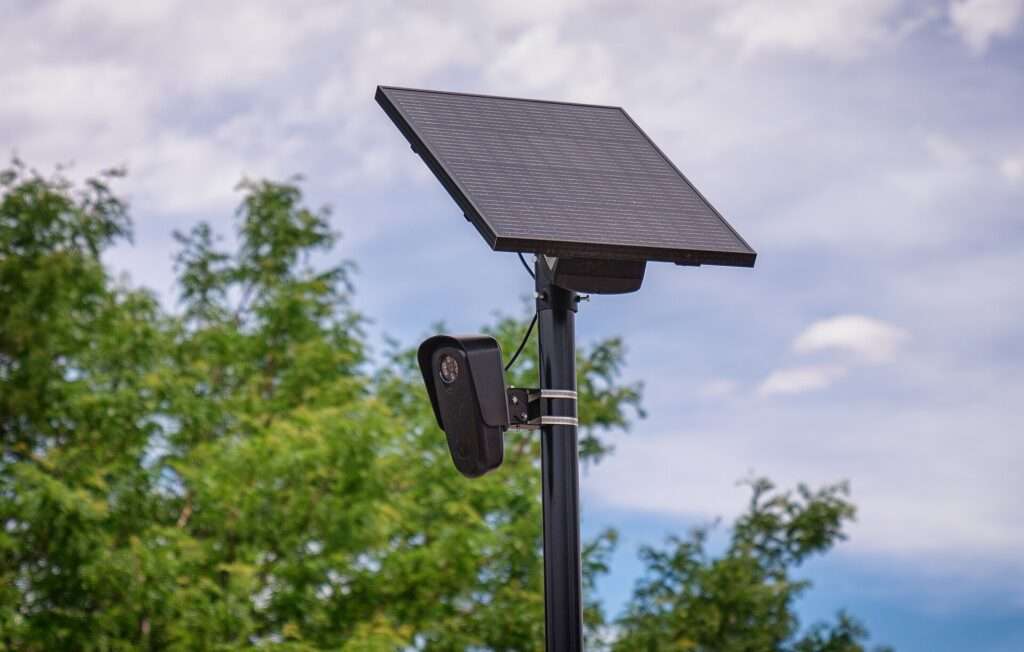
Flock’s own public materials say its cameras capture “visible vehicle characteristics” along with plates, location and time. Its product page advertises searches on full, partial and temporary plates, plus a Vehicle Signature feature designed to “generate investigative leads from limited information,” and a FreeForm search the company says covers thousands of unique vehicle characteristics.
The public record doesn’t say which of those tools, if any, investigators used in the Isaacs case, and it would be unfair to assume. But the design goal is plain from Flock’s own language: when the evidence is thin, the system is built to produce candidates anyway.
That is useful when a detective has a real description of a real stolen car. It is dangerous when the description is fuzzy, because a lead generated from “limited information” about a mid-size SUV is going to land on a lot of mid-size SUVs. Your make, model, color, roof rack and bumper sticker have become search keys in a database you never agreed to join. Owning a popular vehicle, in the wrong place, is not evidence of anything. The technology can make it look like it is.
The scale makes that math matter. In an August 26 letter to Flock CEO Garrett Langley, subcommittee chairman Josh Hawley (R-Mo.) cited more than 120,000 Flock cameras across 49 states and more than 20 billion vehicle scans a month. ACLU senior policy counsel Chad Marlow translated that into roughly 57 scans per American every month. We’ve looked before at how many photos a single car can generate as it moves through a camera network.
When a system runs at that volume, even a small error rate produces a steady stream of innocent people. Hawley’s letter pointed to one California department that found 71% of its alerts were wrong, and to 161 vehicles in Los Angeles incorrectly stopped as stolen over two months.
The car already keeps better records
Crash investigation has never depended on where a car was. It depends on what happened to it. Crush damage, paint transfer, broken lamp lenses, fresh bodywork, a new bumper cover that doesn’t match the rest of the paint. A three-fatality collision leaves marks on sheet metal that don’t wash off, and a trained investigator can read them.
Many modern vehicles also carry their own witness. Federal rules under 49 CFR Part 563 set standards for event data recorders in light vehicles built since September 2012 that have them. The rule exists specifically so the recorders capture data “valuable for effective crash investigations.” It defines the trigger threshold as a velocity change of 8 km/h, about 5 mph, within 150 milliseconds, and requires recording of change in velocity, pre-crash speed, brake status and driver seat-belt use.
A crash severe enough to kill someone would almost certainly register on an equipped vehicle’s recorder. Isaacs’s testimony doesn’t say whether anyone downloaded hers. But the broader point stands: the vehicle itself can often confirm or rule out involvement in a serious crash far more reliably than a timestamped photo taken miles away. We’ve seen the same principle work in the other direction, when dash cam footage became the core evidence in a street-racing case.
A plate-reader hit is a lead. The car is the evidence. The Isaacs case shows what happens when the lead gets treated like the evidence and the evidence gets misread.
Who showed up, and who didn’t
Hawley said he had invited the chief executives of Flock, Axon, Motorola Solutions and Verkada. None sat at the witness table. Apparently everyone had somewhere better to be. That leaves the industry’s side of the story to its public statements.
Flock says its cameras capture vehicles, not faces or biometric data, that data is deleted after 30 days by default, that customers own their data and that sharing is off by default. On September 22, the day before the hearing, the company published results of a Bishop Fox penetration test, saying critical and high findings had been fixed and independently verified.
That announcement landed next to testimony from Atlanta cybersecurity engineer Benn Jordan, who cited 55 security vulnerabilities in Flock’s systems documented by researcher Jon Gaines, and testified that with physical access, pressing a button on a camera three times let him access all of its data.
Law enforcement’s case came from Pinal County, Arizona, Sheriff Ross Teeple, whose jurisdiction sits on the I-10 and I-8 corridors. His testimony drew a line worth noticing. He defended technology “strictly limited to reading license plates” for stolen-car checks and AMBER alerts, but warned against networks that capture much more than a plate. Dick Durbin (D-Ill.), the Judiciary Committee’s ranking member, asked Teeple what the “breaking point” was that led his office to walk away from Flock.
That distinction is the real policy fight. A reader that checks a plate against a stolen-vehicle list and forgets everything else is one tool. A system that indexes every passing car’s appearance and keeps it searchable is a different one.
Where this goes next
The fixes on the table vary widely. The Institute for Justice’s Alasdair Whitney proposed model legislation requiring a warrant for location data more than two hours old, a seven-day retention cap without a court order, audit trails and exclusion of improperly obtained evidence, while still allowing hotlist alerts for stolen cars. His group’s Norfolk, Virginia, lawsuit documents cameras capturing one driver’s plate at least 526 times and another’s at least 849 times in less than five months. The ACLU’s Marlow went further and asked Congress to bar ALPR use by any agency that takes federal money.
The states are moving faster than Congress. Marlow’s testimony pointed to Florida’s move against the cameras on state highways, a shift we examined in our look at the roadside-permit fight, and to Vermont, which will become the first state to ban ALPRs outright when its law takes effect July 1, 2027. In Congress, the so-called Flock-Off Act is already filed, and private litigation such as the class action against Flock is working through the courts.
Whatever Congress does, there is a simple standard that costs nothing and bans no cameras: a plate-reader hit should never close an investigation when the vehicle itself is available to inspect. Look at the car. Check for damage. Pull the recorder. Compare the paint color to what witnesses actually saw.
Cameras are good at one thing, which is placing a vehicle at a spot on a map at a moment in time. The mistake is letting that one fact stand in for all the others. Lindsey Isaacs’s Durango could tell anyone who looked closely that it wasn’t in that crash. It took her defense attorney, and 13 days of her life, to get someone to listen.
Pick a side: is a plate-reader hit plus a matching make and model enough to justify an arrest, or should investigators be required to go look at the actual car before anyone gets charged with anything?