
The traffic stop failed. That is the part of this story worth sitting with.
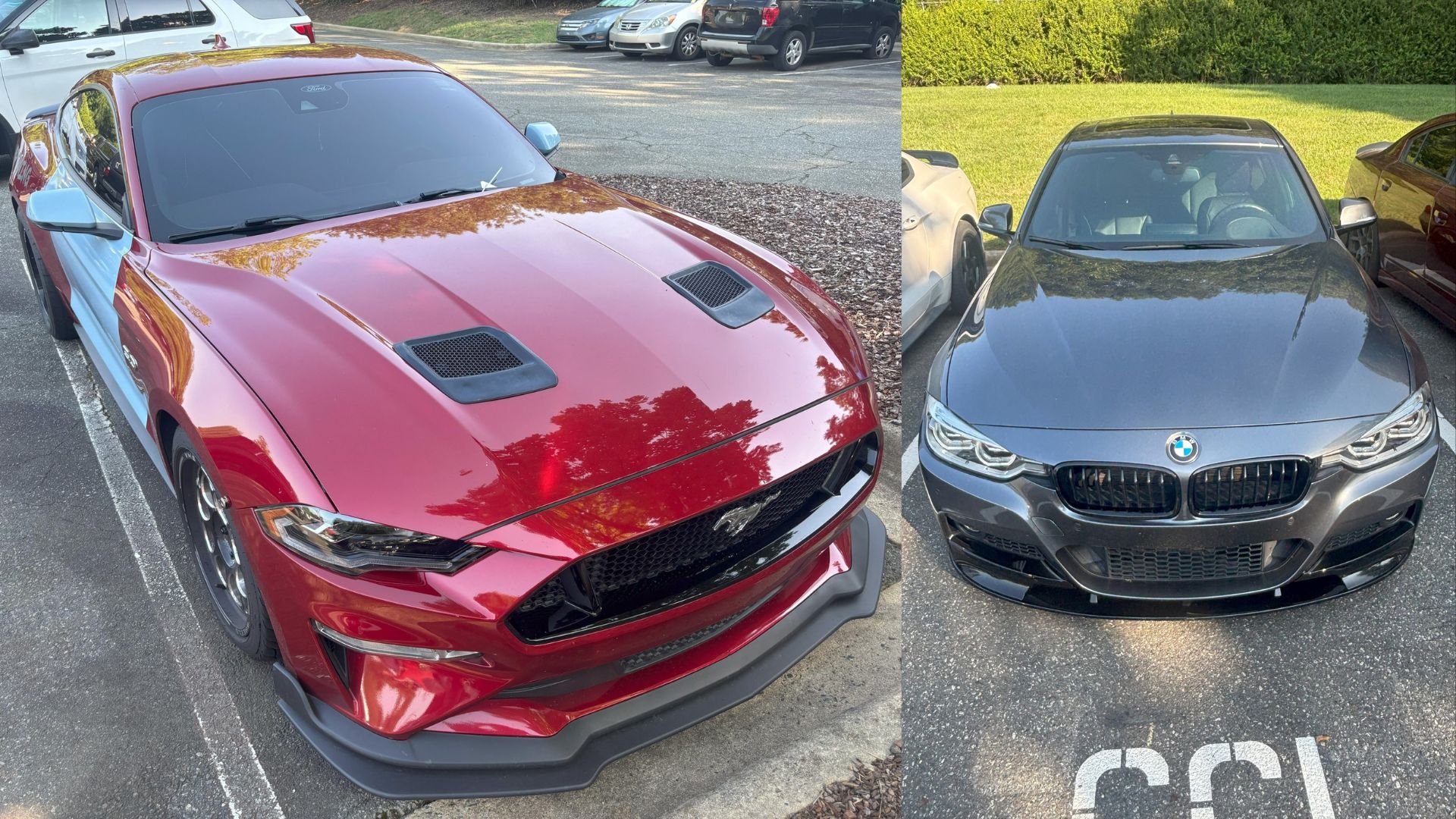
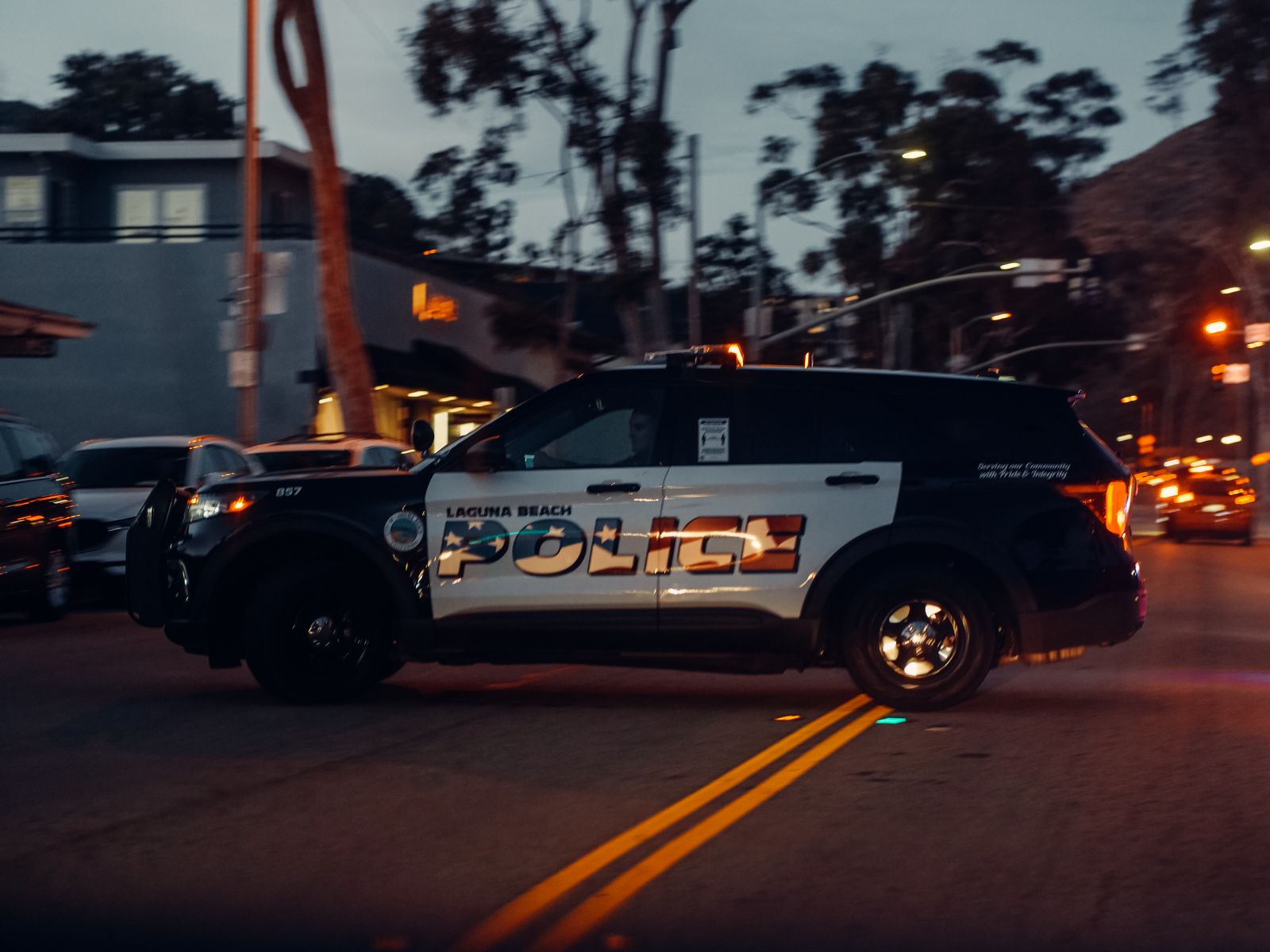
On the evening of September 8, a Pierce County deputy running speed enforcement on Bridgeport Way West in University Place, Washington, watched two cars accelerate away together. He tried to pull them over. According to the sheriff’s office, the attempt was unsuccessful. In most versions of this story, that is the ending. No radar lock, no pursuit, no case.
Instead, two 25-year-old men were booked into the Pierce County Jail on reckless driving and street racing allegations, both cars went onto 72-hour impound holds, and the number that will follow them into a courtroom is 107 mph in a 35-mph zone.
The deputy never measured that speed. Dash cam evidence did — recorded by a camera one of the drivers had bought, mounted, powered and aimed at the road himself.
What the sheriff’s office actually described
The Pierce County Sheriff’s Office account says the deputy ran an area check after the failed stop and found both vehicles — described in the agency’s own words as unlicensed — parked side by side in a nearby lot. That was enough. The deputy, the agency says, “had established probable cause for reckless driving and street racing.”
Then came the step that built the case: “The deputy submitted a search warrant, which was approved, and the suspect’s dash cam was removed for evidence.” The footage, according to the agency, captured “one of the vehicles accelerating up to 107-mph in a 35-mph zone.”
The sheriff’s office signed off with a line that will be familiar to anyone who has spent time around enforcement in a car-heavy county: “We love cool cars, but our county streets are not the place to race.”
Fair enough. But the useful lesson here is not about attitude. It is about evidence, and about a gap in American data law that almost nobody who buys a windshield camera knows is there. This is not the first case built on a driver’s own footage — Indianapolis prosecutors leaned on video evidence in a fatal street racing case last December — but this one turned on video the defendants recorded, stored and drove home with.
Why dash cam evidence sits outside the law drivers think protects them
Ask most enthusiasts whether the data their car collects is legally theirs and they will point, correctly, at the Driver Privacy Act of 2015. The statute is blunt about it: data retained by an event data recorder “is the property of the owner, or, in the case of a leased vehicle, the lessee.” Outsiders can reach it only through narrow exceptions — a court or administrative authority that “authorizes the retrieval of the data,” written owner consent, a federal safety investigation, emergency medical response, or de-identified traffic research.
Here is the catch nobody mentions. The Act does not define an event data recorder on its own terms. It imports NHTSA’s definition from 49 CFR 563.5. And that definition closes with a sentence most drivers have never read:
For the purposes of this definition, the event data do not include audio and video data.
49 CFR 563.5
Read it twice. The federal law that establishes who owns in-car recordings covers the device that logs numbers and expressly carves out the device that records pictures and sound. The recorder Congress protected is the one that cannot see. The recorder that documented this entire incident — windshield-mounted, driver-purchased, satellite-referenced — falls outside that statute completely. It is a camera. Personal property. Seizable on a warrant, like a phone.
Washington’s own law is broader than the federal version. Chapter 46.35 RCW reaches “event data recorders, sensing and diagnostic modules, electronic control modules, automatic crash notification systems, geographic information systems, and any other device that records and preserves data” connected to the vehicle, and it puts that information in the owner’s hands. But look at the first exception on the list: a court order. Which is precisely what the deputy went and got. State law did not stand in the way of the seizure. It described the procedure for it.
That distinction matters well beyond one county. The same footage drivers record to protect themselves is already being eyed as a data source by third parties — a dynamic we covered when a surveillance vendor pitched a plan to tap hundreds of thousands of rideshare dashcams without the drivers behind them knowing.
The speed on the memory card was probably better than the speed on the dash
Now the part that should genuinely unsettle anyone running a GPS camera.
A dash cam’s speed reading is not taken from the car. It is derived from satellite signals, independent of tire diameter, wheel and tire swaps, final drive ratio or the manufacturer’s built-in optimism. Nextbase markets a 10 Hz GPS module on exactly that premise: “Every second the Dash Cam captures 10 data readings,” producing what the company calls “very accurate speed and acceleration data, which is shown in MyNextbase Player and can be critical information if there is an incident.”
An incident, it turns out, cuts in both directions.
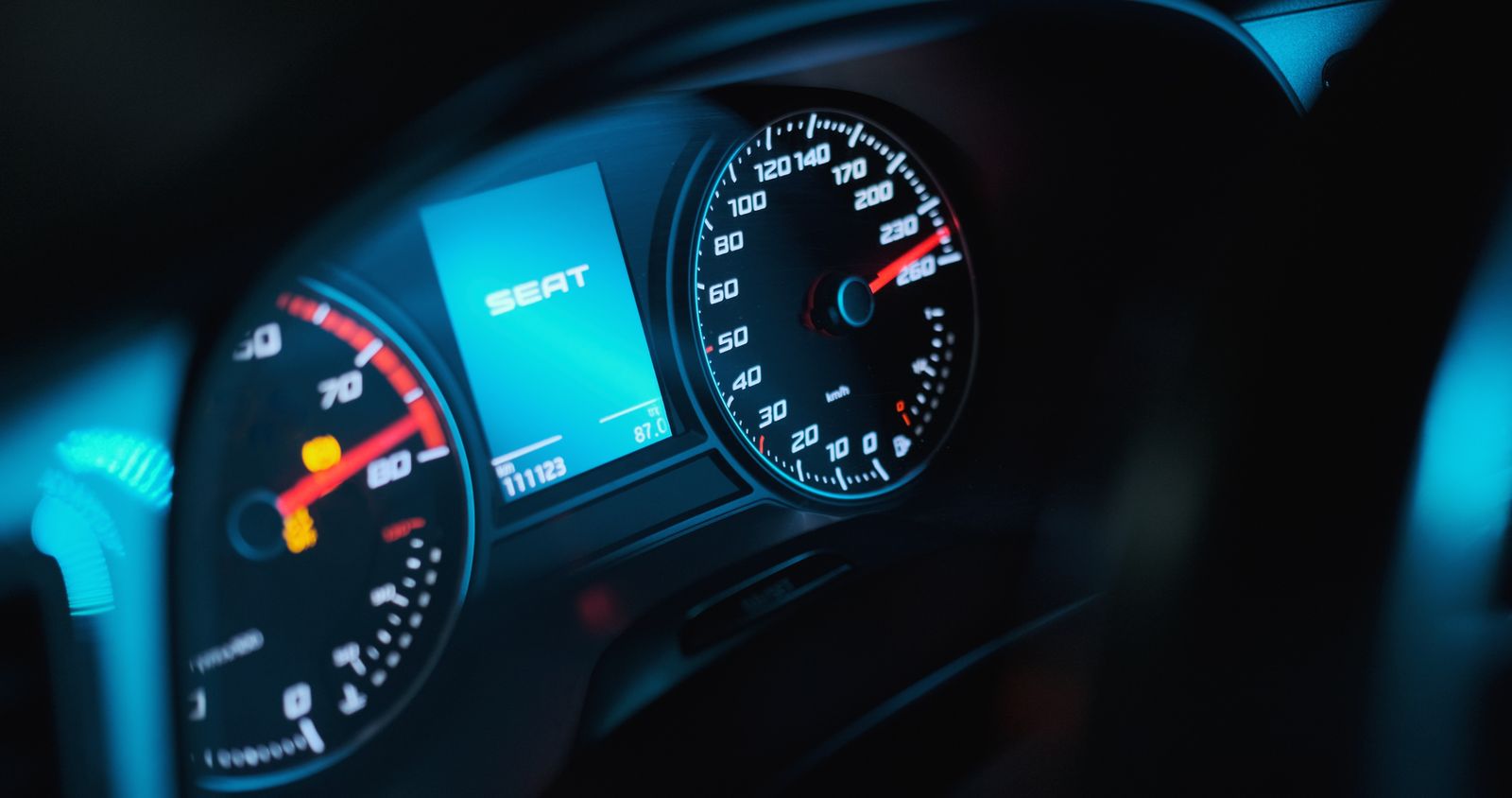
Meanwhile, the gauge in front of the driver answers to nobody. NHTSA once had a rule on this — Federal Motor Vehicle Safety Standard No. 127, Speedometers and Odometers. The agency rescinded it in 1982, having concluded the standard’s requirements “were not yielding and could not be expected to yield significant safety benefits.” What survives in FMVSS No. 101 governs how a speedometer is labeled, not how accurate it has to be. There is no federal accuracy standard for the speedometer in your car.
There is one for a semi. Under 49 CFR 393.82, every bus, truck and truck-tractor “must be equipped with a speedometer” that is “accurate to within plus or minus 8 km/hr (5 mph) at a speed of 80 km/hr (50 mph).” An 80,000-pound rig has a legally defined tolerance. A 500-horsepower sports car does not.
So in a vehicle with an unregulated speedometer and a satellite-referenced camera on the glass, the most defensible speed measurement on board is very likely the one the driver paid for himself.
The factory is about to catch up
The comfortable response is that this is a dash cam problem, and drivers who do not run one are fine. That holds for roughly five more model years.
Start with a fact that surprises nearly everyone: federal rules have never required a car to carry an event data recorder at all. Part 563 applies only to vehicles “if they are equipped with” one. Installation has always been voluntary. And yet NHTSA estimates that 99.5 percent of model year 2021 light vehicles carry a compliant EDR. Automakers fitted them anyway, because crash data has always been worth more to a manufacturer defending a product liability claim than to anyone else in the chain. Drivers have been learning the other half of that equation the hard way, as in the fatal-crash case where a driver’s medical explanation ran into his own vehicle’s recorded data.
What is changing is how much those recorders keep. Acting under Section 24303 of the FAST Act, NHTSA finalized a rule in December 2024 raising pre-crash capture “from 5 seconds at 2 Hz to 20 seconds at 10 Hz.” The required elements are the three that decide any speeding argument: indicated vehicle speed, engine throttle as a percentage, and service brake on or off. After petitions for reconsideration, the agency locked in the timeline in a final rule issued May 18, 2026: 25 percent of production from September 1, 2028, stepping to 100 percent by September 1, 2031, with small-volume manufacturers in 2032 and multi-stage and altered vehicles in 2033.
Ten samples per second. Twenty seconds of history. That is the identical fidelity Nextbase already sells as a consumer feature — which means enthusiasts have spent the better part of a decade voluntarily buying the exact recording capability the federal government is now spending most of another decade installing in everything else.
In Washington, the car is becoming the sentence
The last piece is what happens after the evidence lands.
Under SB 5606, effective January 1, 2024, Washington rewrote its racing statute to cover public highways and off-street facilities, to reach drifting and any display that “willfully demonstrates, exhibits, or compares speed, maneuverability, or the power” of a vehicle, and to expose spectators and anyone who “knowingly aids and abets racing.” Racing is reckless driving under RCW 46.61.500 — a gross misdemeanor carrying up to 364 days in jail, a fine of up to $5,000, and a license suspension of “not less than 30 days.”
The vehicle gets its own penalty track. Impound is mandatory, and when the arrested driver is the registered owner the car cannot be redeemed for 72 hours. On a second pass — a prior racing impound plus a prior charge — the vehicle itself becomes forfeitable on conviction, and the statute routes the proceeds to “personnel, programs, services, and equipment related to enforcing” street racing laws. The seized cars help fund the enforcement that seizes the next ones. Agencies elsewhere have already worked out how effective that is; North Carolina police have run seizure-driven operations against street racing on the same logic.
Then there is 2029. Under ESHB 1596, a Washington reckless driving conviction will carry a 150-day probation period requiring an intelligent speed assistance device — a limiter programmed to hold the vehicle at or below the posted limit, with an override permitted three times a month. The convicted driver pays for installation, removal and lease, plus “$21 per month” to the state. Washington is not alone in reaching for the throttle instead of the license; Virginia already lets judges bolt a limiter to a car rather than pull a license.
Which reframes this entire case. Today, proving a 107-mph run took a search warrant and a memory card. In three years, the sentence for it in Washington is a device engineered to make the next one impossible.
What to take from this
None of this is an argument against dash cams. The reasons people mount them are sound: the uninsured driver, the staged collision, the insurer who wants a version of events you cannot contradict, the officer who remembers the corner differently. A camera does all of that work, and it does it well.
It just does not do only that.
A dash cam is a witness you recruited, mounted, powered and pointed — and it will testify for whichever side asks first. That is worth understanding before you need it rather than after. On most GPS-equipped units the speed and location overlay is a setting, not a law of physics; the camera will still capture the collision that clears you with the speed stamp switched off. Drivers who want that data logged are making a legitimate choice, and there are good reasons to make it. If you are shopping, our dash cam buying guide walks through which features actually matter. The point is to choose deliberately.
Two men in University Place chose by default.
So where do you land on this one: is a GPS speed overlay a feature worth keeping for the day you need to prove you were doing the limit, or is it a liability you would switch off tomorrow?
Should dash cam footage be enough to make a case when the stop itself falls apart? Let us know in the comments.