
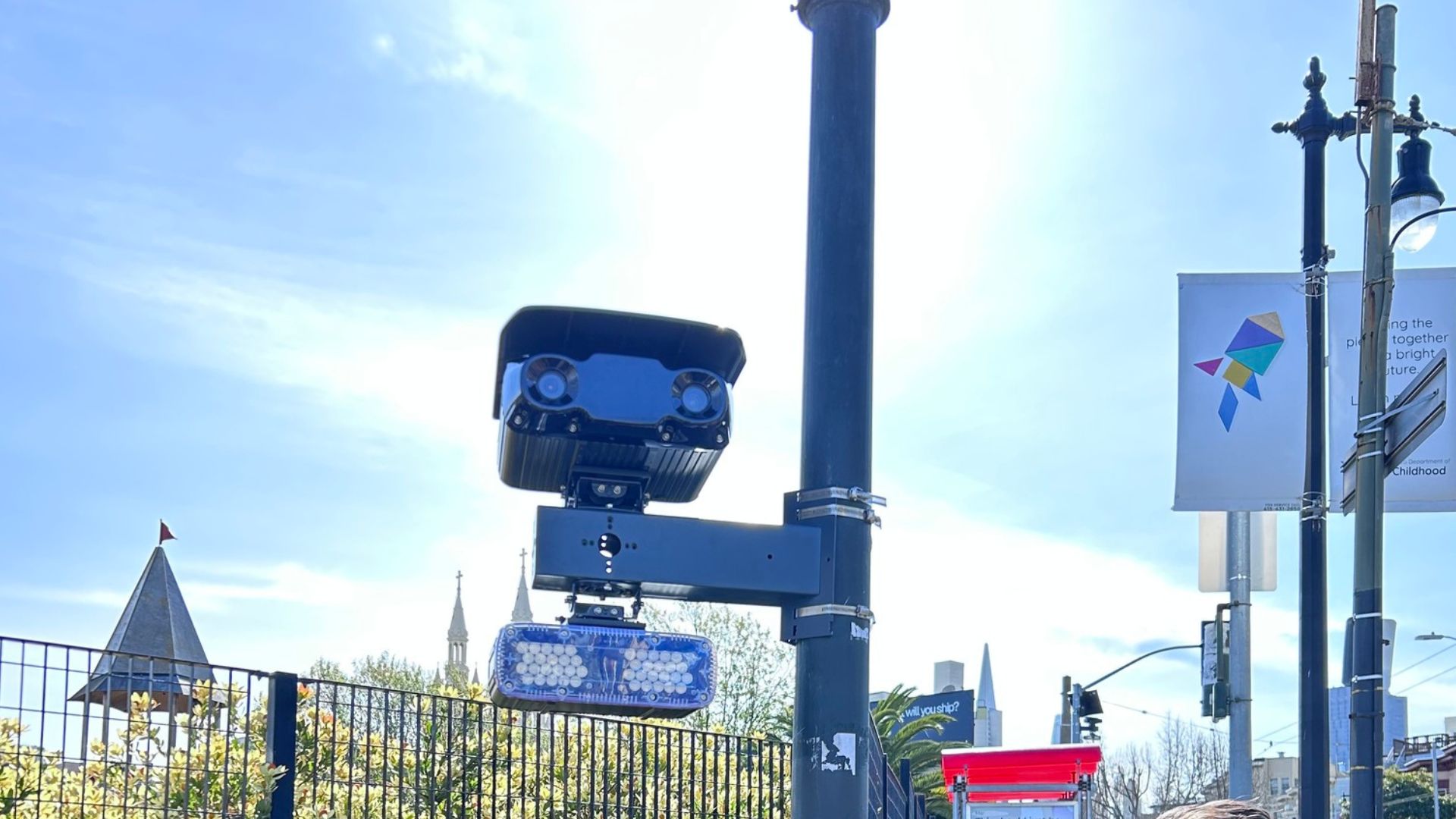
When Ontario abolished municipal speed cameras last November, it did something careful. It wrote itself a liability shield into the Highway Traffic Act, in plain language, anticipating that somebody would sue.
Read the shield closely and you find it protects the province and its municipalities from claims arising out of “the breach, termination or frustration of a contract.” It was built for camera vendors holding cancelled multi-year deals.
It says nothing about a fifteen-year-old.
Buyer’s guide: Best Radar Detectors in 2026
What happened, and what is being claimed
On 25 March 2026, a teenager was struck at a crosswalk near Humber Boulevard and Louvain Street in Toronto’s York South-Weston ward, a short walk from a Catholic secondary school. On 3 September 2026 his family filed a claim in the Ontario Superior Court of Justice naming the Province of Ontario, the City of Toronto and the driver, and seeking $16 million.
None of it is proven. No statement of defence has been filed, and The Auto Wire has not reviewed the claim itself; the allegations reported publicly include a brain injury, multiple fractures and vision loss. Treat every allegation as exactly that until a court says otherwise.
One part of the family’s premise, though, does not depend on the claim at all. It is confirmed by the city’s own records. Toronto’s automated enforcement map still lists camera location code A488, “Humber Blvd. Near Louvain St.,” a mobile unit in Ward 5, status: recently deactivated. There really was a camera there. It really is gone.
The bill that killed the cameras was not a road safety bill
Here is the first thing most people do not know. Ontario did not repeal speed cameras through transportation legislation. It did it through Bill 56, the Building a More Competitive Economy Act, 2025, sponsored by the Minister of Red Tape Reduction.
Schedule 5 of that bill contains one of the shortest and most consequential sentences in recent Ontario law: Part XIV.1 of the Act is repealed. Part XIV.1 was the entire statutory basis for automated speed enforcement in the province. Royal assent came 3 November 2025. Enforcement stopped on 14 November 2025.
A program that Toronto had grown from eight pilot locations in 2018 to 150 cameras by January 2025 ended in a single day, inside an omnibus bill about economic competitiveness.
The shield, and what it actually covers
Bill 56 also inserted section 206.6 into the Highway Traffic Act. Subsection (1) bars any cause of action against a municipality, a council, a current or former councillor, the Crown or a member of the Executive Council arising “as a direct or indirect result of the breach, termination or frustration of a contract” ended by the repeal. Subsection (2) says no compensation or damages are owing. Subsection (3) bars proceedings outright.
Every one of those subsections is anchored to a contract. The province looked at the risk it was creating, identified it as commercial, and legislated against being sued by the companies that owned and maintained the cameras.
That is a rational thing for a government to do. It is also a narrow thing. On the face of the section, a personal injury claim by a struck pedestrian is not a contract claim, and the shield the province wrote does not obviously reach it.
This does not mean the case is easy. Ontario has a far older and blunter defence in the Crown Liability and Proceedings Act, 2019, whose section 11 extinguishes negligence claims against the Crown over acts of a legislative nature and decisions respecting policy. Passing a statute is about as legislative as an act gets. And the City has an unusual answer of its own: it did not choose to switch the cameras off. It was ordered to.
So the province is probably protected here. The interesting part is that it is protected by a 2019 budget bill written for unrelated reasons, not by the shield it drafted last year for this exact moment.
The City published the plaintiffs’ best evidence three months before they filed
This is the part that should make municipal lawyers wince.
On 23 June 2026, Toronto’s General Manager of Transportation Services delivered a supplemental report to council measuring what happened after the cameras came out. Across 104 monitored former camera sites, the average 85th-percentile speed rose 4.8 km/h. The share of vehicles travelling 11 km/h or more over the limit went from 2.0 percent to 8.1 percent.
In 30 km/h zones, drivers exceeding the limit by 16 km/h or more rose from 1.4 percent to 7.2 percent. The report also records that two fatal collisions occurred within 100 metres of former camera locations, and that fatal collisions in the December-to-May window returned to 25, the highest figure in five years.
A defendant municipality does not often hand a plaintiff a quantified, self-authored causation exhibit ten weeks before the claim lands. Toronto did.
Why 4.8 km/h is not a small number
It sounds trivial. It is not, and the reason is the shape of the injury curve rather than the size of the speed change.
The AAA Foundation for Traffic Safety’s impact-speed research puts a pedestrian’s risk of severe injury at roughly 10 percent at 16 mph, 25 percent at 23 mph, and 50 percent at 31 mph. Risk of death runs about 10 percent at 23 mph and 25 percent at 32 mph. The curve is steepest exactly in the band where urban traffic lives.
That is why a few kilometres per hour across a whole population of drivers matters more than it sounds. It is the same logic behind the American debate over whether rear automatic braking should be mandatory rather than merely scored. You are not moving one car slightly faster. You are sliding an entire distribution up the steep part of a curve.
The same research contains a finding worth sitting with: the risk to a 70-year-old pedestrian struck at 25 mph is about the same as the risk to a 30-year-old struck at 35 mph. Age is worth ten miles an hour.
Be honest about what the evidence does and does not show
Toronto’s cameras were independently evaluated by the Hospital for Sick Children Research Institute, which reviewed more than 114 million vehicle observations against 44 control sites and reported a 45 percent reduction in the proportion of speeding vehicles and a 7.44 km/h drop in 85th-percentile speeds.
The same evaluators added a caveat that rarely survives into the political argument: pedestrian collisions are rare events, about 1.4 percent of reported collisions, and there was not enough data to establish a statistically significant reduction in crashes.
So the proven effect of speed cameras is on speed. The link from speed to injury is well established physics and epidemiology, but the direct crash-reduction case is thinner than advocates usually admit. Any honest account of this lawsuit has to carry that nuance, because it is the ground the case will actually be fought on.
The lobby that said the quiet part in an official document
Read the province’s own announcement of the ban and the affordability framing is front and centre. Premier Doug Ford called cameras a cash grab. The Minister of Transportation called them “nothing more than a tool for raising revenue.”
Then keep reading to the supporting quotes, where the Council of Ontario Construction Associations offers a different reason to like the ban: removing cameras “avoids tickets being sent to plate owners instead of the driver; those tickets can be recorded on a company’s Commercial Vehicle Operator’s Registrations (CVOR) and may threaten its ability to operate.”
That is not a cost-of-living argument. That is a fleet-compliance argument. Automated enforcement tickets the registered owner, not the driver, which for a commercial operator means camera tickets land on the company’s safety record. Cameras were degrading CVOR ratings, and CVOR ratings are a licence to do business.
The consumer framing was real. It was also not the only thing in the room.
The replacement does not arrive for thirteen years
Ontario’s answer to losing enforcement was engineering: a one-time $210 million Road Safety Initiatives Fund shared across more than forty municipalities, plus ministerial power to force school-zone signage.
Now put Toronto’s own arithmetic beside it. A February 2026 staff report estimates that installing speed humps and cushions across the city’s school-zone local and collector roads would cost about $52 million and take roughly 13 years at current delivery rates of about 700 installations a year. Mini roundabouts run $50,000 to $150,000; a multi-lane roundabout runs $4 million to $5 million.
Toronto council voted 25-0 to ask the province for $210 million in accelerated capital plus $35 million in operating costs, for Toronto alone.
Enforcement is software. It stops and starts on a date. Technology mandates have their own way of slipping, but concrete has a queue. Concrete is a capital program with a decade-long queue. Ontario swapped one for the other and only the first half happened on schedule.
What to remember
Forget the permit codes and the percentages. Remember the asymmetry.
When Ontario ended automated speed enforcement, it could see clearly enough which party might sue it that it wrote a statute to stop them. The party it protected itself from was the vendor with a contract.
A government that can anticipate the lawsuit from the camera company and not the one from the family is not necessarily acting in bad faith. It is telling you, in the structure of its own legislation, which risk it was actually thinking about.
Should protections like this cover more than just contracts? Tell us in the comments.