
Every new car sold in the United States will soon be legally required to stop itself before rear-ending the vehicle ahead.
The deadline is September 1, 2029. Nothing requires a car to stop itself before backing over a toddler in a driveway. Consumer Reports just asked federal regulators to start closing that gap. The regulator’s answer, so far, amounts to a shrug dressed up as encouragement.
On August 26, Consumer Reports filed public comments supporting a National Highway Traffic Safety Administration proposal to add rear automatic braking with pedestrian detection to the list of recommended technologies inside NCAP, the five-star New Car Assessment Program that grades every new vehicle sold in America. It continues the ten-year roadmap NHTSA published alongside a major 2024 overhaul of that same program, one that added pedestrian braking, lane-keeping assist, and blind-spot monitoring as recommended, not required, equipment. Rear automatic braking is simply next in line.
Here is the part almost nobody outside a regulatory docket understands: recommended and required are two entirely different legal categories, and NHTSA almost never starts with the second one.
Front automatic emergency braking became an actual Federal Motor Vehicle Safety Standard in April 2024, meaning every new passenger car and light truck must have it by law come September 2029. Automakers spent the following year lobbying to soften that rule and mostly lost. Rear automatic braking is not getting anywhere near that treatment yet. It is only being proposed as a recommended NCAP feature, meaning an automaker earns a better star rating for including it and faces zero legal consequence for skipping it.
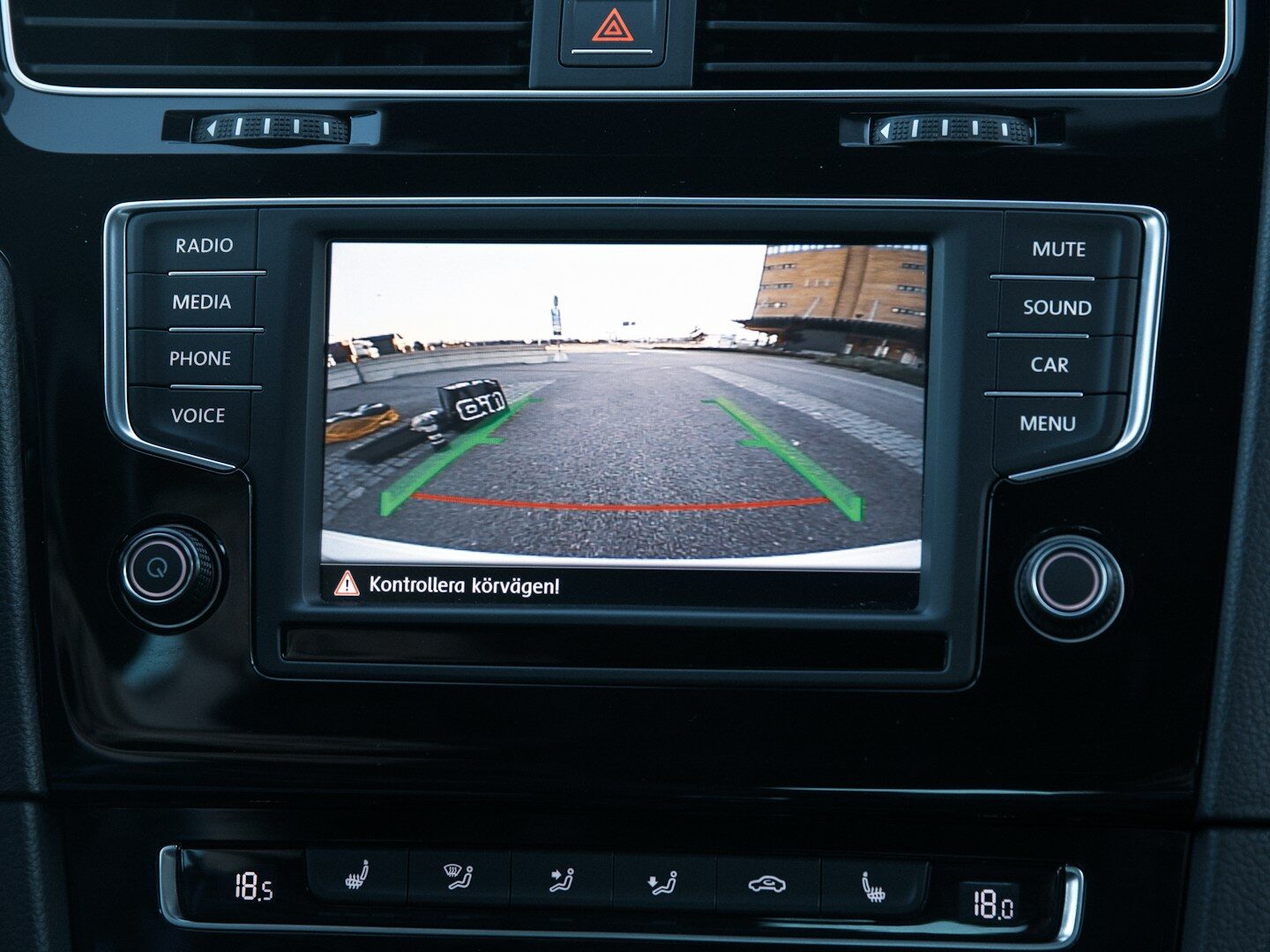
There is a precedent, and it is not encouraging if you are in a hurry. Rearview cameras followed nearly the same script: NHTSA added them to NCAP’s recommended list in 2013 and only made them mandatory on every new vehicle five years later, in 2018, more than a decade after Congress first ordered the agency to address backover deaths. If rear automatic braking follows that timeline, expect a voluntary badge for the rest of this decade and an actual requirement, if one ever arrives, sometime in the early 2030s.
And here is the uncomfortable part the camera mandate exposed: seeing a hazard and stopping for it are not the same skill. Every new car has had a rearview camera for years, and that is assuming the camera in question is actually working, yet pedestrian deaths have not gone down.
They have risen 72% since bottoming out in 2009, according to the Insurance Institute for Highway Safety, with more than 7,000 pedestrians killed in 2024 alone. A camera can show a driver exactly what is about to happen and still not stop it, because it depends on a person noticing, deciding, and reacting in well under a second. Automatic braking removes that human step entirely. IIHS has already measured what that is worth: vehicles equipped with pedestrian-detecting automatic braking are involved in 27% fewer pedestrian crashes than vehicles without it. The technology is not unproven. It has just been aimed in only one direction.
That divergence is the real story, and it is bigger than one filed comment. Overall U.S. traffic deaths just hit an eleven-year low. Cars have never been safer for the people riding inside them. They have rarely been more dangerous, relative to recent history, for the people standing outside them.
Pedestrian fatalities are the exception swimming against an otherwise improving trend, and vehicle geometry is a big reason why: taller hoods, thicker pillars, and shrinking rear glass on modern trucks and SUVs have made the space directly behind a vehicle one of the largest blind zones on the road, exactly where a small child is least visible and least able to get out of the way.
There is also a cost buried in this that nobody mentions at the press conference. Rear automatic braking does not run on the camera you already have. It needs radar or ultrasonic sensors mounted in the rear bumper fascia, wired into a controller that can brake faster than a person can. That is good news in a driveway and bad news in a parking lot.
A low-speed fender bender that used to mean a $400 bumper respray can now mean a sensor replacement and a mandatory recalibration, work that typically has to happen at a dealer or a shop with the right diagnostic equipment. Expect that cost to eventually show up in insurance premiums, the same way it already has for the front radar and camera systems behind adaptive cruise control and lane-keeping assist.
None of that means automakers will drag their feet. A five-star rating and an IIHS Top Safety Pick+ badge have become genuine marketing tools, the kind of thing a dealer prints on a window sticker and a shopper actually notices. A radar module that costs an automaker a few hundred dollars per vehicle is cheap compared to losing a safety-rating fight to a competitor. Voluntary or not, expect rear automatic braking to spread faster than regulation requires it to, the same way blind-spot monitoring and adaptive headlights did before either was legally mandatory.
This is not really a story about a new sensor bolted to a bumper. It is a story about how America writes its car safety rules: as an invitation first, and an obligation only after the invitation has been ignored long enough to become politically embarrassing. Consumer Reports is trying to shorten that gap. History suggests it will not shorten by much.
A star on a window sticker has never stopped a single car in reverse. For more than a decade, though, it has been the only thing that reliably got automakers to try.
Related Articles
- Congress Moves to Require AM Radio in All New Vehicles
- New Jersey Police Dressed Up As Bushes To Catch Texting Drivers