
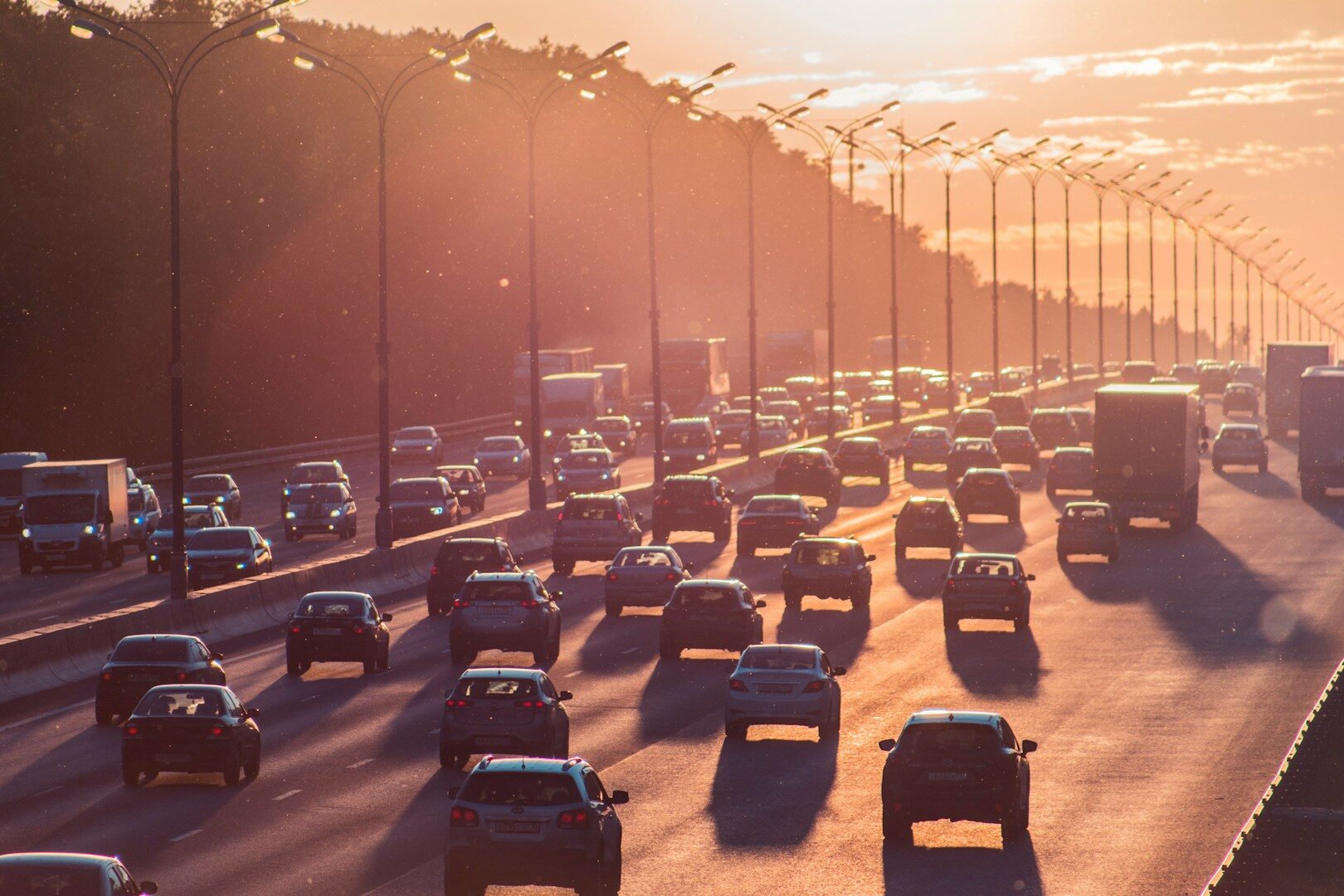
The Department of Transportation wants a victory lap. Traffic deaths fell 4.3% in the first three months of 2026, dropping to 7,770 — the lowest first-quarter total since 2015, according to NHTSA. The fatality rate, 0.99 deaths per 100 million vehicle miles traveled, is the lowest for any quarter since 2014. String enough quarters like that together and 2026 is on pace to be the fifth straight year American roads have gotten less deadly.
Garage-worthy EDC gear, on sale this week.
Good news, obviously. But the real story here isn’t that people suddenly learned to drive better.
Full-year 2025 fatalities landed at an estimated 36,640, the lowest total since 2019 and a 6.7% drop from 2024’s 39,254, NHTSA says. The fatality rate fell to 1.10 per 100 million miles traveled, the second-lowest ever recorded, according to the agency. Transportation Secretary Sean Duffy took the stage in April to credit “incredible law enforcement officers,” a crackdown on unqualified truck drivers, and a program with the almost-too-honest name Freedom Means Affordable Cars.
That last item is the one worth paying attention to.
Here’s a number that didn’t make many headlines: vehicle miles traveled actually rose in 2025, by roughly 29.8 billion miles, according to preliminary Federal Highway Administration data cited in NHTSA’s own release. Americans drove more and died less, in the same year. That combination only happens two ways. Either driving behavior improved dramatically in twelve months, or the vehicles absorbing everyone’s mistakes got dramatically better at it. The data points hard at door number two.
This is why safety researchers obsess over fatalities per 100 million vehicle miles traveled instead of the raw body count. A falling death toll can happen simply because people stopped driving — that’s exactly what happened in spring 2020. A falling rate while total miles driven keeps climbing is a much harder number to fake. It means the miles themselves got safer, one at a time.
So what actually made the miles safer? Start with what’s different about the cars. A mainstream sedan or crossover built in the last three or four years ships with automatic emergency braking, forward collision warning and blind spot monitoring as standard equipment, not an options-sheet luxury reserved for flagship trims. None of that existed on the median car in most driveways a decade ago. Every year that passes, more of that hardware ages into the national fleet, and fewer unequipped older cars remain on the road to crash. Duffy’s own framing gives the game away: an initiative built around making newer and safer cars cheaper to buy is, in plain terms, a safety strategy wearing an economic-policy costume. Getting a driver out of an old car and into a new one is a bigger lever than any seatbelt ad campaign will ever be.
There’s a catch, and it isn’t small. The government wants that fleet turnover to accelerate right as new vehicle prices have crossed a record $50,000 average and affordable used inventory keeps thinning out for buyers who can’t spend that kind of money. The safest new hardware on the market exists. It just isn’t cheap, and it isn’t evenly distributed. Buyers with strong credit cycle into AEB-equipped crossovers every few years. Everyone else holds on to what they’ve got, which means the safety gains driving this entire trend line are arriving unevenly across income brackets instead of all at once for everyone sharing the same road.
Here’s the line in NHTSA’s release that should have been the headline instead of a footnote: bicyclist deaths rose 4% to 1,148 last year, part of a longer climb that pushed the toll to its highest level in more than four decades back in 2023. Occupant deaths are falling toward record lows. Bicyclist deaths are climbing toward a record high. Those two lines moving in opposite directions, in the same report, in the same year, are not a coincidence. Every piece of technology driving the occupant numbers down — airbags, crumple zones, forward collision warning tuned to the car ahead of you — was engineered to protect the person inside the metal box. None of it was built primarily to protect the person outside it.
The industry has been here before, just moving in the other direction. U.S. traffic deaths spiked 10.8% in 2021 to 43,230, the worst single-year total since 2005, and NHTSA’s own researchers pointed to a specific behavioral cause: empty pandemic roads convinced some drivers that police were less likely to write tickets, and impairment behind the wheel crept up as more people drank or used drugs at home. That was a story about behavior. This one is a story about hardware quietly catching up to five years of habits that never fully reformed, which is also why states keep experimenting with court-ordered speed limiters bolted onto repeat offenders’ cars in Virginia and Illinois instead of waiting for driving culture to fix itself.
The stakes behind all of this go well beyond the fatality count. A 2023 NHTSA study put the direct cost of American crashes to taxpayers at $30 billion a year, $340 billion when the cost to society at large is included, and $1.37 trillion once quality-of-life losses are factored in. Every fraction of a point shaved off the fatality rate is worth real money, which is exactly why an administration eager to claim a win keeps reaching for this particular number.
It’s also why the recall system matters more than it gets credit for. Millions of older vehicles are still working through Takata airbag inflator repairs, including 225,000 Stellantis vehicles whose owners were told to park outside until fixed just months ago. The safest fleet in American history is still sharing the road with a meaningful population of unrepaired older cars capable of turning a survivable crash into a fatal one. Fleet turnover cuts both ways: it adds protected new vehicles at one end while genuinely dangerous older ones are still being flagged at the other.
None of this makes the 2026 numbers less real, or less worth noting. Roads getting safer, even for a subset of the people using them, is worth acknowledging. But the honest headline isn’t “Americans learned to drive.” It’s that a car built to survive a mistake has quietly become the norm rather than the exception, while nothing comparable has been built yet for the people walking or pedaling alongside it. A car crash has become a hardware problem for the person inside the vehicle, and a policy problem, still unsolved, for everyone standing next to it.