
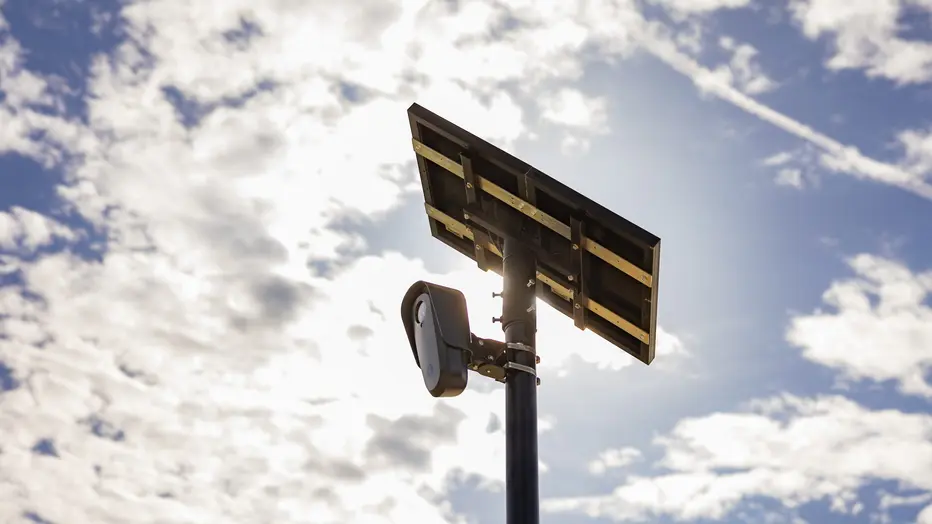
Automated license plate readers like those made by Flock Safety are marketed to police departments as a low-cost way to solve crimes and recover stolen cars, scanning tens of billions of plates a month and instantly flagging matches against hotlists. That scale comes with a cost: even a small error rate produces a steady stream of innocent drivers being pulled over, and in many cases held at gunpoint, because of a misread character or an uncorrected database entry. This piece is a companion to our running record of reported Flock misuse; the incidents below are mistakes rather than deliberate abuse.
Garage-worthy EDC gear, on sale this week.
The Cases
Plymouth, Minnesota — June 2026
Automotive journalist Joel Feder was tracked for two days and then boxed in by four squad cars outside a Kohl’s while driving a loaner Range Rover Sport. The trail led back to a stolen-plate report entered into the NCIC database in California that was missing two middle digits, which were printed smaller than the rest of the plate. Flock’s system matched on the shortened sequence, and the responding officers never checked the full plate against Flock’s own photo before moving in.
Scotts Bluff, Nebraska — June 2026
Within a week of the Plymouth incident, a second auto journalist driving a similarly plated loaner Range Rover was pulled over in Nebraska for the same underlying reason and detained for about an hour before being released.
Sherwood, Arkansas — February 2026
A camera misread a digit on an innocent couple’s plate and flagged it as stolen. Officers ordered the couple out at gunpoint while their six-week-old baby remained alone in the back seat.
Cherry Hills, Colorado — April 2026
A driver was repeatedly pulled over after officers mistakenly entered his own plate onto a Flock hotlist instead of a suspect’s.
Volusia County, Florida — April 2026
A Flock capture led officers to misidentify a driver’s car as one linked to a fatal accident; he spent 13 days in jail before the error was found.
Boulder County, Colorado — December 2025
Another Colorado driver was repeatedly stopped after her own plate was mistakenly added to a hotlist.
San Diego, California — November 2025
Officers searching for a red Alfa Romeo tied to an attempted carjacking relied on Flock’s vehicle-appearance matching, which flagged a different red Alfa Romeo five miles from the crime scene. A passenger in that car spent nearly a month in jail before the mistake was caught.
Denver, Colorado — September 2025
An officer misread a set of Flock captures and wrongly attributed a string of thefts to an innocent woman.
Jefferson County, Colorado — August 2025
A third Colorado driver was repeatedly pulled over after her plate was mistakenly hotlisted.
Redmond, Washington — August 2025
A data-linking error connected a suspect’s vehicle to his innocent father, leading officers to detain the wrong man.
Lafayette, Indiana — July 2024
A camera misread led to an innocent driver being detained at gunpoint.
Morristown, Tennessee — June 2024
A camera read an “O” as a “0,” leading officers to detain two grandparents at gunpoint in front of their three-year-old granddaughter.
North Myrtle Beach, South Carolina — May 2024
Officers misidentified a vehicle from an alert and detained an innocent teenager at gunpoint.
Toledo, Ohio — April 2024
A camera misread a “7” as a “2.” Officers detained the driver at gunpoint, deployed a police dog against him, and held him for several hours.
York County, South Carolina — February 2024 and July 2026
An innocent motorist was held at gunpoint in 2024 after a misread character on his plate, which the sheriff’s office attributed to a tinted plate cover. A second York County driver, Steven Melvin, is now suing after a similar misread of a single letter this year led to another gunpoint stop.
Sedgwick County, Kansas — October 2023
A camera failed to distinguish a temporary paper plate from a permanent one, leading deputies to detain an innocent couple at gunpoint.
Detroit, Michigan — September 2023
Officers misread plate data and detained an innocent woman at gunpoint, placed her autistic child in a squad car, and impounded her vehicle for weeks.
Houston, Texas — August 2023
Officers misread a stolen-vehicle alert and detained two innocent men at gunpoint.
Espanola, New Mexico — July 2023
In one incident that month, a misread digit led to two sisters being detained at gunpoint; in a separate incident days later, officers entered incorrect plate data themselves and detained an innocent teenager at gunpoint.
Fayetteville, North Carolina — July 2023
Officers misread plate-reader data and detained an innocent woman at gunpoint.
Jackson Township, Ohio — March 2023
Officers failed to remove a resolved case’s plate from an active hotlist, leading to an innocent driver’s stop.
Charlotte, North Carolina — July 2022
Incorrect information entered into a plate-reader system led to an innocent woman’s arrest.
Greenville, South Carolina — February 2022
Officers failed to clear a recovered rental car from a hotlist, leading to two innocent women being detained.
Atherton, California — April 2021
Dirt obscuring a plate caused a misread that led to a gunpoint detention.
Aurora, Colorado — August 2020
A misread minivan plate led officers to detain a woman and four children at gunpoint; the city later paid a reported $1.9 million settlement over the incident.
Hercules, California — November 2018
Officers never updated a hotlist after a stolen rental car was recovered, leading a reader to flag it again and two brothers to be detained at gunpoint.
The Pattern
These cases split roughly into two failure modes: outright machine misreads, where character recognition confuses similar-looking letters and numbers or gets thrown off by dirt or tinting, and human error, where officers enter incorrect data or forget to clear a resolved hotlist. Flock has said its cameras are roughly 99% accurate, but at a claimed scale of over 20 billion reads a month, that still implies hundreds of millions of misreads. It’s a different problem from the deliberate misuse we’ve tracked separately, including officers who used the system to stalk exes, but it stems from the same root issue: audit trails and accuracy checks that only work if someone is actively watching them.
This account draws on reporting from The Drive and the Institute for Justice, current as of mid-July 2026. Given how quickly new cases are surfacing, this list is very likely incomplete.