
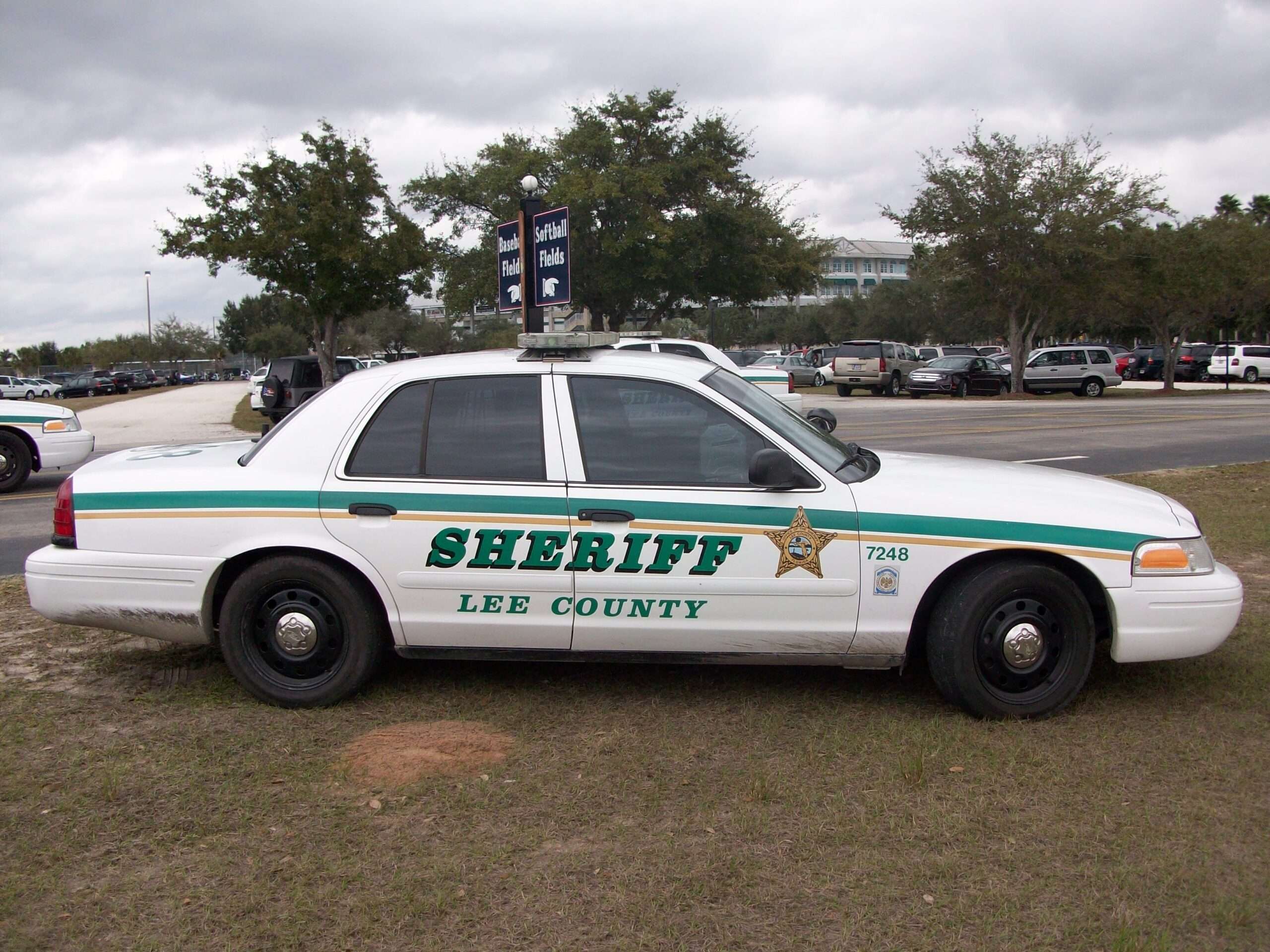
A Tesla hit a light pole and two trees inside the Miromar Lakes community in Lee County, Florida, a little after 9:30 p.m. on Sunday, Sept. 20, and the first call to 911 came from the driver’s iPhone without anyone dialing it. When Lee County Sheriff’s deputies arrived, the debris had been cleaned up and the driver was gone, according to the arrest report as described by WESH. Deputies put the damage at about $20,000.
Deputies identified the driver as Christopher Brewer. The Lee County jail booking record shows a Christopher Brewer, 23, booked at 5:06 a.m. on Sept. 21 on a single charge listed as hit and run involving an unattended vehicle or property without leaving identification. He posted a $150 cash bond and was released at 8:54 a.m. The charge is an accusation, and Brewer has not commented publicly.
According to the report, Brewer and another person told Miromar Lakes security that he was going to the hospital. Deputies later learned from a woman that he was at her house and had not gone to a hospital, WESH reported. The public account of the report does not say who cleared away the debris.
What Brewer’s iPhone Sent to Dispatchers
Crash Detection comes on the iPhone 14 and later models. Apple’s support page for the feature lays out the sequence after the phone decides it has been in a severe crash: an alarm and an on-screen alert for 10 seconds, then, if nobody responds, a 30-second countdown, then a call to emergency services. WESH put the window at 30 seconds; Apple’s own numbers add up to about 40. Once the call connects, the phone plays a looped recording telling the dispatcher that the device detected a severe car crash and its owner is unresponsive, along with the phone’s estimated latitude and longitude. Apple says the location goes out whether or not Location Services is turned on.
Within a minute or so of the impact, then, the sheriff’s office had a time, a set of coordinates, and a phone that deputies say belonged to Brewer. The phone can’t say who was driving or whether that person stuck around. It’s a phone, not a witness. It gave deputies a crash to go look at and an owner to go find, and by early the next morning Brewer was in the county jail.
Florida’s Two Duties After Hitting Unattended Property
The charge description on Brewer’s booking record matches the language of Section 316.063 of the Florida Statutes, which covers crashes that damage an unattended vehicle “or other property.” A light pole and two trees qualify. The statute gives the driver two jobs. The first is to stop immediately and either find the owner and hand over a name, address and the car’s registration number, or securely post a written note with the same information somewhere conspicuous. The second is to “without unnecessary delay notify the nearest office of a duly authorized police authority.”
Failing to do so is a second-degree misdemeanor, which carries up to 60 days in jail under Section 775.082 and a fine of up to $500 under Section 775.083. A conviction also costs license points: Section 322.27 assigns six points for leaving the scene of a crash with more than $50 in property damage, and 12 points inside 12 months brings a suspension of up to 30 days.
Police did hear about the Miromar Lakes crash, from the phone. But the statute puts the duty on “the driver,” and the recording Apple’s phones play reports a crash and a location, not a name, an address or a registration number. Those three items are what the owner-notice half of the law is built around, and a phone that tells dispatchers its owner is unresponsive isn’t supplying them.
The security desk is the other open question. If the community owns the pole and trees, Brewer’s side could argue that telling Miromar Lakes security amounted to notice to the owner. The public account of the report doesn’t say who owns the property or whether Brewer gave security his name, address and registration number. Even if that half went his way, the duty to notify police is separate.
Florida Already Lets a Driverless Car Make That Call
Subsection (4) of the same statute, added in 2019 as Florida wrote its autonomous-vehicle rules, says the section does not apply to a fully autonomous vehicle with its automated driving system engaged if the owner promptly reports the crash to police “or if the fully autonomous vehicle has the capability of alerting a law enforcement agency to the crash.”
Read as written, a robotaxi that clips a light pole and automatically alerts police has met Florida’s requirement with no one stopping at all. A human driver whose phone does the same thing hasn’t. The robot gets a pass the human doesn’t. My read is that the Legislature drew the line on accountability: a driverless car belongs to a fleet operator that can be identified from the vehicle itself, while the human-driver rule exists to make the responsible person identify themselves. That distinction will get more traffic as services like Waymo, now in 14 cities, keep expanding.
A $500 Maximum Fine Against a $20,000 Repair Estimate
The criminal case and the repair bill run on separate tracks. Florida’s statute for crashes involving attended vehicles or property, Section 316.061, includes a sentence letting a judge order a convicted driver who caused the crash to pay restitution for damage done by the car. Section 316.063, the unattended-property law, has no such sentence. Any restitution order would have to come through Florida’s general restitution statute, which covers losses caused “directly or indirectly by the defendant’s offense,” and the offense charged here is failing to stop and notify, not the collision.
That leaves insurance. Under Section 324.022, Florida requires the owner or operator of every registered vehicle to be able to pay $10,000 for damage to other people’s property in any one crash. A driver carrying only that minimum would cover about half of a $20,000 estimate, with the rest left to a civil claim.
Property-Only Crashes Make Up Most of Florida’s Hit-and-Runs
The charge against Brewer falls in the most common category of hit-and-run in the state. Of Florida’s 97,519 hit-and-run crashes in 2024, 81,205 involved property damage only, according to a February 2025 release from the Florida Department of Highway Safety and Motor Vehicles, which lists parked cars, mailboxes, fences and landscaping as typical examples. The department’s hit-and-run page adds that the duty to stop applies on private property as well as public roads, which covers a crash inside a residential community. In the 2025 release, Charlie Vazquez, president of the Florida Police Chiefs Association, addressed drivers who leave: “You’re betting we won’t find you and we’re betting we will.”
More of the evidence at a crash scene now reports itself. The Auto Wire has covered Toyota crash data flowing to State Farm and a Georgia car theft cracked with help from AirPods and a Tesla’s cameras. In Lee County, the device that reported the crash was the driver’s own phone.
Lee County Court Hearing Set for Oct. 5
Brewer’s case, No. 26CT504281, is set for a hearing in Lee County Court at 8 a.m. on Oct. 5, according to the jail record. Nothing in the public record yet shows how he intends to answer the charge.
For other Florida drivers, the statute’s text settles the question the case raises. The duty to stop, identify yourself to the owner or leave a note, and notify police belongs to the driver, and nothing in Section 316.063 says a phone’s automatic call does any of that. Apple’s alert gives a driver who is able to respond the option to dismiss it. Letting it go through tells dispatchers where the crash is, but under the law the name, address and registration number still have to come from the person who was driving.
So pick a side: if your phone already called 911 and told dispatchers exactly where the crash happened, should that count as notifying police the way it does for a driverless car, or is it still on the human behind the wheel to stick around and own it?