
The headline number in J.D. Power and GlobalData’s September forecast, released Sept. 24, is $821. That’s the average monthly payment on a new-vehicle loan this month, up 3.2% from a year ago and the highest September figure J.D. Power has recorded.
A record car payment usually just means prices went up. This time they didn’t really move, and interest rates went down. So where did the extra money come from?
The three numbers that shouldn’t add up to a record
Next to the forecast’s other affordability figures, the $821 looks odd:
- Average transaction price: $45,915, up just 0.7% from September 2025.
- Average interest rate: 6.66%, down four basis points and the lowest September rate since 2022.
- Loans of 84 months or longer: 13.9% of new-vehicle loans, up 2 percentage points from a year ago.
Every one of those should push payments flat or lower. A slightly higher price paired with a slightly lower rate is close to a wash. And stretching a loan to seven years is the oldest trick in the finance office for shrinking a monthly bill. Yet the average payment still climbed about $25 from roughly $796 last September.
When price, rate, and term can’t explain a payment increase, what’s left is the amount being borrowed. The forecast doesn’t publish average amount financed or down payment, so the exact split isn’t knowable from this release. But the other numbers in it point in the same direction: buyers are putting less of their own money into the deal, rolling more old debt into the new one, or both.

What the finance-office data says about who’s borrowing
Two other lines in the forecast fill in the picture.
Negative equity: 29.4% of trade-ins this month carry more loan than the vehicle is worth, up 0.3 points from a year ago. When a buyer trades in an underwater car, that leftover balance usually gets folded into the new loan. The new car costs the same; the loan doesn’t.
Subprime share: Subprime buyers make up 11.2% of new-vehicle financing, up 2.2 points from last year. Subprime borrowers pay higher rates than the 6.66% average, and a larger subprime slice raises the payment math even as the headline rate dips.
Add in the 84-month loans: more buyers are stretching the term to keep the payment in reach, and the payment is still setting records. That’s not a sign of a comfortable buyer.
What a longer loan really costs
Plenty of deals right now lean on the 84-month loan. Take a $40,000 loan at the forecast’s average 6.66% rate:
- 60 months: about $786 a month, roughly $7,140 in total interest.
- 72 months: about $675 a month, roughly $8,630 in total interest.
- 84 months: about $597 a month, roughly $10,160 in total interest.
Going from five years to seven cuts the monthly bill by close to $190. It also adds about $3,000 in interest and keeps the buyer in the loan two years longer. Cars lose value fastest early, so a longer loan also makes it more likely the owner will be underwater at trade-in time. That feeds right back into the 29.4% negative-equity number the next time they shop.
These are illustrative figures calculated from the forecast’s average rate. Your rate depends on your credit, lender, and term.
Why the price number looks lower than you’ve seen elsewhere
If $45,915 seems low, that’s because other trackers count differently. Cox Automotive’s Kelley Blue Book put the August average transaction price at $50,089, up 1.9% year over year. The two firms use different data sets and methods, so their figures aren’t interchangeable. But they agree on the part that matters here: new-vehicle prices are rising slowly right now, not sharply. Kelley Blue Book also found incentives slipping to 6.5% of the transaction price in August from 7.2% a year earlier.
J.D. Power’s numbers show a split inside incentives. Average discounts on gas and hybrid models jumped 31.6% to $3,319 per vehicle. EV incentives fell 21.7% to $8,829. The overall figure is $3,574 per unit, or 6.9% of MSRP.
The EV and hybrid swing is part of the payment story
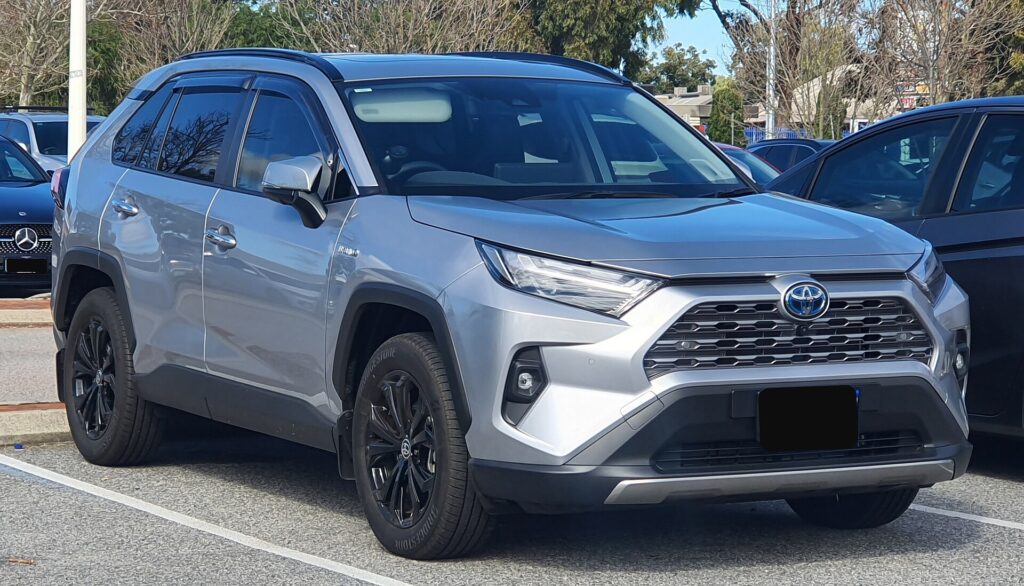
“EV share of retail sales has fallen 6.5 percentage points to 7.9% following the elimination of federal EV credits,” said Thomas King, president of OEM solutions at J.D. Power. Hybrids moved the other way, reaching 17.0% of retail sales, up 3.5 points.
That matters for payments in a less obvious way. Buyers who a year ago might have netted a large tax credit or lease cash on an EV are now shopping gas and hybrid models. Even after a 31.6% jump, the average discount there is $3,319, well under the $8,829 on EVs. Fewer dollars off at signing means more dollars financed.
What this means for the industry
Consumers are on pace to spend $48.7 billion on new vehicles at retail this month, up 6.6% from a year ago. Retail unit sales, adjusted for selling days, are down 0.2%. Total sales, which include fleet, are forecast at 1,330,100 units, up 2.6%.
So about the same number of retail buyers are spending noticeably more money, and they’re financing it over longer periods with less cushion. For automakers and dealers, that’s a revenue number that looks healthy. For lenders, a rising share of long, subprime, and underwater loans is the kind of mix that shows up in delinquency data later. Our recent look at the Credit Acceptance settlement shows what happens at the far end of that spectrum.
It also connects to the shifting brand picture. Cox Automotive expects Detroit 3 market share to fall to a record low this quarter as buyers move toward hybrids and passenger cars, and Toyota’s tariff costs are one more pressure that could reach showroom prices.
What buyers should do with this
- Shop the total, not the payment. A dealer can hit almost any monthly number by adding months. Ask for the out-the-door price and total interest before you talk about monthly figures.
- Know your trade-in balance. If you owe more than the car is worth, find out by how much before you get to the dealership. Rolling it into a new 84-month loan is how negative equity compounds.
- Get outside financing first. A pre-approval from a bank or credit union gives you a rate to beat. The average rate is lower than it’s been in a few Septembers, but “average” hides a wide range.
- Look at the full cost of ownership. Insurance, fuel, and depreciation all move with the vehicle you pick. AAA’s latest numbers, which we broke down in our cost-to-own analysis, show how much those add beyond the loan.
- Don’t rule out used. Used values dipped in September for the first time this year, which may help some buyers keep the amount financed down.
A borrowing story
With prices barely moving and rates easing, the $821 payment comes down to borrowing. The details underneath it (longer terms, more subprime loans, more underwater trade-ins, smaller discounts on the vehicles people are now buying) suggest many buyers are reaching further to get the same car.
Sources: J.D. Power–GlobalData U.S. Automotive Forecast, September 2026; Cox Automotive/Kelley Blue Book August 2026 ATP report; Cox Automotive Q3/September 2026 sales forecast.
Would you stretch a new-car loan to 84 months to get the payment you want, or is that a line you won’t cross? Share your take.