
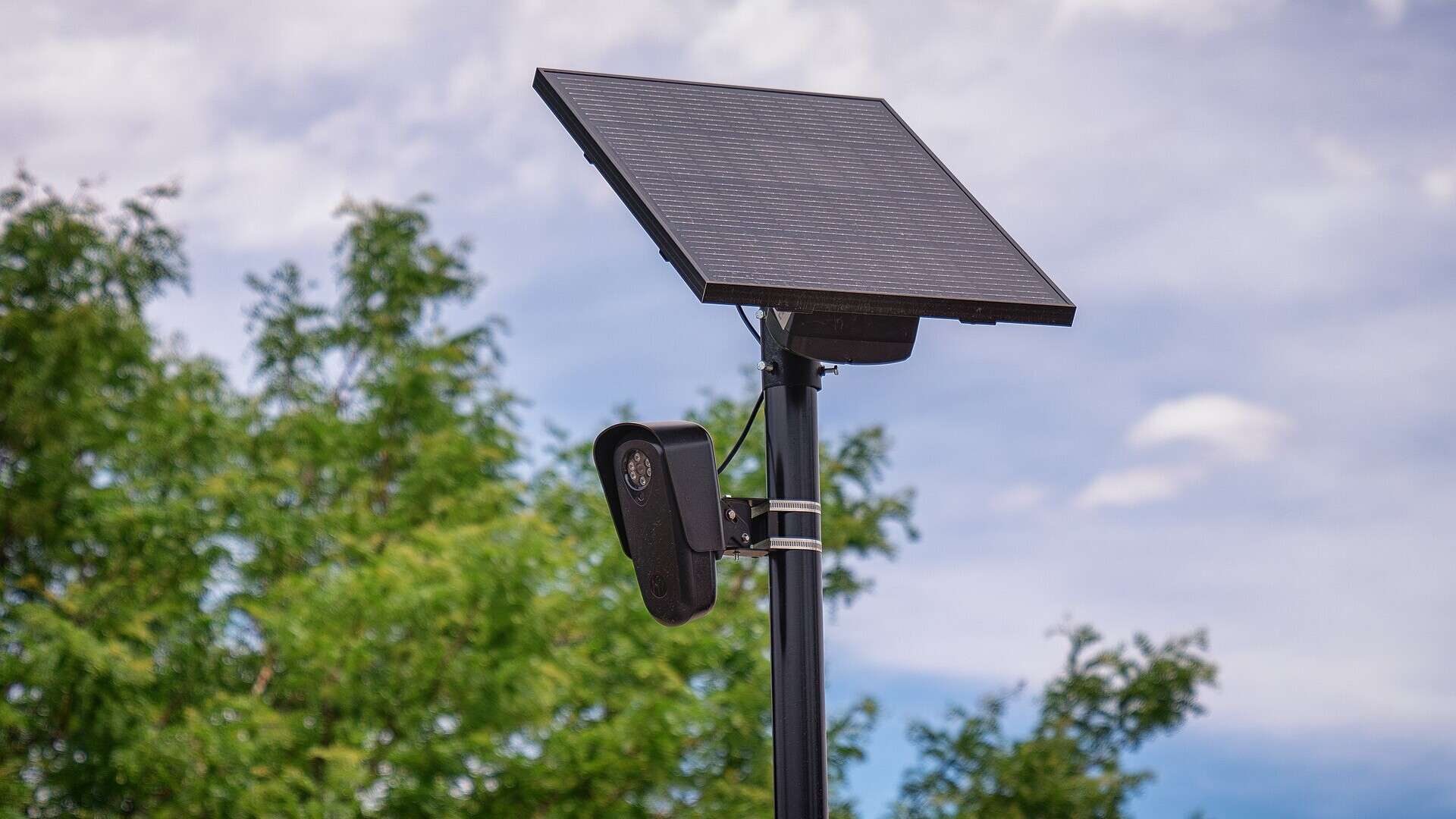
On the evening of May 10, a Tulsa County sheriff’s deputy typed a California license plate into two plate-reader databases, and the software asked him to give a reason. The reasons on record are “traffic violation” and “investigation.” According to the federal judge who later reviewed the stop, the only thing the deputy knew about the car at that moment was the state on its plate.
On Oct. 1, U.S. District Judge Sara E. Hill of the Northern District of Oklahoma ruled that the lookup was a search under the Fourth Amendment, that it was done without a warrant, and that the evidence it led to cannot be used. The case is United States v. Melisa Susan Kyle, No. 26-CR-00189-SEH. Three other federal judges in Oklahoma, one of them in the same district, had reached the opposite result over the previous 14 months.
I read the 38-page order. For drivers, the weight of the order sits in the search screen behind the cameras. Every car on the road carries a state-issued identifier that the law requires it to display, and networks of plate readers now turn that identifier into a travel log that a deputy can pull up from a patrol car in seconds. Judge Hill’s order says a month of that log is private enough to need a warrant. It also shows how little the industry’s main safeguard, a box asking the officer to state a reason, did to stop a search based on nothing more than where a car was registered.
A California plate on I-44 and 50 hits in a month
The defense’s motion to suppress, filed Aug. 3 by the federal public defender’s office, puts the stop at about 6:17 p.m. on Interstate 44 in eastern Tulsa. The deputy, Freddie Alaniz, was parked watching traffic when a Mazda SUV with California plates went by. The court found he pulled onto the highway to follow it “for no apparent reason other than the fact that it had a California license plate.”
He then ran the plate through Flock and VehicleManager, the second of which the defense identifies as Motorola Solutions’ Vigilant plate-reader analytics product. The order says Alaniz had access to at least 30 days of vehicle location data from many states, though not from California. The results showed the Mazda had made a trip from Locust Grove, Oklahoma, toward the California-Arizona border. In the judge’s words, the search “provided him with more than 50 individual records of Kyle’s whereabouts across the country for an entire month.”
Only after that did Alaniz record what he considered traffic violations: lane changes without enough signaling, and following too closely. The court accepted the second one. The driver left about 30 feet between her car and the one ahead, which Hill found was an objectively reasonable basis for a stop under Oklahoma’s following-distance statute.
The judge found the stop itself was legal and the detention that followed was not. Alaniz returned Kyle’s license, issued a warning and kept her there anyway. Hill went through the factors the government offered to justify the extra time: a short trip to California, a lot of luggage, a cigarette, nervousness, the fact that the Mazda was a rental, and a marijuana admission that came only after the detention had already become unlawful. Of the rental car, the order says, “The Court does not give this any weight in the reasonable suspicion calculus.” A drug dog then alerted, and the search ended with Kyle’s arrest. NonDoc, an Oklahoma City news outlet, reported that she was charged May 19 with possession of methamphetamine with intent to distribute.
Hill suppressed everything obtained after the stop was unlawfully extended and after the plate-reader search began. The extension finding alone would have been enough to suppress what the search of the car turned up. She ruled on the database question anyway, and that part of the order travels well beyond one traffic stop.
From a 1983 beeper to this year’s Google case
The government’s argument was the one police have relied on for four decades. A plate is displayed on a public road, anyone can see it, so a driver has no reasonable expectation of privacy in where it goes. That position comes from United States v. Knotts, the 1983 Supreme Court case in which officers used a radio beeper hidden in a container to follow one car to a cabin. The court held that a person traveling on public roads has “no reasonable expectation of privacy in his movements from one place to another.”
Hill distinguished Knotts as a single beeper and “much less sophisticated technology,” and wrote that lower courts need to reexamine its result. She built instead on two newer decisions about phones. In Carpenter v. United States in 2018, the Supreme Court required a warrant for historical cell-site records. On June 29 of this year, in Chatrie v. United States, a majority led by Justice Elena Kagan held that police conducted a Fourth Amendment search when they acquired a suspect’s location data from Google, because a person has a reasonable expectation of privacy in that information.
Chatrie is three months old, and the Kyle order applies its reasoning to a license plate. The step from phone to plate is shorter than it looks. A phone can be turned off or left at home. A plate cannot be removed while driving, and state laws require it to be displayed and legible, so a car on the road broadcasts its identity to every camera it passes. A single photograph of a plate shows where a car was at one moment. Hundreds of networked cameras, with a search box on top, show where it has been for a month.
Hill’s answer to the government’s point that this data is all in public view rests on scale. She acknowledged that a dedicated team of officers could follow one car for a month and lawfully record the same information. The databases do it for every car at once, and no particular vehicle has to be under suspicion first. “This is a type of indiscriminate mass surveillance,” she wrote, and later: “It is not too much to draw the line at indiscriminate mass surveillance.”
The reason field didn’t screen this search
Plate-reader companies answer privacy complaints by pointing to audit trails. Flock’s data privacy page says “Searches require a public-safety reason,” and that the reason is recorded with each search so agencies can review how the system is used. The Kyle record shows what that requirement amounts to on the road. Both systems asked Alaniz for a reason. He typed “traffic violation” and “investigation.” The order finds that “[a]t the time of those queries, all Alaniz knew was that the vehicle had a California license plate.”
The video citations in the order point the same way. Hill cites the deputy’s body camera showing the query result at 18:19:32 and his dash camera capturing the lane changes and following distance at 18:19:48. Those are two different cameras, and the order does not say their clocks were synchronized, so the 16-second gap is The Auto Wire’s comparison, not a court finding. The court’s own finding about what Alaniz knew does not depend on it.
A reason field is a text box. The order describes no check on whether the stated reason existed, and no requirement for a case number or a supervisor’s approval before a month of travel history appeared on the screen. An audit log can catch misuse afterward, if someone reads it. Here the reader was a federal public defender, months later, working a drug case.
Retention is the other variable. Flock’s privacy page says that in most communities its images are deleted after seven days unless local law says otherwise. Alaniz, working across two vendors’ systems, could see at least 30 days. How far back a deputy can look depends on contracts, vendor settings and state law, not on any federal limit. A bill from Sen. Josh Hawley would cap plate data at 10 days; it is a proposal, not law.
Rentals and out-of-state plates fit the profile
Kyle was driving a rental, and the plate came with the car. The same is true of anyone who just moved and hasn’t re-registered, a student driving a parent’s car from another state, or a buyer driving home a vehicle bought across a state line. In this case, a California plate on an Oklahoma interstate was enough to start a tail and a month-long location search. The order found no other reason for either.
Database hits can also be wrong, which raises the cost of searching first and asking questions later. The Auto Wire has reported on a woman who spent 13 days in jail after a Flock camera helped put her there, until photos of her undamaged Dodge Durango got her out.
Oklahoma’s federal courts now disagree, and the Tenth Circuit hasn’t ruled
Hill’s order acknowledges that she is outnumbered in her own state. It lists three Oklahoma federal decisions holding that police use of plate-reader data is not a search: United States v. Acosta, from her own Northern District, on Aug. 22, 2025; United States v. Brown, from the Western District, on Aug. 25, 2025; and United States v. Schoggins, from the Eastern District, on Jan. 28, 2026. She also wrote that “Neither the Tenth Circuit nor the Supreme Court have decided whether law enforcement’s use of ALPR technology is a search for Fourth Amendment purposes.”
For now, then, a driver’s protection from a warrantless 30-day plate search in northeastern Oklahoma depends on which judge in the Tulsa federal courthouse draws the case. That kind of split is what appeals courts exist to settle. A Tenth Circuit ruling would bind federal courts in Oklahoma, Kansas, Colorado, New Mexico, Utah and Wyoming.
The U.S. Attorney’s Office told FOX23 it is reviewing the decision and evaluating next steps, that the system remains in use, and that the ruling is limited to the specific facts of this case. That last point is partly right. The order turns on a month-long, multistate history pulled from a single query, and it does not say a glance at whether a plate is stolen requires a warrant. But the reasoning, built on Chatrie, does not depend on anything unusual about Kyle.
Federal law gives the government 30 days from a suppression order to appeal, under 18 U.S.C. § 3731, which puts the decision point around the end of October. If prosecutors appeal, the Tenth Circuit will have to decide whether a month of plate-reader history belongs in the same category as a month of phone location data. If they drop the appeal, Hill’s order stands as a district-court opinion that no other judge has to follow, and the databases keep running exactly as they did on May 10.
Should police need a warrant before pulling a month of your car’s plate-reader history, or is anything your car does on a public road fair game?