
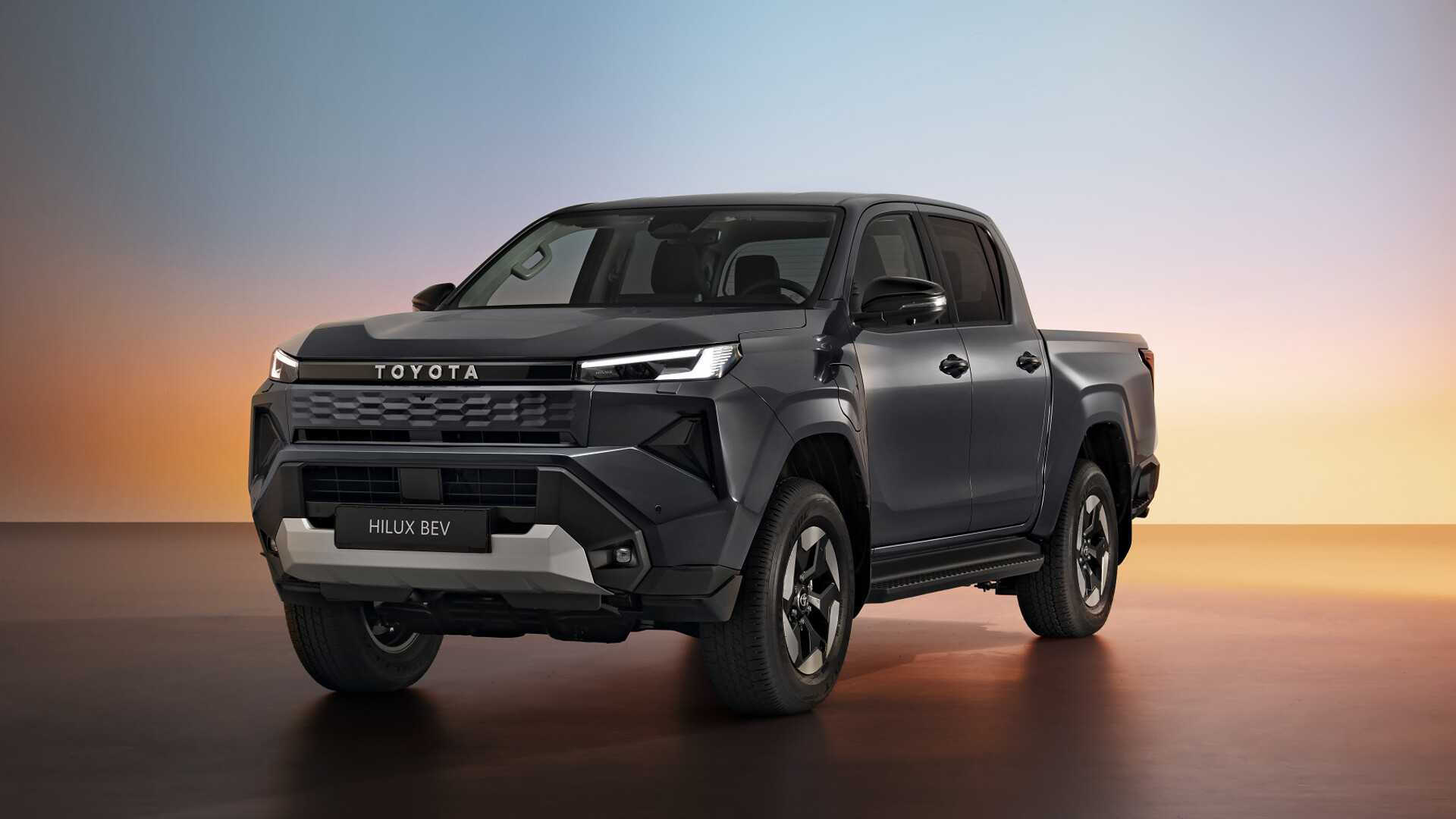
Argentina’s government has approved a 30-year tax and customs deal for a Toyota vehicle that Toyota has not named, priced, or formally committed to building. On Sept. 30, the evaluation committee for the country’s large-investment incentive regime, known as RIGI, accepted Toyota Argentina’s application for a project to produce “un vehículo electrificado” at its Zárate plant outside Buenos Aires. Toyota’s own statement that day said the approval “permite avanzar en el proceso de aprobación final por parte de Toyota,” meaning the company’s final sign-off is still to come.
That gap matters more than the dollar figure. Argentina has locked in the terms. Toyota still holds the decision on what rolls down the line, and the rules it qualified under let it choose a battery-electric pickup, a hybrid, or both. My read of the documents is that this deal protects Toyota’s Latin American export base first and makes an EV possible second.
What the committee approved, and the two numbers attached to it
Economy Minister Luis Caputo announced the approval on X, putting the investment at USD 1.341 billion and calling it “la inversión más grande de la historia en la industria automotriz argentina,” the largest in the history of the country’s auto industry. He described a new plant for “un vehículo 100% electrificado, tecnología hoy no fabricada en el país,” and said the project would export USD 1.28 billion a year, close to 70% of its output. He also projected more than 3,600 jobs during construction and more than 2,600 once the plant runs, direct and indirect combined.
Toyota’s release uses a rounder and more careful figure: an “inversión estimada” of USD 1.3 billion. It names no model, gives no start date, and says details on the timing of investment decisions and future production plans will be announced later. If Caputo’s export numbers hold, they imply a plant producing about $1.8 billion worth of vehicles a year. That is The Auto Wire’s arithmetic on the government’s figures, not a number either side has published.
Buenos Aires daily La Nación has reported that the vehicle is the ninth-generation Hilux, in battery-electric and hybrid versions, with the battery truck aimed first at mining and industrial customers who run fixed routes and can charge at a base. Toyota has not confirmed that.
“Electrificado” covers hybrids, and the rules allow them
Toyota Argentina keeps the two words apart. In a June 9 release, the company described its “line-up de electrificados,” which includes a plug-in hybrid RAV4, and separately called the imported bZ4X “su primer vehículo 100% eléctrico.” Electrified, in Toyota’s usage, is the umbrella. Eléctrico is the battery car. Caputo’s phrase, “100% electrificado,” borrows a word from each column, and Toyota’s own release on the approval uses only the umbrella term.
The regulation is just as broad. Carmaking does not appear among the sectors listed in the RIGI law itself. Automakers got in through the technology category in the implementing rule, Decree 749/2024, which covers “movilidad en base a nuevas tecnologías de motorización y tecnologías de transición energética.” That wording names new propulsion technology and stops there. It does not require a battery-only drivetrain, so a hybrid Hilux could qualify on the same terms as an electric one.
The terms are generous. According to the government’s investment-promotion summary, RIGI projects pay a 25% corporate income tax instead of 35%, get accelerated depreciation, import capital goods, spare parts, and components free of duty, stop paying export duties after three years, and receive 30 years of regulatory stability. The minimum investment is $200 million. Toyota’s project is more than six times that.
The Hilux’s towing figures explain why Toyota would want both options
In Argentina the Hilux is mostly a work tool. Toyota Argentina’s 2025 year-end report says the truck held 40% of corporate fleet sales among midsize pickups, 63% of the oil and gas segment, and 53% of agriculture. Those buyers tow trailers, carry heavy loads, and drive long distances between fuel stops.
Toyota’s European specifications for the new Hilux show the trade-off. The battery-electric version uses a 59.2 kWh pack, is rated at about 240 km (149 miles) on the WLTP cycle, and is quoted at roughly 715 kg (1,576 lb) of payload and 1,600 kg (3,527 lb) of towing. The 48-volt hybrid in the same lineup carries about one tonne and tows up to 3,500 kg (7,716 lb) braked. We covered that gap in detail last month. For a farm or oilfield buyer, the battery truck can tow less than half what the hybrid can.
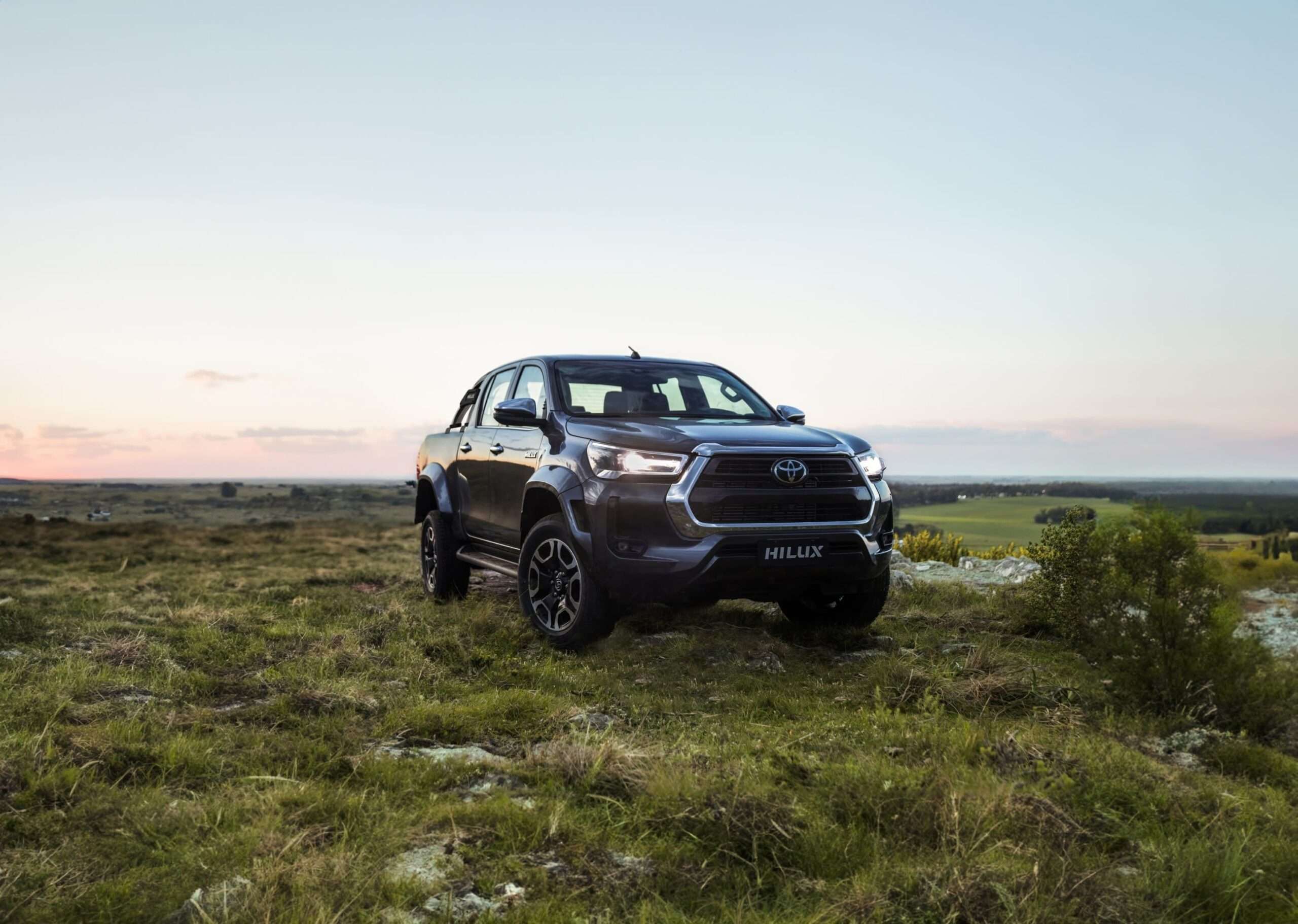
That is why a tax deal written for “electrified” production is worth more to Toyota than one limited to battery trucks. A mine with a charging depot can run an electric Hilux. A ranch three hours from the nearest fast charger will want a hybrid or a diesel. Toyota is already hedging in other markets: the November 2025 global launch of the ninth-generation truck paired the battery model with diesel versions, and a fuel-cell Hilux is due in 2028 for Europe and Oceania.
Zárate is an export plant, and the deal protects that
Toyota built 180,352 Hilux, SW4, and Hiace units at Zárate in 2025 and exported 140,768 of them to 22 countries, according to the company’s year-end report. That is 78% of output by my count. Toyota says it accounted for more than half of Argentina’s vehicle exports and close to 5% of everything the country exported. The plant has run three shifts for three straight years.
Pickup programs run on long cycles. In 2005, Toyota made what it calls the largest investment in the industry’s history up to that point, to build the global IMV platform behind the seventh-generation Hilux at Zárate. The ninth generation arrived 20 years later. A 30-year stability guarantee covers the next generation and part of the one after it. For a company that has absorbed a $9 billion tariff bill in the United States, written protection against future tax and trade changes is worth real money.
On the same day, Argentina made imported EVs cheaper to bring in
Also on Sept. 30, the government published Decree 1128/2026, which raised the price ceiling for vehicles that can enter under its zero-tariff import quota. Battery-electric cars can now be valued up to USD 35,000 FOB, up from USD 16,000. Conventional and plug-in hybrids rose to USD 18,000. Mild hybrids stay at USD 16,000.
The government’s own figures show how quickly that door has been used. Hybrid and electric vehicles took 21.1% of the market in the first seven months of 2026, up from 4.4% a year earlier, and 72% of those units came in under the zero-tariff regime. Of the 100,000 units allotted for 2025 and 2026, 68,792 had arrived, spread across 58 models from 29 brands. The government does not break the imports out by country of origin.
The regional picture is clearer. BYD opened its plant in Camaçari, Brazil in October 2025 with initial capacity of 150,000 vehicles a year and a stated next phase of 300,000, and it claimed 76.36% of Brazil’s electric-car sales for the year to date. Its Shark plug-in hybrid pickup went on sale in Argentina in April at USD 59,990, according to Ámbito. It competes in the Hilux’s segment. Chinese carmakers’ factories outside China do not always arrive on schedule, but the one in Brazil is running.
Argentina is now doing two things at once. It lets imported electrified cars in duty-free to push prices down for local buyers today, and it offers decades of tax certainty to a manufacturer that will build electrified vehicles at home and ship most of them abroad. For Toyota, the second policy matters more than the first. Most of what Zárate builds is sold in neighboring countries, where it now competes with Chinese brands, one of which builds cars in Brazil.
Toyota’s final decision and the drivetrain mix come next
The first milestone is Toyota’s final investment decision and the model announcement that comes with it. The second is the drivetrain mix. Caputo says vehicles like this are not built in Argentina today, so either version would be a first for the country. If hybrids lead, its largest-ever auto incentive will have gone to a powertrain Toyota already builds in volume elsewhere. If a battery-electric Hilux leads, its 240 km range and 1,600 kg towing rating will decide whether fleet buyers in Argentina and its export markets take it.
For buyers in Argentina, the price of a locally built electrified Hilux will be set against imports that just got more room under the duty-free ceiling. For Toyota dealers and service shops elsewhere in the region, the question is whether the truck arriving from Zárate in a few years still comes with a diesel option, or whether the battery version becomes the one they learn to fix.
If you use a pickup for work, would a battery-electric Hilux that tows 1,600 kg earn a place in your fleet, or is a hybrid the only kind of electrified truck you would buy?