
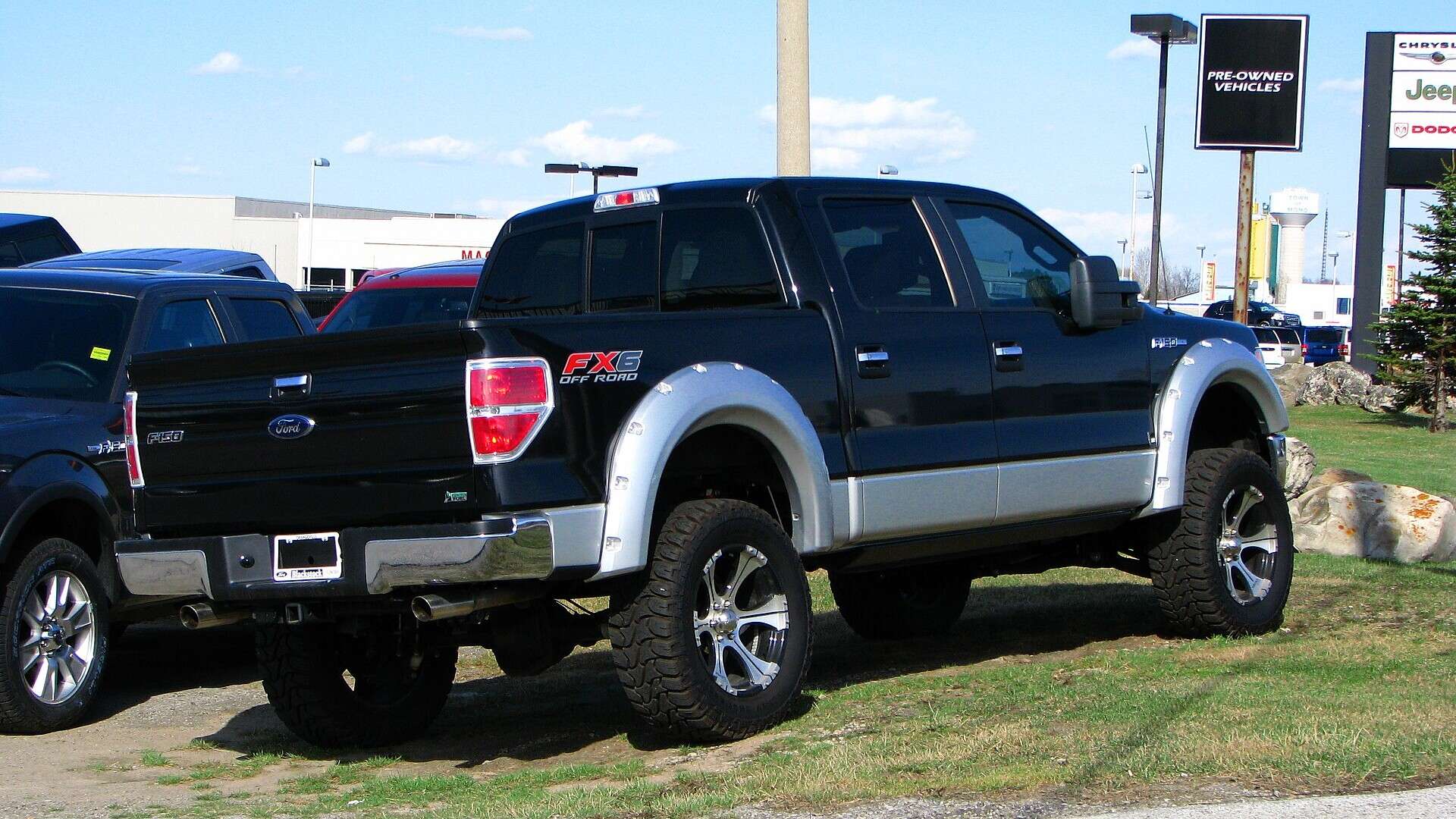
Georgia still has a law limiting how high a truck can be lifted, but it doesn’t apply to almost any pickup on the road today. Since July 1, 2024, the state’s suspension statute has said it “shall not apply to any motor vehicle with an electronic stability control system” that meets federal Standard 126. Federal rules have required that system on every passenger car, SUV and truck rated at 10,000 pounds or less built on or after Sept. 1, 2011. A lifted 2015 F-150 is exempt, and so is a lifted 2025 one.
Now a widow in Gwinnett County wants a civil jury to decide whether a lift can be dangerous, since the legislature no longer decides it for modern trucks. Lolita Holloway filed a wrongful-death complaint in September in the State Court of Gwinnett County. It says her husband, Charles Holloway Jr., died on Jan. 8 when the driver of a lifted Ford F-150 crossed the center line and hit his Toyota Tundra head-on. According to descriptions of the filing, the suit calls the crash otherwise survivable. It claims the lift raised the F-150’s frame rails and crash structures high enough to pass over the Tundra’s and push into its cab.
Besides the driver, the suit names the dealership that sold the truck, Courtesy Ford. It also names the shop that installed the kit, GRJ Offroad, and the companies tied to the kit itself: Sport Truck, its parent company Fox Factory, and RealTruck. I have not been able to get the complaint from the court’s records portal, which requires a registered account, so this account relies on descriptions of the filing. Every claim in it is an allegation that no court has tested yet.
How a raised frame rail changes a head-on crash
A modern truck’s front end is built to crush in a set order. The frame rails and the structure bolted to them fold up and absorb energy so the cab doesn’t have to. That only works if the other vehicle’s structure is there to meet them. When one vehicle’s rails ride above the other’s, the higher structure can pass over the crush zone and hit what’s behind it: the engine, the firewall, the A-pillars and, eventually, the people.
Automakers have known this for decades. In 2003 they adopted a voluntary agreement on vehicle-to-vehicle crash compatibility, which NHTSA later evaluated in a May 2012 report. Under it, a pickup, SUV or van had to line its main front energy-absorbing structure up with a car’s bumper zone under federal Part 581, which sits 16 to 20 inches off the ground. The alternative was to add a secondary “blocker beam” that reached down into that zone. Full compliance was due by September 2009.
NHTSA’s evaluation, written by Nathan K. Greenwell, estimated an 8 percent drop in deaths among car occupants after light trucks certified to the agreement. Results varied by vehicle type. SUVs showed a statistically significant 17.5 percent reduction, while the estimate for pickups was not statistically significant. The agency stopped short of calling the agreement a proven success. The Insurance Institute for Highway Safety has tracked the same problem with crash data. Its 2019 study found that in 2013-16, pickups were 2½ times as likely as cars and minivans to be in a crash that killed a car or minivan driver. A newer IIHS paper by Samuel Monfort, covering 2017-2022, put that ratio at 1.9.
That agreement applies to a truck as it leaves the factory, and nothing in it covers changes made at a lift shop afterward. A suspension lift raises the frame along with the body. That moves the rails, and everything Ford tuned around them, above where the engineers placed them. In this case the vehicle that was hit wasn’t a car. A Tundra is also a full-size, body-on-frame pickup, the kind of vehicle the compatibility work treated as the tall partner in a crash. If the suit’s account holds up, the lifted F-150 rode over another pickup’s crush structure, not a sedan’s.
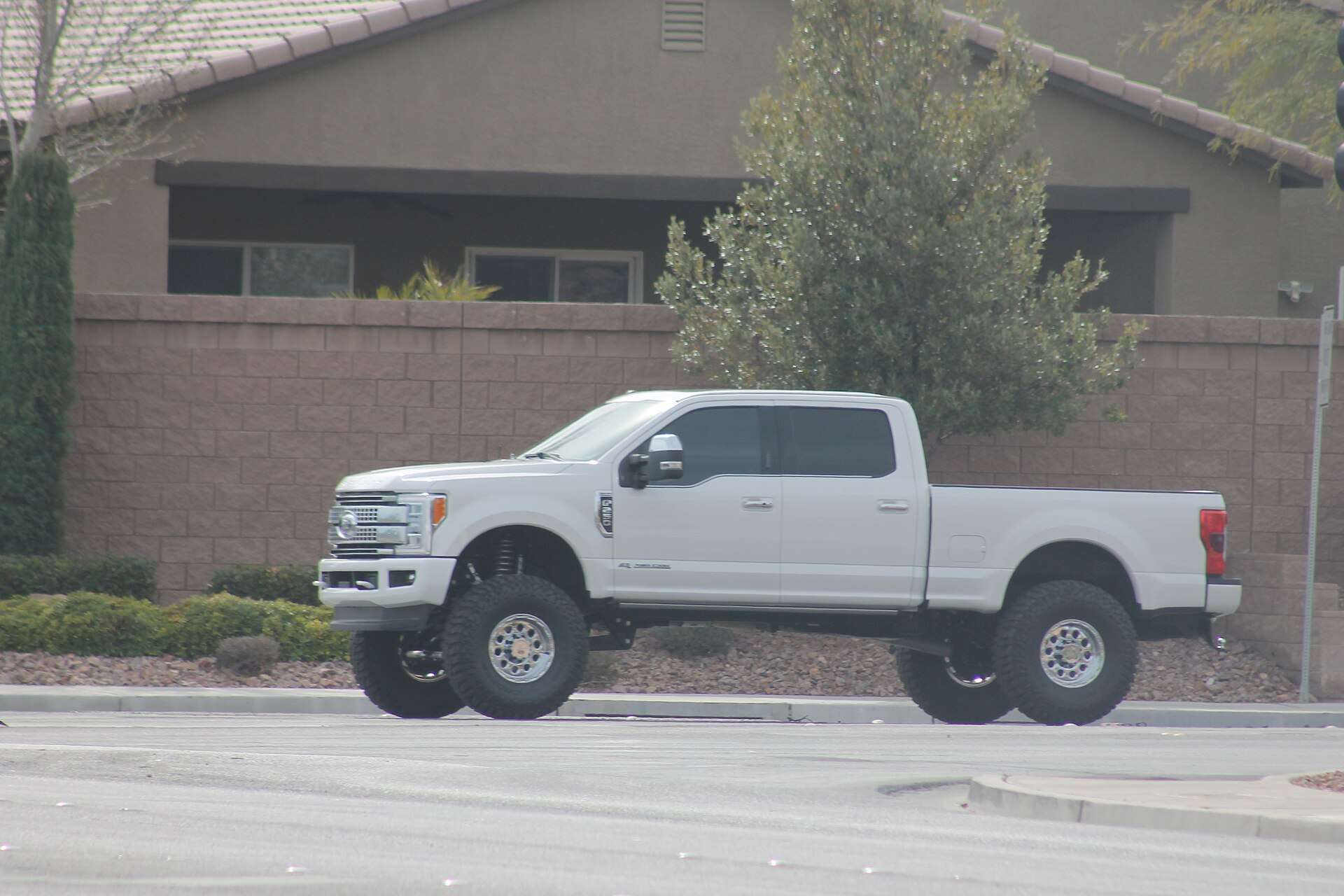

Georgia replaced its two-inch rule with an exemption for nearly every truck
Before mid-2024, Georgia made it a misdemeanor to alter a private passenger vehicle’s suspension “more than two inches above or below the factory recommendation.” Descriptions of the Holloway complaint say it cites that standard. That language is no longer in the code. Senate Bill 352 rewrote Code Section 40-8-6, Gov. Brian Kemp signed it in May 2024, and it took effect July 1, 2024. Which version a court applies, and how much it matters to a civil case, is for the parties to argue.
The aftermarket trade group SEMA lobbied for the bill. It argued in February 2024 that the two-inch rule was unenforceable because it depended on a “factory recommendation” nobody could find. The replacement uses measurements a trooper can take with a tape measure. The lowest point of the frame can be no higher than 27 inches for vehicles with a gross vehicle weight rating of 4,500 pounds or less, 30 inches for 4,501 to 7,500 pounds, and 31 inches for 7,501 to 14,000 pounds. A separate subsection bans a front frame height more than four inches above or below the rear on vehicles rated from 4,000 to 7,000 pounds. Local police publicized that subsection as Georgia’s squatted-truck ban. Other states have their own versions, and Louisiana police recently towed a squatted truck after a second ticket.
Then comes subsection (f). It exempts any vehicle whose stability control meets 49 C.F.R. 571.126, and it applies to “this Code section,” not just one bracket. Read literally, that covers the frame-height caps, the four-inch rake rule and the line about operating a vehicle with broken springs. The caps still apply in full to trucks built before September 2011.
Ford’s own paperwork complicates that exemption. The 2025 F-150 owner’s manual, in its section on how stability control works, warns that modifications to the suspension, wheel and tire size and several other systems “may change the handling characteristics of your vehicle and may adversely affect the performance of the electronic stability control system.” Georgia exempts a lifted truck because it has stability control, and the truck’s maker says lifting it can weaken that system.
Why a dealer and a parts maker can be sued over another driver’s mistake
Crossing the center line is the driver’s act, and the suit names the driver for it. The claims against the companies rest on a different idea that product-liability lawyers call crashworthiness, or enhanced injury. A manufacturer or seller doesn’t have to cause a crash to be liable. The plaintiff tries to show that the product made the injuries worse than they would have been, in this case turning a survivable head-on crash into a fatal one. The case against the companies depends on that word “survivable,” so expect both sides’ crash reconstructionists to spend most of their time on it.
According to descriptions of the filing, the suit also alleges that the lift degraded the F-150’s collision-warning and crash-avoidance systems, and that the defendants should have known about OEM warnings against changing ride height. Ford’s manual doesn’t mention lift kits by name, but several of its warnings point the same way. Its airbag section says that modifying or adding equipment to the front of the truck “could affect the performance of the airbag system, increasing the risk of injury,” and it lists the bumper system, the frame and the front body structure. Its sensor-based driver aids come with a note that “vehicle loading and suspension changes can impact the angle of the sensors and may change the normal detection zone of the system.” For pre-collision assist, the manual says the system “depends on the detection ability of its camera and sensors,” which on the F-150 means a windshield camera and, where equipped, a radar unit behind the lower grille.
Ford Motor Co. itself does not appear among the defendants named in descriptions of the suit. A Ford store is. A dealer that sells a truck already lifted, or arranges the lift through a nearby shop to close the sale, has a hard time arguing it was a bystander.
What to watch in the Gwinnett case and at the lift shop
The first filings to watch are the defendants’ answers. Each company will want to push responsibility to the driver and to the others in the chain. Watch for an argument that Georgia’s 2024 exemption reflects a legislative judgment that lifted, stability-controlled trucks are lawful. A product can be legal to sell and still be found defectively designed. Even so, a kit maker would be glad to have a statute it can point to, and Georgia now gives it one.
The second is data. No federal crash test is run on a lifted F-150. NHTSA and IIHS test trucks as built, which means buyers, insurers and juries have no official crash result for the configuration in this case. Engineering experts will have to reconstruct what happened, and those reconstructions, more than any statute, are likely to shape whether lift-kit makers start shipping crash-compatibility warnings or whether lift installers start asking customers to sign more paperwork.
If you own a lifted truck built since late 2011, Georgia’s height caps almost certainly don’t apply to it. The statute says nothing about what that truck does to the people in the vehicle it hits. Should the companies that sell and install lift kits be held responsible for what a raised frame does in a crash, or does that responsibility end with the person driving?