
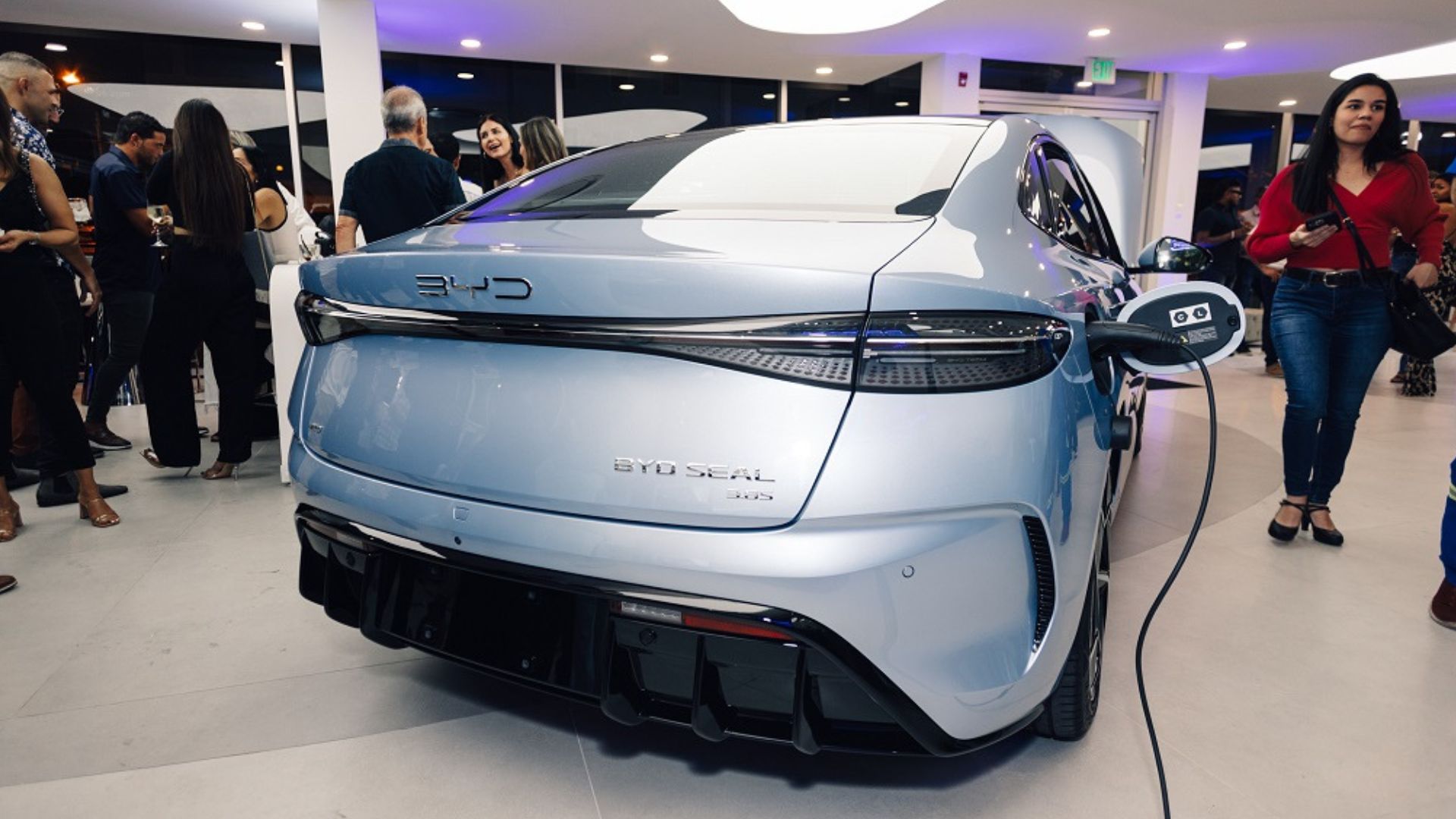
A car factory in the Sindh desert just blew through another deadline. On its own, that’s not news. Assembly plants slip their opening dates constantly in emerging markets. What makes this particular delay worth a second look is who actually stands to lose sleep over it. It isn’t BYD, the Chinese company whose badge will eventually go on every car that rolls out of the place. It’s a Pakistani electric utility that decided, in the middle of a national power crisis, that the smartest way to survive was to start selling cars.
The plant sits in Gharo, a small town on the coastal highway outside Karachi. It’s a joint venture between BYD and Mega Motor Company, a subsidiary of Hub Power Company, Pakistan’s largest independent power producer, known locally as Hubco. Hubco owns half the project through its holding arm and originally told investors the factory would be running by the first half of Pakistan’s 2026 fiscal year. That deadline came and went. The company’s newest guidance, relayed to analysts at Topline Securities, now points to the second half of calendar 2026, and even that window is already two months old. Total investment is pegged at $150 million, $90 million of which is borrowed. Planned output starts at 25,000 vehicles a year, with room to double.
When Dawn, Pakistan’s business newspaper of record, asked Mega Motor why the plant was late, what it would build first, and how much of each car would actually be sourced locally, the company said nothing. Not a denial. Not a clarification. Just silence, filtered through a PR firm. That kind of non-answer usually means one of two things: the company doesn’t know yet, or it knows and doesn’t want the reason on record.
Here’s the detail buried in the financial filings. BYD isn’t the one financing this factory. Hubco is. Of that $150 million price tag, $90 million is debt sitting on a Pakistani utility’s balance sheet, not BYD’s. BYD supplies the platform, the badge, and presumably some engineering support. Everything else, the land, the loans, the currency exposure, the political risk, belongs to a company that had never assembled anything with wheels until a few years ago. This isn’t unique to Pakistan. We’ve watched a version of this play out in Hungary, where BYD’s factory deal is now facing a government audit tied to a former minister, and in France, where BYD twice tried to buy a stake in Renault and got turned down both times. The pattern is the same in all three places. BYD would rather rent a foothold than own the risk of building one from scratch.
Pakistan’s auto assemblers have a well-documented reason for going quiet about missed deadlines: dollars. For much of the last four years, Pakistan’s central bank has rationed the foreign currency needed to open letters of credit for imported parts, a direct consequence of the country’s balance-of-payments crisis and IMF program. When the State Bank tightens that tap, assembly lines belonging to Toyota’s and Honda’s local partners have gone idle for weeks at a stretch waiting on kits stuck at customs. Mega Motor hasn’t said this is what happened to its own timeline. But its silence follows a script that plenty of other automakers in Pakistan have already read from.
There’s a second, quieter reason governments like Pakistan’s court deals like this one at all. Pakistan’s auto policy grants lower duties to vehicles built up progressively from imported kits, rewarding manufacturers who add local content over time. That’s a reasonable goal on paper. In practice, it means a car can carry an “assembled in Pakistan” label while consisting mostly of parts that arrived in a shipping container and were bolted together locally, with genuine domestic sourcing showing up years later, if it shows up at all. Calling that a factory is generous. Calling it a final assembly line is more honest. Either way, it’s a big part of why the tax math works for a joint venture like this one, and why a simple question about when local assembly actually starts is such an uncomfortable one for Mega Motor to answer.
None of that explains why a power company wanted into the car business in the first place. That answer sits in Hubco’s other big project: a growing network of DC fast chargers spaced along the Karachi-to-Peshawar motorway, branded Hubco Green, with 24 sites already open and more planned every 100 kilometers. Pakistan’s independent power producers spent years fighting the government over capacity payments, the guaranteed fees they’re owed whether or not the country actually uses their electricity, as part of the country’s long-running circular debt crisis. That fight made one thing obvious to Hubco: getting paid to have power available isn’t the same as getting paid for power people actually use. Selling cars that need to be charged, on chargers Hubco owns, turns idle electrons into paying customers. The EV plant isn’t really a diversification project. It’s a demand-side hedge for a power company whose supply-side business has spent years under political pressure.
That hedge looks smarter next to a data point buried near the bottom of the same brokerage note: Pakistan’s new-energy-vehicle segment grew 392 percent in the last fiscal year and now accounts for roughly 15 percent of the country’s auto market. Chery, which is launching its own electric Q hatchback at the Pakistan Auto Show this month, is marketing it less as a green choice and more as a way to use rooftop solar panels people already own. Chery’s own math claims a gasoline car driven 20,000 kilometers a year burns through roughly 488,000 rupees in fuel, versus about 30,000 rupees in electricity for an EV charged from home solar. In a country where grid reliability is shaky enough that middle-class households have been installing solar panels for years just to keep the lights on, that pitch lands very differently than it would in the United States. The car becomes a battery on wheels for power people already generate and would otherwise waste.
Zoom out and this is the same expansion playbook BYD has run in market after market on its way to chasing the title of the world’s largest automaker within five years. Find a local partner willing to put up the capital and absorb the political risk, supply the vehicle platform and the brand, and let someone else’s balance sheet take the hit if the timeline slips or the currency moves. It’s worked well enough that BYD’s own financials now look stronger even as unit sales soften, and well enough that European regulators are watching Chinese-brand resale values slide almost as fast as the expansion itself.
A missed deadline in Gharo won’t slow BYD down. The company has plants and partners scattered across enough countries that one delayed joint venture barely registers as a rounding error. But it says a lot about how BYD is becoming the biggest automaker on earth without necessarily being the biggest risk-taker on earth. The world’s biggest EV maker doesn’t always need to build the factory. It just needs someone else desperate enough to build it for them.